Crutches Workout: How to Maintain Muscle While Recovering
There is nothing quite as frustrating as building out your dream home gym, only to get sidelined by a lower body injury. Whether you are dealing with a torn meniscus, a sprained ankle, or foot surgery, staring at your power rack while balancing on one leg is a tough pill to swallow. But an injury does not mean your fitness journey hits a dead end.
Adapting to a crutches workout is entirely possible with the right mindset and a few strategic adjustments to your training space. This guide will help you safely navigate your equipment, maintain your upper body strength, and keep your sanity intact while your lower half heals.
Key Takeaways
- Incidental Training: Navigating your home gym on crutches is a workout in itself, heavily engaging your triceps, lats, and core.
- Space Modification: Clear your floor space of plates, bands, and cords to create a safe, trip-free zone before you even attempt to lift.
- Seated Variations: Shift your focus to seated or lying dumbbell and cable movements to protect your injured leg and maintain balance.
- Asymmetrical Training: Unilateral exercises can help prevent severe muscle imbalances during your prolonged recovery phase.
The Reality of the Crutches Gym Experience
Before you even touch a dumbbell, it is important to acknowledge the physical toll of your new mobility aids. Transforming your standard setup into a safe crutches gym requires a shift in perspective. You are no longer just training; you are managing fatigue.
Do Crutches Make Your Arms Stronger?
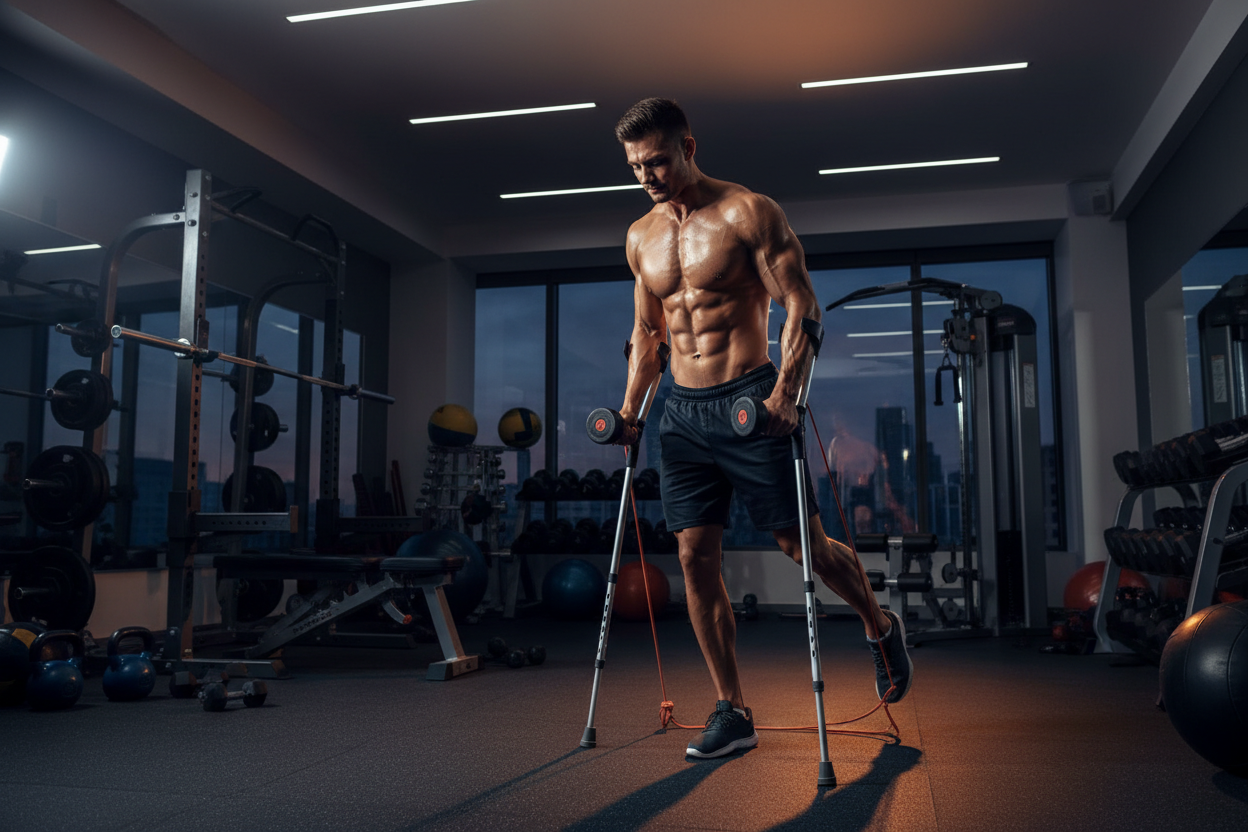
If you are wondering, 'do crutches make your arms stronger?', the answer is a resounding yes. Simply moving from your kitchen to your garage gym engages your triceps, shoulders, and latissimus dorsi. In fact, many people find that just getting around is treating crutches the workout itself. However, to prevent over-use injuries in your shoulders, it is vital to ensure your crutches are sized correctly—you should have about two inches of clearance below your armpits so you are pushing with your hands, not hanging on your shoulders.
Building Your Crutches Exercise Routine
Transitioning to a structured crutches exercise routine requires leaving your ego at the door. Heavy barbell squats and standing overhead presses are off the table. Instead, your home gym's adjustable bench, functional trainer, and dumbbell set will become your best friends.
Exercises While On Crutches
When planning exercises while on crutches, prioritize absolute stability. Seated overhead presses, chest-supported dumbbell rows, and floor presses are excellent choices. Using a functional trainer or resistance bands while seated on a plyo box can also provide a massive pump without risking your balance. The goal is to isolate the upper body while keeping the injured leg elevated or safely resting out of the way.
Crutch Muscles Strengthening Exercises
To make your daily mobility easier, incorporate specific crutch muscles strengthening exercises into your routine. Focus on grip strength (seated wrist curls or static holds), triceps press-downs, and seated core work. A strong core and robust triceps make swinging your body weight between the crutch handles significantly easier and less exhausting.
From Our Gym: Honest Take
When I tore my Achilles tendon last spring, my beautifully organized garage gym suddenly felt like a dangerous obstacle course. I quickly realized that navigating around a heavy power rack on aluminum sticks is genuinely risky. The first thing I did was clear a wide, six-foot path down the center of my rubber mats. I also moved my most-used dumbbells to the top tier of my storage rack—bending over to pick up a 50-pound dumbbell from the floor while balancing on one foot was a recipe for disaster.
One unexpected silver lining? Because I was forced to sit down, my seated strict press numbers skyrocketed, and I developed a profound appreciation for how much energy it takes just to stay upright. It was humbling, but keeping my upper body moving was the only thing that kept me sane during those four months.
Frequently Asked Questions
Is using crutches a good workout?
Yes, it requires significant cardiovascular effort and muscular endurance. Supporting your body weight with your upper body elevates your heart rate much faster than standard walking, making it a surprisingly effective low-intensity cardio session.
Are crutches a good workout for weight loss?
While they do burn more calories than regular walking due to the increased mechanical effort, relying solely on them for weight loss is not practical. Proper nutrition and a modified, safe strength training routine will be your primary drivers for maintaining body composition during recovery.
How should I modify my home gym space for safety?
Remove all trip hazards like rogue change plates, resistance bands, and foam rollers from the floor. Ensure your adjustable bench is locked firmly into place, and try to keep all your necessary cable attachments and weights at waist height to minimize dangerous bending and twisting.