Best Ab Exercises for Flat Stomach Myths Busted
If you have ever spent thirty minutes at the end of a workout doing endless crunches on a yoga mat, you already know the frustration. The burn is real, but the visible results rarely match the effort. Whether you are training in a fully equipped garage gym or a small apartment corner, optimizing your core routine is essential for both aesthetics and heavy lifting stability.
In this guide, we are breaking down the best ab exercises for flat stomach development. We will cut through the fitness industry noise, explain why your current routine might be failing, and show you exactly how to program your core training using basic home gym equipment.
Key Takeaways
- Nutrition is the foundation: No amount of training will outwork a high body fat percentage.
- Ditch the high reps: Treat your abs like any other muscle group by using progressive overload.
- Focus on anti-extension: Movements that force you to resist gravity build a tighter, stronger core.
- Keep gear simple: An ab wheel, a pull-up bar, and some resistance bands are all you need for an elite midsection.
Why Traditional Crunches Fall Short
For decades, the standard approach to midsection training was high-volume spinal flexion—think sit-ups and standard crunches. While these target the rectus abdominis (the visible six-pack muscles), they do very little to pull the stomach inward or build functional strength for heavy compound lifts like squats and deadlifts.
The Anatomy of a Tighter Core
To achieve that tight, flat look, you need to target the transverse abdominis. This deep core muscle acts like a natural weightlifting belt, wrapping around your spine and pulling your waistline in. The most effective way to engage this muscle is through stabilization and anti-extension exercises, which demand far more energy and tension than basic floor crunches.
Essential Core Movements for Your Home Gym
Building the best ab workouts for flat stomach results requires a mix of weighted resistance and bodyweight mastery. Here are the top movements to integrate into your home gym routine.
1. The Ab Wheel Rollout (Anti-Extension)
The ab rollout is arguably the king of core exercises. It forces your entire abdominal wall to brace against gravity to protect your lower back. If you do not have a dedicated ab roller, a barbell loaded with round bumper plates works just as well. Focus on keeping your pelvis tucked and stopping before your lower back sags.
2. Hanging Leg Raises (Lower Ab Focus)
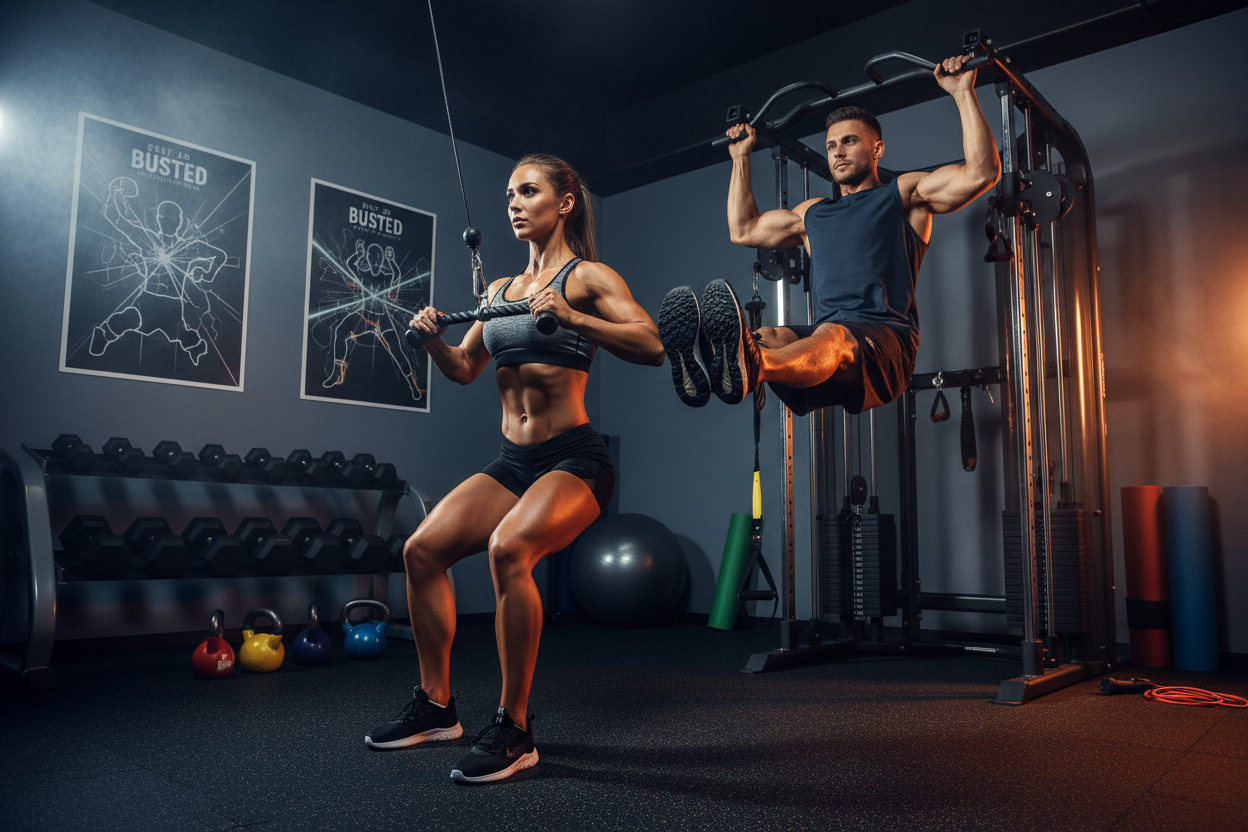
Utilizing your power rack's pull-up bar for hanging leg raises provides an incredible stretch and contraction for the lower abs. Beginners can start with bent knees, eventually progressing to straight legs. The key is to avoid swinging; use strict core control to lift your legs, which prevents the hip flexors from taking over the movement.
3. Weighted Cable Crunches (Progressive Flexion)
If your setup includes a functional trainer or a simple pulley system, kneeling cable crunches allow you to add heavy resistance to your core training. By holding a rope attachment behind your neck and crunching your elbows toward your knees, you can build thicker, more defined abdominal muscles that show through even at slightly higher body fat percentages.
From Our Gym: Honest Take
When I first started building out my garage gym, I completely neglected direct core work, assuming heavy squats were enough. Once I hit a plateau, I decided to focus on targeted movements. The first time I incorporated strict barbell rollouts on our 3/4-inch rubber stall mats, my core was sore for three days. I used to chase the burn with high-rep sit-ups, but adding progressive resistance completely changed my midsection.
One caveat I have learned through trial and error: cheap, lightweight plastic ab wheels wobble terribly on uneven garage floors. If you are training on stall mats or concrete, invest in a dual-wheel roller or simply use your barbell with collars and bumper plates for a much smoother, more stable rollout.
Frequently Asked Questions
Can I get a flat stomach just by doing ab exercises?
No. Ab exercises build and strengthen the muscles beneath the fat, but a flat stomach is primarily the result of a caloric deficit. You must combine effective core training with a dialed-in nutrition plan to reveal the muscles you are building.
What home gym equipment is best for core training?
You do not need bulky, single-use ab machines. A high-quality pull-up bar, an ab wheel, and a set of resistance bands or a cable pulley system offer more than enough versatility to build a strong, flat midsection.
How often should I train my abs?
Treat your core like any other muscle group. Training them 2 to 3 times per week with 3 to 4 challenging sets per session is ideal. Allow for adequate recovery between sessions to let the muscle tissue repair and grow stronger.