CrossFit Leg Workout at Home: Moves and Setup
Why Train Functional Leg Strength at Home
Conditioning your lower body with functional movements develops muscular endurance and coordination without requiring a commercial gym facility. A home routine centered on classic functional fitness patterns relies on bodyweight resistance, explosive tempo shifts, and plyometric drills. Incorporating these varied movement patterns into an organized routine, such as a structured workout high gym guide, allows you to build overall lower body muscle and capacity steadily in your living area or garage. When planning your training schedule, pairing high-intensity conditioning with dedicated strength training blocks helps keep lower body volume consistent. If you prefer short sessions with focused dumbbell loading, reviewing a leg workout high guide can provide useful ideas for sequencing squats and lunges.
Functional training challenges the hips, quadriceps, hamstrings, and calves through multi-joint patterns. Unlike isolated gym machines that fix your path of motion, home CrossFit floor exercises demand balance across the entire kinetic chain. When you pull yourself down into deep squats and push back up through the floor, your core and legs must work together to maintain stability under fatigue.
Essential CrossFit Leg Exercises for Stronger Legs
To target the lower body effectively in a home setting, select movements that emphasize hip hinge mechanics, knee flexion, and explosive power. Maintaining crisp technique prevents unnecessary joint strain as reps accumulate.
Foundational Squats and Tempo Squats
Air squats serve as the baseline movement for building stronger legs. Stand tall in your starting position with your feet slightly wider than shoulder width and toes angled slightly outward. Keep your chest upright and core engaged as you sit your hips back and down. Descend through a full range where the hip crease sits below the knees, then push through your heels to return upright. Modifying the cadence with slow descents increases time under tension without added load, demanding control through the thighs and hips.
Overhead Squats and Mobility
Performing bodyweight overhead squats, or holding a light broomstick or PVC bar overhead, challenges balance across the shoulders, thoracic spine, and ankles. In your starting position, set your hands wider than shoulder width with arms straight overhead. As you descend, keep your shoulders active, elbows extended, and head neutral. If you later advance to holding a light barbell overhead, holding that barbell requires maintaining vertical alignment so the weight remains directly centered over the midfoot.
The Back Squat and Front-Loaded Variations
If you have home equipment like dumbbells or a barbell, integrating the traditional back squat or front squat builds exceptional leg strength. Position the bar across the upper shoulders or hold dumbbells at shoulder level with elbows bent and palms facing your torso. Sit your hips back into the squat, keeping your torso proud and core engaged. Drive through the ground to lift out of the bottom point, ensuring your knees track in line with your toes rather than collapsing inward.
Jumping Lunges and Unilateral CrossFit Movements
Step your right leg forward and drop your back knee toward the floor until your right knee forms a clean bend. Drive upward off both feet explosively, switching your stance in mid-air so your left leg lands forward for the next rep. For controlled balance, substitute jumping lunges with a single leg squat progression to an elevated bench or sturdy chair. As a CrossFit coach will often note during class briefings, keeping your chest tall on unilateral lunges prevents you from tipping forward onto your toes.
Box Jumps and Explosive Step-Overs
Box jumps develop rapid force generation across the entire lower body. Stand facing a stable plyo box or low step. Hinge your hips, swing your arms forward, and jump cleanly onto the surface, landing softly with knees tracking over toes. Stand until your hips and knees are fully locked out before stepping down to reset for the next rep. If ceiling height is limited, broad jumps or tuck jumps offer practical alternatives.
Three Lower Body CrossFit Workouts for Home
Structuring your session with classic functional fitness formats keeps intensity consistent and eliminates guesswork. Warm up thoroughly with mobility drills before starting any high-cadence lower body block.
Workout 1: The Ten-Minute Conditioning AMRAP
Set a timer for ten minutes and complete as many rounds as possible of the following sequence:
- 15 Squats
- 10 Alternating jumping lunges (5 reps per leg)
- 10 Broad jumps
- 30 Fast skips with a jump rope
Focus on smooth transitions between stations while keeping your breathing steady and core engaged. If you do not have a jump rope, simulate double-unders with quick floor line hops or high knees.
Workout 2: Every Minute on the Minute (EMOM)
Run a twelve-minute clock, performing one movement at the start of each minute and resting for whatever time remains before the next minute begins:
- Minute 1: 18 Deep squats at a controlled tempo
- Minute 2: 12 Alternating reverse lunges holding dumbbells or a barbell
- Minute 3: 45 Seconds of jump rope double-unders or assault bike intervals
- Minute 4: Rest and reset
Repeat this four-minute sequence for three full cycles to accumulate volume while managing fatigue. Those who have an assault bike at home can use hard bike sprints to spike metabolic demand without loading the spine.
Workout 3: The Rapid Finisher For Time
For a fast, leg-heavy conclusion to your session, complete three rounds for time of:
- 20 Squats
- 10 Burpees with a clean jump off the floor
- 15 Step-ups per leg onto a sturdy box or bench
Pace the first round conservatively so your reps remain crisp through the final push.
Floor Protection and Shock-Absorbing Mats for Explosive Moves
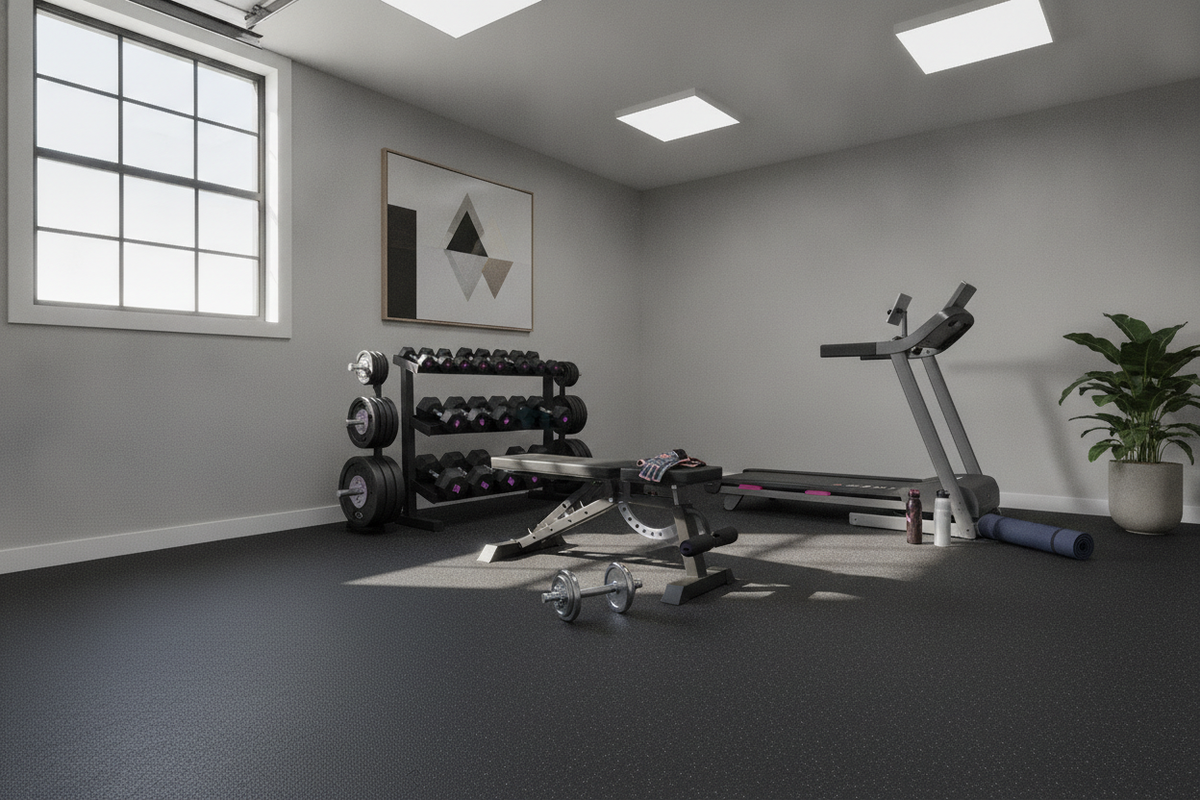
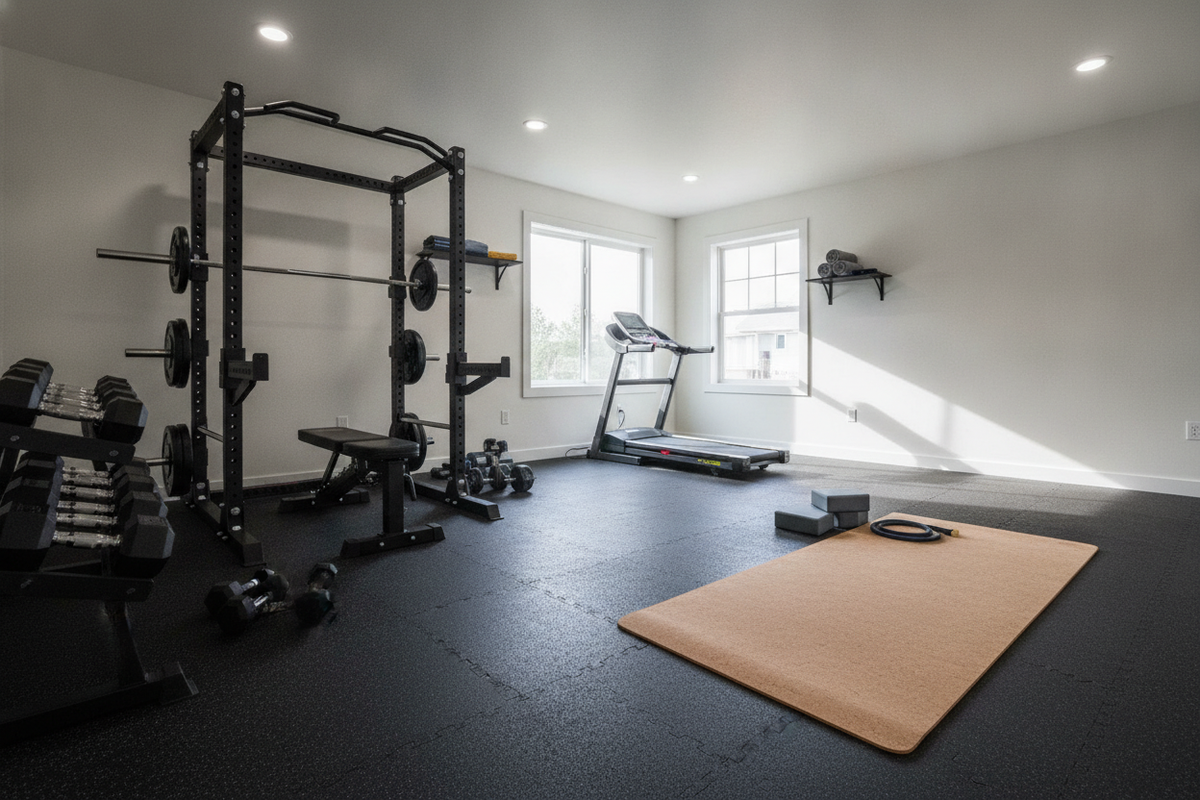
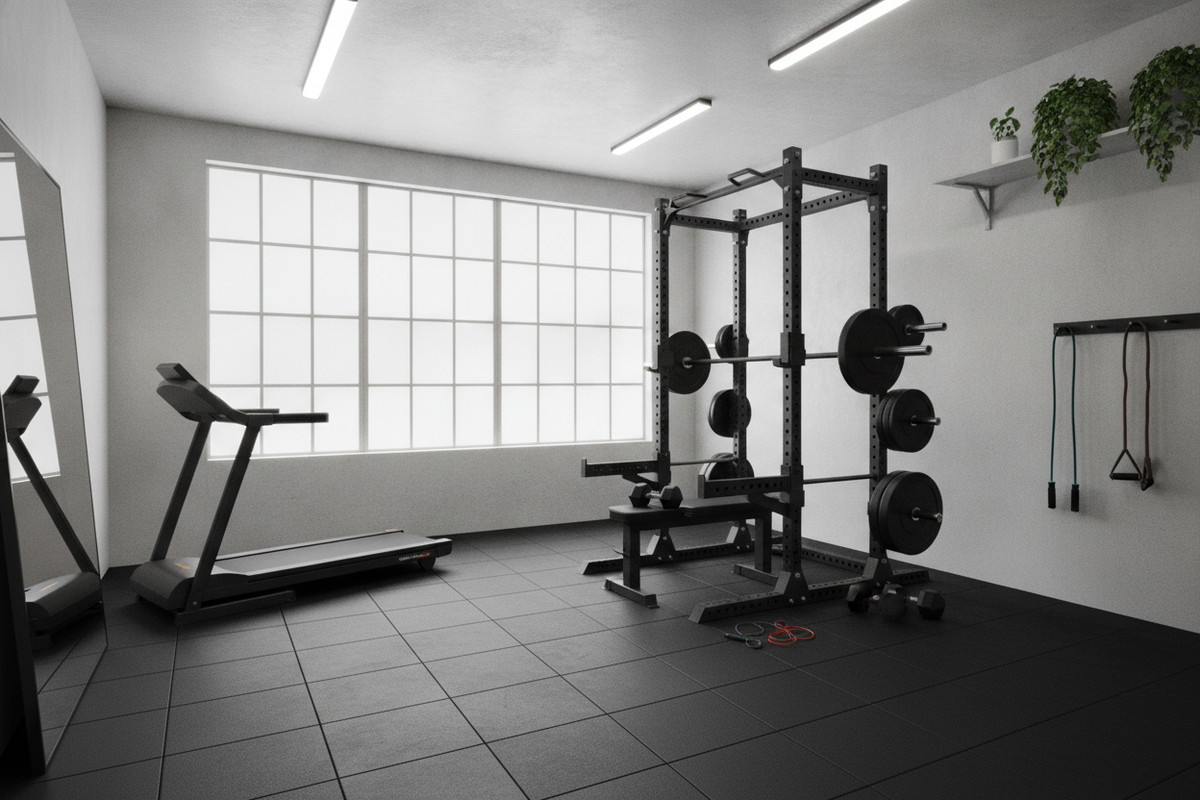
High-impact foot strikes from jump rope routines, rebounding box jumps, and burpees place direct stress on residential subfloors. Hard tile can crack under repeated impacts, while unpadded concrete transmits heavy vibration throughout the home. Setting up high-density surfaces from a dedicated gym mat collection helps soften footfalls and dampen sound transfer to lower living areas.
Traction is equally vital during fast-paced interval changes. Sweaty hardwood or slick laminate surfaces create slip hazards during dynamic lunges and rapid transitions between squats and floor work. A textured, non-skid surface like a gym workout product establishes a stable base that remains anchored under lateral force, keeping your feet planted during aggressive jump landings, heavy lifts, and rapid stance adjustments.
Setting Up Your Home Space for Dynamic Footwork
Training high-cadence lower body movements safely indoors requires careful spatial planning to reduce any risk of stumbles or injury:
- Clearance: Ensure you have sufficient overhead room for jumping movements, high skips with a jump rope, and upright barbell or dumbbell presses.
- Surrounding Zone: Keep a clean radius around your mat perimeter free of furniture corners, loose weights, or other movements that create clutter.
- Footwear Selection: Wear supportive cross-training shoes with flat outsoles to maintain heel contact during squats and lateral stability during lunges.
- Surface Care: Wipe down rubber and dense foam mats after high-sweat sessions with a mild cleanser to maintain grip and material resilience.