Core Fried on Leg Day? Why a back and abs workout same day fixes it.
I remember the specific Tuesday I almost snapped my spine in half. I had just finished a brutal session of 405-lb squats and decided to 'finish' my core with weighted decline sit-ups. One rep in, my lower back went into a spasm so violent I had to crawl to the rack to pull myself up. That was the day I realized my programming was broken. Tacking core work onto the end of a heavy lower-body session isn't 'hardcore'—it is a fast track to a physical therapist's office. This is why I moved to a back and abs workout same day split.
Quick Takeaways
- Lower back fatigue from squats/deadlifts makes post-leg day core work dangerous.
- Vertical pulling movements help decompress the spine before hitting the midsection.
- A back-and-abs split allows for higher intensity on both muscle groups.
- Pairing these groups improves your 'bracing' mechanics for heavy compound lifts.
Why I Stopped Doing Core on Leg Day
The biomechanics of a heavy squat or deadlift require your core to act as a rigid, unyielding cylinder. By the time you finish your working sets, your spinal erectors and deep stabilizers are already redlined. Asking those same muscles to then handle targeted flexion or high-rep stability work is a recipe for disaster.
When your lower back is fried, it can't properly support your spine during ab exercises. You end up 'cheating' with your hip flexors or, worse, putting all the shear force directly onto your lumbar discs. I spent years wondering why my back was always 'tight' until I realized I was just overworking the same support structures two hours straight.
The Logic Behind a Back and Abs Workout Same Day
Pairing pulling movements with core work is the smartest adjustment I have made in my garage gym. Think about the nature of a heavy row or a pull-up. While rows definitely tax the lower back, they don't compress the spine the same way a bar across your traps does. In fact, vertical pulls like lat pulldowns or dead-hangs actually provide a bit of decompression.
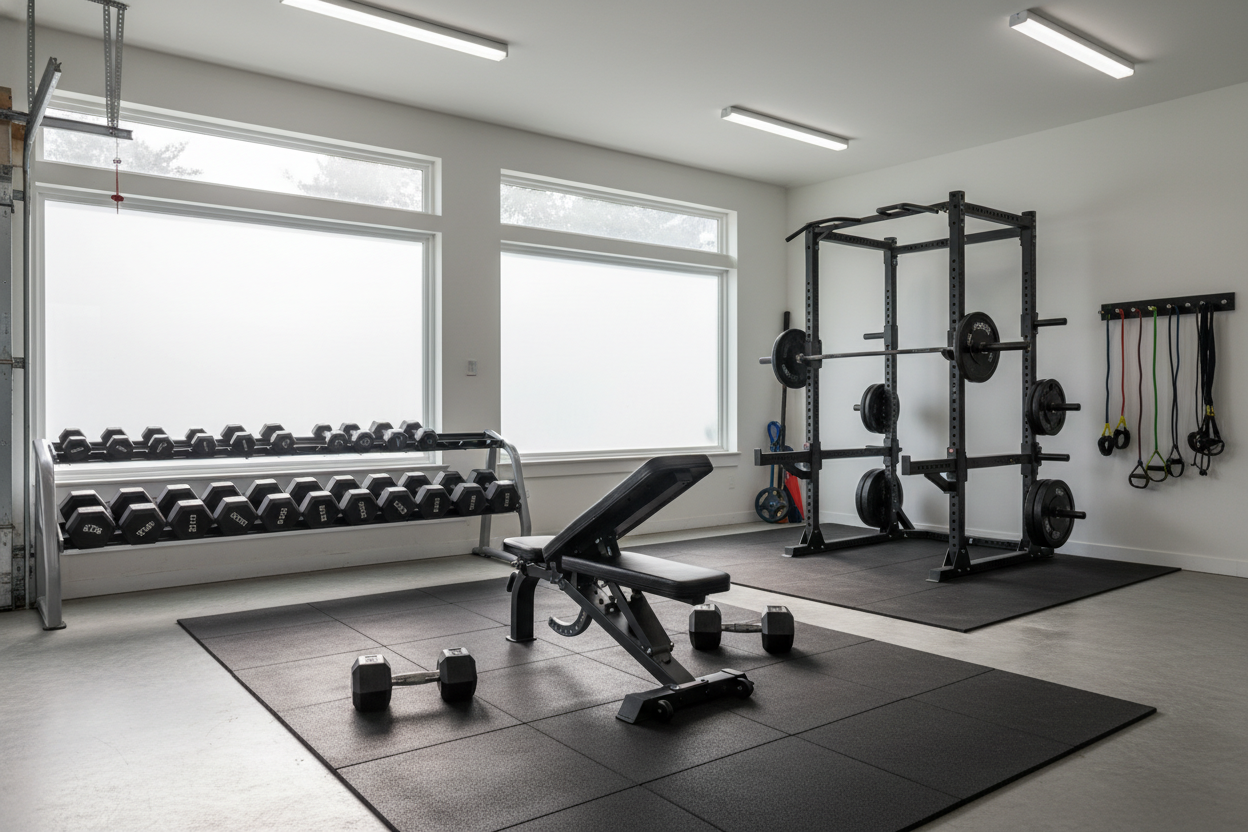
This creates a much safer physiological environment. I usually start with my heavy barbell movements using my weight set and bench to get the big rocks out of the way. Once the back is pumped and the spine has had a chance to breathe between sets of rows, the core is primed to work without the crushing fatigue left over from a leg session.
What About Other Splits? Can i do abs and arms on the same day?
I get asked this constantly: can i do abs and arms on the same day? The short answer is yes, but the context matters. Pairing core with arms is what I call a 'recovery day' split. It’s great if you’re short on time or just want a low-stress session to get some blood flowing without taxing your CNS.
However, arm-day core work lacks the functional carryover you get when pairing it with back. When you train back and abs together, you’re training the entire 'trunk' as a unit. If you’re looking for a higher-volume pump session, you might prefer a chest abs and arms workout at home, but for raw strength and spinal integrity, the back/abs combo wins every time.
The Exact Back and Midsection Routine I Use
This is my go-to routine when I'm training in my garage. It's five movements, high intensity, and usually takes about 45 minutes. I don't believe in doing 500 crunches; I believe in heavy resistance and stability.
- Weighted Pull-Ups: 3 sets of 6-8 reps. (Decompresses the spine while hitting the lats).
- Bent Over Barbell Rows: 4 sets of 8 reps. (Teaches the core to brace under load).
- Hanging Leg Raises: 3 sets to failure. (Keep the swing out of it; control is everything).
- Ab Wheel Rollouts: 3 sets of 10-12 reps. (The ultimate anti-extension move).
- Plank Variations: 3 rounds of 60 seconds.
For the floor-based portion, I make sure I'm using a high-density 6x8ft exercise mat. There is nothing that kills an ab set faster than your elbows sliding around on bare concrete or cheap, thin foam. You need a surface that grips back.
How to Program This Without Overcomplicating Things
Don't overthink the frequency. I run this combination twice a week. The key is managing the fatigue so you aren't going into your next leg day with a core that feels like it’s been through a paper shredder. If you have squats on Thursday, don't do this routine on Wednesday night.
Give yourself at least 48 hours of buffer between a heavy core session and a heavy squat session. This ensures your stabilizers are fresh enough to keep your spine safe when the weight gets heavy. Listen to your body—if your lower back feels 'twingy' during the back portion, back off the intensity on the abs.
FAQ
Is it better to do abs before or after back?
Always after. You need your core to be 100% fresh to stabilize your spine during heavy rows or pull-ups. If you fatigue your abs first, your form will collapse during your back exercises, leading to injury.
Will this split help my deadlift?
Absolutely. A stronger, more stable core translates directly to a better brace. When your lats and your abs learn to fire together, your 'torso rigidity' improves, which is the secret to moving heavy weight safely.
Can I do this with just dumbbells?
You can. Substitute barbell rows for 1-arm dumbbell rows and pull-ups for pullovers if you don't have a bar. The logic of the split remains the same regardless of the tools you're using.