Compound Exercise for Quads: Best Moves and Setup
When planning an effective lower body workout, choosing the right compound exercise for quads forms the backbone of long-term leg development. A compound exercise for quads engages multiple joints at once, challenging the large quadriceps muscles along the front of the thigh alongside stabilizing muscles in the hips and core. Whether your goal is building raw quad strength, adding muscular fullness, or improving athletic power, multi-joint lifts provide an efficient stimulus that isolation movements cannot match on their own.
For lifters training at home or in a dedicated training space, mastering a reliable compound exercise for quads requires more than just loading a barbell or grabbing a pair of heavy dumbbells. You also need solid ground contact, predictable traction, and a durable surface that supports aggressive knee drive. In this guide, we break down top compound quad exercises, explain the mechanics that direct tension into the anterior thigh, and cover the training environment you need to perform every compound exercise for quads with confidence.
Understanding Quad-Dominant Compound Movements
A true compound exercise for quads coordinates significant knee flexion with controlled hip extension. While the quadriceps extend the knee, the glutes and hamstrings work across the hip joint to stand the weight up. The degree to which an exercise targets the quadriceps depends heavily on torso angle and joint geometry. When the torso remains upright and the knees travel forward over the toes, the quadriceps bear the majority of the mechanical load. Conversely, hinging forward transfers more work to the posterior chain.
Understanding this balance helps lifters customize their leg day programming. For a broader perspective on multi-joint training classifications, you can explore our hip thrust compound movement review or read our in-depth guide on compound movements for legs. By selecting a compound exercise for quads that emphasizes deep knee flexion, you ensure that every repetition directly stimulates the targeted thigh musculature.
What Is the Best Compound Exercise for Quads?
The front squat is widely considered the best compound exercise for quads because its anterior bar position forces an upright torso and demands deep knee travel. By resting the barbell across the anterior deltoids, the front squat limits excessive forward lean at the torso, shifting the primary lever arm onto the quadriceps throughout the full range of motion.
However, the ideal compound exercise for quads can vary depending on individual mobility, limb proportions, and available equipment. While the barbell back squat remains a classic foundation of many a leg workout, lifters with longer femurs often find that a low-bar barbell back squat distributes considerable effort into the hips rather than isolating quad strength. Switching to a high-bar barbell back squat or utilizing anterior-loaded squat patterns allows trainees to keep the work focused on the anterior thighs.
Top Compound Quad Exercises for Strength and Size
Building balanced quadriceps requires incorporating a variety of movement angles into your regular leg workout. Rotating through distinct compound quad exercises challenges muscle fibers through varied joint angles and loading schemes, supporting steady progressive overload while minimizing repetitive strain.
Front Squats and Goblet Squats
Both the front squat and the goblet squat place the resistance in front of the body, which naturally keeps the spine vertical and places high mechanical tension on the quadriceps. The front squat allows for heavy loading with a barbell, making it an exceptional choice for building maximal quad strength. Focus on keeping the elbows elevated and maintaining proper knee alignment as you descend into deep knee flexion.
The goblet squat offers an accessible yet demanding compound exercise for quads, particularly for home gyms. Holding a kettlebell or dumbbell close to the chest promotes an upright posture and smooth hip drive. Adjusting your foot stance to shoulder width with slight toe flare allows the hips to drop between the heels, maximizing the active range of motion for the quadriceps without rounding the lower back.
Bulgarian Split Squats and Step Variations
The bulgarian split squat stands out as an elite unilateral training movement that tests balance, stability, and sheer muscular endurance. By elevating the rear foot on a bench or sturdy block, the front leg must support the majority of the load. This makes the bulgarian split squat an indispensable compound exercise for quads, ensuring both legs develop equal strength without the stronger side compensating.
During the bulgarian split squat, maintaining a more upright torso emphasizes the anterior thigh, while leaning slightly forward engages more hip musculature. Incorporating unilateral training into your lower body workout addresses subtle strength imbalances, sharpens joint stability, and delivers high muscle tension without requiring massive spinal loading.
Walking Lunges and Reverse Lunges
Dynamic quad compound exercises like walking lunges introduce movement in the sagittal plane, requiring rapid deceleration and acceleration. As you step forward during walking lunges, the lead quadriceps absorb body weight and external load through controlled eccentric lengthening, followed immediately by forceful knee extension to propel the body into the next step.
For trainees with limited floor space or those seeking greater knee comfort, reverse lunges provide similar quad activation while keeping the lead foot anchored. Like dumbbell squats and walking lunges, reverse lunges allow lifters to build muscular volume during any leg workout while maintaining precise knee alignment over the second and third toes.
How Foot Placement and Knee Travel Influence Quad Load
Small adjustments in technique can transform an ordinary squat into a hyper-targeted compound exercise for quads. The mechanics of stance, ankle mobility, and joint path dictate exactly where force is directed throughout the movement.
- Foot Stance Width: A narrower foot stance generally encourages greater forward knee travel, placing higher demand on the vastus medialis and vastus lateralis of the quadriceps. A wide stance often increases hip adductor engagement instead.
- Knee Alignment and Forward Travel: Allowing the knees to track forward freely past the toes increases the knee flexion angle. Keeping proper knee alignment over the feet ensures joint forces remain evenly distributed across the connective tissue.
- Heel Elevation: Trainees with limited ankle dorsiflexion often struggle to achieve full depth while staying upright. Using small wedges or weight plates for heel elevation allows greater forward knee displacement, keeping the torso vertical and transforming standard dumbbell squats into a potent compound exercise for quads.
- Active Range of Motion: Performing each compound exercise for quads through a complete range of motion produces greater muscle stretch under load, which is essential for stimulating long-term muscle adaptation.
How Does Flooring Affect Stability During Heavy Quad Compound Exercises?
Flooring affects stability during heavy quad compound exercises by providing a firm, non-compressible foundation that prevents energy leaks and protects joints during maximal ground drive. When performing heavy quad compound exercises or unilateral training on plush carpeting or slippery hard surfaces, your feet can shift unexpectedly, compromising knee alignment and reducing power output.
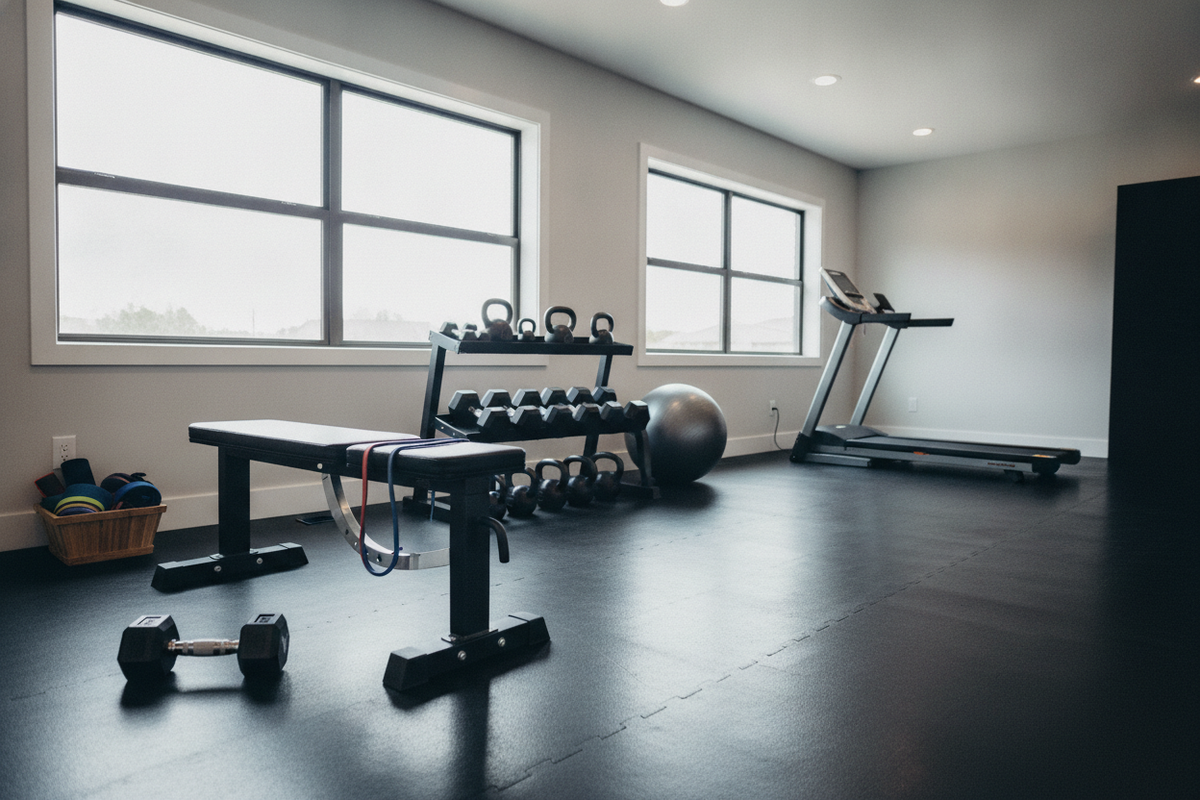
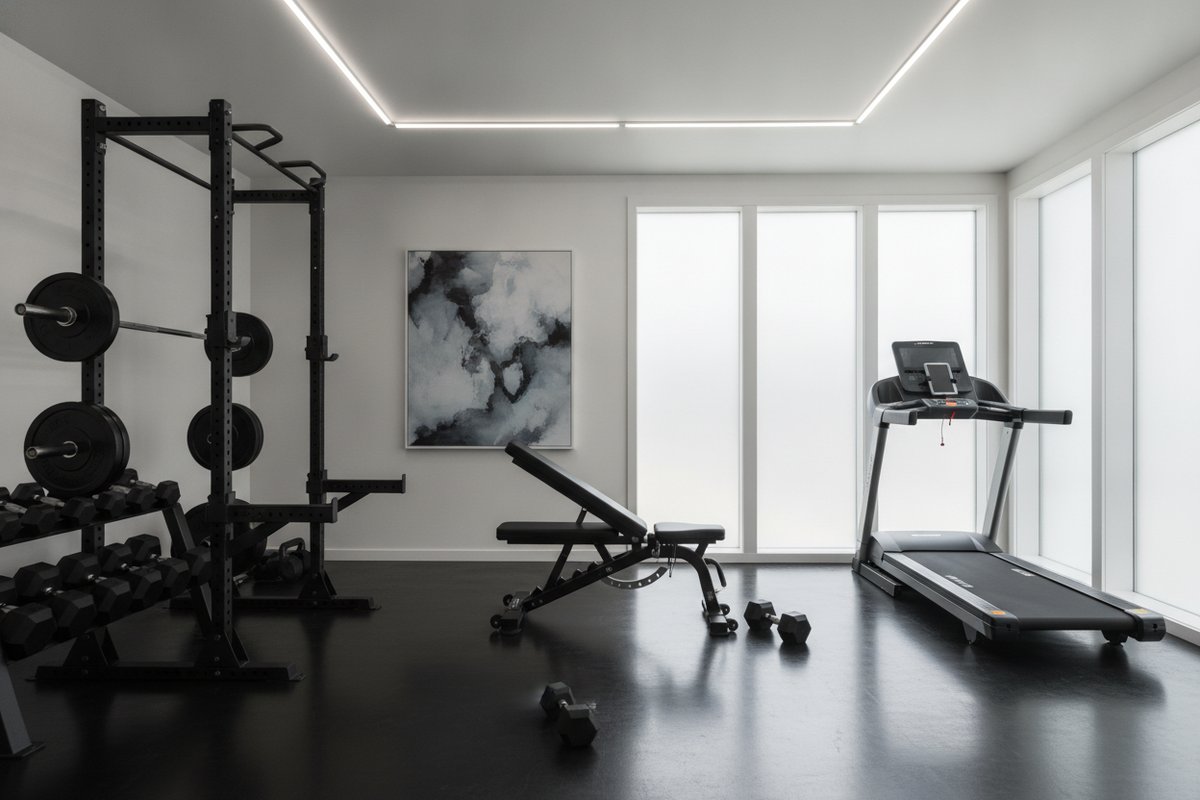
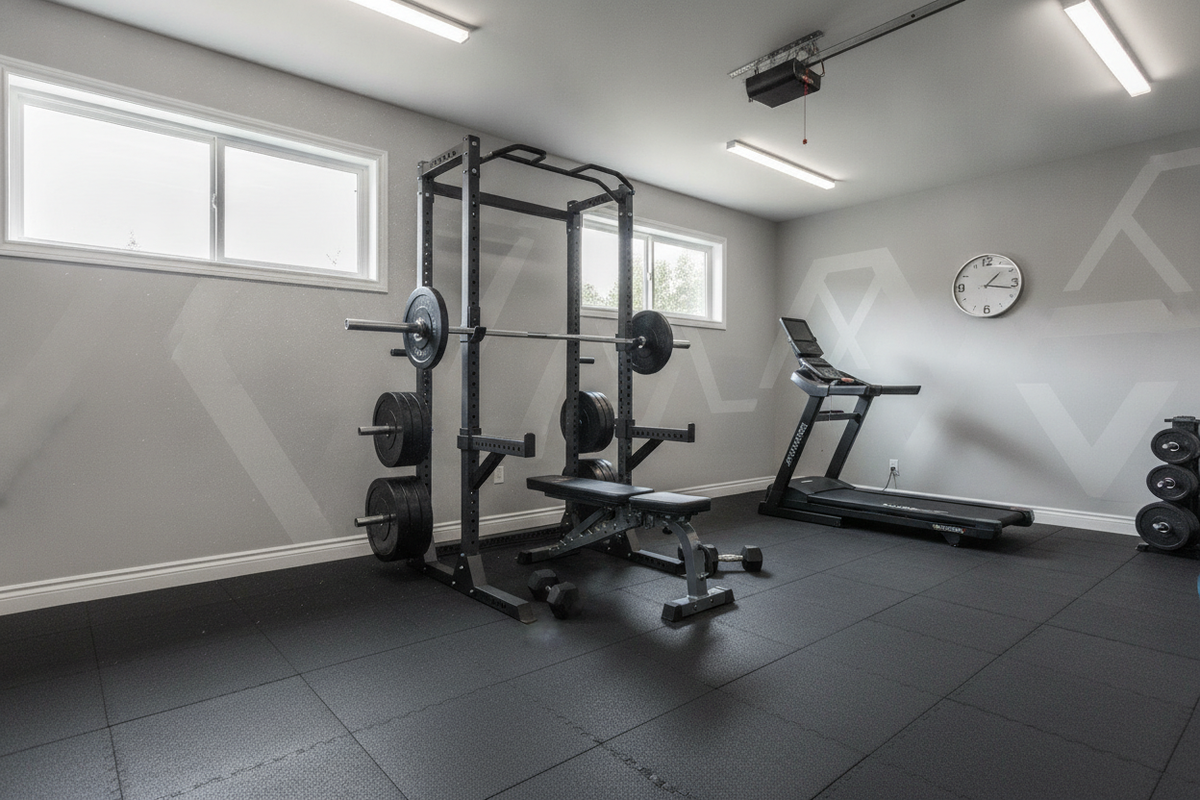
A dedicated home gym floor requires resilient gym flooring that can absorb the impact of dropped weights while offering consistent friction for lunges and split squats. Utilizing a high-density protective exercise mat collection creates a dedicated lifting zone that resists indentations from heavy dumbbells and barbells. For trainees performing dynamic walking lunges or expansive barbell lifts, investing in large exercise mat options provides the continuous boundary needed for uninterrupted footwork.
For instance, a heavy-duty surface like a 6x10ft exercise mat delivers ample space for everything from deep dumbbell squats to traveling lunges without shifting underneath your stance. High-grade gym flooring also isolates subfloor structures from vibration, ensuring your home training space remains secure and quiet during demanding sessions.
Designing a Balanced Quad-Focused Routine at Home
Structuring an effective leg day around quad compound exercises requires a smart blend of bilateral strength and unilateral stability. Rather than piling on endless sets of arbitrary exercises, focus on steady progressive overload across a few core movements.
- Primary Heavy Bilateral Lift: Begin your session with a demanding compound exercise for quads when energy levels are highest. A barbell front squat or high-bar barbell back squat serves as an ideal opener for building raw quad strength. Perform 3 to 4 working sets with controlled tempo.
- Unilateral Movement: Follow your primary lift with a unilateral compound exercise for quads, such as the bulgarian split squat or weighted walking lunges. This step targets stabilizers and corrects side-to-side discrepancies while accumulating quality training volume.
- Volume and Burnout Finisher: Complete the session with dumbbell squats or goblet squat variations utilizing heel elevation to keep constant mechanical tension on the quadriceps through a deep range of motion.
To sustain progress, apply progressive overload over weeks and months by gradually adding load, increasing repetitions, or slowing down the eccentric descent. When paired with dependable gym flooring and disciplined technique, sticking to a proven compound exercise for quads will yield steady improvements in muscular size, strength, and functional lower body performance.