Childrens Play Mat: The Secret to a Family-Friendly Gym
Trying to squeeze in a workout while keeping an eye on your kids is a classic home gym struggle. Between heavy dumbbells, sharp machine edges, and unforgiving rubber stall mats, basements and garage gyms aren't exactly toddler-friendly. However, dedicating a safe corner with a high-quality childrens play mat can completely change your training dynamic.
Instead of skipping your workout because you don't have childcare, you can create a secure, designated zone where your kids can play while you train. This guide will walk you through choosing the right materials, planning your space, and keeping everyone safe in a shared workout environment.
Key Takeaways
- Zoning is crucial: Keep the play area strictly separated from heavy lifting zones and equipment drop zones.
- Material matters: Look for non-toxic, high-density foam that provides impact absorption for kids but is durable enough for a gym environment.
- Size for success: A dedicated 6x6 play mat provides ample room for toddlers without eating up your entire floor plan.
- Visual boundaries: A brightly colored play mat cushion helps children understand exactly where their safe zone begins and ends.
Choosing the Right Cushion Play Mat
Not all mats are created equal, especially when they are sharing a room with power racks and kettlebells. You need a surface that protects your kids from the hard concrete subfloor but doesn't easily puncture if a stray weight rolls over.
Foam Density and Thickness
Standard gym flooring is usually made of dense recycled rubber, which is great for barbells but terrible for crawling knees. A dedicated cushion play mat made from high-density EVA foam or TPU (Thermoplastic Polyurethane) bridges the gap. Aim for at least 0.5 to 0.8 inches of thickness to ensure proper shock absorption for tumbles and falls.
Toxicity and Easy Cleaning
Garages and basements get dusty, and home gyms get sweaty. Ensure the play floor you choose is waterproof and easy to wipe down. More importantly, check that the materials are free from BPA, phthalates, and heavy metals. When your kid is doing tummy time next to your treadmill, air quality and surface safety are paramount.
Mapping Out Your Play Floor
Integrating a kids' zone into a home gym requires strategic space planning. You cannot simply throw a mat down next to your squat rack and call it a day.
The 6x6 Rule for Gym Zoning
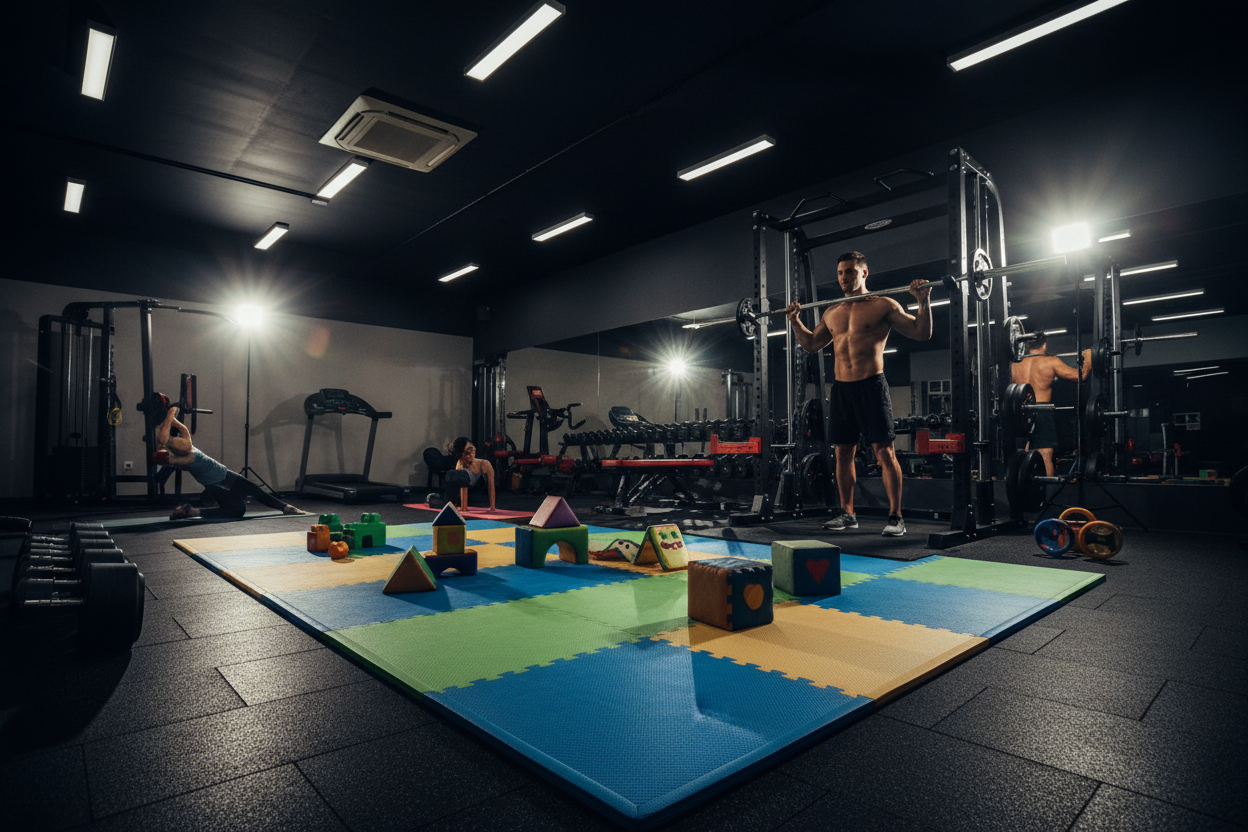
For most North American garage and basement gyms, a 6x6 play mat is the sweet spot. It offers 36 square feet of dedicated play space—plenty of room for blocks, books, and crawling—while leaving enough square footage for a rack, bench, and functional trainer. Place this mat in a corner furthest from your lifting platform, ideally in your direct line of sight.
Establishing the Safe Zone
Use the visual contrast of the bright cushioned play mat against your black gym flooring to enforce a strict boundary. Teach your kids that the colored mat is their island, and the black rubber is off-limits while mom or dad is lifting.
From Our Gym: Honest Take
When I first started building out my two-car garage gym, I thought my toddler could just hang out on a spare yoga mat. I was dead wrong. It kept sliding around, and the hard concrete underneath offered zero protection. I eventually invested in a premium interlocking play mat cushion setup, placing it in the far front corner of the garage.
The difference was night and day. Having a thick, dedicated space meant my son could comfortably play with his trucks while I knocked out sets of dumbbell rows. The only minor caveat? The transition edge between the 3/4-inch rubber gym mats and the 1/2-inch kids mat created a slight tripping hazard at first. I highly recommend buying edge pieces or taping the seam with heavy-duty vinyl tape to keep the transition smooth.
Frequently Asked Questions
Can I just use my standard rubber gym flooring for my kids?
While durable, recycled rubber gym mats are highly abrasive on bare skin and often emit a strong rubber odor (off-gassing). A dedicated childrens play mat is softer, non-toxic, and much gentler on knees and elbows.
How do I keep a play mat clean in a garage gym environment?
Sweep the mat daily to remove gym dust and chalk. Once a week, wipe down the cushioned play mat with a mild soap and water solution. Avoid harsh chemical gym cleaners, as they can degrade the foam and irritate your child's skin.
Is it safe to have children in a home gym?
Yes, but strict rules are required. Always place the play floor out of the path of rolling barbells or falling weights. Unplug cardio equipment when not in use, and never perform heavy, unspotted overhead lifts while your child is roaming outside their designated mat area.