Cardio vs Weight Training for Belly Fat at Home
When planning a home fitness routine, deciding between cardio vs weight training for belly fat is one of the most common dilemmas. Many people wonder whether logging miles on a treadmill or picking up free weights produces faster trimming around the waistline. The conversation around cardio vs weight training for belly fat often gets confused by extreme claims, but understanding how physical exertion influences total-body leanness makes your choices much simpler.
Cardio vs Weight Training for Belly Fat: Key Differences
Neither exercise style can selectively target midsection tissue because spot reduction is an anatomical myth. Fat stores across the torso, including deeper visceral fat and superficial layers, decrease only when the body sustains a consistent negative energy balance over time. When evaluating cardio vs weight training for belly fat, the main difference lies in how each discipline changes daily energy expenditure and overall body composition.
Aerobic conditioning elevates your heart rate and drives substantial acute calorie burn during the session itself. In contrast, lifting weights stimulates structural changes in skeletal muscle. Choosing cardio or weights to lose belly fat comes down to balancing session-by-session output with lasting muscular adaptation.
How Cardio Affects Overall Energy Expenditure
Traditional aerobic exercise serves as an efficient vehicle for immediate energy expenditure. Whether you prefer steady-state cycling, rowing, or running, these rhythmic efforts consume fuel rapidly while active. For individuals choosing cardio or weight training to lose belly fat, cardiovascular sessions offer an approachable method to widen an energy deficit without complex programming.
Sprint routines and high intensity intervals can amplify this effect by compressing vigorous work into shorter windows. However, relying purely on endurance work carries trade-offs. Excessive endurance volume without structural support can lead to elevated joint impact on hips and knees, especially on hard residential surfaces. Furthermore, relying entirely on running or cycling without muscle stimulation may cause the body to shed lean muscle mass alongside adipose tissue.
Why Resistance Training Shapes Long-Term Muscle Tone
Dedicated strength training reshapes how your body handles energy throughout the entire day. While a standard lifting session may produce a slightly lower immediate calorie burn than uninterrupted running, lifting creates structural adaptations that defend muscle tissue during periods of caloric restriction. Preserving lean muscle mass keeps your baseline metabolic rate robust, meaning your body burns more energy even when resting.
Multi-joint movements like compound lifts engage several large muscle groups simultaneously, generating substantial metabolic demand. Incorporating structured dumbbell exercises such as goblet squats, lunges, and overhead presses allows home lifters to stimulate dense muscle fibers in compact spaces. If you want to explore how far pure iron workouts can take your physique, consult our lose weight lifting guide for dedicated programming insights.
Cardio or Weight Training to Lose Belly Fat: Which to Prioritize?
When deciding whether to emphasize cardio or weight lifting to lose belly fat, your current fitness level, personal preferences, and schedule should guide your choice. If you enjoy repetitive, rhythmic movement and need to build baseline cardiovascular stamina, aerobic sessions provide immediate satisfaction. Conversely, if your goal is achieving a firm, athletic physique while trimming waistline measurements, resistance training deserves top billing in your calendar.
The debate over cardio or weights to lose stomach fat often creates a false choice. Research and practical coaching both indicate that someone weighing weights or cardio to lose belly fat achieves far superior outcomes by treating them as partners rather than rivals. When you combine them, aerobic work accelerates weekly calorie burn, while progressive resistance ensures that the weight dropped comes from fat stores rather than metabolically active tissue.
Is Cardio or Weight Training Better for Losing Belly Fat?
Neither exercise style is universally better on its own, because combining resistance training with aerobic exercise produces superior improvements in body composition compared to either method alone. Lifting protects your structural frame and maintains active tissue, while cardiovascular intervals improve heart health and elevate short-term caloric deficits. Addressing belly fat cardio or weights questions requires looking at the big picture: sustainable habits always outperform rigid single-modality routines.
If time is strictly limited to two or three sessions per week, prioritizing resistance training with demanding compound lifts often yields the greatest physical return. You can easily sprinkle brief bursts of brisk walking or agility drills onto the end of your lifting routines to maintain cardiovascular conditioning without dedicating entire days to endurance work.
Combining Cardio and Weights in a Balanced Home Plan
Building a hybrid routine eliminates the dilemma of cardio or weights for belly fat. A balanced four-day schedule might feature two upper-and-lower resistance sessions paired with two moderate-intensity endurance sessions. Alternatively, you can merge both approaches into metabolic resistance circuits that blend dumbbell exercises with brisk jump rope or bodyweight conditioning.
To explore circuit formats that merge steady resistance with cardiovascular pace, check out our comprehensive fat lifting weights guide. This combined methodology prevents workout boredom, promotes healthy management of visceral fat, and supports steady improvements in functional movement.
How Should I Combine Cardio and Weights at Home for Fat Loss?
The most practical way to combine both disciplines at home is by completing your strength work first before finishing with moderate cardio drills. Lifting while your central nervous system is fresh ensures strict lifting technique, preventing form breakdowns that can cause injury when handling heavy loads. Once your primary lifts are done, a ten-to-fifteen-minute aerobic finisher safely drains remaining glycogen stores.
For those balancing busy workdays, alternating days works equally well. Dedicating Monday and Thursday to strength training and Tuesday and Friday to aerobic conditioning allows balanced muscular recovery while maintaining steady daily activity.
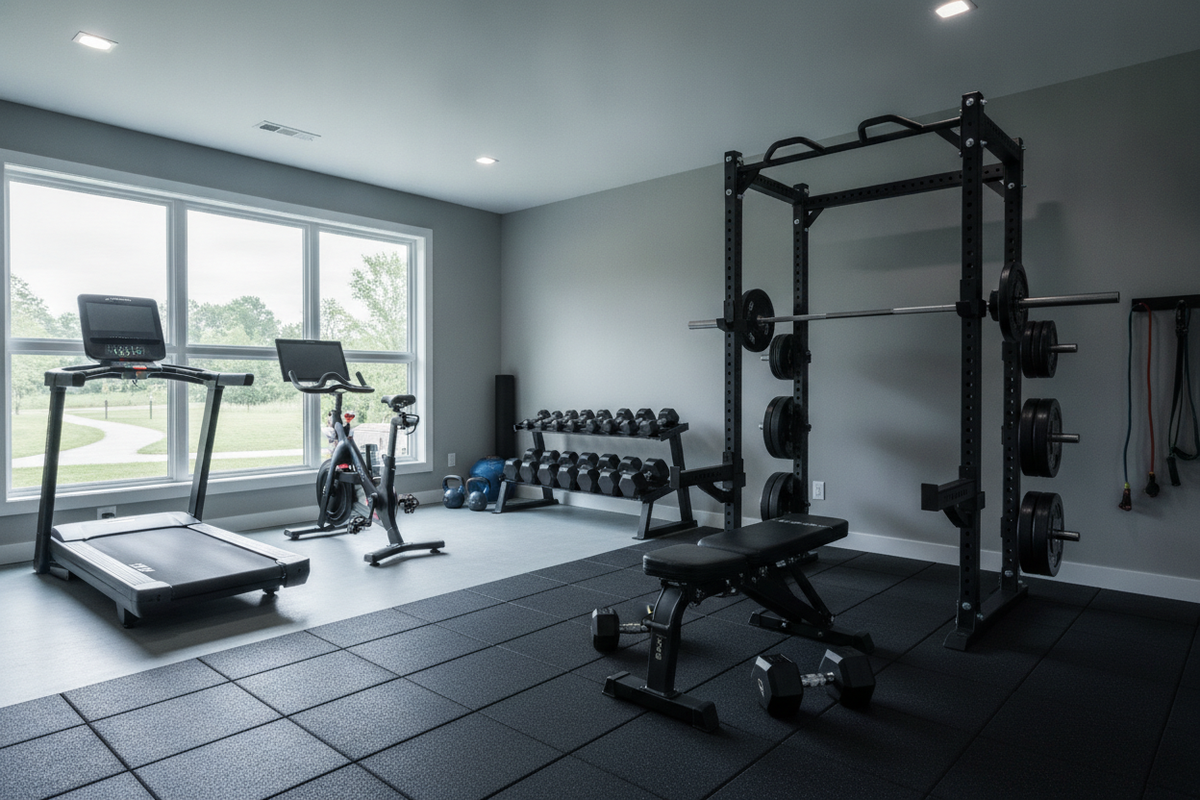
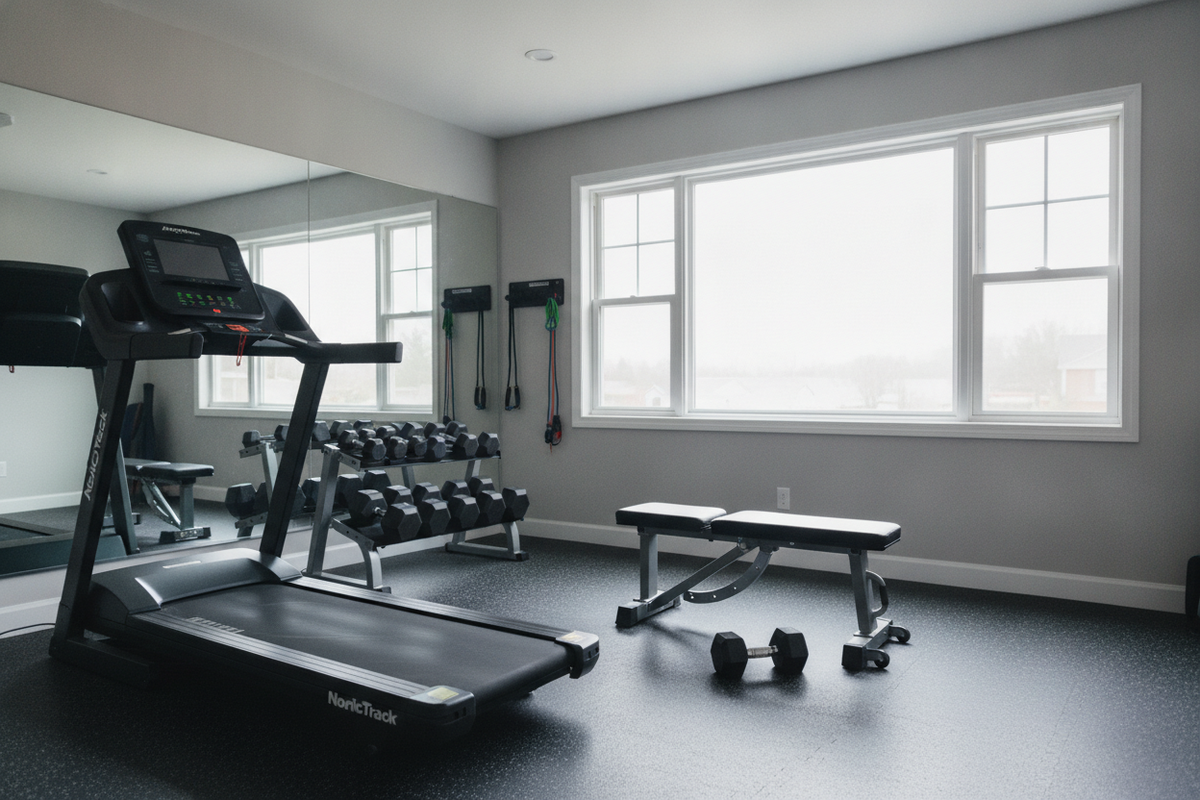
Home Gym Setup: Protecting Floors for Dynamic and Heavy Lifts
Executing both training styles under one roof requires deliberate attention to equipment placement and surface safety. High-impact intervals like jump-roping, burpees, and box steps demand shock absorption to minimize joint impact on concrete or tile subfloors. Simultaneously, heavy free weights risk cracking fragile tiles or indenting hardwood if dropped or rested forcefully.
Installing dense home gym flooring provides essential subfloor protection across your active zone. A quality exercise mat or wide rubber tile surface creates steady traction for rapid lateral footwork while dampening vibrations from loaded barbells. When organizing your workout room, maintain clear travel paths between your rack, bench, and open floor space to allow smooth transitions between lifting sets and cardio intervals. If you need reliable gear to outfit your training space safely, browse our curated strength training accessories collection to find durable, floor-friendly solutions.
Frequently Asked Questions
Can you lose belly fat by only lifting weights?
Yes, you can reduce midsection fat solely through resistance training provided your overall nutrition creates a caloric deficit. Lifting preserves muscle tissue, which sustains resting metabolic rate, while the energy required for muscle repair supports daily energy expenditure.
Does cardio burn belly fat faster than strength training?
Cardio often yields a higher acute calorie burn during an individual session, which may accelerate short-term weight loss on the bathroom scale. However, without resistance training to preserve lean muscle mass, a portion of that lost weight may come from muscle tissue rather than pure adipose tissue.
How do I protect my floor when doing cardio and lifting weights at home?
Use high-density home gym flooring or a large, multi-layered exercise mat to provide subfloor protection. High-grade rubber surfaces absorb downward force, reduce noise transmission, cushion joints during jumping drills, and guard residential foundations against dropped weights.