
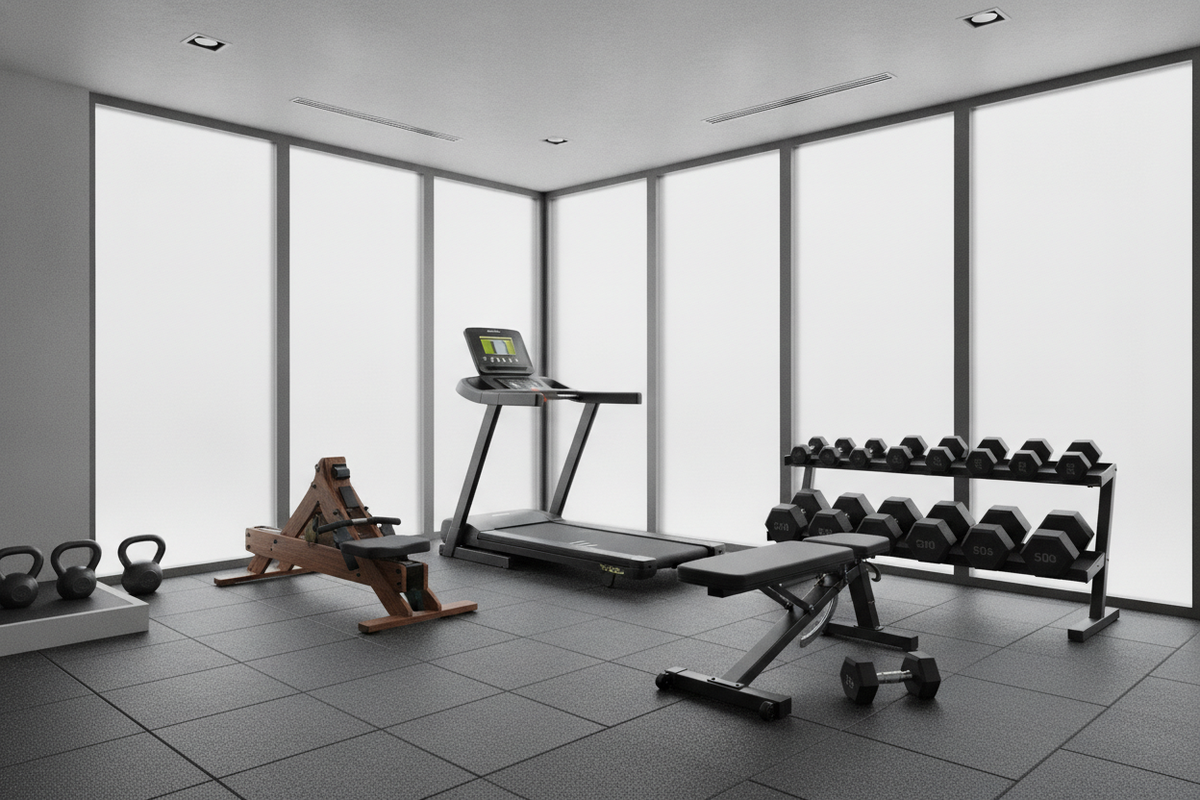
Cardio Best for Weight Loss: Modality Comparison, Weekly Structuring, and Home Gym Floor Staging
Choosing which cardio approach fits your lifestyle can determine your consistency and training longevity. Many people wonder about the cardio best for weight loss when designing a routine, balancing time constraints against physical recovery. Achieving lasting results requires an understanding of training intensity, weekly programming, and the physical environment where training takes place.
Understanding What Makes Cardio Effective for Weight Loss
The effectiveness of any cardiovascular program depends on aggregate energy demand, mechanical sustainability, and consistent weekly execution. Rather than viewing exercise solely as an immediate calorie-burning event, it helps to understand how cardiovascular sessions support overall conditioning and training capacity.
The Balance Between Intensity, Duration, and Frequency
Workouts sit on a spectrum between short, high-effort bouts and extended, lower-effort sessions. High-output sessions place substantial demands on muscular recovery and the central nervous system, meaning they can only be sustained for shorter periods and performed fewer times per week. Conversely, lower-intensity sessions can be repeated more frequently with minimal recovery debt. Identifying effective cardio for fat loss involves balancing these variables so workouts challenge the body without causing chronic fatigue or session dropouts.
Sustainability and Joint Longevity in Long-Term Fat Loss
Long-term adherence is the foundation of weight management. When repetitive impact causes joint discomfort or connective tissue strain, consistency falters. Structuring your training to manage impact—by varying movement directions, alternating impact levels, and training on resilient surfaces—protects the knees, ankles, and lower back over months of continuous training.
Comparing Primary Modalities: Which Cardio Is Best for Weight Loss?
Different cardiovascular training styles offer distinct physiological benefits. Evaluating these formats helps clarify which modality aligns best with your schedule, fitness level, and recovery capacity.
High-Intensity Interval Training and Metabolic Circuits
High-Intensity Interval Training (HIIT) alternates short intervals of near-maximal effort with structured recovery windows. These formats provide substantial training stimulus within condensed timeframes, making them popular for busy schedules. When structuring intervals, following a proven weight loss cardio guide helps maintain proper work-to-rest ratios and prevents premature form breakdown.
Low-Intensity Steady-State and Aerobic Base Building
Low-Intensity Steady-State (LISS) training consists of sustained, rhythmic movement performed at a conversational pace, such as brisk walking, incline treadmill work, or light cycling. Because LISS creates negligible joint and systemic fatigue, it serves as an excellent foundation for building an aerobic base and can be executed almost daily without compromising recovery from strength training sessions.
Hybrid Bodyweight and Calisthenic Cardio
Hybrid training merges dynamic calisthenic patterns with continuous aerobic pacing. Movements like squat thrusts, mountain climbers, and bodyweight complexes engage broad muscle groups while challenging cardiovascular endurance. Reviewing an exercise lose weight guide illustrates how full-body engagement can elevate metabolic output compared to isolated leg-only cardio machines.
Effective Cardio Exercises to Burn Fat at Home
Home workouts offer convenience and eliminate travel barriers. Categorizing movements by impact level ensures you can assemble balanced workouts tailored to your space and joint tolerances.
Dynamic High-Impact Floor Drills
High-impact drills utilize explosive ground contact to elevate heart rates rapidly. These cardio exercises to burn fat require spatial control and good landing mechanics:
- High Knees: Rapid alternating knee drives that emphasize upright posture and active core engagement.
- Squat Jumps: Explosive vertical leaps focusing on soft, controlled landings through the midfoot and heel.
- Lateral Skater Hops: Side-to-side bounds that train frontal-plane stability and lateral hip strength.
- Burpees: Full-body floor-to-standing transitions that challenge upper-body pushing and leg drive simultaneously.
Low-Impact Cardio Exercises to Lose Fat
Low-impact movements keep at least one foot on the ground or eliminate hard landings entirely, providing a joint-friendly cardio exercise to lose fat:
- Shadowboxing Combinations: Fluid sequences of punches, slips, and pivots that demand continuous shoulder and torso engagement.
- Step Jacks: A non-jumping variation of traditional jumping jacks that minimizes ground impact while maintaining rapid arm and leg movement.
- Bear Crawl Holds and Transitions: Quadrupedal holds and slow directional steps that generate substantial core and shoulder fatigue.
- Tempo Bodyweight Squats: Continuous-motion squats performed without pausing at the top or bottom to maintain constant muscle tension.
Structuring Your Weekly Effective Cardio for Weight Loss Routine
A balanced weekly routine prevents overuse injuries and maximizes energy output. Structuring effective cardio for weight loss means distributing high-intensity efforts around steady-state conditioning days.
The 3-Day Foundational Cardio Schedule
This layout suits beginners or individuals combining cardio with existing resistance training routines:
- Day 1 (High Intensity): 20 to 25 minutes of bodyweight interval circuits with 1:2 work-to-rest intervals.
- Day 2 (Active Recovery / Low-Impact Steady-State): 35 to 45 minutes of steady walking, light cycling, or mobility flows.
- Day 3 (Hybrid Conditioning): 30 minutes of alternating moderate calisthenic intervals and core floor work.
The 4-to-5-Day Progressive Conditioning Split
For trainees with established conditioning bases, a 4-to-5-day split provides an effective cardio to lose weight framework while avoiding cumulative fatigue:
- Monday: Interval sprint or bodyweight HIIT session (20–30 minutes).
- Tuesday: Steady-state aerobic session (45 minutes at a conversational pace).
- Wednesday: Rest or gentle mobility work.
- Thursday: Multi-planar hybrid circuit (30–35 minutes of dynamic agility drills).
- Friday: Low-impact steady-state session or shadowboxing drill (40 minutes).
- Weekend: Active lifestyle movement, outdoor walking, or scheduled rest.
Home Gym Floor Staging and Room Protection for Cardio Workouts
Home cardiovascular training generates repetitive floor strikes, sweat accumulation, and lateral shearing forces. Staging a dedicated training surface preserves underlying floors and creates a secure training foundation.
Subfloor Protection and Impact Absorption
Hardwood, laminate, and tile flooring can suffer damage from repeated shoe impacts and dropped accessories. Placing a large exercise mat across the workout area disperses landing forces, muffles noise transmission throughout the home, and provides a cushioned barrier that shields both subfloors and joints.
Traction, Shoe Grip, and Lateral Stability
Dynamic cardio routines rely on multi-directional movement. Performing lateral bounds or quick pivot steps on bare floors or unstable rugs introduces slipping hazards. A dedicated exercise mat with a textured, non-slip base ensures firm shoe grip and prevents the mat from bunching or shifting during rapid directional changes.
Mat Sizing, Layout Spacing, and Equipment Placement
Adequate spatial clearance is essential for unrestricted movement during dynamic conditioning. Setting up an expansive surface such as a large exercise mat for cardio 6x12 provides ample perimeter space for wide-stance calisthenics, jump rope rotations, and ground transitions. Keep adjacent gym equipment arranged outside this perimeter to ensure a safe, trip-free training zone, and wipe down the mat surface after workouts to maintain hygienic conditions.


