Can You Build an Olympic Lifting Home Gym Without Wrecking the House?
I remember the first time I dropped a 100kg clean and jerk in my garage. My wife came running out of the house thinking a transformer had exploded or a car had hit the siding. That is the jarring reality of building an olympic lifting home gym; it is not just about buying a shiny bar and some rubber plates. It is about the literal foundation of your home.
Most people underestimate the sheer violence of a missed snatch. You are not just 'setting weight down' like a kettlebell. You are releasing a high-velocity projectile onto a concrete slab that was designed to hold a parked car, not absorb 5,000 pounds of peak force on a four-inch contact point.
- Concrete is strong in compression but brittle under impact; it will crack without a platform.
- Bumper plates are shock-absorbers, not magic shields for your floor.
- Ceiling height is the most common dealbreaker for garage snatching.
- Crash pads are the best $150 you will ever spend to keep the neighbors happy.
The Brutal Reality of Dropping 200 Pounds in Your Garage
Physics is a jerk. When you drop a loaded barbell from overhead, that energy has to go somewhere. In a commercial CrossFit box, they usually have thick recycled rubber floors over high-psi industrial concrete. In your garage? You probably have a four-inch slab of residential concrete that might already have some settling cracks.
When that bar hits, the vibration travels through the slab and into the footings of your house. I have seen guys shake pictures off the walls in their living room because they thought a single layer of horse stall mats was enough. If you are serious about the classic lifts, you have to treat your floor like a piece of high-end equipment.
What Happens to Concrete When You Skimp on Flooring
The nightmare scenario is 'spalling' or 'spider-webbing.' This is when the concrete underneath your mats starts to pulverize into dust. You won't see it happening until you move your mats a year later and realize you have a literal hole in your garage floor. This is a multi-thousand-dollar repair that no landlord or spouse will ever forgive.
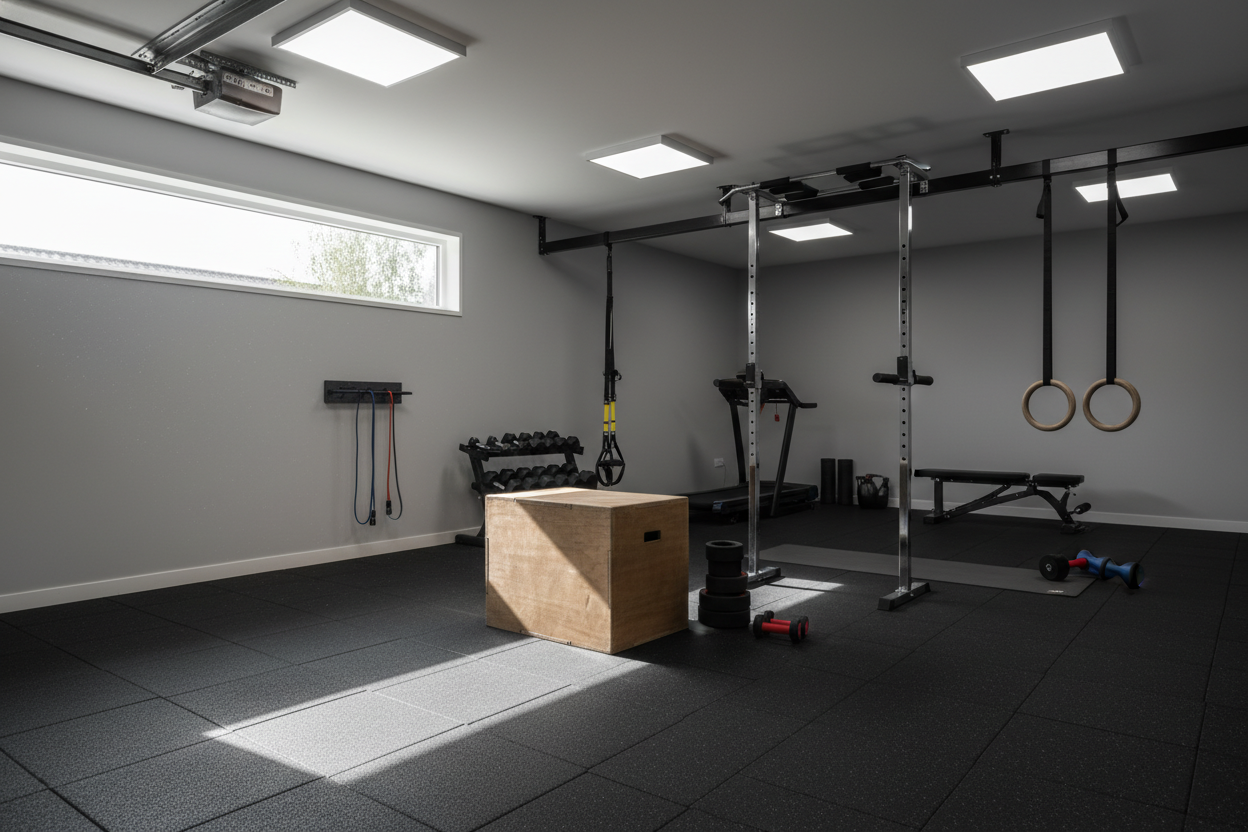
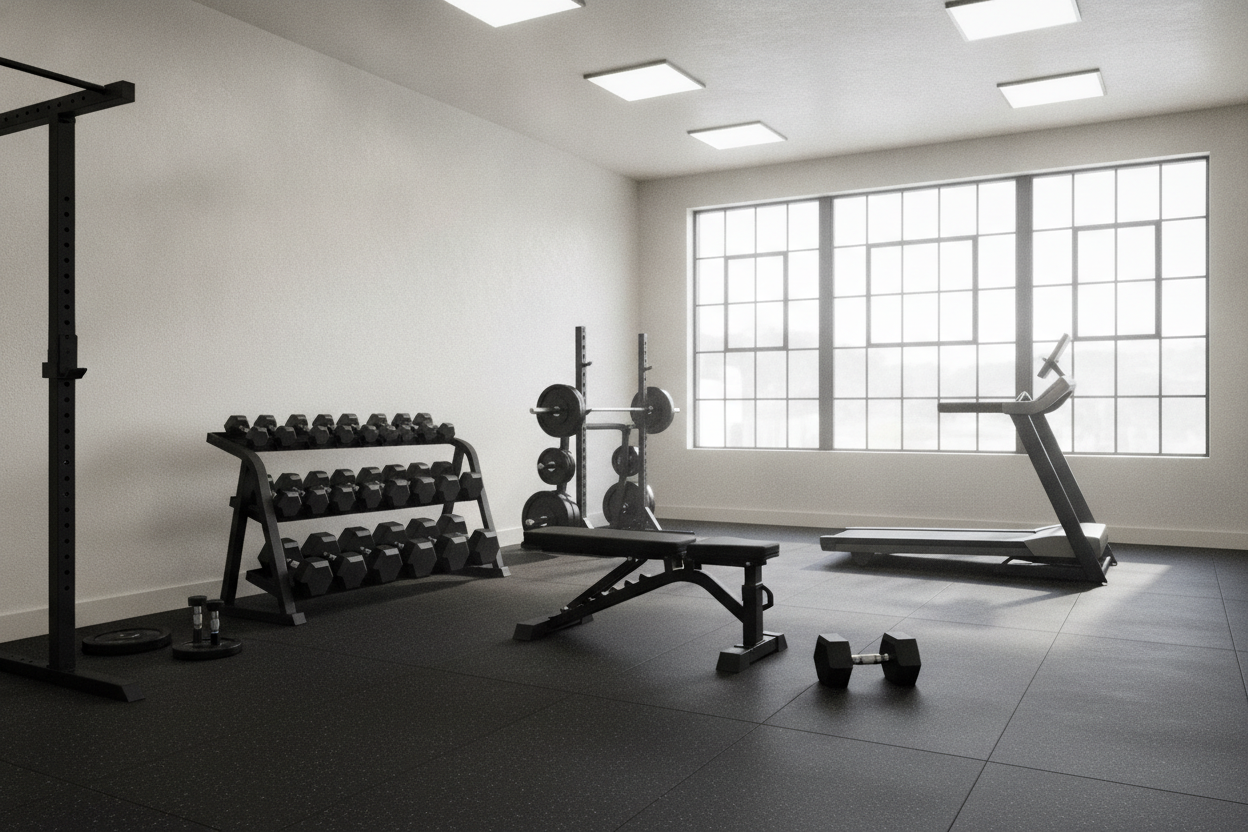
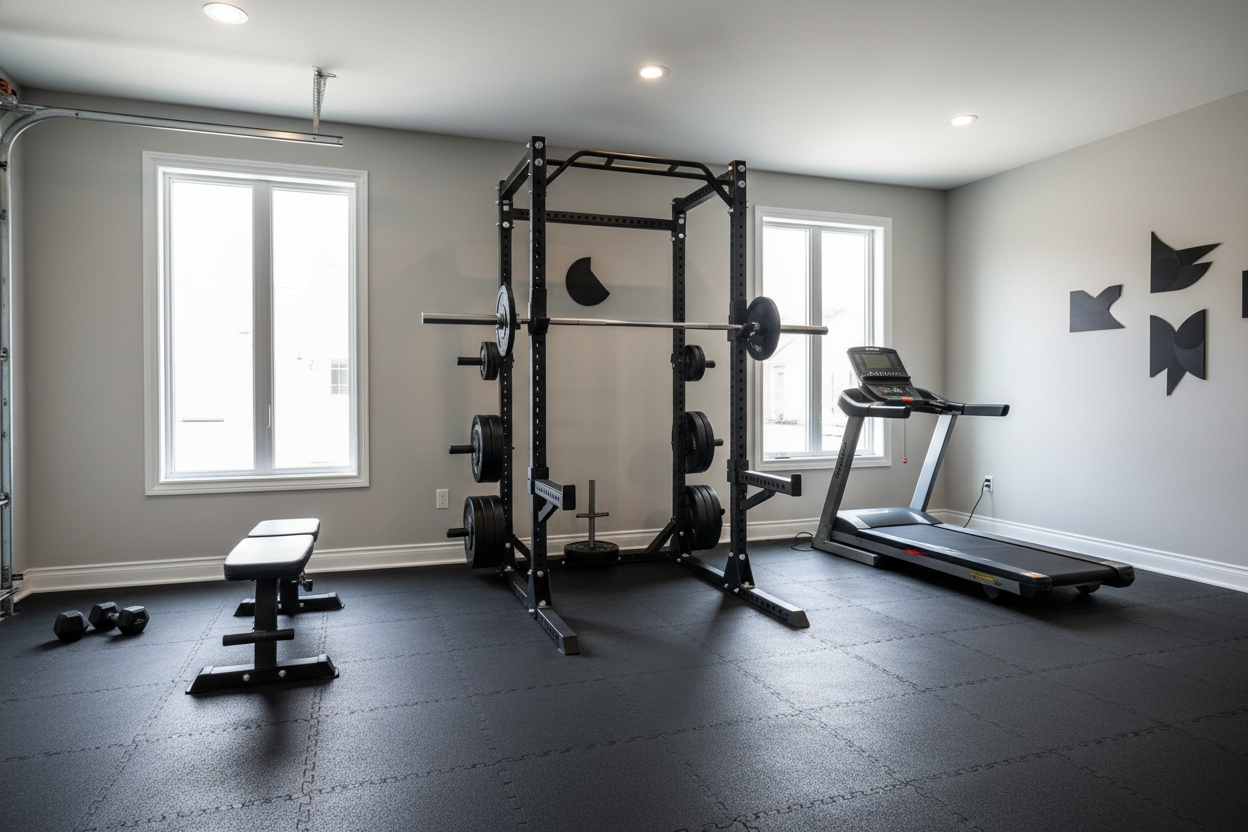
Before you even think about bolting down a rack or building a wooden platform, you need a foundational layer. Using a large exercise mat for home gym setups can provide that initial thermal and vibration break between the raw concrete and your actual lifting surface. It is the absolute baseline for protecting your property value.
The Non-Negotiable Gear for Ground Protection
To do this right, you need a layering system. The gold standard is a DIY lifting platform: two layers of 3/4-inch plywood topped with a layer of oak or maple in the center and high-density rubber on the 'drop zones.' This 2.25-inch stack diffuses the point-load of the barbell across an 8-foot by 8-foot area.
If you are in a second-story apartment or a basement with low tolerance for noise, you also need silencer pads (crash pads). These are thick foam rectangles that you drop the bar onto. They kill the noise and the vibration almost entirely, though they do make it harder to chase a bar that is bouncing around.
Why Bumper Plates Are Only Half the Battle
I hear it all the time: 'I have bumpers, so my floor is safe.' Wrong. Bumper plates are designed to protect the barbell and the plates themselves from breaking. While they do dampen the blow, they still transfer a massive amount of kinetic energy straight through to the floor. If you want the full breakdown on gear, check out my blueprint for an olympic lifting home gym.
Layering Up: Mats, Wood, and Crash Pads
The best setup I have ever used involved a sandwich method. I put down a high-density 6x8ft exercise mat gym flooring for home workout as the base to grip the concrete. On top of that, I built the plywood platform. The rubber mat prevents the wood from sliding and adds one more layer of acoustic dampening.
Don't buy the cheap, squishy foam tiles from the big-box stores. They will compress under a heavy load, leaving you unstable and potentially causing a wrist injury during a heavy catch. You want 'dead' rubber—the kind that smells like a tire shop and weighs 80 pounds per mat.
Ceiling Height: The Silent Killer of Overhead Lifts
Measure your ceiling. Then measure it again. Then have a friend hold a PVC pipe at your full lockout height while you stand on a two-inch platform. If you have 8-foot ceilings, you are likely going to punch a hole in the drywall during a split jerk. Most garage lifters need at least 9 feet of clearance to feel safe. Don't forget the garage door opener—I have seen more than one athlete snap a light bulb with a barbell sleeve because they forgot to account for the tracks.
How to Train Heavy When You Can't Afford a Real Platform
If you are renting or on a tight budget, stop dropping the bar. It sounds simple, but it changes your training. Focus on 'hang' variations—hang cleans and hang snatches—where you catch the bar and then lower it under control to your thighs. This builds incredible eccentric strength and saves your floor.
You can also invest in a solid lifting weights sets guide to find iron plates for your accessory work, but keep the rubber bumpers for your main lifts. If you can't build a platform, use blocks or pulling stands to limit the distance the bar falls. It is not ideal for a competitive lifter, but it is better than losing your security deposit.
Personal Experience: My $1,200 Mistake
When I started, I thought two layers of 1/2-inch rubber was enough for my 120kg cleans. After six months, I noticed the bar was 'thudding' differently. I pulled up the mats and found the concrete had turned to grey sand. I had to patch the floor with high-strength epoxy and build a real platform anyway. Save yourself the double-work and build the platform first.
Frequently Asked Questions
Can I use horse stall mats instead of a platform?
For deadlifts, yes. For Olympic lifting, no. The wood center of a platform provides a stable, non-slip surface that won't compress when you are trying to explode off the floor. Stall mats are too 'squishy' for heavy jerks.
How loud is a garage gym for neighbors?
It is loud. Without crash pads, a dropped snatch can be heard three houses away. If you train early in the morning or late at night, crash pads are mandatory to avoid a visit from the police.
Do I need to bolt my rack to the platform?
If you are doing heavy squats or pull-ups, yes. For pure Olympic lifting, many lifters use independent squat stands that can be moved out of the way so the platform stays clear for the classic lifts.