Can a Basic Garage Gym Really Build a Lean and Strong Body?
I remember standing in a three-person line for a greasy squat rack at my local commercial gym, listening to someone else's EDM playlist through the house speakers, and thinking there had to be a better way. I went home, shoved the lawnmower into the shed, and started scouring Craigslist for iron. I didn't want to be a mass monster; I just wanted to build a lean and strong body without the monthly fee and the crowds. The truth is, your garage—even if it's a cramped single-car space with a cracked floor—is the ultimate laboratory for body recomposition.
Quick Takeaways
- Stop the aggressive bulk-and-cut cycles; they mostly just add body fat and stress.
- Heavy compound lifts at maintenance calories are the fastest way to a dense, muscular look.
- You only need a few high-quality pieces of equipment to see 90% of your results.
- Leg day is non-negotiable for metabolic health and hormonal response.
- Prioritize protein and sleep over adding more 'junk volume' to your workouts.
Why the Bulk-and-Cut Cycle is Ruining Your Progress
The fitness industry loves a good 'transformation.' We've been sold this idea that you have to spend six months eating like a horse to gain muscle, followed by three months of starving yourself to see it. For the average person training in a garage, this is a recipe for disaster. When you 'bulk' aggressively, you usually end up gaining two pounds of fat for every pound of muscle. By the time you start your cut, you're so miserable and depleted that you end up burning off that hard-earned muscle just to get your abs back. It's a wheel-spinning exercise that leaves you looking exactly the same year after year.
I've seen guys gain 30 pounds in a winter, only to realize their 'mass' was mostly water retention and a soft midsection. You don't need a surplus of 1,000 calories to build muscle. Muscle protein synthesis is a slow, expensive process for the body, but it doesn't require a buffet. If you want a physique that looks good at the beach and performs in the gym, you have to stop treating your body like a trash can for six months of the year.
The Maintenance Phase Secret for a Lean Strong Body
Body recomposition is the 'holy grail' of training, and it's surprisingly simple if you have the discipline. By eating at your maintenance calories—the amount where your weight stays stable—and pushing your lifts aggressively, you force your body to change its composition. You’re essentially telling your body to use stored fat as energy to fuel the repair of muscle tissue. This is how you develop a lean strong body that stays sharp year-round rather than just for two weeks in July.
This approach requires patience. You won't see the scale move much, which freaks people out. But if your waist is shrinking while your bench press is climbing, you are winning. You’re trading soft tissue for dense, functional muscle. I recommend staying within 100-200 calories of maintenance and focusing entirely on the logbook. If you’re adding five pounds to the bar every few weeks, the muscle is coming.
Your Garage Gym Doesn't Need 50 Machines
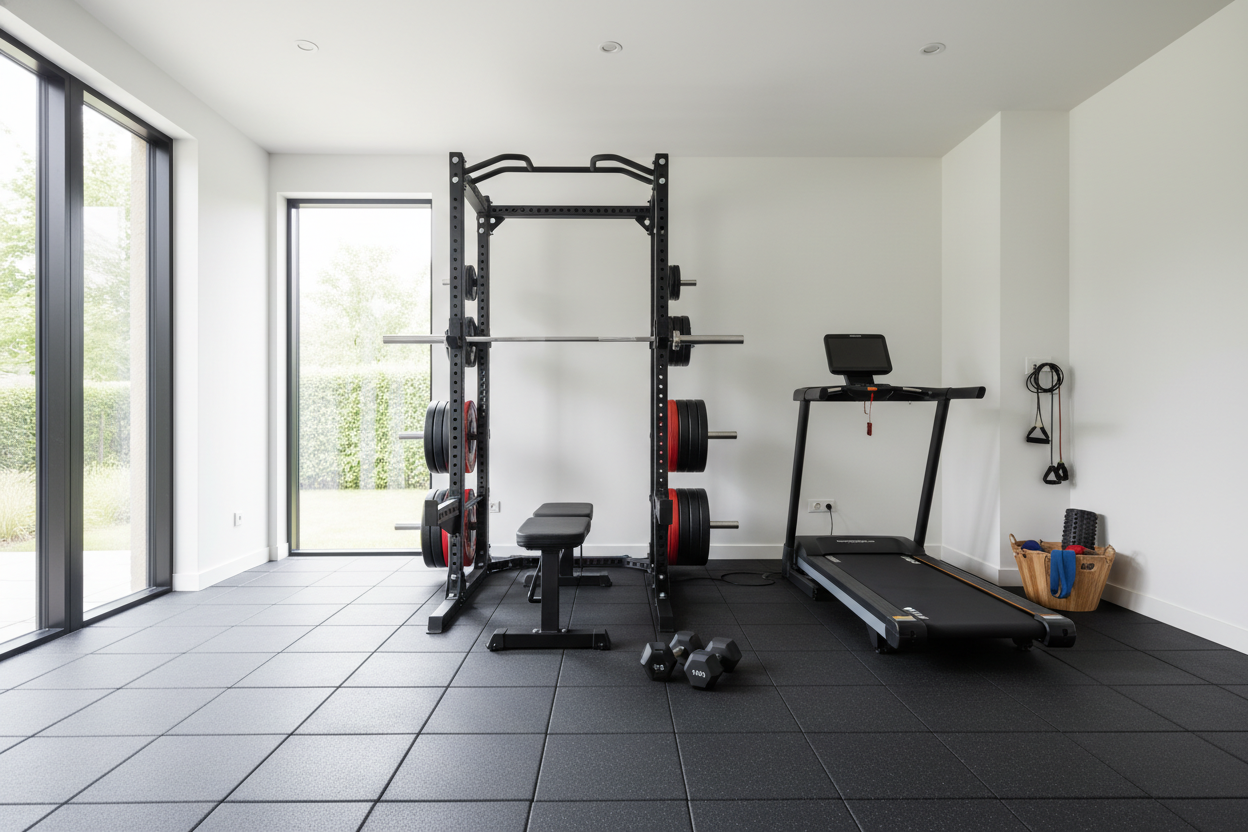
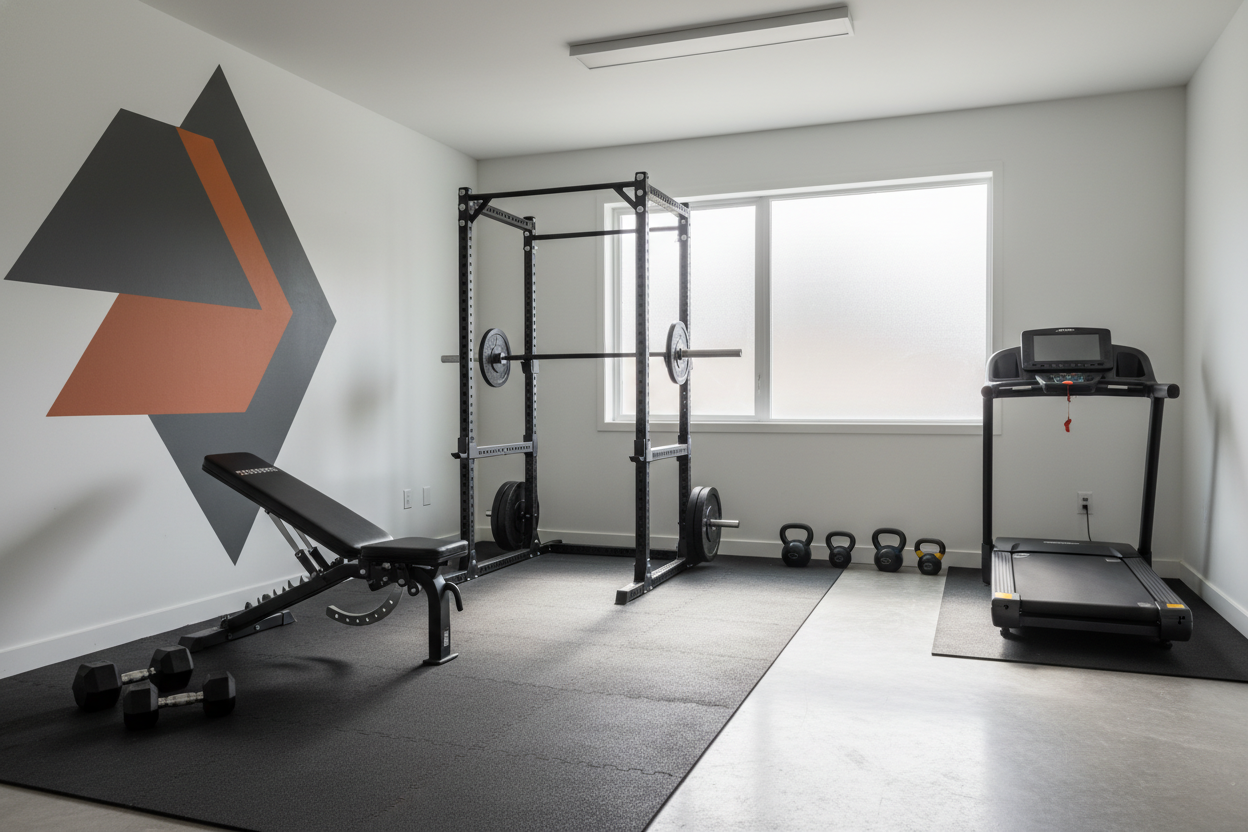
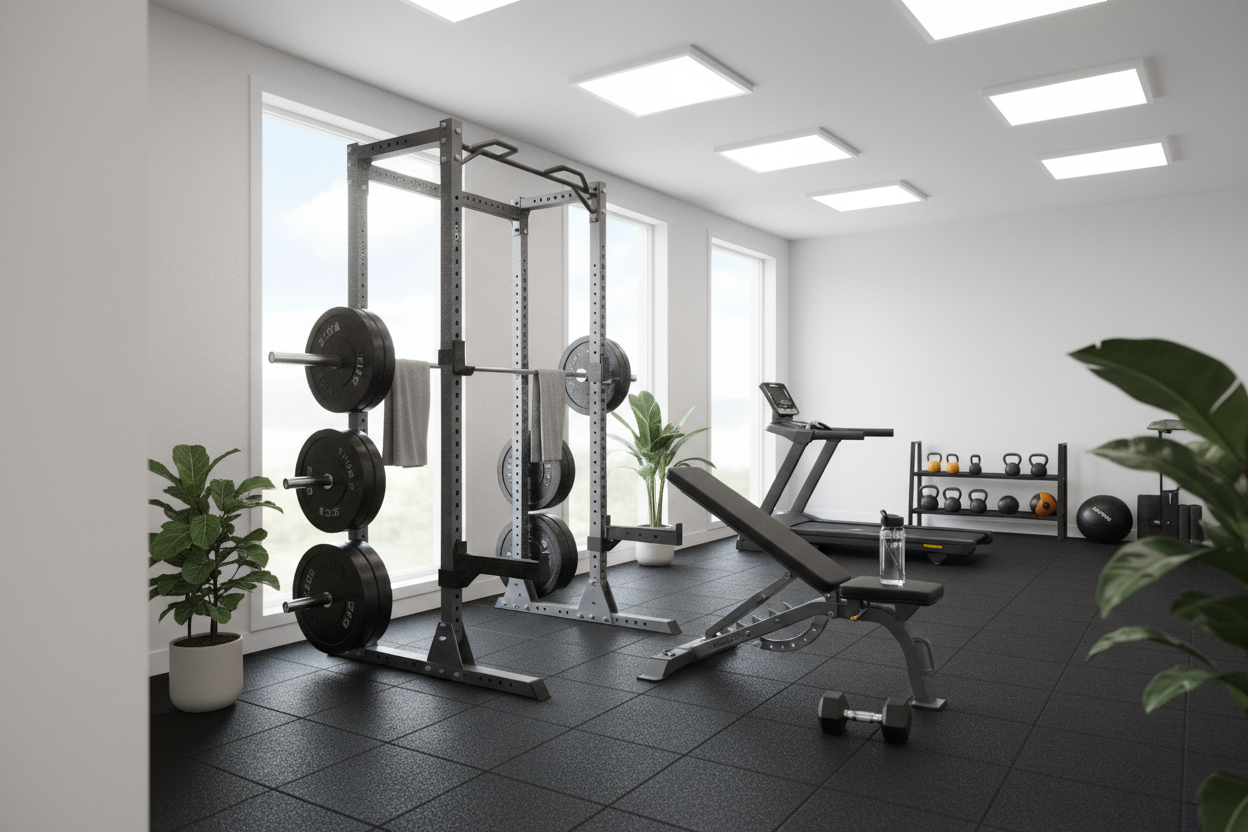
You do not need a $5,000 cable crossover or a row of selectorized machines to get results. In fact, the more 'stuff' you have, the more likely you are to waste time on fluff. The foundation of every impressive physique I’ve ever seen is a heavy barbell and a place to move it. A solid weight set and bench is the only real requirement. If you have a rack that can handle 500+ lbs and a bar with a decent knurling—something that doesn't feel like a wet noodle when you load three plates—you have everything you need.
Think about the footprint. A standard power rack is roughly 4x4 feet. Add a 7-foot Olympic bar, and you're looking at a 7x8 foot training space. That’s it. I’ve seen guys build world-class physiques in a corner of a basement using nothing but floor presses, squats, and rows. When you limit your options, you're forced to get better at the movements that actually matter. You stop 'toning' with light weights and start building real density.
Don't Ignore the Lower Half (Seriously)
I’ll be the first to admit it: squatting in a cold garage in the middle of January sucks. It’s much easier to just do some extra bench press and call it a day. But if you skip the lower body, you’re leaving half your progress on the table. Heavy lower body movements like squats and deadlifts are calorically expensive. They demand more from your central nervous system and trigger a much larger systemic response than any bicep curl ever will. If you want to sculpt strong thighs and glutes, you have to embrace the suck of the squat rack.
Beyond the aesthetics, training legs keeps your metabolism humming. Muscle is metabolically active tissue, and your legs and glutes are the largest muscle groups in your body. More muscle there means you burn more calories just sitting on the couch. Don't be the guy with the 315-lb bench and 135-lb squat. It looks ridiculous, and it’s a sign that you’re avoiding the hard work that actually creates a complete physique.
Why I Ditched the Endless Cardio Routine
A few years back, I got obsessed with the idea that I needed to run 20 miles a week to stay lean. I bought a high-end treadmill, spent hours pounding the belt, and watched my strength crater. I didn't look ripped; I looked 'skinny-fat.' My body was so stressed from the high-impact cardio and the caloric deficit that it held onto every ounce of fat it could. I eventually realized I wanted a slim and lean body, but one that actually had some muscle tone and power behind it.
I sold the treadmill and replaced it with a heavy sandbag and a jump rope. Now, my 'cardio' is just shorter rest periods during my lifting sessions or a brisk walk with a weighted vest. The result? I’m leaner now at 195 lbs than I was at 180 lbs when I was running. Lifting heavy is the primary driver of body composition. Cardio should be the accessory, not the main event. If you’re doing so much cardio that your squats are suffering, you’re moving backward.
The 3 Non-Negotiables for Year-Round Results
If you want to stop the yo-yo dieting and actually see your abs while keeping your strength, you need to follow these three rules strictly. First, hit your protein target every single day. Aim for roughly 1 gram per pound of goal body weight. This is the building block for recovery. Second, track every lift. If you aren't trying to beat last week's numbers—even by just one rep—you're just exercising, not training. Progressive overload is the only reason your body has to grow.
Finally, prioritize recovery. I used to think I could out-train a bad sleep schedule. I was wrong. If you’re getting five hours of sleep and trying to hit a new PR, you’re just begging for an injury. Your muscles don’t grow in the garage; they grow while you sleep. Shut down the screens, get seven to eight hours of rest, and watch how much faster your body responds to the iron.
FAQ
Can I really build muscle without a caloric surplus?
Yes, especially if you aren't already at a very low body fat percentage. Your body can use its own fat stores to provide the energy needed for muscle protein synthesis. It's slower than a traditional bulk, but much cleaner.
What is the minimum equipment I need for a garage gym?
A power rack, an Olympic barbell, about 300 lbs of plates, and an adjustable bench. That setup allows you to perform every major compound lift safely and effectively.
How many days a week should I train?
For most people, 3 to 4 days of heavy lifting is the sweet spot. This allows for maximum intensity during the sessions and enough recovery time for the 'strong' part of 'lean and strong' to actually happen.