
Cable Romanian Deadlift: How to Do It for Hamstrings and Glutes
Quick answer: To do a cable Romanian deadlift, attach a straight bar (or rope) to a low pulley, grab it with an overhand grip and step back a pace or two from the stack so there's tension. Stand tall with soft knees, then push your hips back and hinge forward with a flat back, sliding the bar down your thighs until you feel a stretch in your hamstrings, usually around mid-shin. Drive the hips forward to stand and squeeze your glutes. Do 3 sets of 10–15 reps. The cable RDL trains the hamstrings and glutes with constant tension, and it's an easy way to learn the hip hinge.
Key takeaways
- Hips back, not down: it's a hinge, not a squat.
- Soft knees that stay mostly fixed.
- Flat back from start to finish.
- Stop at a strong hamstring stretch, not at the floor.
- Constant tension makes light weights effective.
Muscles worked
| Muscle | Role |
|---|---|
| Hamstrings | Lengthen under load and extend the hip |
| Glutes | Drive the hips forward |
| Lower back (erectors) | Hold the spine neutral |
| Lats and grip | Keep the bar close |
Benefits of the cable RDL
- Learn the hinge with a forgiving setup.
- Constant tension, even at the top where free-weight RDLs unload.
- Lower spinal load than heavy barbell RDLs, good for high reps.
- Hamstring and glute strength for running, jumping and deadlifts.
How to do a cable Romanian deadlift
- Set up: straight bar or rope on the lowest pulley.
- Grip and step back: overhand grip, step back 1–2 paces with feet hip width.
- Start: stand tall, shoulders back, soft knees.
- Hinge: push the hips back, sliding the bar along your thighs with straight arms.
- Stretch: stop when you feel a strong hamstring stretch with a flat back.
- Stand: drive the hips forward and squeeze the glutes without leaning back.
Variations
| Variation | Why |
|---|---|
| Rope cable RDL | Neutral grip, rope between the legs |
| Single-leg cable RDL | Balance and one-side hamstring focus |
| Cable pull-through | Face away from the stack; more glute |
| Barbell RDL / stiff leg deadlift | Heavier loading |
Common mistakes
| Mistake | Fix |
|---|---|
| Squatting the weight down | Push the hips back; keep shins nearly vertical |
| Rounding the back | Stop higher; chest proud |
| Standing too close | Step back so the cable has tension |
| Leaning back at the top | Finish with the glutes, ribs down |
| Bar drifting away | Keep it close to the legs |
Sample hamstring and glute workout
| Exercise | Sets × reps |
|---|---|
| Deadlift | 3 × 5 |
| Cable Romanian deadlift | 3 × 12 |
| Nordic curl (assisted) | 3 × 5 |
| Cable hip abduction | 3 × 15 per leg |
Finish with hamstring stretches.
Who should be careful
- Lower back pain: use a short range and light weight; get professional guidance if pain continues.
- Hamstring strain: wait until healed and build up gradually.
Cable RDLs at home
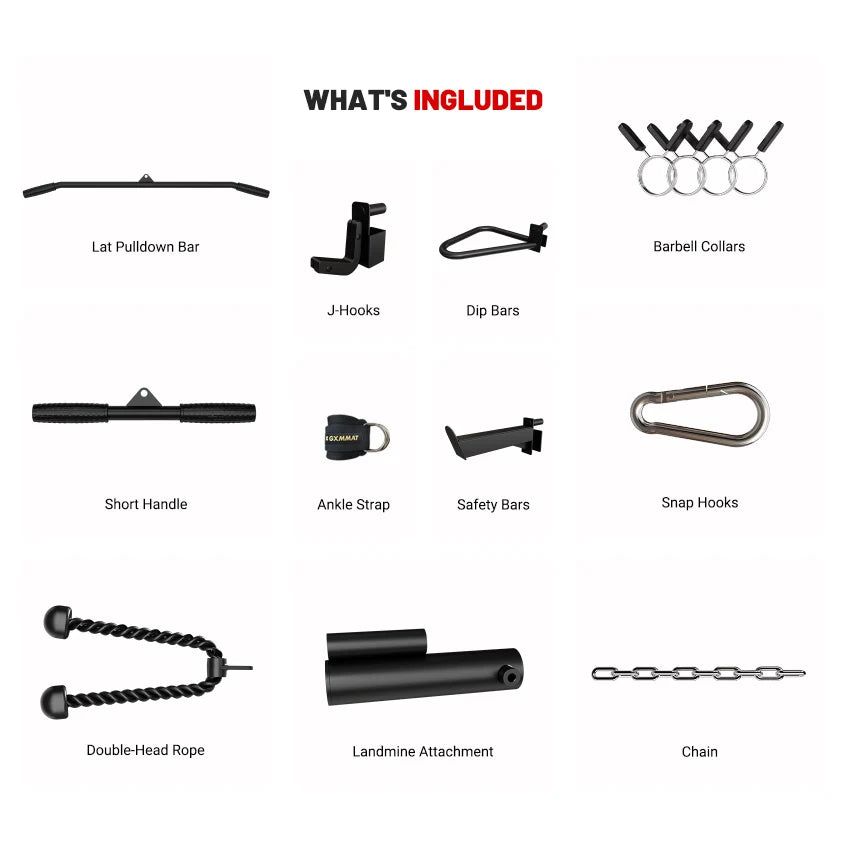
A low pulley and a straight bar or rope is all you need. The GXMMAT G5 low row station comes with a long bar and a double-head rope, and the V6 and X6 have dual cables for single-leg and rope variations. Place a large exercise mat under your rack for stable footing. See the cable attachments guide.
FAQ
What does the cable Romanian deadlift work?
The hamstrings and glutes, plus the lower back and grip.
Is the cable RDL as good as a barbell RDL?
It's lighter but gives constant tension, making it great for learning the hinge and higher-rep work.
How far should I go down?
Until you feel a strong hamstring stretch with a flat back, often around mid-shin.
Should my knees bend?
Slightly. Keep a soft bend that stays about the same throughout.
How many reps should I do?
3 sets of 10–15 reps.
Written by Yuvien Royer for GXMMAT. This article is general fitness information, not medical advice.


