
Cable Hip Abduction: How to Do It for Stronger Side Glutes
Quick answer: To do a cable hip abduction, attach an ankle strap to a low pulley and fasten it around the ankle farther from the machine. Stand side-on to the stack, hold the frame for balance, and with your leg straight and toes pointing forward, lift the strapped leg out to the side as far as you can without leaning your torso. Pause, then return slowly. Do 3 sets of 12–15 reps per leg. Cable hip abductions target the gluteus medius and minimus, the side glutes that stabilize your hips and knees during walking, running and squatting.
Key takeaways
- Strap on the outside leg (the one farther from the stack).
- Stand tall: no leaning toward the machine.
- Toes forward or slightly in to keep the glutes working.
- Small, controlled range with a pause at the top.
- Light to moderate weight, higher reps.
Muscles worked
| Muscle | Role |
|---|---|
| Gluteus medius | Main hip abductor |
| Gluteus minimus | Assists abduction and stability |
| Tensor fasciae latae (TFL) | Assists, especially with toes turned out |
| Standing leg glutes and core | Stabilize the body |
Benefits of cable hip abductions
- Stronger side glutes for hip and knee stability.
- Better knee tracking in squats and lunges.
- Balance from standing on one leg.
- Constant tension compared with bands or bodyweight.
- Rounder glute shape as part of a full glute program.
Weak hip abductors are often linked with knee and IT band issues in runners; see IT band stretches.
How to do a cable hip abduction
- Set up: ankle strap on the lowest pulley, strapped to the outside ankle.
- Position: stand side-on, about an arm's length away, holding the rack or frame with the inside hand.
- Start: the strapped leg starts slightly in front of the standing leg with tension on the cable.
- Lift: keeping the leg straight and toes forward, raise it out to the side about 30–45 degrees.
- Pause for 1 second, squeezing the side glute.
- Return slowly to the start. Finish all reps, then switch sides.
Variations
| Variation | How | Why |
|---|---|---|
| Slight forward lean | Hinge the torso forward 15–20 degrees | Many people feel the glute medius more |
| Kneeling cable abduction | Half kneeling on a pad | Removes balance demand |
| Cable fire hydrant | On all fours, lift the knee out | Glute focus; see fire hydrants |
| Cable hip adduction | Strap the inside leg, pull across | Inner thigh balance |
For more strap moves, see cable ankle strap exercises.
Common mistakes
| Mistake | Fix |
|---|---|
| Leaning the torso away | Stand tall; reduce the weight |
| Turning the toes up | Toes forward or slightly down |
| Swinging the leg | Lift and lower under control |
| Lifting too high | 30–45 degrees is enough |
| Hiking the hip | Keep the pelvis level |
Sample glute workout
| Exercise | Sets × reps |
|---|---|
| Kettlebell sumo deadlift or RDL | 3 × 10 |
| Glute bridge or hip thrust | 3 × 12 |
| Reverse lunges | 3 × 10 per leg |
| Cable hip abduction | 3 × 15 per leg |
| Cable pull-through | 3 × 15 |
Who should be careful
- Hip pain on the side of the hip: start very light and see a professional if it hurts.
- Balance issues: use the kneeling version.
Cable hip abductions at home
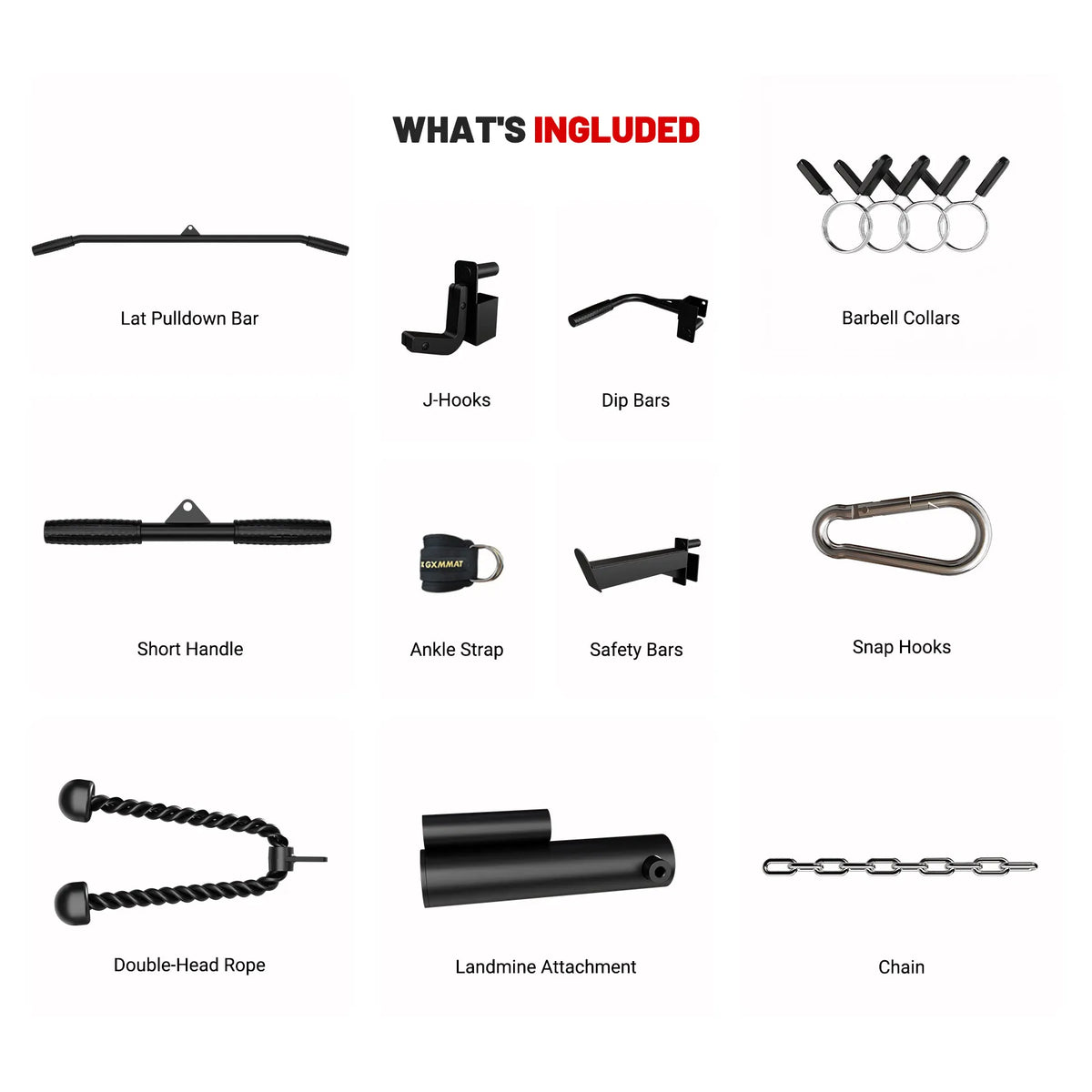
All you need is a low pulley and an ankle strap. The GXMMAT G5 and V6 power racks include an ankle strap in the box, and the X6 has adjustable-height dual cables for all kinds of lower body cable work. See the cable attachments guide. A large exercise mat under the rack gives your standing foot grip, and a kneeling pad helps with kneeling variations.
FAQ
What muscles do cable hip abductions work?
Mainly the gluteus medius and minimus, with help from the TFL.
Are cable abductions better than the abduction machine?
Both work. Cables add a balance challenge and work one side at a time.
How heavy should I go?
Light to moderate, enough for 12–15 controlled reps without leaning.
Do hip abductions help knee pain?
Stronger hip abductors can improve knee control for some people, but see a professional for ongoing knee pain.
How often should I train hip abductors?
2–3 times a week as part of lower body or glute training.
Written by Yuvien Royer for GXMMAT. This article is general fitness information, not medical advice.


