Cable Fitness Machine: The Complete Home Gym Buyer's Guide
If you have been lifting at home for a while, you know the frustration of hitting a plateau. Dumbbells and barbells are fantastic, but they rely strictly on gravity, meaning the resistance curve drops off at certain points in your lift. Enter the cable fitness machine—the ultimate tool for constant tension, joint-friendly mechanics, and unmatched versatility.
Whether you are trying to replicate the commercial gym experience in your basement or looking to maximize a tight garage footprint, adding this piece of equipment can completely transform your training. In this guide, we will break down exactly what to look for, how much space you really need, and whether it is the right investment for your home setup.
Key Takeaways
- Constant Tension: Unlike free weights, cables provide continuous resistance throughout the entire range of motion, maximizing muscle hypertrophy.
- Space Efficiency: Modern functional trainers and single-column setups are designed to fit seamlessly into standard North American home gyms.
- Safety for Solo Lifters: Cables eliminate the need for a spotter, making it safer to push to muscular failure.
- Versatility: A single machine can replace dozens of single-station machines, targeting every major muscle group.
Fitting a Cable Machine in Your Home Gym
Space is the ultimate luxury in a home gym. Before you add any cable machine gym equipment to your cart, you need to measure your available footprint—especially your ceiling height.
Garage vs. Spare Room Setups
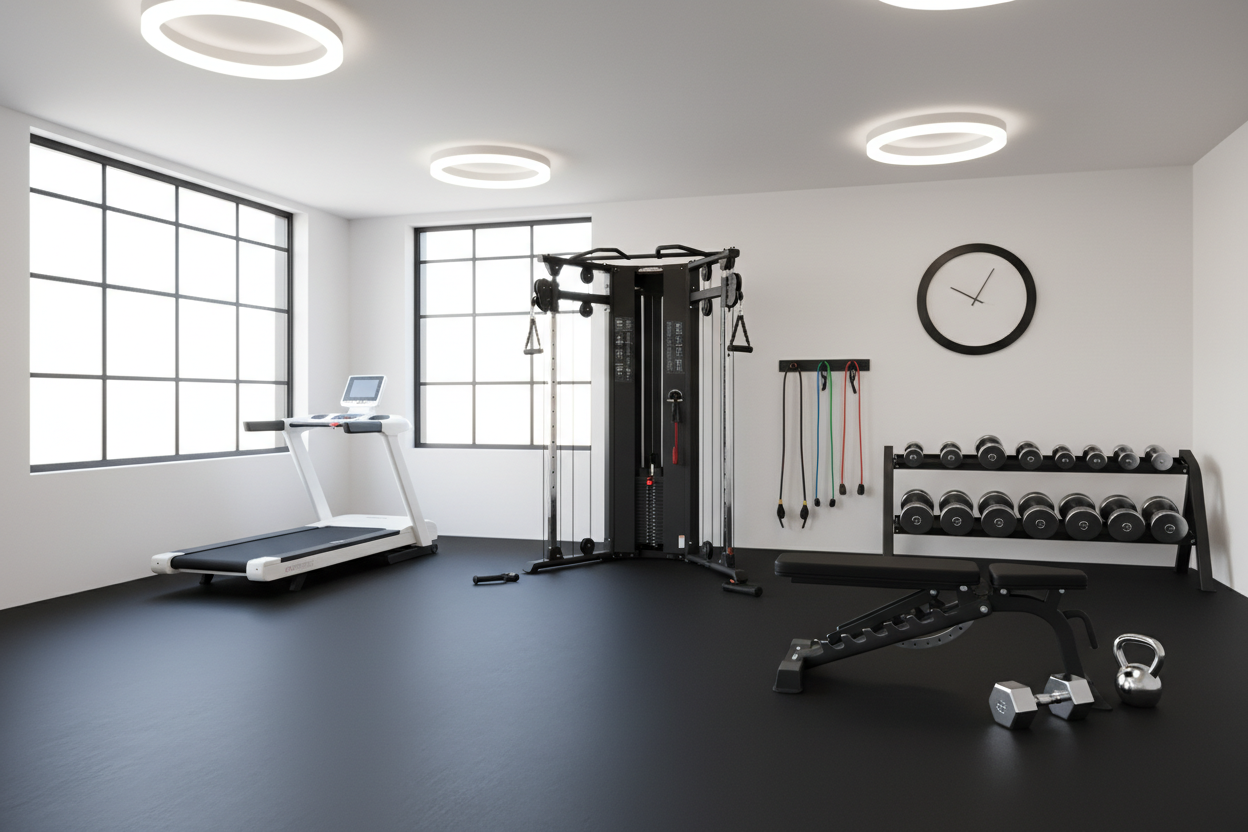
Most standard functional trainers require at least 80 to 85 inches of vertical clearance. If you are setting up in a basement with low ceilings, you will need to look for a specifically designed 'short' model. For garage gyms, height is rarely an issue, but width can be. A dual-stack machine can span over 60 inches wide, so ensure you have enough room to fully extend your arms for movements like cable crossovers without hitting your power rack or walls.
What Makes a Quality Gym Pulley Machine?
Not all cables are created equal. The difference between a frustrating, jerky workout and a buttery-smooth pump comes down to the engineering of the gym pulley machine.
Weight Stacks vs. Plate-Loaded
You generally have two options: selectorized (weight stacks) or plate-loaded. Selectorized machines are the gold standard for convenience. You can change weights in seconds with a pin, making drop sets a breeze. Plate-loaded options are significantly cheaper and utilize the Olympic plates you already own, but sliding plates on and off can disrupt the flow of your workout.
Pulley Ratios Explained
Pay attention to the pulley ratio. A 2:1 ratio (common on most functional trainers) means a 100 lb weight stack delivers 50 lbs of actual resistance. This allows for longer cable travel, which is essential for dynamic or explosive movements. A 1:1 ratio provides true weight, which is ideal for heavy lat pulldowns and low rows.
Unlocking the Multi Cable Machine
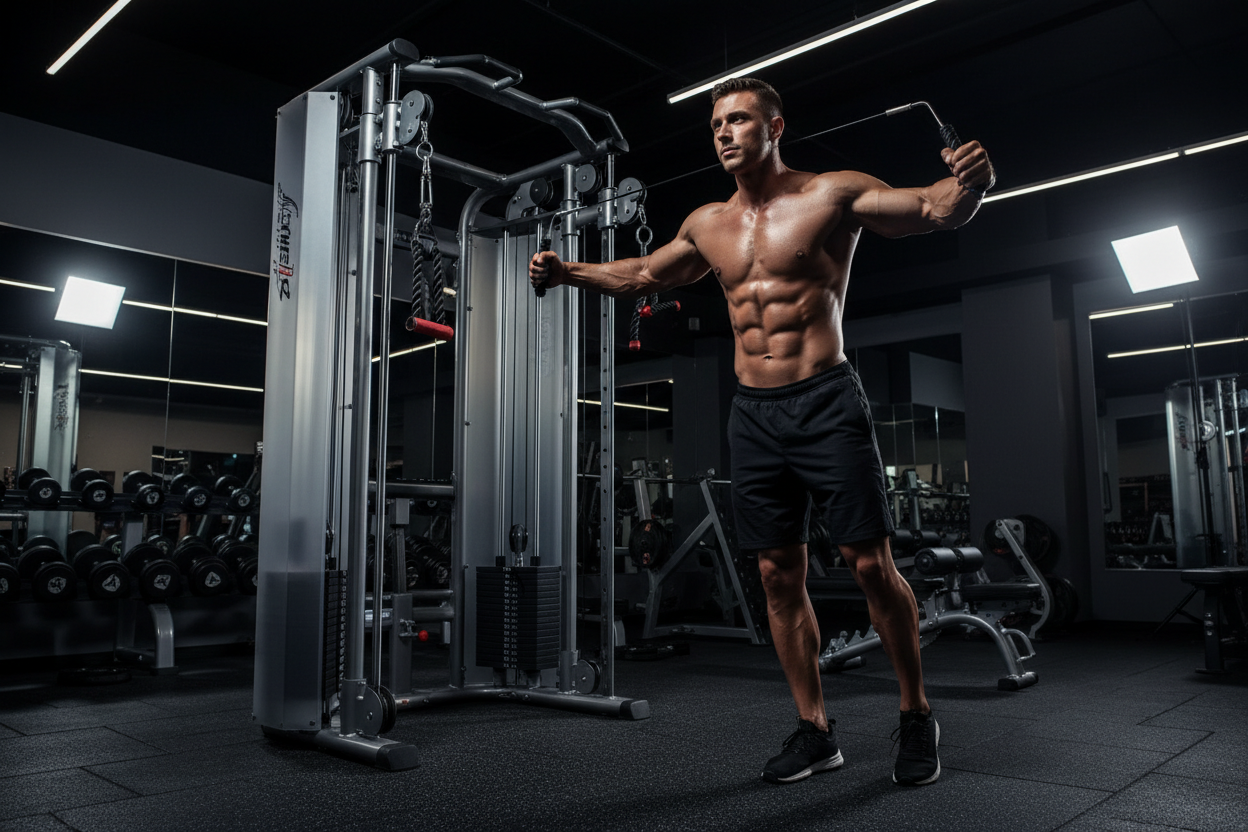
The true beauty of a multi cable machine lies in its programming flexibility. You are no longer restricted to linear, up-and-down movements. You can adjust the carriage height to hit your chest from multiple angles, perform face pulls to bulletproof your shoulders, or attach a rope for heavy triceps pushdowns. Because the resistance is constant, it is the perfect complementary tool to finish your muscles after heavy barbell compound lifts.
From Our Gym: Honest Take
After running a dual-stack functional trainer in our 400-square-foot testing garage for the past year, it has become the most used piece of equipment outside of the power rack. The knurled D-handles we upgraded to felt incredibly secure during heavy single-arm rows. However, here is the honest truth: if you go with a cheaper model that uses nylon pulleys instead of aluminum, you will eventually feel a 'drag' or stutter in the cable after a few months of heavy use. We highly recommend spending the extra money on aluminum pulleys and high-tensile aircraft cables. Also, plate-loaded models are great for budgets, but getting under the carriage to load 45-pound plates can get tedious when you are already exhausted.
Frequently Asked Questions
Is a cable fitness machine worth it for a home gym?
Absolutely. If you value isolation exercises, constant tension, and joint health, it is one of the best investments you can make. It bridges the gap between a basic home setup and a commercial gym experience.
How much ceiling clearance do I need?
Standard models require roughly 82 to 85 inches of clearance. Always leave an extra 2 to 3 inches above the machine so you can actually assemble the top crossmember and route the cables during installation.
Can you build muscle with just cables?
Yes. Muscle growth requires mechanical tension, metabolic stress, and progressive overload. Cables provide all three effectively, often with less sheer stress on your joints compared to heavy barbells.