Butt Lift Leg Extension Guide: Movement Mechanics, Hybrid Variations, and Home Floor Staging
Deconstructing the Butt Lift Leg Extension Pattern
In home fitness communities, the phrase butt lift leg extension often refers to two distinct yet complementary training concepts. The primary definition points to a ground-based unilateral glute bridge variation, sometimes cataloged in casual workout programs as but lifts leg extensions. In this variation, a lifter elevates their pelvis while extending one knee outward or upward. The second interpretation describes a programming pairing where posterior-chain elevation movements, such as weighted hip thrusts or bridges, are sequenced alongside mechanical quadriceps work on seated apparatus.
Understanding which movement pattern matches your home routine helps clarify proper joint positioning and equipment needs. Floor-based bridge variations require deliberate core bracing, pelvic symmetry, and spinal neutral alignment. Conversely, mechanical leg work shifts emphasis to isolated knee extension across an anchored path. By viewing these movements through biomechanics and home training layouts, lifters can structure balanced lower-body sessions while protecting their flooring surfaces.
Biomechanical Foundations: Hip Extension Meets Knee Articulation
The ground-based butt lift with an extended leg introduces rotational and asymmetrical forces to the lower torso. When both feet remain anchored during a standard glute bridge, the load distributes symmetrically across the hips, hamstrings, and lumbar stabilizing muscles. Once one foot lifts from the ground and straightens at the knee joint, the base of support shrinks significantly.
This unilateral stance demands increased stabilization from the stance-leg hip musculature and deep abdominal stabilizers to prevent the pelvis from dipping on the unsupported side. Furthermore, keeping the non-working leg straight introduces a longer lever arm. This extended lever increases torque across the midsection, making steady respiration and neutral rib cage alignment essential for steady performance.
Step-by-Step Execution of Ground-Based Bridge Extensions
Achieving clean execution on a floor-based single-leg bridge extension relies on deliberate pacing and thoughtful alignment rather than rushing through momentum:
- Initial Setup: Lie supine on a supportive, high-density exercise mat. Bend both knees with the soles of your feet resting flat on the surface, keeping heels situated within comfortable reaching distance of your fingertips.
- Engaging the Midsection: Flatten the lower back slightly toward the floor surface to prevent passive lumbar arching before initiating elevation.
- Leg Extension Phase: Extend one knee so that the shin aligns diagonally with the opposite thigh, or drive the leg vertically if mobility permits, keeping the quadriceps lightly braced.
- Pelvic Drive: Press firmly through the heel of the grounded foot, elevating the pelvis until a straight diagonal line forms from the shoulder to the elevated hip.
- Controlled Descent: Lower the hips slowly back toward the mat under active tension, avoiding hard bounces on the floor before initiating the next repetition.
Pairing Ground Glute Work with Dedicated Quad Extension Machines
While mat-based bridge extensions emphasize the posterior chain, rounded lower-body conditioning benefits from opposing knee-dominant stimulus. Incorporating a dedicated leg extension product allows lifters to isolate the anterior quadriceps without placing excessive axial load on the spine.
Combining ground-based hip elevation with seated knee extensions creates an antagonistic pairing that trains both sides of the thigh. In a compact training space, alternating between floor work and machine-guided quad extensions keeps heart rates elevated while distributing physical effort smoothly between hip extensors and knee extensors.
Evaluating Machine Sourcing and Home Space Allocations
When selecting machinery for a garage or spare room, lifters must balance multi-functionality against spatial footprint. Consulting a comprehensive leg extension guide helps identify key durability indicators, such as solid pivot bushings, smooth roller pad adjustments, and solid frame tolerances before acquiring pre-owned or modular units.
Checking frame dimensions ensures that your workout area accommodates both seated movements and open floor space for supine bridging. A crowded footprint often leads to compromised exercise technique or awkward transitions between floor sets and machine repetitions.
Core Stability and Movement Synergies in Supine Training
Both hip bridging and floor leg raises rely heavily on supine pelvic control. During bridging, the abdominal wall acts as a stabilizing brace to prevent excessive lumbar hyperextension as the gluteal muscles contract. Reviewing a foundational leg lifts guide reveals that abdominal training often demands similar pelvic discipline to manage anterior pelvic tilt.
Integrating bridge extensions alongside steady abdominal bracing cultivates rotational stability. When you resist the downward pull of the unsupported hip during an extended bridge, the oblique musculature works in tandem with the posterior chain. This coordinated tension builds transferable movement confidence for heavier compound lifts like squats and deadlifts.
Home Gym Floor Staging: Mat Cushioning and Surface Stability
Ground-based butt lift variations place substantial localized pressure on the spine, scapulae, and driving heel. Executing these exercises on unpadded concrete or bare hardwood can lead to joint discomfort and unpredictable slipping. High-density rubber or foam exercise mats provide a firm, tactile surface that preserves balance while cushioning bony contact points.
A suitable home exercise surface must offer sufficient grip underfoot. If a lifter's plant foot slides forward during the peak contraction of a bridge, hamstring strain can occur as the muscle scrambles to maintain leverage. Non-slip mat textures keep the plant foot firmly anchored, enabling clean force transfer straight through the floor.
Subfloor Guarding Beneath Weighted Machinery
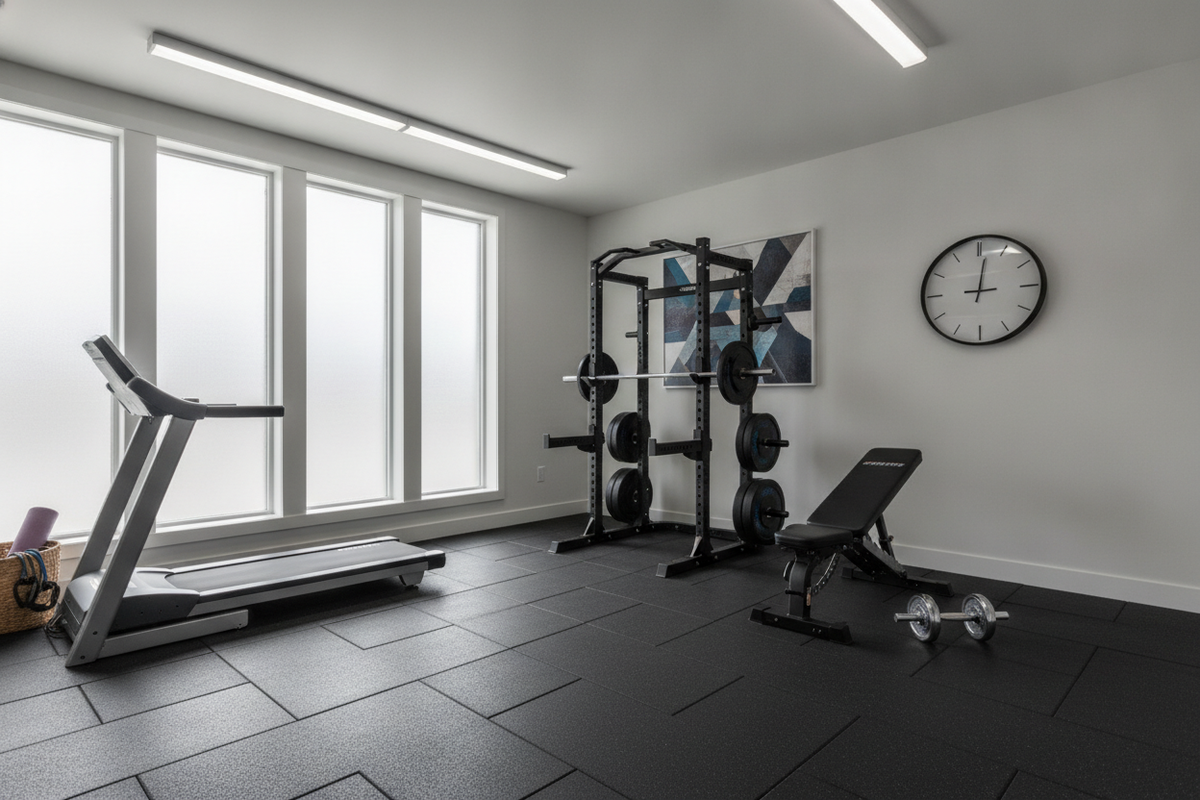
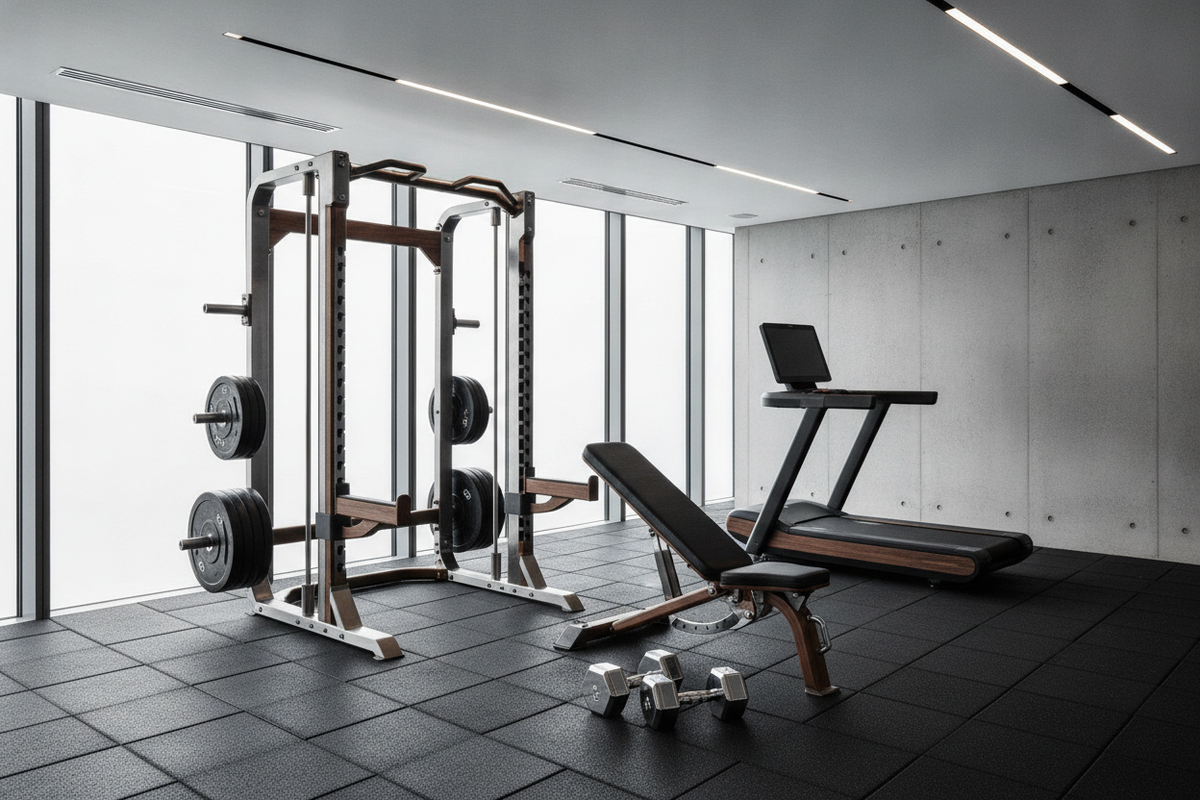
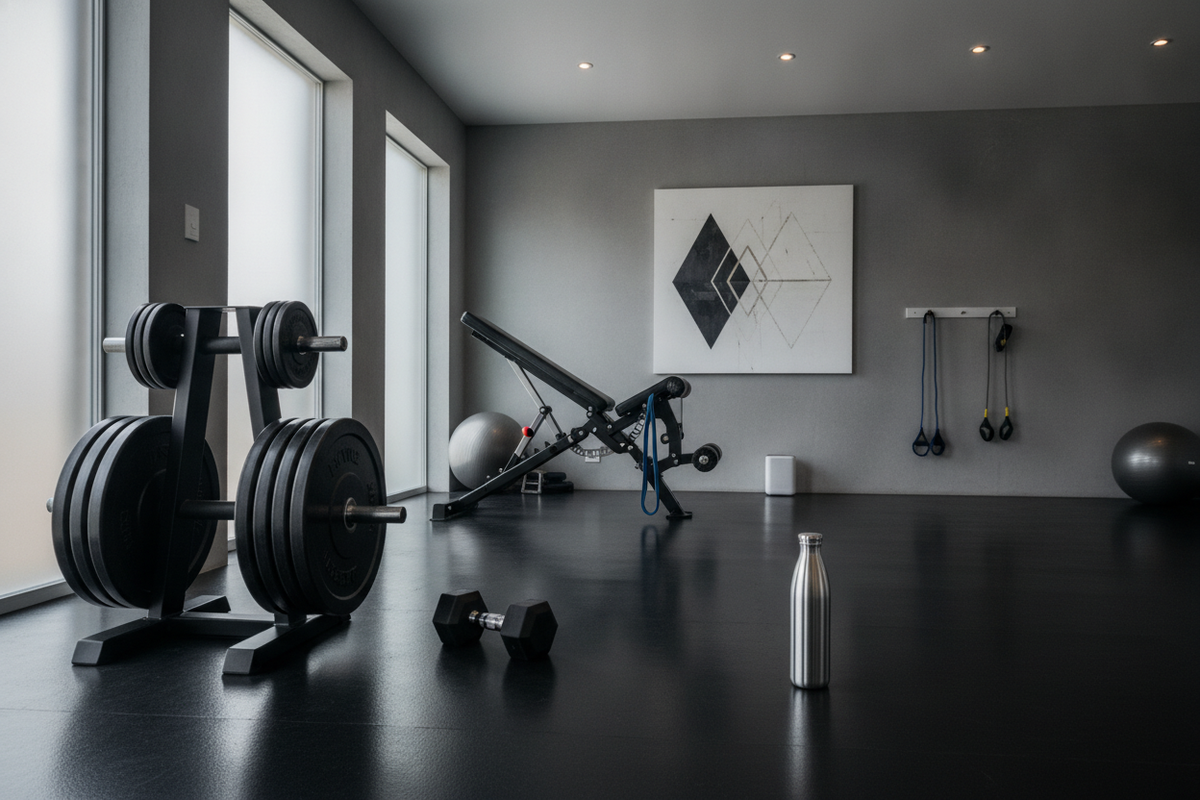
When pairing floor movements with heavier plate-loaded units, such as a specialized leg extension product setup, flooring considerations shift toward structural protection. Heavy steel frames and shifting weight plates generate concentrated point loads that can crack residential tile, dent timber, or scuff epoxy finishes.
Deploying heavy-duty, dense rubber flooring under both the apparatus and adjacent floor workout zones serves multiple practical functions:
- Impact Dispersion: Dense rubber spreads concentrated frame weight across a broader floor footprint, protecting residential subfloors from localized stress fractures.
- Acoustic and Vibration Damping: Sturdy underlayment softens the dull thud of selectorized weight stacks or loaded bumper plates during eccentric phases.
- Zone Organization: Continuous surface flooring establishes clear boundaries between machine operation zones and open stretch-and-bridge areas, improving workflow safety.
Programming Guidelines and Common Form Adjustments
To incorporate butt lift leg extension sequences successfully, prioritize form consistency over excessive repetition volume. Beginners often benefit from mastering standard bilateral glute bridges before progressing to long-lever unilateral extensions.
Common faults during extended bridging include overarching the lumbar spine at the top of the stroke, letting the non-working hip sag toward the floor, or pushing excessively through the toes rather than the mid-foot and heel. Cueing a gentle rib tuck and actively squeezing the working glute at parallel extension tends to resolve these alignment errors.
For programming, alternating between single-leg bridge extensions and controlled quad extensions across moderate set schemes allows lifters to train opposing muscle groups efficiently. By maintaining firm core tension, using deliberate tempos, and staging the training space with resilient flooring, home lifters can pursue balanced lower-body development safely and comfortably.