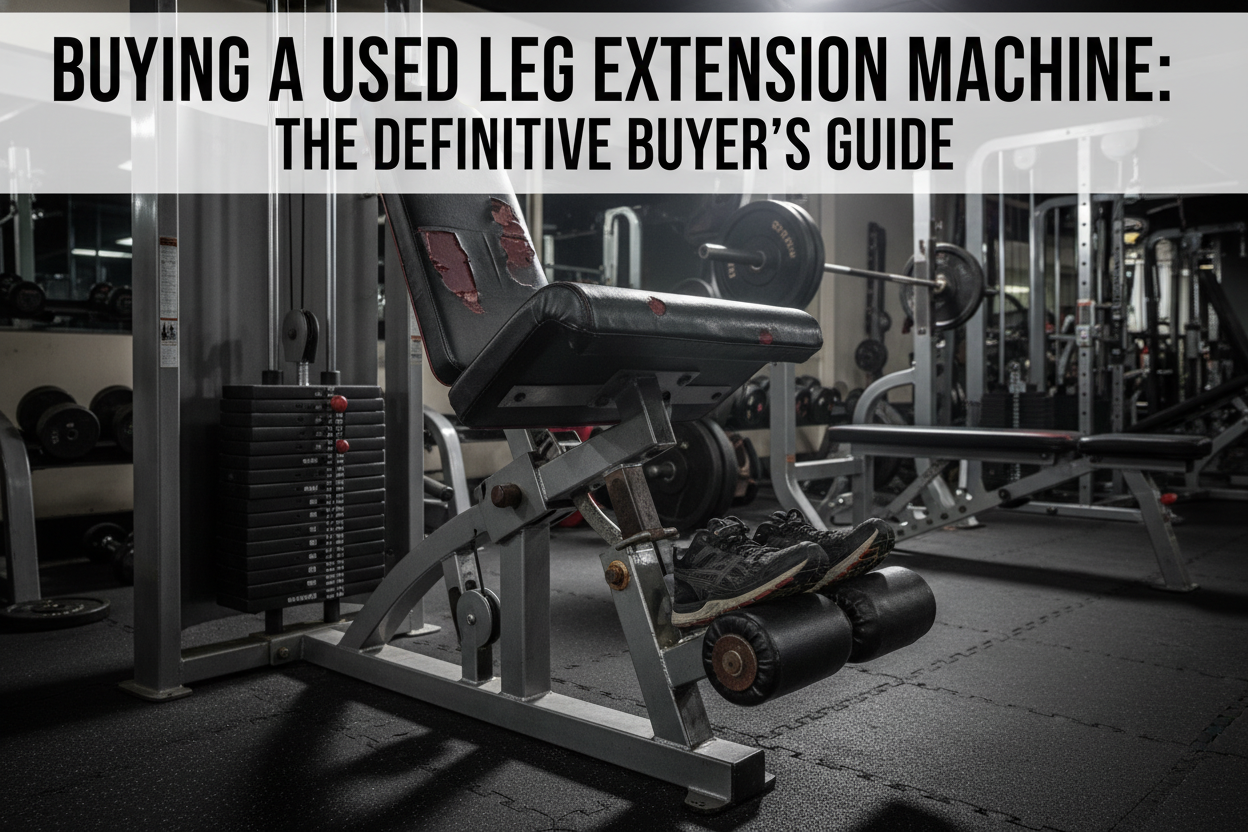
Buying a Used Leg Extension Machine: The Definitive Buyer's Guide
Building massive quads in a home gym usually hits a wall eventually. Squats and lunges are foundational, but they don't offer the specific peak contraction that an isolation machine provides. This is usually the moment you start scouring the internet for a used leg extension machine.
The problem is that the used fitness market is a minefield. For every commercial-grade gem from a closing gym, there are a dozen rickety, rusted units that will wobble under heavy load. You want gym-quality isolation without the four-figure price tag, but you also don't want a tetanus shot waiting to happen.
This guide cuts through the noise to help you find a piece of equipment that will last a lifetime.
Key Takeaways: Quick Buyer's Checklist
- Check the Cables First: Inspect the plastic coating on cables. Any cracking or peeling exposes the wire, which creates friction and eventually snaps under load.
- The Combo Trade-off: A used leg extension and curl machine saves space but often sacrifices biomechanics. Ensure the pivot point aligns with your knee for both movements.
- Guide Rod Condition: Run your finger down the chrome guide rods. If they feel pitted or rough, the weight stack will drag, killing the smoothness of the rep.
- Upholstery Matters: Re-upholstering is easy, but cracked foam underneath is not. Press the pads to ensure they haven't lost their density.
Why Go Used Instead of New?
When it comes to isolation machines, mass matters. Most budget-friendly "new" machines sold on Amazon are built with light-gauge steel. They wobble. They slide across the floor when you go heavy.
A used leg extension from a commercial brand like Life Fitness, Cybex, or Hammer Strength is built like a tank. These machines are designed to withstand 24/7 abuse. By purchasing used, you are essentially buying a frame that will outlive you, usually for the same price as a flimsy new residential model.
The "Weight Stack" vs. "Plate Loaded" Debate
You will find two types of used leg extension machine for sale listings: selectorized (weight stack) and plate-loaded.
If you have the budget, hunt for a selectorized unit. The ability to do drop sets by simply moving a pin is invaluable for hypertrophy training. However, plate-loaded machines are mechanically simpler. There are fewer things to break—no cables to snap (usually) and no guide rods to grease. If you are looking for a used leg curl machine or extension on a tight budget, plate-loaded is the safer bet for longevity.
Analyzing the Combo Machine
Space is the ultimate luxury in a garage gym. This leads many to look for a used leg extension leg curl machine combo unit. While efficient, you need to understand the mechanical compromise here.
Dedicated machines have a cam (the pulley wheel) designed specifically for the strength curve of the quadriceps. A combo machine tries to serve two masters: the quads and the hamstrings.
If you buy a used leg extension and curl machine, sit in it before you buy it. Switch modes. Does the transition take 30 seconds or 3 minutes? If it's too fiddly, you won't use it. More importantly, check the shin pad. It needs to roll or adjust easily to sit on top of the ankles for extensions and behind the ankles for curls.
Inspection: How to Spot a Lemon
When you go to inspect a leg curl machine used or an extension unit, bring a flashlight and a rag.
1. The Guide Rod Test
The weight stack travels up and down two chrome bars. If the previous owner didn't lubricate these (or worse, used WD-40 which attracts dust), the movement will be jerky. Wipe the rod. If there is rust pitting that catches your fingernail, walk away. You can clean dirt, but you cannot fix pitted chrome without replacing the rods.
2. The Cam and Belt/Cable
Look at the cam (the kidney-shaped wheel). On older commercial units, this might be driven by a Kevlar belt rather than a cable. Belts are incredibly durable, but if they are fraying, they are expensive to replace. If it uses a cable, check the crimped ends. This is where failure happens.
3. The Pivot Point
Sit in the machine. The axis of rotation (the bolt the arm swings on) should align perfectly with your knee joint. If the machine is fixed and doesn't fit your body mechanics, you are buying a prescription for knee pain, not hypertrophy.
My Personal Experience with a Used Leg Extension Machine
I distinctly remember driving two hours with a borrowed trailer to pick up a used leg extension from a gym that was liquidating its assets. It was an old Nautilus nitro style—ugly, beige, and heavy as hell.
In the photos, it looked pristine. But when I got there, I realized something photos don't show: the "gumminess" of the handles. Years of sweat and cleaning chemicals had turned the rubber grips into a sticky, degrading mess that left black residue on my hands. I also noticed that the pop-pin for the back pad adjustment was seized solid from rust.
I bought it anyway because the frame was solid, but I spent the next three weekends rehabbing it. I had to use an angle grinder to cut off the old pop-pin and order a generic replacement from eBay. I wrapped the sticky handles in tennis racket grip tape (a hack I still use). The biggest lesson? The weight stack had a "dead spot" halfway up. I realized later the guide rods were slightly bent—something I would have felt if I had actually lifted the stack instead of just kicking the tires. It still works, but that slight friction at the midpoint of every rep is a constant reminder to test the equipment under load before handing over the cash.
Conclusion
Finding the right used leg extension machine requires patience and a critical eye. Don't get distracted by torn vinyl; that's an easy fix. Focus on the mechanical heart of the machine: the rods, the bearings, and the cables. Secure a solid frame, and you'll have a gym staple that delivers the quad separation you can't get from squats alone.
Frequently Asked Questions
Is a used leg extension and curl machine combo worth it?
For home gyms with limited square footage, yes. However, verify that the machine allows for full range of motion on both exercises. Many cheap combos limit the contraction at the top of the leg curl.
How do I transport a commercial used leg extension?
These machines often weigh 400+ lbs. You must disassemble the weight stack. Remove the guide rods and transport the weight plates separately. Do not try to move the machine fully assembled; you risk bending the frame or the rods.
Can I fix a fraying cable myself?
Yes, but safety is paramount. You can buy replacement aircraft cable and cable stops at hardware stores, but ensure you match the diameter exactly. If you aren't confident in crimping the cable ends, buy a pre-made cable from a fitness repair supplier.