Burnt Out? Steal My Simple and Effective Workout Routine
I spent three hours last week analyzing the knurling and tensile strength of a barbell I am probably never going to max out. Then I realized I hadn't actually trained in four days because my 'perfect' spreadsheet felt like a second job. If you are staring at your power rack with more dread than excitement, you need a simple and effective workout routine that doesn't require a PhD in kinesiology to execute.
Quick Takeaways
- Stop chasing 'optimal' and start chasing 'done.'
- Compound movements are your high-yield assets for muscle maintenance.
- A 40-minute session you actually do beats a 90-minute session you skip.
- Minimalist setups reduce the mental friction of starting when life gets chaotic.
Why We All Fall for the 'Optimal' Trap
Fitness influencers love to sell you 12-week peak programs with RPE targets that require a calculator and a degree. It is exhausting. When life hits—kids, deadlines, or just plain old fatigue—these complex programs are the first thing to go. You don't need a 20-tab spreadsheet to stay strong; you need consistent tension and a bit of sweat.
The mental load of 'perfect' training often leads to total paralysis. We think if we can't do the full 90-minute hypertrophy block, the whole day is a wash. That is a lie. Stripping back the fluff isn't giving up; it is a tactical retreat to ensure you don't lose the gains you've already worked so hard to build.
The Rules of a Truly Sustainable Plan
Maintenance is significantly easier than growth. Research shows you can maintain most of your muscle mass on about one-third of the volume you used to build it. By understanding the science of the most effective leg workout, you realize that one or two heavy sets of squats often do more for your physique than five sets of 'junk volume' leg extensions.
This isn't about being lazy. It is about being surgical with your energy. We focus on big, multi-joint movements that recruit the most motor units. If a movement doesn't make you breathe hard or strain by the eighth rep, it probably isn't making the cut for this minimalist protocol. We want high ROI, every single time.
Setting Up Your Friction-Free Space
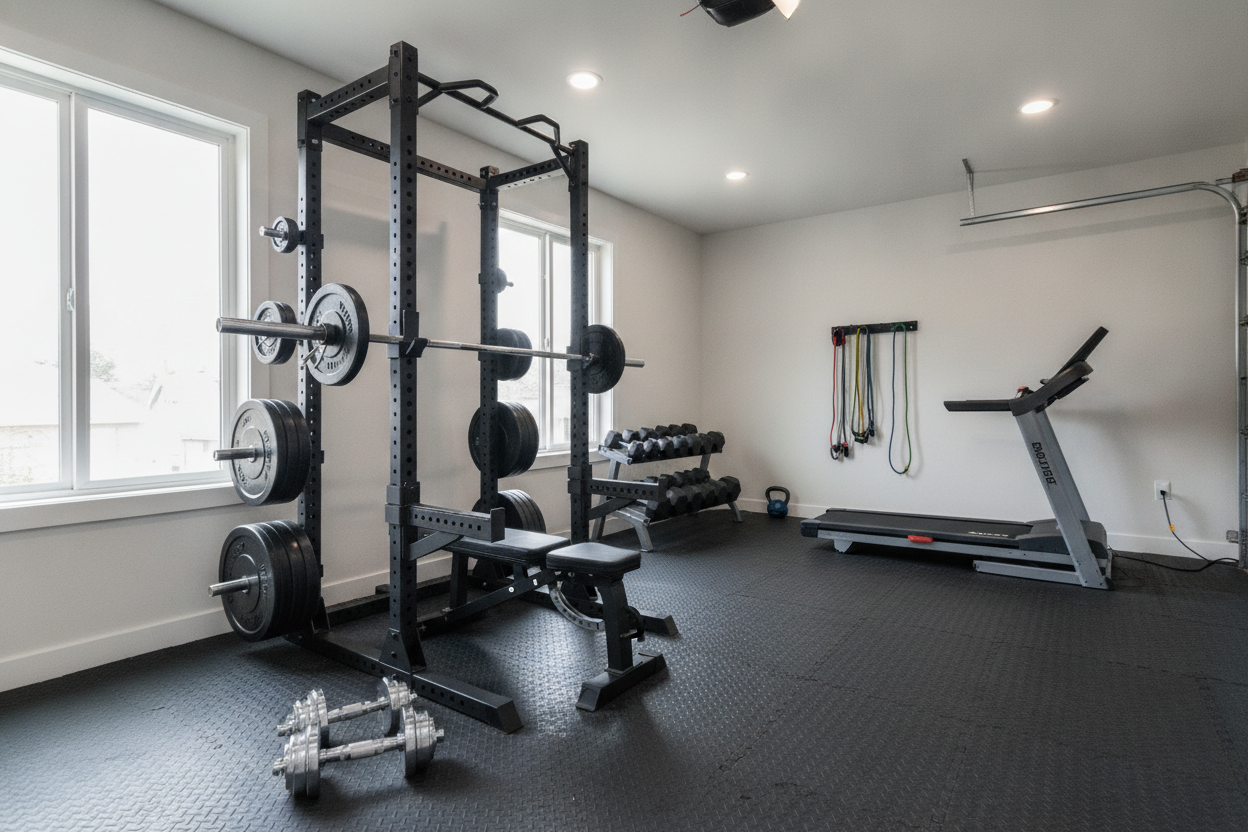
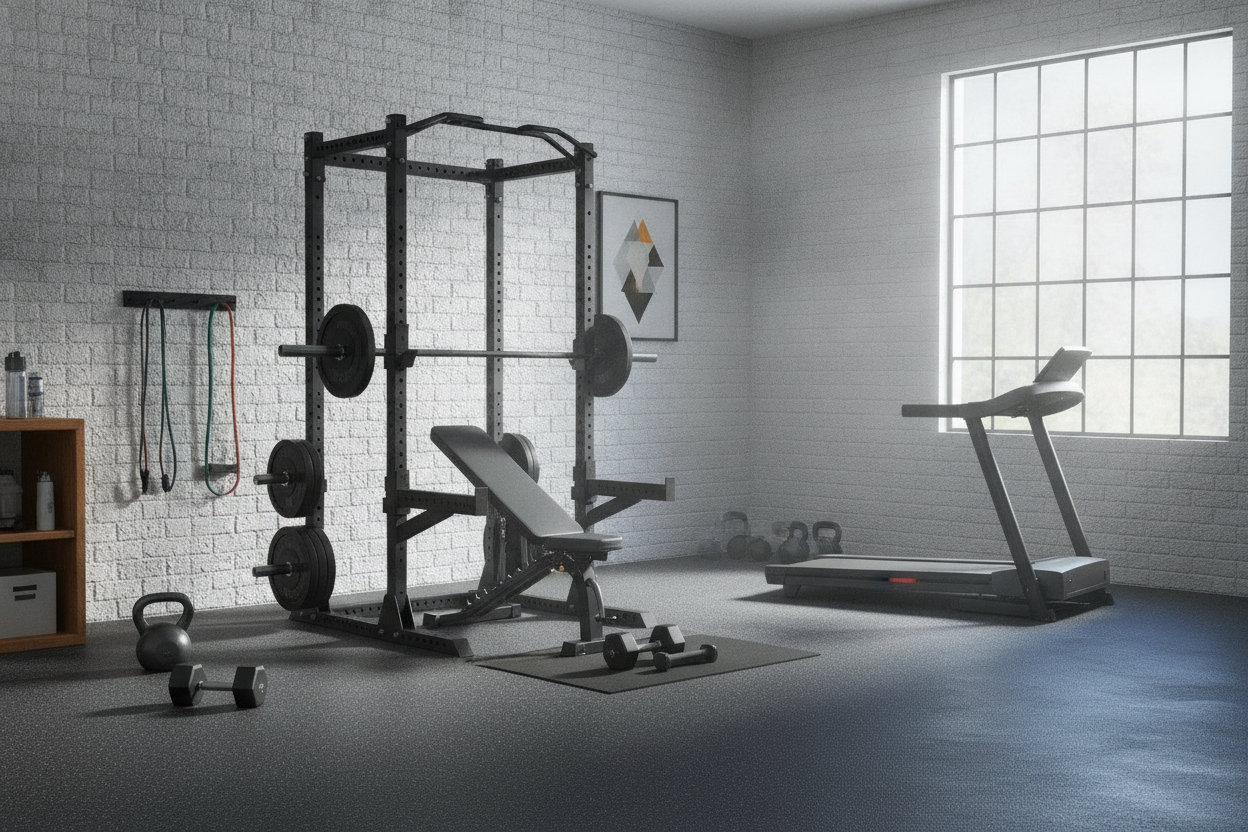
If I have to move three bikes and a lawnmower just to reach my pull-up bar, I am probably not going to work out. I cleared a dedicated corner in my garage and laid down a 6x8ft exercise mat yoga mat gym flooring. It is thick enough to protect the concrete from dropped 50-lb dumbbells and large enough for lunges without stepping onto cold oil-stained cement.
Having that defined boundary tells my brain it is time to work, even if the rest of the house is a mess. You don't need a $5,000 functional trainer. You need a flat surface, a pair of adjustable dumbbells, and the discipline to step onto that mat. Minimize the setup time, and you minimize the excuses.
The Actual Routine: 4 Days, No Fluff
This simple effective workout routine is built on the big rocks. We are talking four days a week, 45 minutes max, including a quick warm-up. We aren't testing 1RM totals here; we are keeping the engine running and the muscles full. No specialized machines, no weird cable attachments—just basic, heavy movements.
Days 1 & 3: Upper Body Essentials
We are pairing pushes and pulls to save time. I usually start with an Overhead Press superset with Pull-ups, followed by a Floor Press and Rows. It keeps the heart rate up and the pump real. While an effective machine chest workout routine is great if you have access to a commercial gym, at home, we stick to free weights to keep the transitions fast and the equipment footprint small.
Days 2 & 4: Lower Body and Core
Forget the 500-lb back squats when you are truly burnt out. I switched to Bulgarian Split Squats and RDLs. They tax the legs and glutes without the massive systemic fatigue of a heavy barbell on your spine. Finish with some hanging leg raises or a heavy farmer's carry. It is brutal, but it is fast. You will be done before your coffee gets cold.
When You're Ready to Scale Back Up
This routine is a bridge, not a life sentence. It is designed to keep you in the game when you feel like quitting. When the itch to lift heavy or chase a new PR finally returns, explore our complete workout hub for more specialized and intense programs. The goal is to never stop moving, even if you are just idling for a month or two.
Personal Experience: My Biggest Mistake
I once tried to run a high-volume powerlifting program while moving houses and starting a new job. I ended up with a strained hip flexor and didn't touch a weight for two months because I felt like a failure for missing sessions. It was a stupid mistake. Now, I keep this minimalist plan in my back pocket. It is my 'break glass in case of emergency' protocol.
FAQ
Can I really maintain muscle with only 4 days?
Absolutely. If you push your sets close to failure, two heavy sessions per muscle group per week is more than enough to maintain—and often even grow—muscle mass.
What if I only have 20 minutes?
Pick one push, one pull, and one leg movement. Perform them as a circuit with minimal rest. You can get a lot of work done in 20 minutes if you stop looking at your phone.
Do I need a full rack for this?
No. A solid set of dumbbells and a bench can cover 90% of this routine. If you don't have a bench, floor presses and goblet squats work just fine.