Built in the Living Room: A Complete Guide to Growing Legs Without a Gym
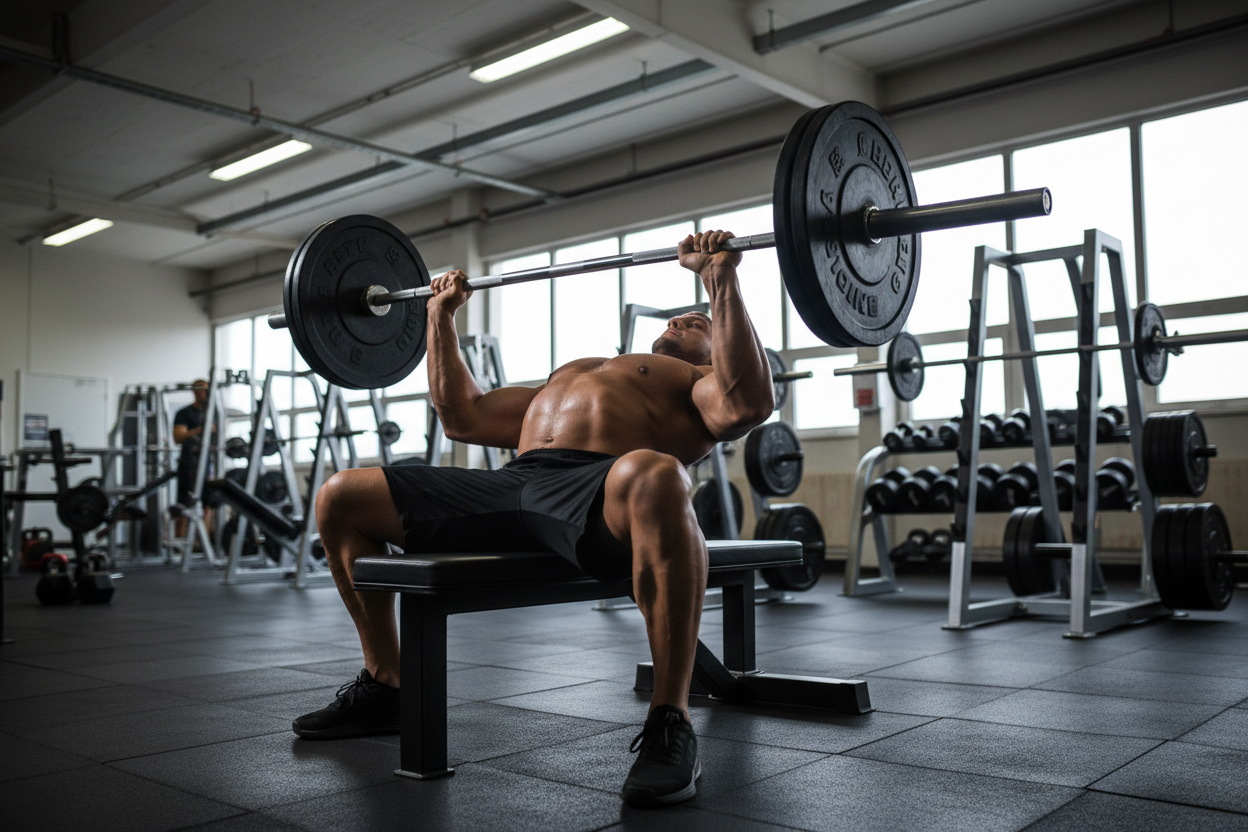
Building a powerful lower body doesn't require a squat rack, hundreds of pounds of plates, or a gym membership. You can effectively train legs at home using gravity, leverage, and intensity techniques that rival heavy iron. The biggest misconception in fitness is that bodyweight training is only for beginners or cardio. If you manipulate tempo, rest times, and unilateral loading, your living room floor becomes just as effective as the weight room.
I learned this lesson the hard way a few years ago. I was traveling for work in a remote area with absolutely no access to fitness equipment for three months. I was terrified I’d lose the leg size I had spent years building. Forced to improvise, I started doing high-volume pistol squats and walking lunges with a backpack full of books. To my surprise, my legs didn't shrink. They actually got more defined and my stabilizer muscles became bulletproof. The soreness I felt after those sessions was different—deeper and more exhausting than my usual heavy sets of five. That experience shifted my perspective on what workouts for lower body at home could actually achieve.
The Mechanics of Home Hypertrophy
To understand how to do legs at home effectively, you have to stop thinking about moving weight and start thinking about muscle tension. In the gym, we rely on mechanical tension provided by heavy loads. At home, since we lack that external load, we must increase metabolic stress and time under tension.
You accomplish this by slowing down your reps. Instead of dropping quickly into a squat, take three to four seconds to lower yourself. Pause at the bottom. explode up, and immediately start the next rep without locking out your knees. This keeps the tension on the muscle fibers constantly, creating the stimulus needed for growth. This approach transforms simple leg strengthening exercises into grueling muscle-builders.
Top Movements for Size and Strength
The best at home workouts for legs rely on compound movements that recruit multiple muscle groups. Isolation exercises are difficult to replicate without machines, so we focus on the big movers.
The Bulgarian Split Squat
If there is one king of leg building exercises at home, it is the Bulgarian Split Squat. By elevating your rear foot on a couch or chair, you shift almost all your body weight to the front leg. This creates a load comparable to a weighted squat but requires zero equipment. It targets the quads, glutes, and challenges your balance significantly.
The Pistol Squat (and regressions)
For those seeking the best leg exercises for mass at home, the pistol squat is the gold standard. It requires immense mobility and strength. If you can't do a full pistol squat yet, start by sitting down onto a chair on one leg and standing back up. This unilateral focus ensures you can't hide muscle imbalances.
Glute Bridges and Nordic Curls
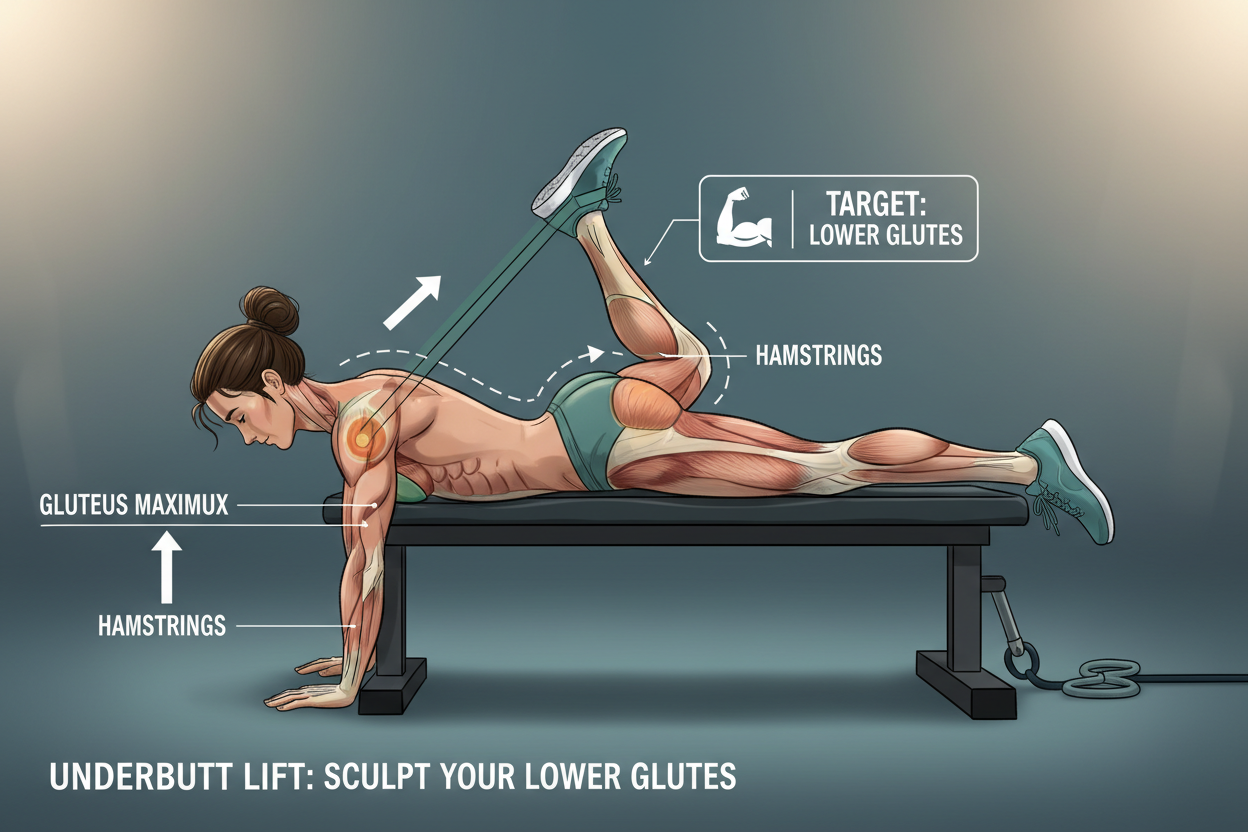
Most leg muscle home workouts neglect the posterior chain (hamstrings and glutes). Single-leg glute bridges are essential for hip health. If you have a partner or a heavy piece of furniture to anchor your feet, Nordic curls are arguably the best hamstring exercise in existence, gym or no gym.
Designing Your Routine
Randomly doing squats during commercial breaks isn't enough. You need structure. Below are three different approaches depending on your goals and current fitness level.
Option 1: The Hypertrophy Focus
This is arguably the best leg workout for home if your goal is size. Perform this routine twice a week with at least two days of rest in between.
- Bulgarian Split Squats: 4 sets of 12-15 reps per leg (0 seconds rest between legs).
- Sliding Hamstring Curls: 4 sets of 15 reps (use a towel on a hardwood floor or paper plates on carpet).
- Walking Lunges: 3 sets of 20 steps per leg. Keep your torso upright to hit the quads.
- Calf Raises on a Step: 5 sets of 20 reps.
Option 2: The Metabolic Burn
If you want intense leg workouts at home that also burn fat, high-intensity interval training (HIIT) combined with resistance is the way to go. Perform each exercise for 45 seconds, rest for 15 seconds, and complete the circuit 4 times.
- Jump Squats (explode up as high as possible)
- Reverse Lunges (alternating legs)
- Side Lunges (lateral movement is key for hip health)
- Wall Sit (hold until failure on the final round)
Option 3: The Full Posterior Chain
Sometimes efficiency is key. A leg and back workout at home is a great combination because many hip-hinge movements naturally engage the lower back. If you have a pull-up bar, this combo is deadly.
- Single-Leg Romanian Deadlifts (RDL): 4 sets of 12 reps. Focus on the stretch in the hamstring.
- Pull-ups or Door Frame Rows: 4 sets to failure.
- Step-Ups (using a sturdy chair): 3 sets of 15 reps. Drive through the heel.
- Superman Holds: 3 sets of 45 seconds to strengthen the lower back and glutes.
Progressive Overload Without Weights
To ensure this remains a viable workout for your legs at home over the long term, you must make it harder over time. Since you cannot add 5lbs to the bar, you must add complexity or volume. Increase the number of reps each week. If you did 12 reps of split squats last week, aim for 13 this week. Alternatively, decrease your rest time. If you rested 90 seconds between sets, cut it to 60. These small adjustments force the body to adapt.
Another method is adding pauses. Pause for two full seconds at the bottom of every squat or lunge. This removes the stretch reflex (the bounce) and forces the muscle to generate force from a dead stop. This is humbling and will make even basic air squats feel heavy.
Consistency is the Variable
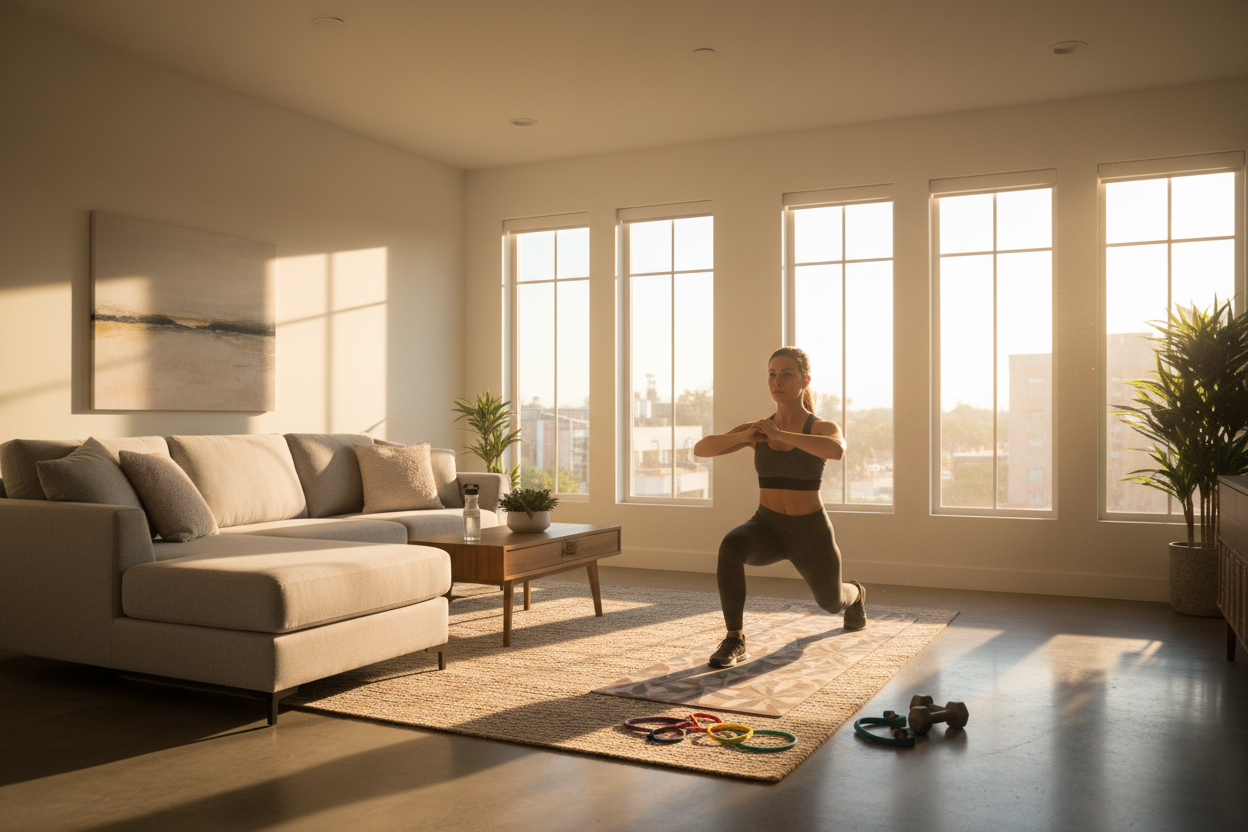
The perfect routine is the one you actually do. The convenience of home training is its greatest asset, but also its biggest distraction. Treat your living room like a gym the moment you start your warm-up. Put on your workout gear, play your music, and focus. Whether you are doing simple leg strengthening exercises to fix knee pain or chasing mass with high-volume lunges, the principles of effort and consistency remain the same. Your legs don't know if you are in a high-tech facility or your bedroom; they only know tension and fatigue. Give them plenty of both.
Frequently Asked Questions
How often should I train legs at home to see results?
For most people, training legs 2 to 3 times per week is optimal. Because bodyweight exercises generally cause less systemic fatigue than heavy barbell lifts, you can often train them with higher frequency compared to heavy gym sessions, provided you are eating and sleeping well.
Can I actually build big legs without weights?
Yes, but it requires high effort. You must train close to failure and utilize unilateral (single-leg) exercises like pistol squats and split squats to put enough load on the muscles. High repetitions and slow tempos are necessary to stimulate hypertrophy without heavy external loads.
What if I have bad knees?
Focus on posterior chain exercises like glute bridges and hamstring curls which place less stress on the knee joint. For squat patterns, limit the depth to a pain-free range of motion and focus on wall sits (isometric holds) which strengthen the muscles without the grinding movement on the joint.