The Underbutt Lift: How to Actually Define Your Gluteal Fold
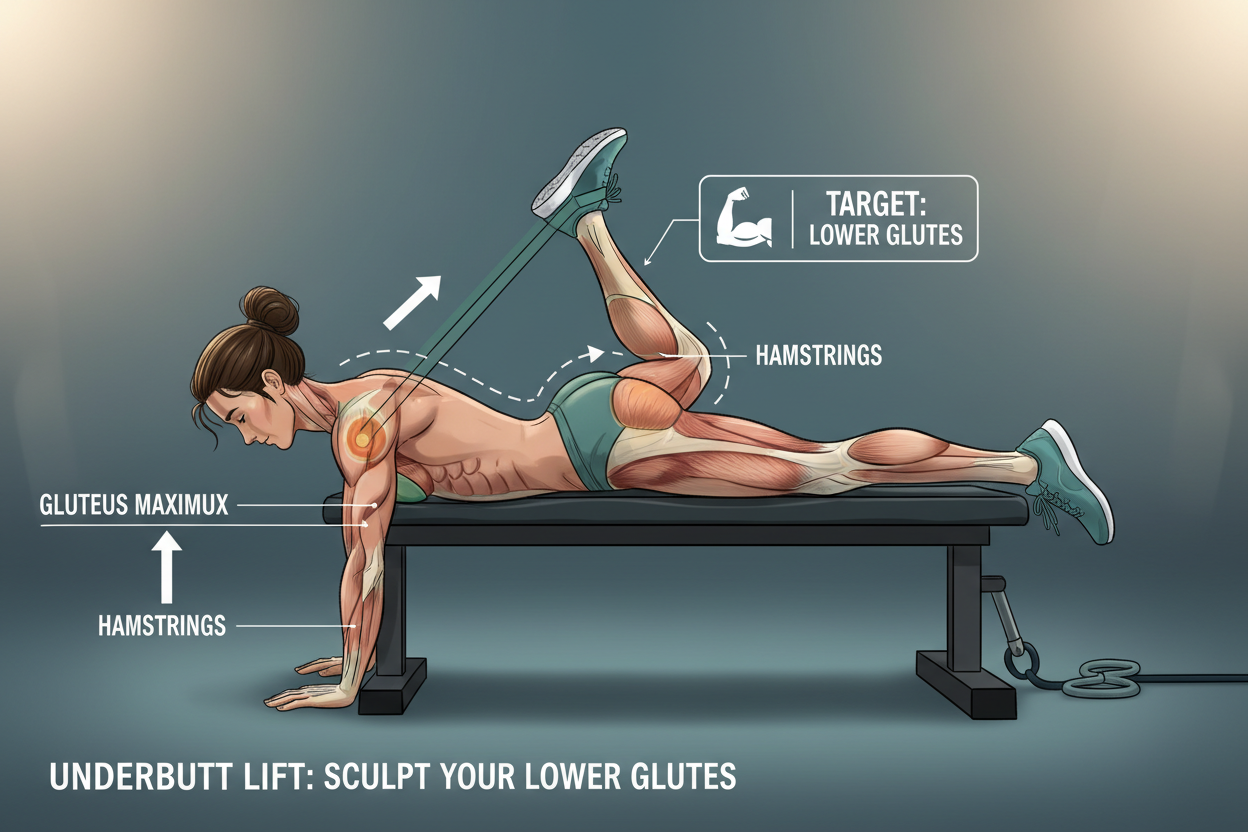
You have likely looked in the mirror and wondered why, despite all the squats, that specific line where your glutes meet your hamstrings just isn't lifting the way you want it to. This area, anatomically known as the gluteal sulcus, is notoriously difficult to target because it isn't a single muscle. It is the structural intersection of the lower gluteus maximus fibers and the hamstring attachment. To change the shape of this area, you cannot rely on general leg days; you need a strategy that specifically targets the posterior chain extension.
I spent the first three years of my training life obsessed with heavy back squats, assuming they were the golden ticket to a complete lower body. While my quads grew significantly, my posterior chain lagged behind. It wasn't until I shifted my focus toward hip-hinge movements and specific extension mechanics that I saw a change in the "underbutt" area. The reality is that gravity and genetics play a massive role here, but with the right mechanical tension, you can create a visual lift.
Understanding the Anatomy of the Lift
Before jumping into the movements, you need to understand what you are trying to move. The "fold" is essentially where the skin creases because of the gluteal muscle hanging over the hamstring. To alter this appearance, you have two primary objectives: hypertrophy of the lower gluteus maximus and development of the upper hamstring. A comprehensive gluteal fold workout must integrate exercises that lengthen the hamstrings while contracting the glutes.
If you only focus on the upper glute shelf (the medius and minimus), you might get a wider look, but you won't fix the sag at the bottom. The exercises below are chosen specifically because they place the highest amount of tension on the glute-ham tie-in.
The King of the Crease: Romanian Deadlifts (RDLs)
If you could only pick one movement to transform your backside, the Romanian Deadlift would be it. Unlike a conventional deadlift where the knees bend significantly, the RDL keeps the legs relatively straight (but not locked), forcing the hips to travel backward. This creates a massive stretch in the hamstrings and the lower glutes.
Proper execution is non-negotiable here. You want to push your hips back as if you are trying to close a car door with your butt. As you lower the weight, stop as soon as your hips stop moving back. Going lower than that usually shifts the tension to your lower back, which we want to avoid. The magic happens at the bottom of the movement—the deep stretch. This is a premier gluteal fold exercise because it builds the density of the hamstrings right where they insert under the glutes, providing a supportive base that pushes the glutes up.
Deep Deficit Reverse Lunges
Unilateral training is essential for fixing imbalances and allowing for a deeper range of motion than bilateral squats usually permit. By standing on a small platform or weight plate (about 2-4 inches high) and stepping back into a lunge, you increase the distance your glute has to travel.
To bias this toward the gluteal crease exercise category rather than a quad exercise, lean your torso forward slightly—about 30 to 45 degrees—while keeping your back flat. This torso lean pre-stretches the glutes. Drive through the heel of the front foot to return to the starting position. You should feel a distinct pull right at the base of the butt cheek. This movement isolates the lower fibers effectively because the glute max is the primary extensor of the hip in this deep flexion position.
The 45-Degree Hyperextension
Often utilized incorrectly as a lower back warm-up, the 45-degree hyperextension is actually a powerhouse for the posterior chain when tweaked slightly. The goal here is to round the upper back slightly (chin tucked to chest) to take the spinal erectors out of the equation. This forces the glutes and hamstrings to do all the lifting.
Turn your toes out about 45 degrees. As you lower yourself, get a full stretch. As you rise, focus strictly on driving your hips into the pad. Do not hyperextend your spine at the top; simply come up until your body is in a straight line and squeeze hard. This is one of the most effective gluteal sulcus exercises because it maintains constant tension on the area without the limiting factor of spinal compression that you might get from heavy barbell work.
Cable Pull-Throughs
The cable pull-through mimics the mechanics of a kettlebell swing or an RDL but provides a different force vector. Because the weight is pulling you backward, it forces you to aggressively engage your glutes to maintain balance and stand upright. This constant horizontal tension is excellent for high-repetition burnout sets at the end of a session.
Set the cable pulley to the lowest setting. Face away from the machine with the rope attachment between your legs. Hinge at the hips, letting the cable pull your hands through your legs towards the machine. Snap the hips forward and squeeze the glutes at the top. The mind-muscle connection is vital here; if you just go through the motions, you won't feel it. Visualize the crease lifting as you lock out the hips.
Managing Body Composition and Expectations
We need to address the elephant in the room: body fat. You can build impressive muscle tissue with a targeted gluteal fold workout, but if there is a significant layer of body fat covering the area, the definition will be obscured. The "fold" often becomes more pronounced when body fat is lower.
However, simply losing weight isn't the answer either. Weight loss without muscle stimulus leads to a flat appearance. The ideal approach is "body recomposition"—eating enough protein to support the hypertrophy of the glute muscles while maintaining a slight caloric deficit or maintenance level to manage fat stores. It takes time. In my experience with clients, visible changes to the underbutt area take longer than the upper glutes because the glute max is a large, thick muscle group that requires heavy loads to grow.
Structuring Your Routine
You do not need a separate day just for the underbutt. Instead, integrate these movements into your existing leg days. A balanced lower body split might look like this:
- Compound Lift: Heavy Romanian Deadlifts (3 sets of 8-10 reps)
- Unilateral Movement: Deficit Reverse Lunges (3 sets of 10-12 reps per leg)
- Isolation: 45-Degree Glute-Focus Hyperextensions (3 sets of 15-20 reps)
- Burnout: Cable Pull-Throughs (2 sets of 20+ reps)
Consistency is the primary driver of results. Perform these movements with intent, control the eccentric (lowering) portion of every rep, and ensure you are progressively adding weight or reps over time. The gluteal fold is a stubborn area, but with heavy hinges and deep stretches, it can be lifted and defined.
Frequently Asked Questions
Can you completely get rid of the gluteal fold?
Not entirely, and you shouldn't want to. The fold is a natural anatomical feature where the gluteus maximus overlaps the hamstring. However, through targeted muscle growth and body fat reduction, you can lift the area, making the fold shorter and the transition between glute and leg smoother and tighter.
How long does it take to see results in the underbutt area?
The glutes are the largest muscle group in the body and require significant stimulus to change shape. With consistent training (2x per week) and proper nutrition, you can expect to see noticeable structural changes in 12 to 16 weeks. Patience is key for this specific region.
Are squats or deadlifts better for the gluteal fold?
Deadlifts, specifically Romanian Deadlifts, are superior for this specific goal. While squats are excellent for overall leg mass, they are quad-dominant. Deadlifts focus on the hip hinge, which directly targets the hamstrings and lower glutes, the exact muscles responsible for the underbutt aesthetic.