Built for Sunday: The Blueprint to Explosive NFL Leg Power
You watch them on Sunday afternoons—massive linemen moving with the agility of dancers and running backs cutting with enough force to tear up turf. The physical requirements of professional football are unique. Consequently, nfl leg training isn't simply about stacking as many plates as possible on a barbell. It is a calculated methodology focused on three pillars: ground reaction force, unilateral stability, and injury prevention. To train like a pro, you have to stop thinking about bodybuilding and start thinking about force production.
I learned this the hard way years ago while training alongside a former Division I linebacker preparing for his pro day. I thought my squat numbers were decent, so I figured I could hang. I was wrong. The weight on the bar wasn't the issue; it was the speed at which he moved it and his ability to generate immense power from a static position. While I was grinding out slow reps, he was exploding through the roof. That session shifted my entire perspective. Real athletic power comes from the posterior chain—the glutes and hamstrings—and the ability to transfer that energy into the ground efficiently.
The Philosophy: Power vs. Absolute Strength
There is a distinct difference between being strong and being powerful. Power is strength expressed quickly. An offensive lineman needs absolute strength to hold his ground, but he also needs explosive power to fire out of his stance. This is why an effective nfl leg workout prioritizes movement speed and intent.
Most commercial gym routines focus on the "mirror muscles" (quads), but football is played with the backside of the body. The glutes and hamstrings are the engines that drive sprinting and tackling. If you look at the lower body development of top-tier running backs, their hamstring sweep and glute density are massive. This isn't aesthetic; it's functional armor.
The King of Football Lifts: Trap Bar Deadlift
If you walked into a weight room for the Kansas City Chiefs or the Philadelphia Eagles, you would likely see more trap bars than straight bars for lower body pulling. The straight bar deadlift is a classic, but the risk-to-reward ratio for a multimillion-dollar athlete often tilts toward the trap bar (hex bar).
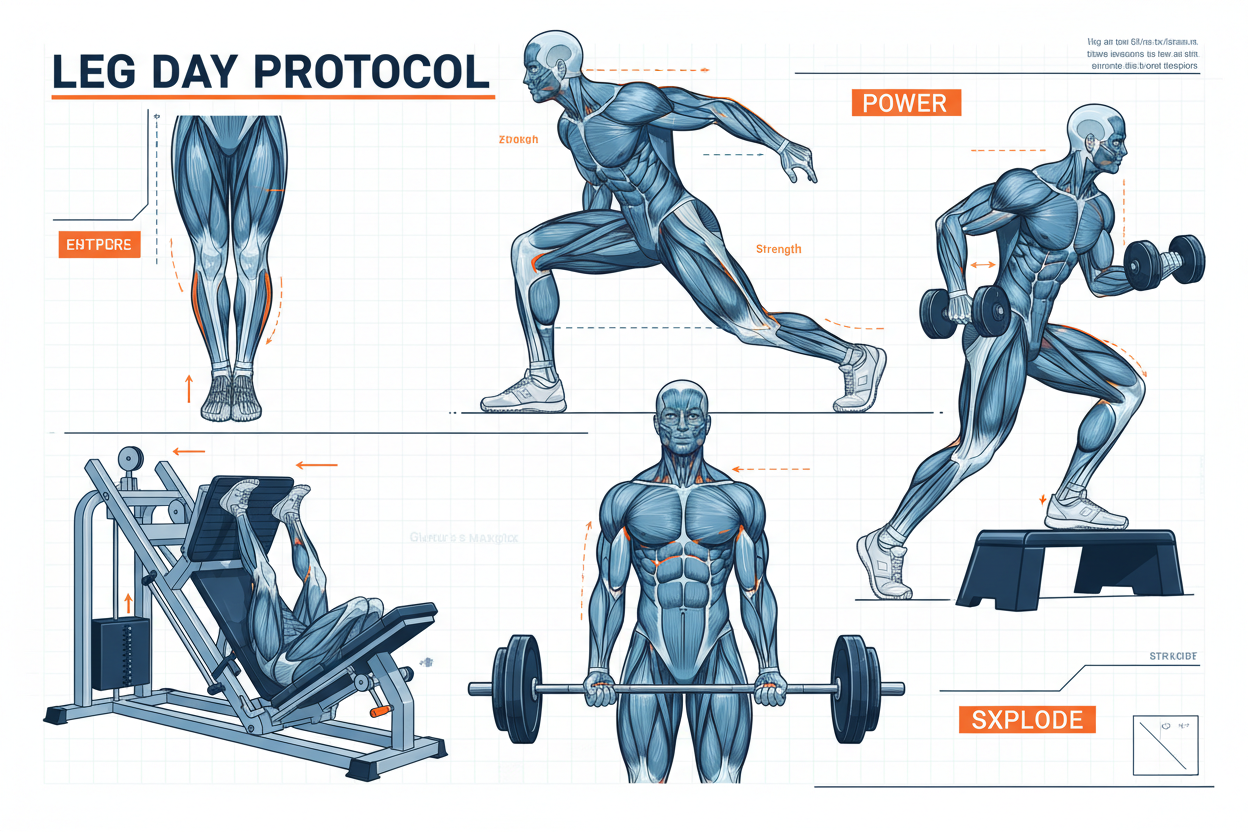
The trap bar allows the athlete to step inside the center of gravity. This reduces shear force on the lumbar spine and allows for greater leg drive, making the movement a hybrid between a squat and a deadlift. It translates directly to the field because it mimics the "athletic position"—chest up, hips back, knees bent. For building raw starting strength without wrecking your lower back, this lift is non-negotiable.
Dynamic Effort and Contrast Training
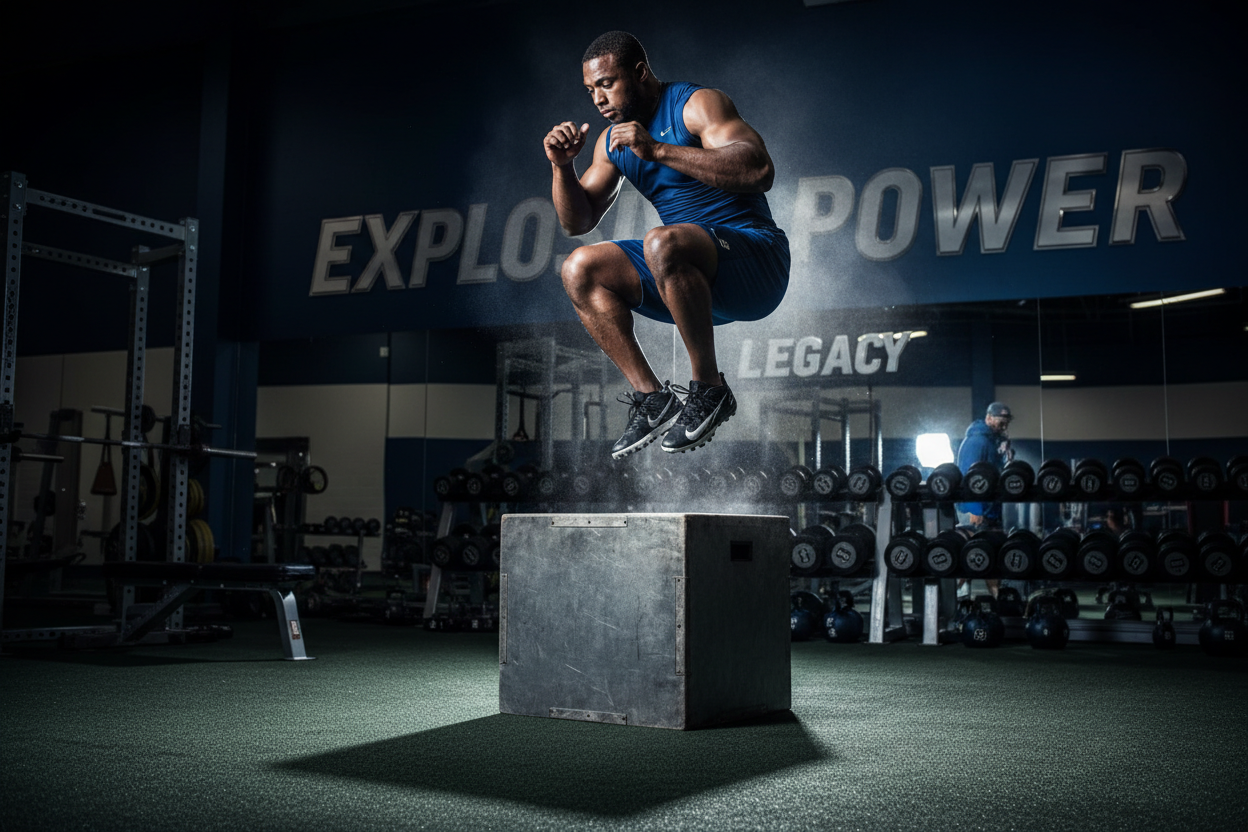
To convert that raw strength into speed, pros use contrast training. This involves pairing a heavy compound lift immediately with an unloaded plyometric movement. For example, a player might perform a heavy set of trap bar deadlifts for 3 reps, rest for 20 seconds, and then perform 3 maximum-height box jumps. This technique recruits high-threshold motor units with the heavy lift, making the subsequent jump more explosive—a phenomenon known as Post-Activation Potentiation (PAP).
Unilateral Training: The Game is Played on One Leg
Rarely does a football player have both feet planted evenly on the ground while exerting force. They are sprinting, cutting, or driving off one leg. Traditional squats are excellent for base strength, but they can hide imbalances. If your right leg is 15% stronger than your left, a heavy back squat will let you compensate. On the field, that imbalance leads to non-contact knee injuries.
Bulgarian Split Squats and Single-Leg RDLs are staples in any nfl leg training regimen. These movements force the stabilizers in the hip and knee to work overtime. The Bulgarian Split Squat, in particular, opens up tight hip flexors (common in athletes) while overloading the working quad and glute. If you want to bulletproof your knees against ACL tears, you need to get uncomfortable with single-leg work.
The Nordic Curl: Hamstring Armor
Speed kills, but pulled hamstrings kill seasons. The hamstring acts as the brake for the leg during a sprint. When the leg swings forward, the hamstring must eccentrically contract to slow the lower leg down before foot strike. This is where most tears happen.
The Nordic Hamstring Curl is widely regarded as the best exercise for preventing these injuries. It focuses entirely on the eccentric (lowering) phase. By strengthening the hamstrings while they lengthen, athletes build resilience against the high-velocity forces encountered during a 40-yard dash. It is a humbling exercise; most people cramp up immediately, but mastering it is a hallmark of elite conditioning.
Sample Off-Season Lower Body Session
This workout structure mimics a typical power day for a skill position player. The goal is quality of movement, not exhaustion. Rest periods are generous because the central nervous system needs to recover to maintain maximum output.
- Warm-up: 10 minutes dynamic stretching, hip flow, and activation (glute bridges, band walks).
- 1. Power Primer: Box Jumps – 4 sets of 3 reps. (Focus on soft landing and max height).
- 2. Main Strength Movement: Trap Bar Deadlift – 4 sets of 3-5 reps. (Heavy but moving fast).
-
3. Contrast Superset:
- A1. Goblet Squat – 3 sets of 6 reps.
- A2. Vertical Jump (bodyweight) – 3 sets of 3 reps immediately after squat.
- 4. Unilateral Work: Dumbbell Bulgarian Split Squats – 3 sets of 6 reps per leg.
- 5. Posterior Chain: Nordic Hamstring Curls (eccentric only) – 3 sets of 5 reps. (Use a partner or anchor your feet; lower yourself as slowly as possible).
- 6. Core/Stability: Paloff Press – 3 sets of 10 reps per side.
Durability and Recovery
You cannot train like a beast if you recover like a novice. The volume in an nfl leg workout is high intensity, taxing the nervous system heavily. Professional facilities invest millions in recovery modalities, but the basics remain accessible to everyone: sleep and mobility.
Ankle mobility is often overlooked. Stiff ankles force the knees to compensate, leading to patellar tendonitis. Simple drills like knee-to-wall touches or calf eccentrics keep the kinetic chain functioning properly. Furthermore, hip mobility is crucial. If your hips are locked up, your lower back takes the beating during squats and deadlifts.
Implementing these strategies requires patience. You won't turn into Saquon Barkley overnight. However, by shifting your focus from "how much can I lift" to "how well can I move this weight," you align your training with the demands of the sport. Build the engine, reinforce the chassis, and the performance will follow.
Frequently Asked Questions
How often do NFL players train legs during the season?
During the season, frequency drops to maintain strength rather than build it. Most players train legs once or twice a week with reduced volume (fewer sets) but keep the intensity (weight) relatively high to prevent muscle atrophy without causing excessive fatigue.
Can I do this workout if I have bad knees?
Yes, but modifications are necessary. Swap the box jumps for non-impact medicine ball slams and replace heavy spinal loading with sled pushes or belt squats, which remove the load from the spine and reduce shear force on the knees while still building leg strength.
Why do NFL players prefer box squats over regular squats?
Box squats break the eccentric-concentric chain, forcing the athlete to generate starting strength from a dead stop, which translates well to football. They also allow for a wider stance that emphasizes the hips and glutes while placing less stress on the knees compared to a free squat.