Building a Workout Plan for Muscle Gain Woman Lifters Won't Hate
I remember standing in a crowded commercial gym, waiting twenty minutes for the only squat rack that wasn't being used for bicep curls. It is frustrating to pay forty bucks a month just to stand around. If you are tired of the crowds and the patronizing 'toning' classes, finding a solid workout plan for muscle gain woman lifters can actually follow at home is a massive upgrade for your sanity and your physique.
Quick Takeaways
- Ditch the high-rep, low-weight 'toning' myth for heavy compound lifts.
- Progressive overload is the only way to force muscle hypertrophy.
- A 4-day upper/lower split is the gold standard for home-based gains.
- Protect your floor and your joints with a high-density lifting surface.
- Eat more protein than you think you need—muscle requires fuel.
The 'Toning' Lie We Need to Stop Believing Today
The fitness industry has spent decades lying to women. They tell you that if you pick up anything heavier than a latte, you will wake up looking like a pro bodybuilder overnight. It is a scam designed to sell you expensive boutique classes and pink plastic dumbbells that weigh less than your purse. The truth is that 'toning' is just a marketing word for building muscle and then losing enough body fat to see it. You cannot 'shape' a muscle without adding mass to it first.
When you do 30 reps of a 5-lb lateral raise, you aren't building a women's muscle-building workout routine at home; you are just doing low-intensity cardio with your arms. To change your body composition, you need mechanical tension. That means lifting weights that actually make you struggle by the 8th or 10th rep. Stop fearing the heavy rack. Muscle is metabolically expensive, meaning the more you have, the more calories you burn just sitting on your couch watching Netflix. If you want that 'sculpted' look, you have to build the slab of granite before you can carve the statue.
What a Real Women's Muscle-Building Workout Routine at Home Requires
Building a muscle-building workout plan for beginners female doesn't require a 5,000-square-foot facility. I have built more muscle in my garage with a pair of adjustable dumbbells and a flat bench than I ever did using fancy selectorized machines. The key is progressive overload. This means every week, or every two weeks, you must do more than you did before. More weight, more reps, or shorter rest periods. If you stay at the same 15-lb dumbbells for six months, your body has no reason to grow.
If you have spent months following a Planet Fitness workout plan to build muscle, you might be used to the circuit-style training where you jump from machine to machine. At home, we focus on the big movers: squats, hinges, pushes, and pulls. You need enough recovery time—typically 48 hours between hitting the same muscle group—to let the tissue repair. This is where the actual growth happens, not while you are sweating in the gym. Consistency beats intensity every single time. A 'perfect' workout once a week is useless compared to a 'good' workout four times a week.
Setting Up Your Space for Heavy Lifts
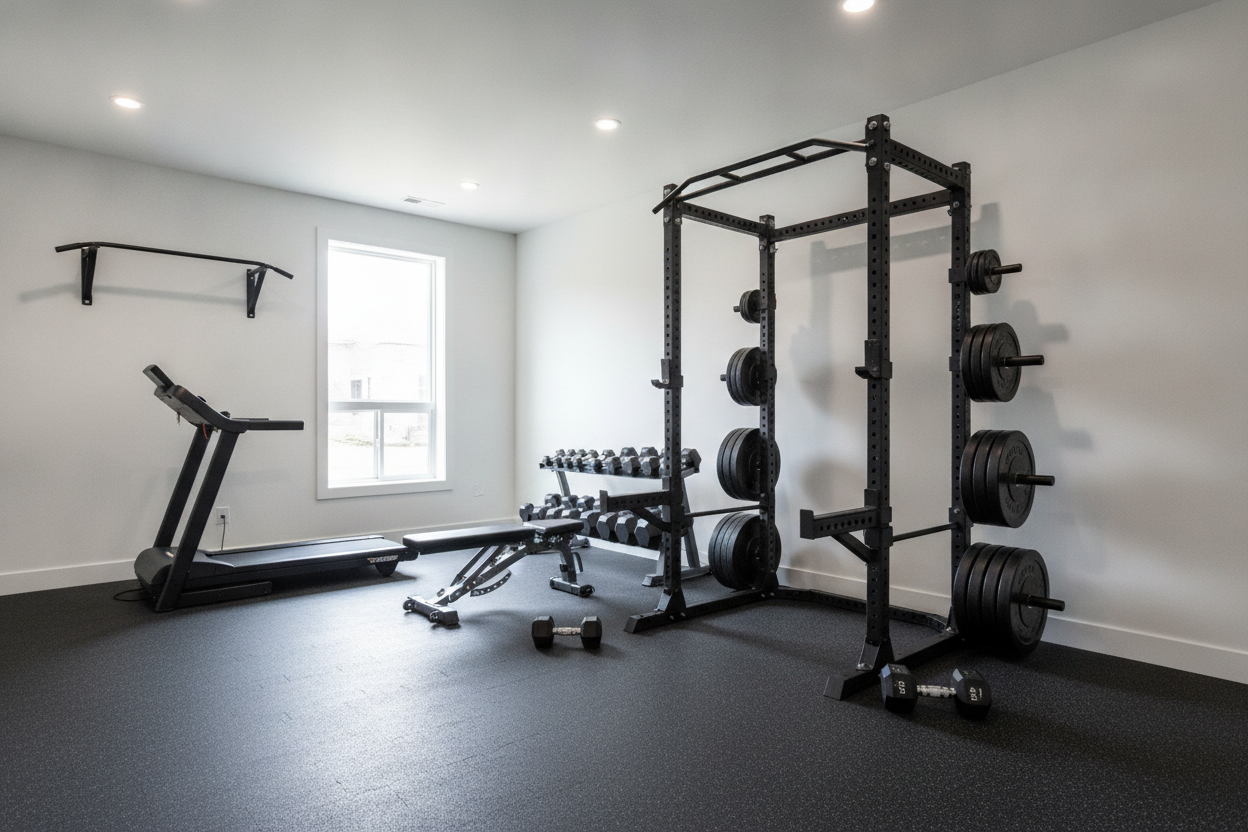
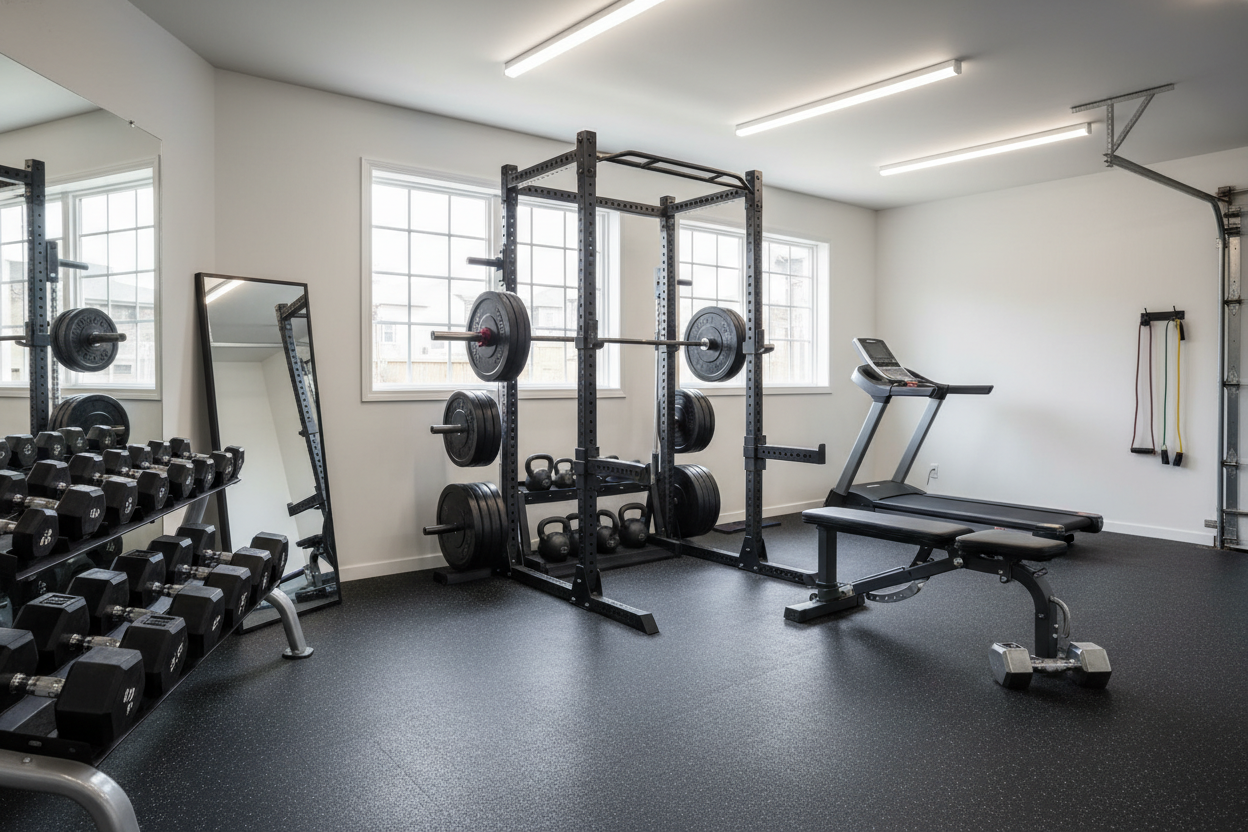
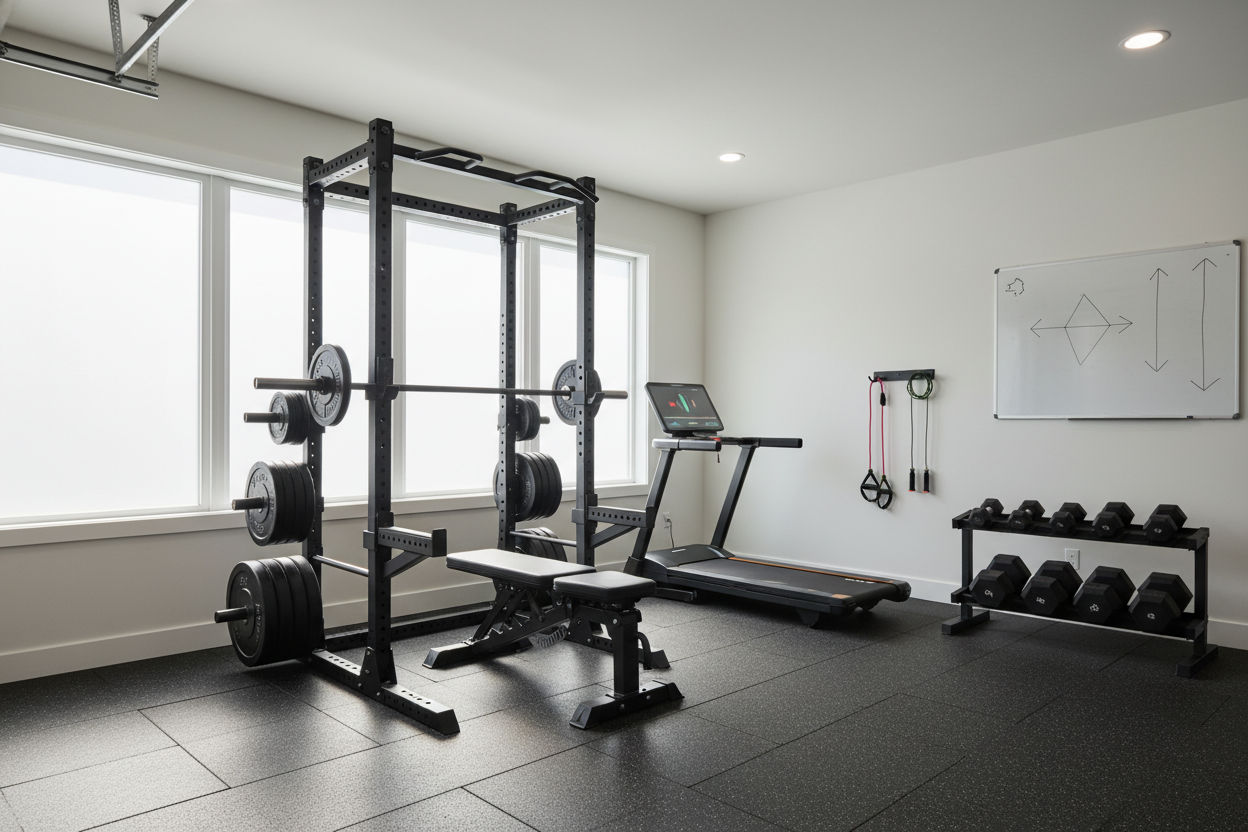
You don't need a full power rack to start a muscle-building workout plan for beginners female at home, but you do need a safe surface. I learned this the hard way when I dropped a 35-lb kettlebell and cracked the laminate in my spare bedroom. A large exercise mat for home gym use is the bare minimum. It saves your floor and provides the traction you need so your feet don't slide out during a heavy split squat.
If you are planning on moving serious weight—and you should be—investing in dedicated gym flooring for home workout spaces is the best move you can make. It dampens the noise so you aren't waking up the whole house during 6 AM deadlifts and it saves your joints from the unforgiving concrete of a garage. Once the floor is set, get a pair of adjustable dumbbells that go up to at least 50 lbs. You will outgrow those 10-lb sets faster than you think.
The 4-Day Muscle Gain Workout Plan Female Lifters Can Run Anywhere
This women's muscle gain workout plan is built on a 4-day split. We are moving away from full-body circuits that leave you gasping for air and moving toward focused hypertrophy. This is a women's workout plan for building muscle that prioritizes the 'big' lifts.
Monday: Lower Body (Squat Focus)
1. Goblet Squats: 3 sets of 8-10 reps
2. Walking Lunges: 3 sets of 12 reps per leg
3. Glute Bridges (Weighted): 4 sets of 12 reps
4. Calf Raises: 3 sets of 15 reps
Tuesday: Upper Body (Push Focus)
1. Dumbbell Overhead Press: 3 sets of 8-10 reps
2. Push-ups (Deficit if possible): 3 sets to failure
3. Dumbbell Floor Press: 3 sets of 10 reps
4. Lateral Raises: 3 sets of 15 reps
Thursday: Lower Body (Hinge Focus)
1. Romanian Deadlifts: 3 sets of 8-10 reps
2. Bulgarian Split Squats: 3 sets of 10 reps per leg
3. Kettlebell Swings: 4 sets of 15 reps
4. Hamstring Curls (with dumbbell between feet): 3 sets of 12 reps
Friday: Upper Body (Pull Focus)
1. Single-Arm Dumbbell Rows: 3 sets of 8-10 reps
2. Pull-ups or Lat Pulldowns (with bands): 3 sets to failure
3. Rear Delt Flies: 3 sets of 15 reps
4. Bicep Curls: 3 sets of 12 reps
Why We Are Skipping the Useless Ab Circuits
You will notice there isn't a 20-minute 'ab blast' at the end of these workouts. Why? Because endless crunches are a waste of your time. If you are doing heavy Romanian deadlifts and goblet squats correctly, your core is already working overtime to stabilize your spine. You cannot spot-reduce fat off your stomach by doing sit-ups. If you want visible abs, build muscle everywhere else and get your diet in check. Stop wasting fifteen minutes at the end of your session on 'bicycle crunches' and use that time to add another set of heavy rows instead.
How to Eat to Actually Support Your Gains
A women's workout plan to gain muscle is only half the battle. If you are eating 1,200 calories a day, you aren't building muscle; you are just starving yourself while lifting weights. To build tissue, you need a slight caloric surplus and a lot of protein. Aim for roughly 0.8 to 1 gram of protein per pound of body weight. If you weigh 150 lbs, that is 120-150 grams of protein daily.
Don't be afraid of carbohydrates either. Carbs are the primary fuel for high-intensity lifting. They replenish the glycogen in your muscles so you can push harder in your next session. If you feel sluggish and weak during your Thursday hinge session, you probably didn't eat enough on Wednesday. Treat food as a tool for performance, not a reward for suffering. You are an athlete now, not a dieter.
Stop Overthinking and Just Start Lifting Heavy
The biggest hurdle for most women isn't the weight—it's the hesitation. We are socialized to take up less space, to be smaller, and to stay in the 'toning' section. Forget all of that. Grab the heavy weights, put on some music that makes you feel aggressive, and put in the work. This workout plan for muscle gain female lifters actually works because it treats you like a serious trainee. Stick to this routine for at least 12 weeks before you change a single thing. Results don't happen in a weekend; they happen in the aggregate of a hundred sessions.
My Personal Experience with Home Gains
When I first started my home gym, I was terrified of 'bulking up.' I spent a year doing high-rep bodyweight movements on a cheap yoga mat. I lost a little weight, but I looked exactly the same—just a smaller version of my soft self. It wasn't until I bought a real set of dumbbells and started failing at the 8-rep mark that my shoulders capped out and my legs actually took shape. My biggest mistake was buying 'fitness' weights (the vinyl-coated ones) that only went up to 15 lbs. I wasted $100 on equipment I outgrew in three weeks. Buy heavy, buy once.
FAQ
How long does it take to see muscle gain?
You will likely feel stronger within 2-3 weeks due to neurological adaptations. Visible muscle growth usually takes 8-12 weeks of consistent lifting and proper nutrition. Patience is your best friend here.
Can I build muscle with no equipment?
You can build a baseline of strength with a women's muscle building workout routine at home no equipment style, but eventually, you will need external resistance. Gravity only provides so much tension. To keep growing, you will eventually need bands, kettlebells, or dumbbells.
Should I do cardio while trying to gain muscle?
Yes, but don't overdo it. Low-intensity walking is great for recovery. High-intensity interval training (HIIT) can sometimes interfere with your lifting recovery if done too often. Keep the lifting as the main course and cardio as the side dish.