Building a Bulletproof Garage Gym: Is the Synergee Setup the Value King?
There comes a point in every lifter's journey where waiting twenty minutes for a squat rack at a commercial gym just isn't an option anymore. You want to lift on your own terms, blast your own music, and not worry about wiping down someone else's sweat. But moving to a home setup introduces a massive hurdle: safety. You can buy all the dumbbells you want, but if you plan on heavy compound movements like squats and bench presses alone, you need a cage. This is where equipment like the Synergee Power Rack V1 enters the conversation, bridging the gap between flimsy budget stands and overpriced commercial rigs.
A power rack is the centerpiece of any serious garage gym. It isn't just a place to hang your weights; it is your spotter when nobody else is around. If you are looking to maximize floor space without sacrificing the ability to go heavy, finding the right cage is critical. Many generic options on Amazon look the same, but the nuances in steel gauge, hole spacing, and weld quality make a significant difference when you have 300 pounds on your back.
Why the Cage is the Anchor of Your Home Gym
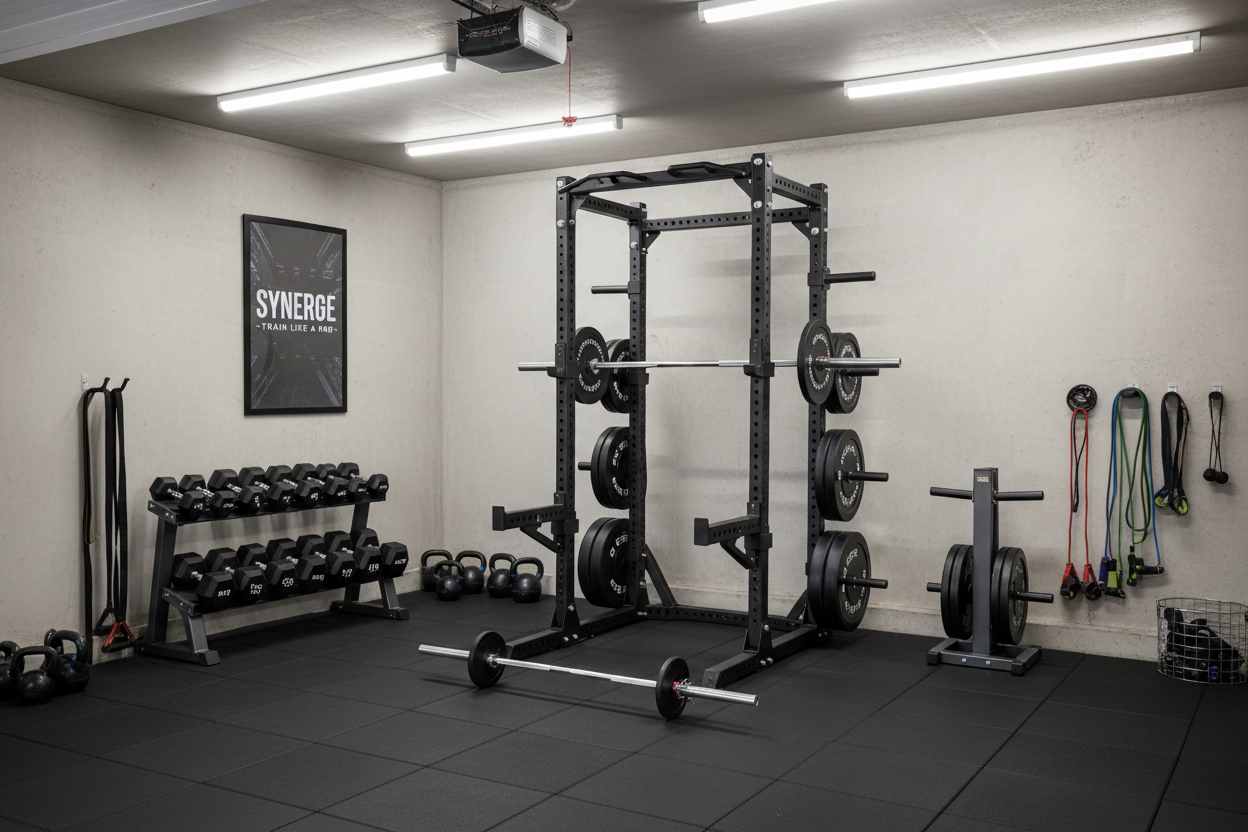
When you strip away the cardio machines and the fancy isolation stations, strength training comes down to moving a barbell against gravity. Doing this safely at home requires a structure that won't tip, wobble, or buckle. The Synergee rack has gained traction in the home gym community specifically because it hits a sweet spot regarding weight capacity and footprint. It is rated for enough weight that 99% of lifters will never max it out, yet it doesn't require a warehouse to set up.
Stability is the primary metric here. A rack needs to feel grounded. When you slam the bar back into the J-cups after a heavy set of overhead presses, you don't want the entire structure to shudder. This is often where entry-level racks fail. They use thin steel or poor engineering that results in a terrifying wobble. A proper setup provides a rigid box that allows you to fail a lift safely. If you get stuck at the bottom of a squat, the safety arms catch the bar, not your spine.
A Look at the Synergee Power Rack V1
The V1 model is designed with the residential user in mind. It typically features a standard 2x2 steel frame, which is the industry standard for home equipment. This dimension is important not just for structural integrity, but for compatibility. If you decide later that you want to add dip attachments, landmines, or jammer arms, a 2x2 upright makes finding accessories much easier compared to proprietary sizing.
One specific aspect of the Synergee Power Rack V1 that stands out is the inclusion of a pull-up bar with decent knurling. Many budget racks treat the pull-up bar as an afterthought, using slick powder coating that becomes impossible to grip once your hands get sweaty. A good rack serves as a complete bodyweight station as well. You can hang rings for rows, attach bands for mobility work, or perform dead hangs for spinal decompression.
My Experience with the "Shake Test"
I remember the first time I assembled a budget rack in my garage. I tightened the bolts with everything I had, stepped back, and gave it a shove. It swayed like a tree in the wind. It was terrifying. When I later had the chance to test a Synergee setup, the difference was immediately noticeable. I performed what I call the "aggressive re-rack test." I loaded the bar up and racked it with more force than necessary, mimicking the end of a grueling set where you just want to get the weight off your back.
The rack absorbed the impact without shifting across the concrete. While I always recommend bolting any rack to the floor for maximum safety, especially if you plan on doing kipping pull-ups or using heavy bands, the base stability of the Synergee rack was impressive for a freestanding unit. It gave me the confidence to bench press alone, knowing the safety pins were sturdy enough to catch the bar if my triceps gave out.
Versatility and Footprint
Space is usually the biggest constraint for home gym owners. You might be sharing the garage with a car, a lawnmower, and holiday decorations. You need a rack that defines your workout space without taking over the entire room. The footprint needs to be efficient. You need enough depth inside the cage to squat without hitting the uprights, but not so much that it extends too far into the room.
This rack allows for a high degree of versatility within that compact footprint. Beyond the big three lifts (squat, bench, deadlift), the frame allows for rack pulls, which are excellent for building back thickness. You can set the safety pins at knee height and pull from there, overloading the top portion of the movement. This is something you simply cannot do safely with independent squat stands.
The Importance of Hole Spacing
A detail often overlooked by beginners is the spacing of the holes on the uprights. This dictates where you can place your J-cups and safety arms. If the holes are spaced too far apart, you might find yourself in an awkward position where the J-cup is either too high (forcing you to tip-toe to unrack) or too low (forcing you to do a quarter squat to get the bar out). Westside hole spacing (closer spacing in the bench zone) is the gold standard, but consistent 2-inch spacing is generally sufficient for most.
The Synergee Power Rack V1 manages this well, providing enough adjustment points to find a comfortable start position for both benching and squatting. This adjustability is vital for safety. If your safety bars are too low because of poor hole spacing, they won't save you. If they are too high, they impede your range of motion and ruin the lift.
Comparing Value and Longevity
Fitness equipment is an investment. You want steel that lasts decades, not plastic that cracks in a year. The finish on the metal matters. Cheap paint chips off, leading to rust, especially in humid garages. Powder coating is the preferred finish as it resists dings and scratches from the barbell. The Synergee equipment generally utilizes a finish that holds up well to daily abuse.
When you compare the cost of a monthly gym membership to the one-time price of a Synergee rack, the ROI usually happens within a year or two. But the real value is consistency. Removing the friction of driving to the gym means you are less likely to skip leg day. Having a reliable, heavy-duty cage 20 feet from your living room eliminates excuses.
Final Thoughts on the Setup
Building a home gym is about balancing budget with safety. You can cut corners on things like weight plates or mats, but you should never cut corners on the rack. It is the skeleton of your gym. Whether you are a powerlifter looking to move heavy iron or a functional fitness athlete needing a station for pull-ups and barbell cycling, the cage is non-negotiable.
The Synergee Power Rack V1 positions itself as a robust solution for those who want professional-grade safety without the commercial-grade price tag. It handles the basics exceptionally well, provides a stable platform for heavy lifting, and fits into standard residential spaces. Once you have the rack, a bar, and some plates, you have everything you need to build elite strength.
Frequently Asked Questions
Do I need to bolt the rack to the floor?
While the rack is stable on its own for static lifts like squats and bench presses, bolting it down is highly recommended for maximum safety. If you plan on doing dynamic movements like kipping pull-ups or using heavy resistance bands attached to the top, anchoring the rack prevents it from tipping or walking across the floor.
What is the weight capacity of the Synergee Power Rack V1?
This rack is generally rated for a high weight capacity, often upwards of 700 to 1,000 pounds depending on the specific iteration and setup. This is more than sufficient for the vast majority of lifters, ensuring the structure won't buckle even under heavy loads.
Can I use standard 1-inch hole accessories with this rack?
Since the rack typically uses 2x2 inch uprights with 1-inch holes, it is compatible with a wide variety of third-party attachments. However, always verify the pin size of any accessory you buy to ensure a snug fit without damaging the uprights.