Bro Splits Are Dead: The Best Workout Routine to Build Muscle
I remember spending two hours every Monday waiting for a bench at the local commercial gym. It was a ritual. International Chest Day. By the time I finished my seventh set of cable flyes, my chest was fried, but I wouldn't touch it again for seven days. That is a massive mistake. If you want the best workout routine to build muscle, you have to stop training like an enhanced pro and start training like a human being.
Quick Takeaways
- Muscle protein synthesis usually returns to baseline after 48 hours.
- Hitting a muscle group twice a week is objectively better for growth than once.
- Progressive overload on compound lifts is the engine; isolation work is the paint job.
- Recovery happens between sessions, not during them.
Why You Need to Kill the 'Chest Monday' Tradition
The traditional 'bro split'—where you dedicate one day each to chest, back, legs, shoulders, and arms—is a relic of the 90s. It works great if you have professional-grade genetics or 'chemical assistance.' For the rest of us, it is a waste of time. When you crush your chest on Monday, your muscle protein synthesis (MPS) spikes, but it drops back to baseline within 24 to 48 hours. By Thursday, that muscle is no longer growing; it is just sitting there waiting for next Monday.
By switching to a higher frequency, you keep that growth signal turned on all week long. Instead of doing 20 sets of chest in one day and barely being able to lift your arms, you do 10 sets on Monday and 10 sets on Thursday. The total volume is the same, but the quality of your sets is higher because you are not exhausted by the time you reach your third exercise. It is a smarter way to find the best muscle workout for your natural potential.
What Actually Makes the Best Muscle Workout?
Hypertrophy is not magic; it is biology. To force a muscle to grow, you need three things: mechanical tension, metabolic stress, and enough recovery to actually build the tissue. Most people fail because they focus on 'the pump'—that burning sensation from high reps—without ever adding weight to the bar. If you are still benching 135 lbs six months from now, your chest will look exactly the same regardless of your split.
The best muscle workout focuses on hitting each muscle group at least twice every seven days. You want to prioritize heavy compound movements like the squat, bench, and row, then fill in the gaps with isolation work. You can find several templates that follow this rule in our dedicated workout hub. The goal is to manage fatigue so you can hit the gym hard again in 48 hours, not to leave yourself crippled for a week.
Upper/Lower vs. PPL: Choosing Your Battle Plan
If you have four days a week to train, the Upper/Lower split is the undisputed king. You hit your upper body on Monday, lower on Tuesday, rest Wednesday, and repeat. It is balanced, sustainable, and fits into a busy life. It gives you four distinct opportunities to push your limits without spending three hours in the garage. I have found this split is the most 'idiot-proof' way to ensure progress.
If you have six days and the recovery capacity of a 19-year-old, Push/Pull/Legs (PPL) is a great alternative. You push (chest/tris/shoulders) on day one, pull (back/bis) on day two, and hit legs on day three. You repeat the cycle and take one day off. It is high volume and high frequency, but be warned: if you have a physical job or poor sleep, PPL will grind you into the dirt. Choose the plan you can actually stick to for six months, not the one that looks coolest on paper.
Don't Neglect the Base: Structuring Your Lower Half
Leg day is usually the first thing people skip, but it is the foundation of your entire physique. When programming your lower body, you need to balance the 'big' movers—squats and deadlifts—with accessories like lunges or leg curls. If you go heavy on back squats on Tuesday, maybe opt for Romanian deadlifts on Friday to hit the posterior chain without frying your central nervous system.
Understanding the best leg workout to build muscle helps you realize that you do not need 50 sets of leg extensions. You need intensity on the movements that matter. If you are struggling to piece it together, check out this lower body workout to build muscle for a plug-and-play routine that actually works. A thick set of legs makes everything else look better, and the hormonal response to heavy lower body training is a nice bonus for your overall growth.
Prepping Your Garage for Serious Hypertrophy
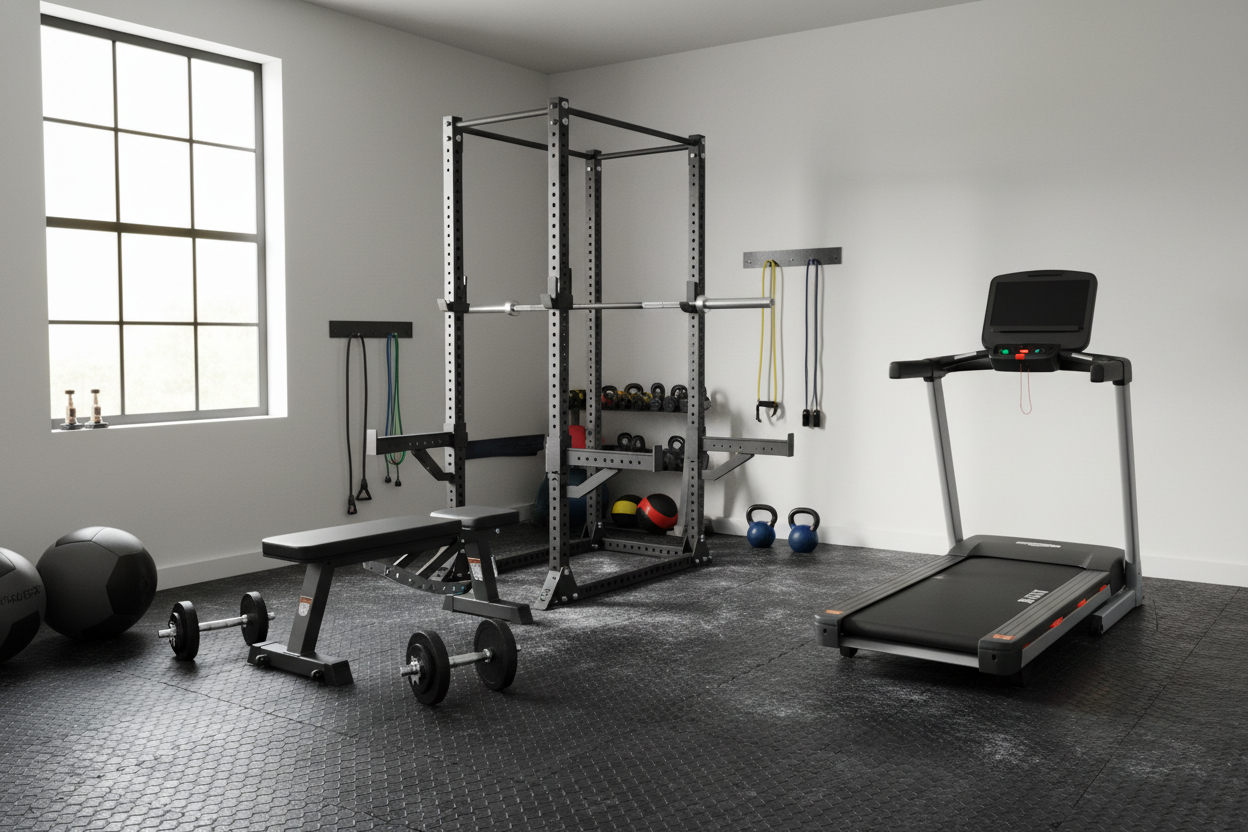
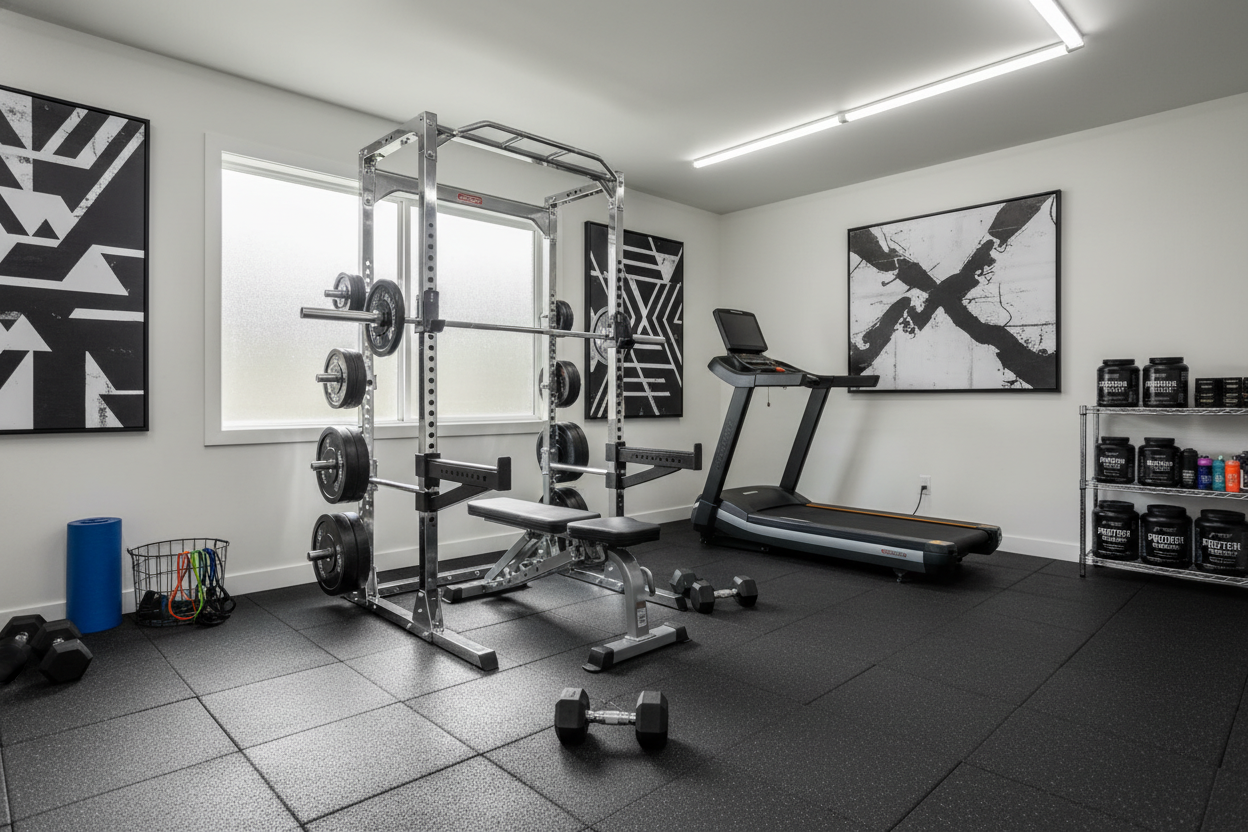
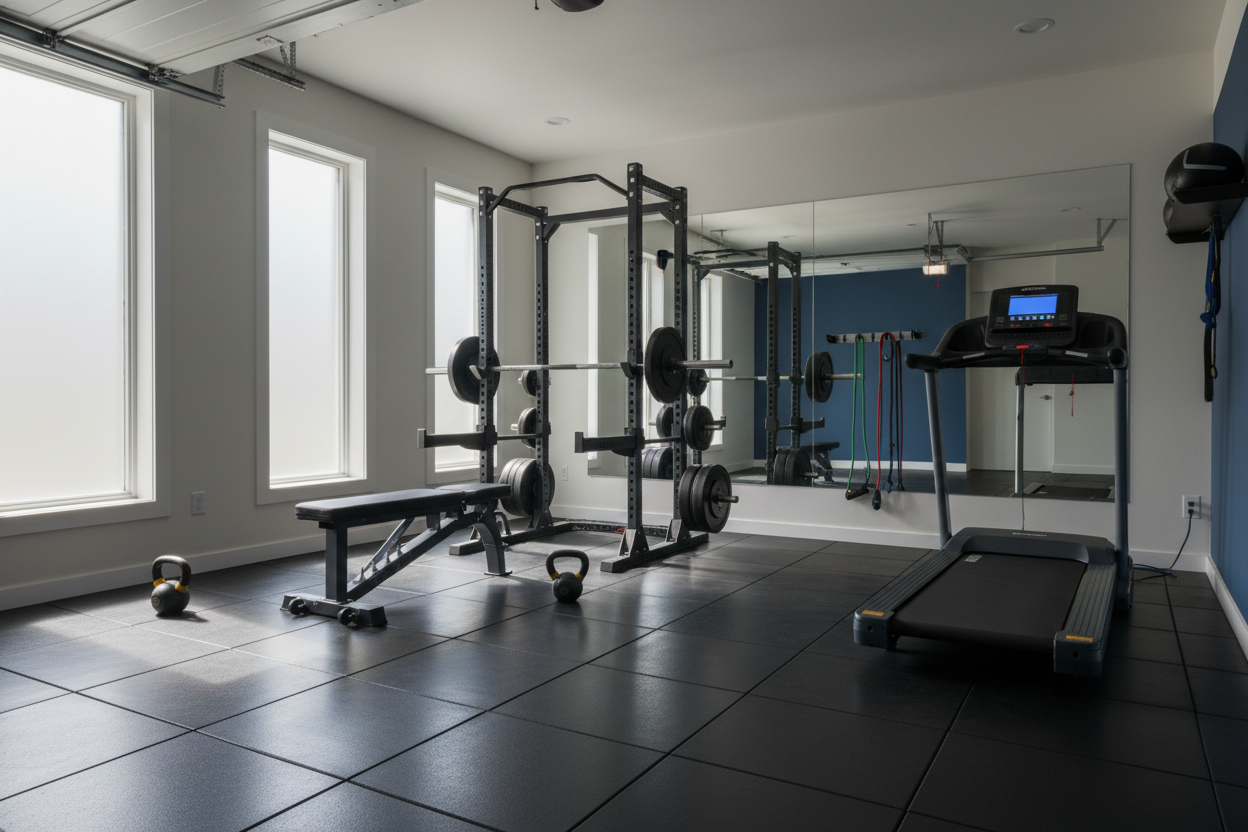
Training at home is a massive advantage for consistency, but you have to respect your space. I have seen guys drop 315-lb deadlifts on bare concrete and wonder why their foundation is cracking. You need more than just a cheap yoga mat. Investing in reliable gym flooring for home workouts is the first thing I tell anyone building a garage gym. It saves your joints, protects your equipment, and dampens the noise so your neighbors don't hate you.
Beyond flooring, focus on a solid power rack and a barbell that doesn't feel like a wet noodle. You do not need fancy machines to build a world-class physique. You need a place where you can safely move heavy weight and enough floor space to lunges without tripping over a lawnmower. Keep it simple, keep it heavy, and keep it consistent.
My Personal Take on Frequency
I spent three years doing a 5-day bro split because that is what the magazines told me to do. My chest grew, but my legs stayed like toothpicks and my back was flat. I was constantly dealing with 'nagging' shoulder pain because I was doing 25 sets of pressing every Monday. When I switched to a 4-day Upper/Lower split, my strength exploded. I stopped chasing the 'burn' and started chasing the logbook. My biggest mistake was thinking I needed to be sore to grow. You don't. You just need to be better than you were last week.
Frequently Asked Questions
How long does it take to see results?
If your diet is on point, you will notice strength gains in 2-3 weeks. Visual changes usually take 8-12 weeks of consistent effort. Stop looking in the mirror every morning; check your progress photos every month instead.
What if I miss a workout?
Do not double up the next day. Just pick up where you left off. One missed session won't ruin your gains, but trying to do a 3-hour 'make-up' workout usually leads to injury or burnout.
Do I need supplements?
Creatine and protein powder are helpful tools, but they won't fix a bad program. Focus on eating enough calories and hitting your protein goals with real food first. The supplements are just the last 5 percent.