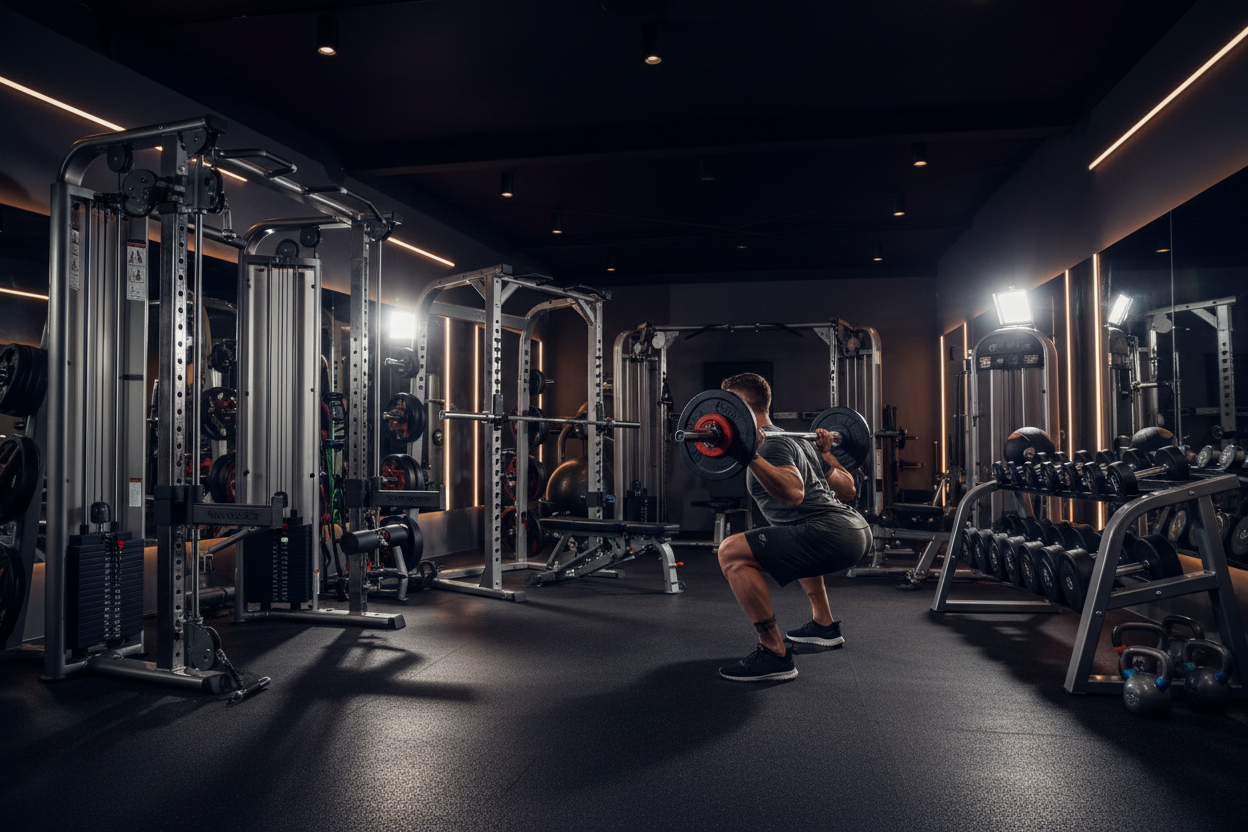
The Best Lower Body Workout to Build Muscle: The Definitive Guide
You have likely spent hours in the squat rack, grinding through reps, only to look in the mirror and see the same legs you had six months ago. It is frustrating. Many lifters mistake fatigue for progress, assuming that if they can't walk the next day, they had a good session. But soreness does not always equal growth.
To truly change your physique, you need a strategy that prioritizes mechanical tension and progressive overload. The **best lower body workout to build muscle** isn't about doing random exercises until you collapse; it is about executing specific movement patterns that force your body to adapt by adding mass.
Key Takeaways: The Pillars of Leg Growth
If you are looking for the quick answer on how to structure your training for maximum hypertrophy, here is the core framework you need to follow:
- Prioritize Compound Movements: Squats, deadlifts, and lunges must form 80% of your volume to maximize motor unit recruitment.
- Balance Intensity and Volume: Combine heavy lower body workout days (low reps, high weight) with lighter, high-rep metabolic work.
- Unilateral Training: Include single-leg work to fix imbalances and increase lower body strength stability.
- Progressive Overload: You must add weight, reps, or improve form every single week.
- Strategic De-loading: You cannot grow if you are constantly injured; recovery is when the muscle is built.
The Anatomy of a Mass-Building Routine
To build lower body muscle effectively, we need to move away from the idea of just "training legs" and start thinking about training movement patterns. A comprehensive lower body strength program addresses the knee-dominant movements (quads) and hip-dominant movements (glutes/hamstrings).
1. The Heavy Compound Lift
Every session should start with a heavy hitter. This is usually a Barbell Squat or a Deadlift variation. This is where you focus on how to increase lower body strength. We are talking about the 4-6 rep range with long rest periods. These movements trigger the greatest hormonal response and systemic stress, which is crucial for overall growth.
2. The Hypertrophy Bridge
After your central nervous system is fried from the heavy work, you move to the 8-12 rep range. This is where a best lower body workout gym session shines. Think Leg Press, Hack Squats, or Romanian Deadlifts. You aren't maxing out here; you are chasing the pump and focusing on time under tension.
3. Unilateral Stabilization
Most people have one leg stronger than the other. To fix this, you need lower body exercises at gym setups that isolate each side. Bulgarian Split Squats or Walking Lunges are non-negotiable here. They are painful, but they are the secret weapon for building lower body aesthetics and function.
Sample: The Definitive Lower Body Gym Workout
Here is a practical application of these principles. This routine covers all bases, from raw power to metabolic conditioning.
- Barbell Back Squat: 3 sets x 5 reps (Heavy focus)
- Romanian Deadlift: 4 sets x 8-10 reps (Posterior chain focus)
- Bulgarian Split Squats: 3 sets x 12 reps per leg (Unilateral focus)
- Leg Extensions superset w/ Leg Curls: 3 sets x 15 reps (Isolation/Pump)
- Standing Calf Raises: 4 sets x 15-20 reps
For an advanced lower body workout, you might incorporate drop sets on the leg extensions or pause-reps on the squats to increase intensity without adding more weight.
High Frequency vs. High Intensity
A common question is whether you should do a daily lower body workout. For 99% of lifters, the answer is no. Muscle protein synthesis lasts about 24-48 hours. If you train heavy legs every day, you interrupt the repair process. Instead, aim for a frequency of twice a week. You might do a heavy day early in the week and a light lower body workout focused on volume and conditioning later in the week.
Conditioning and The Posterior Chain
Many lifters neglect the engine. A lower body conditioning workout doesn't mean running a marathon; it means sled pushes, hill sprints, or high-rep kettlebell swings. These exercises improve your work capacity, allowing you to recover faster between sets on your heavy days.
Additionally, some splits combine the lower body and back workout. This is often called a "Posterior Chain" day. It is incredibly taxing but efficient. Deadlifts hit both the back and legs, making them the perfect bridge exercise if you are running a condensed training split.
Common Mistakes That Kill Gains
When learning how to improve lower body strength, avoid these pitfalls:
- Ego Lifting: Half-reps on the leg press might look cool, but they don't build muscle. Full range of motion is king.
- Skipping Warm-ups: What does lower body workout include? It includes 10 minutes of dynamic stretching. Hips need to be mobile to squat deep.
- Neglecting Hamstrings: Quad-dominance leads to knee pain. Ensure you have a 1:1 ratio of pushing to pulling exercises for the legs.
My Training Log: Real Talk
I want to be transparent about what this actually feels like. I remember running a specialized squat program last winter. On paper, 5 sets of 5 reps sounds manageable. But the reality of being under a bar that is 85% of your max is different.
I recall specifically the feeling of the barbell knurling digging into my traps—not pain, but a dull pressure that tells you things are about to get heavy. The hardest part wasn't the first three reps; it was the walkout on the fourth set. My legs felt like jelly, and there was this distinct wobble in my stabilizers. I had to mentally cue myself to "screw my feet into the floor."
That specific sensation—where your lungs are burning and your quads feel like they are inflated with water—is the only place where growth happens. If you finish your session and you can casually jog up the stairs to the locker room, you didn't go hard enough. The "waddle" is the badge of honor.
Conclusion
Building a massive lower body requires a blend of brutality and science. You need the heavy loads to stimulate the nervous system and the high volume to tear down muscle fibers. Stick to the basics, eat enough protein to support recovery, and don't skip the split squats.
Frequently Asked Questions
Is a daily lower body workout effective for muscle growth?
Generally, no. Muscles grow during rest, not during training. Training legs daily prevents full recovery and can lead to overtraining or injury. A better approach is hitting legs twice a week with at least 48 hours of rest in between.
What is lower body strength vs. hypertrophy training?
What is lower body strength training? It focuses on low reps (1-5) with heavy weights to improve neural efficiency. Hypertrophy (muscle building) focuses on moderate reps (8-12) to maximize metabolic stress and muscle damage. A good program includes both.
Can I combine a lower body and back workout?
Yes, this is often done in "posterior chain" focused routines. Since deadlifts engage both the hamstrings and the lats, pairing back and legs can be efficient. However, be mindful of lower back fatigue, as both muscle groups rely heavily on the erector spinae.