Best Exercises to Grow Quads: The Definitive Guide (2025)
You hit the gym, load up the bar, and push through the pain, yet your legs refuse to grow. It is a frustrating plateau that almost every lifter faces. The problem usually isn't a lack of effort; it's a lack of proper exercise selection and execution.
Building massive legs requires understanding biomechanics, not just moving weight from point A to point B. If you want to fill out your jeans, you need to prioritize movements that maximize knee flexion and mechanical tension.
In this guide, we break down the science and application of the best exercises to grow quads so you can stop guessing and start growing.
Quick Summary: The Quad Growth Blueprint
If you are looking for the most effective movements to add to your routine immediately, here is the shortlist of hypertrophy-focused exercises.
- High-Bar Back Squat: The gold standard for overall mass and mechanical tension.
- Hack Squat: Offers stability to isolate the quads without lower back fatigue.
- Bulgarian Split Squat: Corrects imbalances and places extreme load on a single leg.
- Leg Press: Allows for high-volume training safely.
- Leg Extensions: The only movement that fully targets the rectus femoris (the middle quad muscle).
Understanding the "Why" Behind the Movements
Before we look at the specific lifts, you need to understand the goal. The quadriceps are responsible for extending the knee. Therefore, the more knee flexion (bending) you can achieve under load, the more the quad has to work to extend that leg back out.
Many lifters rely too heavily on their hips and glutes. To target the front of the thigh, we need to minimize hip hinge and maximize knee travel.
The Compound Heavy Hitters
The High-Bar Squat
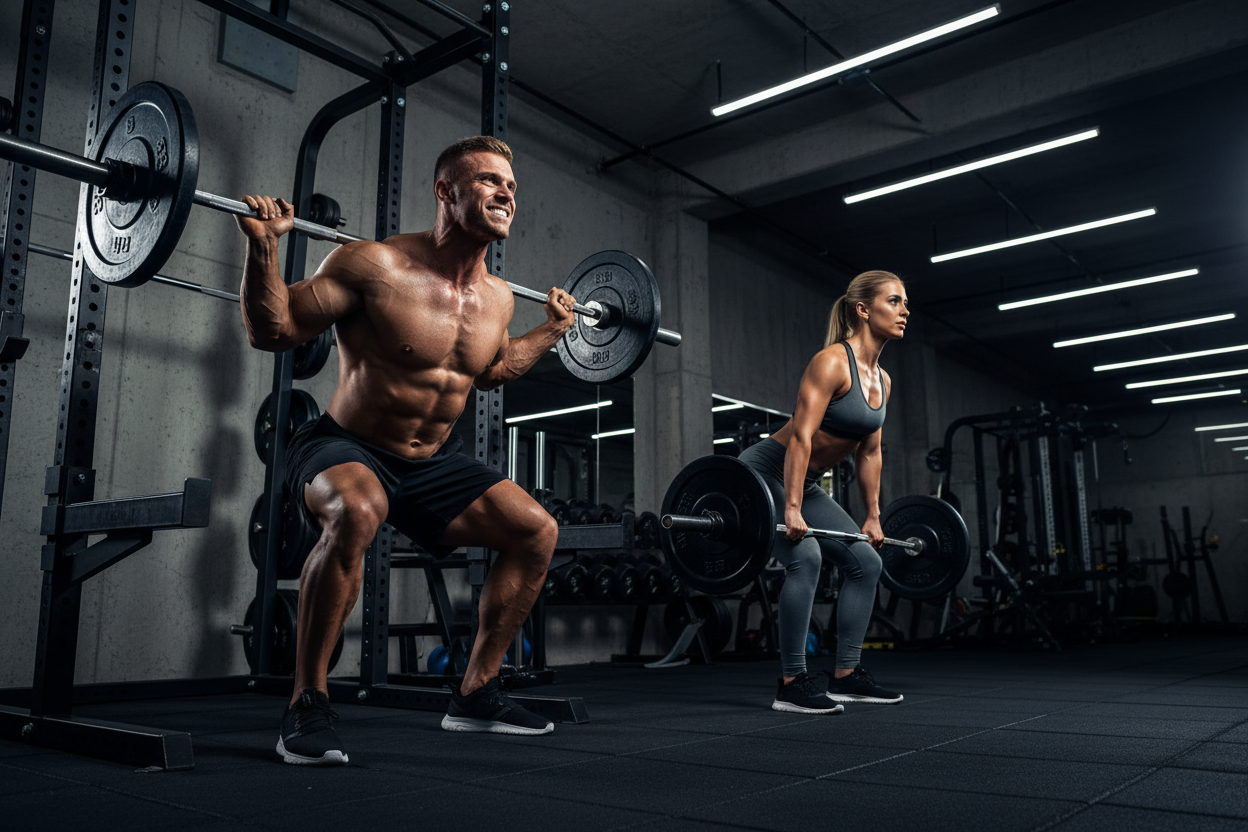
While the low-bar squat allows you to lift more weight, the high-bar position is superior for quad development. By resting the bar on your traps, you stay more upright. This forces your knees to track forward over your toes, placing the majority of the tension directly on the quadriceps rather than the posterior chain.
The Hack Squat
If you have lower back issues or struggle with balance, the Hack Squat might be the single best exercise to grow quads in isolation. because the machine stabilizes your torso, you can push close to failure safely. It removes the stability requirement of a barbell squat, letting you focus purely on pushing the weight with your legs.
Leg Press (Foot Placement Matters)
The Leg Press is excellent for volume. However, foot placement changes everything. Placing your feet lower on the platform increases knee bend, which biases the quads. Placing them high biases the glutes. Keep them low and shoulder-width apart for maximum growth.
Unilateral and Isolation Work
Bulgarian Split Squats
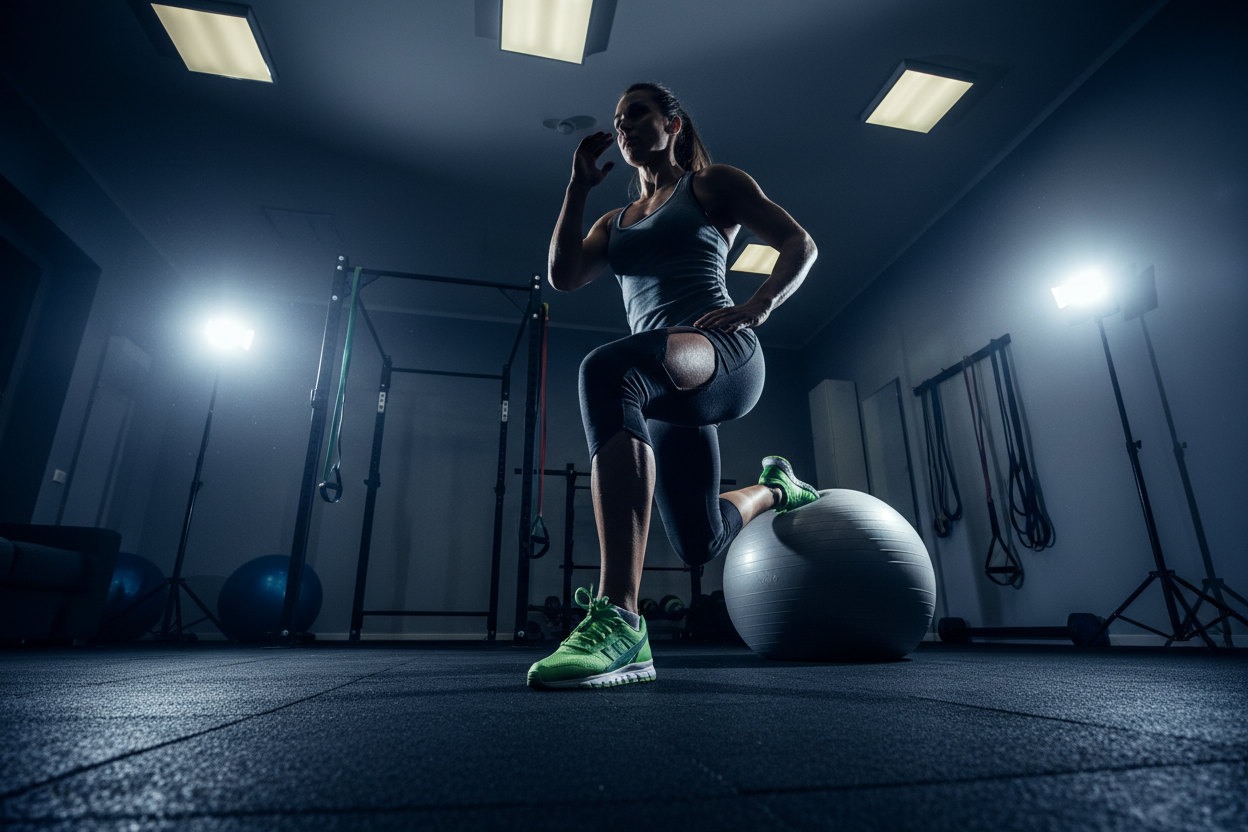
This is the exercise everyone loves to hate. By elevating the rear foot, you force the front leg to handle the entire load. This creates immense mechanical tension and a deep stretch at the bottom of the movement. It ensures you aren't compensating with a stronger dominant side.
Leg Extensions
Compound movements are great, but they often neglect the rectus femoris because it crosses both the hip and knee joints. Leg extensions isolate this muscle. Use this as a finisher to pump blood into the muscle and fatigue the fibers completely without taxing your central nervous system.
Common Mistakes Killing Your Gains
Cutting Range of Motion: Half-reps result in half-growth. The bottom portion of a squat or press—where the knee is fully bent—is where the quad is under the most stretch and tension. Leave your ego at the door and go deep.
Ignoring Tempo: Bouncing out of the hole uses momentum, not muscle. Control the eccentric (lowering) phase for 2-3 seconds to maximize muscle fiber damage, which signals repair and growth.
Conclusion
Building impressive legs doesn't require a complicated secret formula. It requires executing the basics with surgical precision. Focus on full range of motion, control the weight, and prioritize movements that force your knees to bend deeply.
Pick two compounds and one isolation movement from this list, stick to them for 8-12 weeks, and progressive overload. The results will follow.
Frequently Asked Questions
How often should I train my quads for maximum growth?
For most natural lifters, training legs twice a week yields the best results. This frequency allows you to accumulate enough volume to stimulate hypertrophy while giving the muscles 2-3 days to recover and repair between sessions.
Is the squat the absolute best exercise to grow quads?
While the squat is arguably the king of leg exercises, it isn't mandatory. If your anatomy makes squatting painful or if you are extremely hip-dominant, machines like the Hack Squat or Pendulum Squat can actually be more effective for pure quad hypertrophy.
What rep range is best for size?
Quads respond well to a variety of rep ranges. A good rule of thumb is to perform heavy compound movements (Squats, Leg Press) in the 6-10 rep range for mechanical tension, and isolation movements (Extensions, Lunges) in the 12-20 rep range to maximize metabolic stress.