Booty Workouts That Work: Engineering Tension Profiles, Program Splits, and Floor Grip
Why Most Glute Routines Stall: The Mechanics of Effective Training
Many lifters invest considerable time into lower-body training yet fail to see meaningful muscular development. In most cases, standard routines stall not from a lack of effort, but from redundant movement selection, excessive quad dominance, and unstable base setups. Performing endless high-rep kickbacks or air squats rarely creates the progressive overload needed for tissue adaptation when the pelvis is unsupported or the mechanical line of pull bypasses the target musculature.
Achieving reliable results requires understanding how gluteal fibers respond to multi-directional force. The gluteus maximus, medius, and minimus operate across sagittal, frontal, and transverse planes. Relying solely on vertical squatting patterns often shifts the primary tension to the anterior chain, leaving the posterior structures under-stimulated. Exploring a structured build glutes that guide illustrates why shifting angles and targeting peak tension points revitalizes lagging progress. When movement patterns match anatomical function and lifters establish an unyielding ground base, booty workouts that work become predictable and repeatable.
Core Movement Archetypes for Comprehensive Glute Development
To design booty building workouts that produce measurable stimulus, movements must be organized by their mechanical tension profiles. Dividing a routine into distinct functional categories ensures every portion of the hip musculature experiences adequate stimulus without placing disproportionate wear on individual joints.
A well-rounded program incorporates several distinct archetypes:
- Horizontal Hip Extension: Lifts where peak tension occurs when hips reach full extension, placing direct resistance against the glutes with minimal spinal compression.
- Lengthened-Position Hinges: Movements that challenge the musculature in deep hip flexion, maximizing mechanical stretch under control.
- Unilateral and Split Stances: Asymmetrical patterns that recruit stabilizing fibers in the hip abductors while isolating single-leg force production.
- Frontal-Plane Abduction: Targeted actions that bias the gluteus medius and minimus to support pelvic stability and round out muscular development.
Reviewing our build exercise butt guide provides further clarity on how compound lower-body work coordinates with targeted accessories to shape the hips and upper hamstrings.
Horizontal Force and Shortened Position Overload
Barbell and dumbbell hip thrusts, alongside varied glute bridge executions, serve as the foundation for horizontal loading. Unlike standard squats, where resistance diminishes toward the top of the ascent, hip thrusts generate maximal resistance at full hip lockout. This shortened position is precisely where the gluteus maximus achieves its greatest mechanical advantage.
Executing these lifts with intent requires deliberate mechanics: maintaining a slight chin tuck, bracing the ribcage downward, and pivoting strictly through the sternum and hips rather than arching the lower spine. By driving through flat feet and holding brief contractions at lockout, lifters direct tension entirely into the posterior chain rather than distributing it into the lumbar region.
Lengthened-State Drivers: Hinges and Unilateral Stances
While bridges capture the shortened position, movements such as Romanian deadlifts and Bulgarian split squats challenge the glutes under a loaded stretch. Deep hip flexion creates strong mechanical tension, which serves as a major driver of hypertrophy.
In a Romanian deadlift, pushing the pelvis backward while maintaining a soft knee bend keeps the load distributed across the glute-hamstring tie-in. Similarly, in a split squat, setting a slight forward torso lean encourages greater hip hinge depth, biasing the glute fibers of the lead leg rather than overloading the quadriceps. These unilateral lifts also identify and correct side-to-side force discrepancies before they lead to movement compensations.
Structuring Balanced Home Training Splits
Consistency in glute training depends on balancing training volume, frequency, and systemic recovery. Because the gluteal complex is composed of large, resilient muscle groups, training it multiple times per week with varied mechanical vectors yields better outcomes than exhausting the muscles in a single marathon workout.
A sensible weekly structure might divide hip work into primary compound days and accessory-focused sessions. One workout can prioritize heavy horizontal hip extension paired with deep hinges, while a secondary session focuses on split-stance unilateral variations and lateral band abduction. Lifters organizing a long-term plan can consult our central workout resource to see how lower-body programming fits within balanced full-body or upper-lower training schedules.
Floor Staging and Surface Stability for Glute Power Transfer
Even the most meticulously designed workout loses effectiveness if the training surface fails to provide adequate traction and support. In home gyms, lifters frequently encounter thick, yielding carpets, slick hardwood, or slippery laminate surfaces. These environments create micro-instabilities that compromise force output and distract from muscular recruitment.
When performing heavy hip thrusts, split squats, or standing hinges, the feet must transfer ground reaction force directly into the target muscles. Soft, squishy padding or slippery surfaces force the small intrinsic muscles of the feet and ankles to overcorrect constantly. This instability triggers natural protective reflexes, causing lifters to reduce their effort or shift their weight forward into the toes, which shifts tension directly onto the anterior knees.
Minimizing Energy Leaks: Ground Reaction Force and Equipment Security
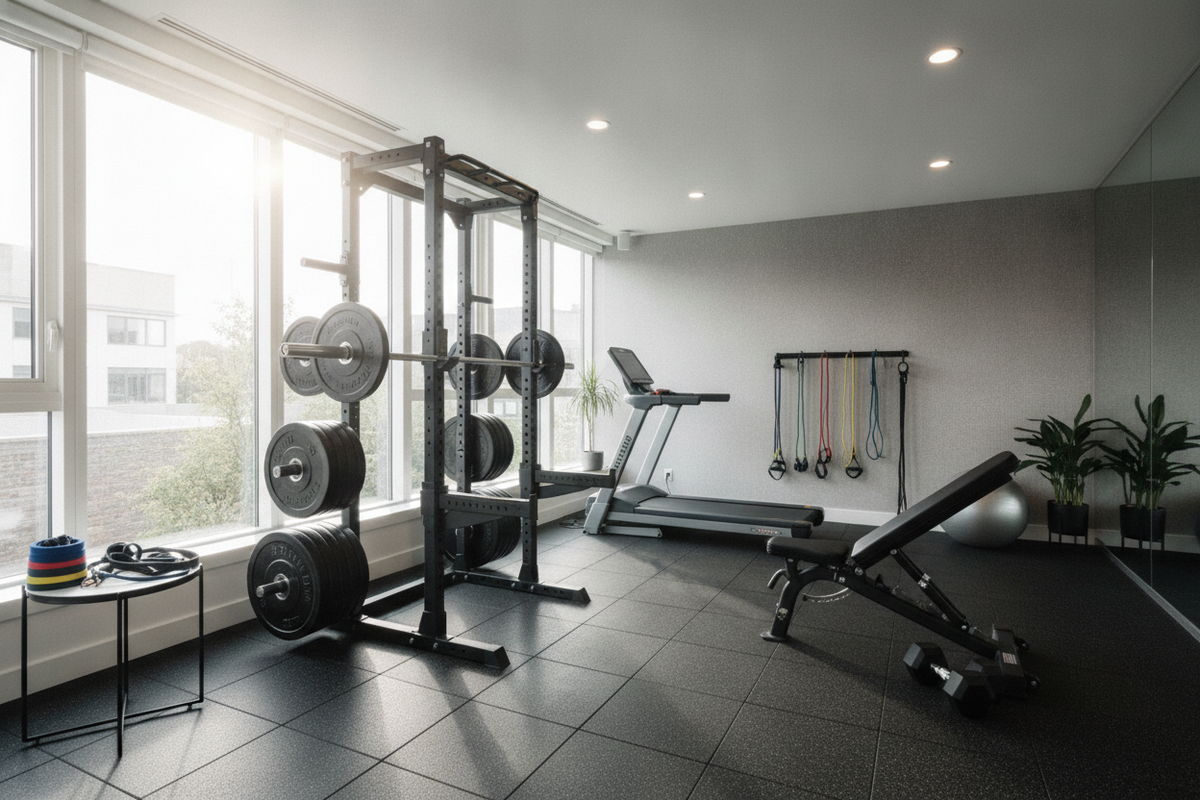
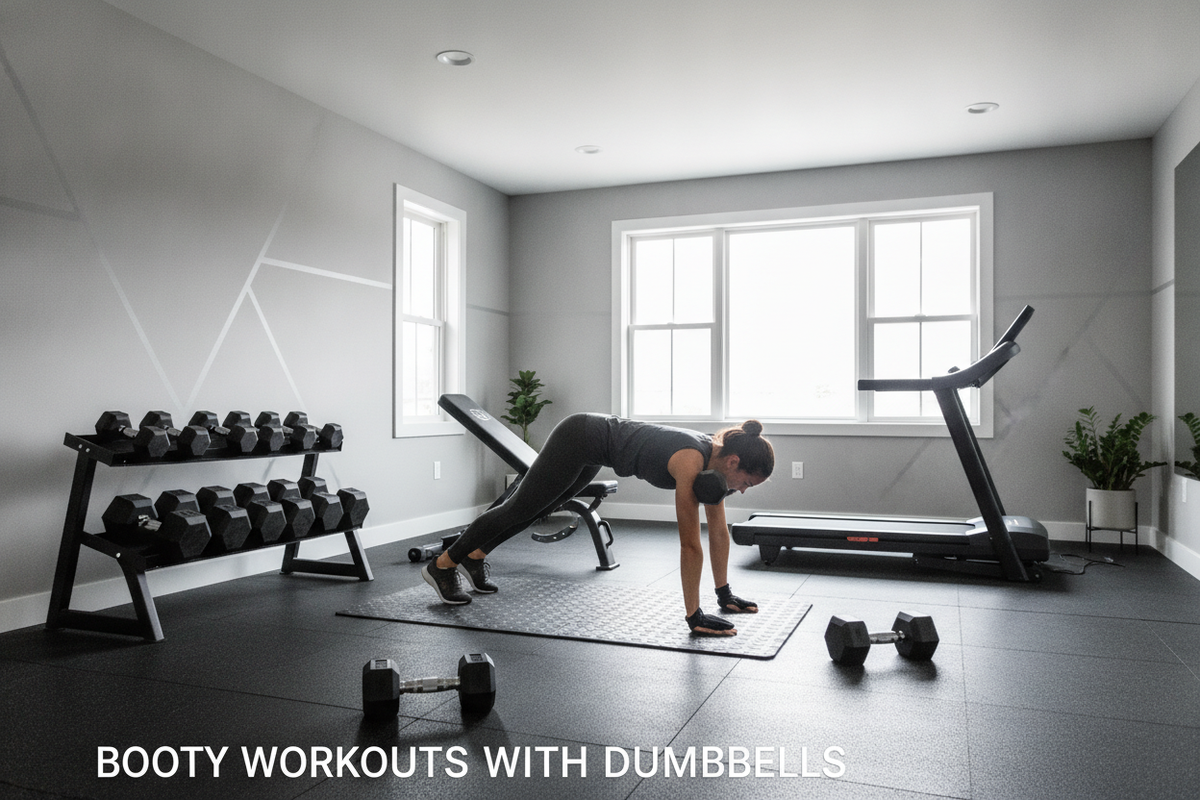
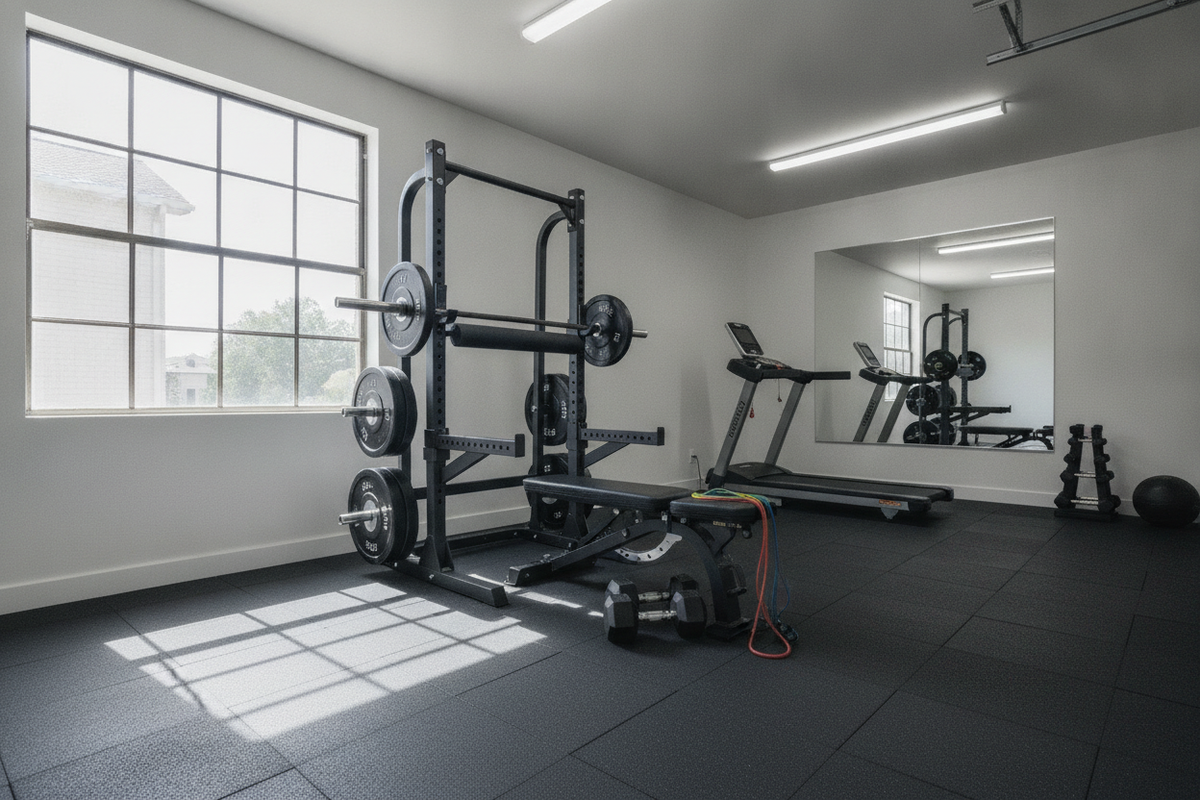
An ideal lifting surface provides high-density support with firm traction. Using a dedicated surface like our large workout product prevents equipment drift and ensures solid foot placement during heavy sets. Setting a hip thrust bench on an unsecured hardwood floor or sliding area rug causes the bench to shift backward with every repetition, dissipating horizontal force and interrupting the rhythm of the set.
A dense, low-profile mat locks both the support bench and the lifter’s footwear in place. This solid footing allows lifters to drive aggressively through their midfoot and heels, transforming mechanical effort into direct glute contraction. Furthermore, high-density flooring dampens the impact of dropped dumbbells, kettlebells, or barbell plates, protecting underlying residential floors during high-intensity training sessions.
Maintenance and Floor Care in High-Traffic Workout Zones
Dedicated training areas endure persistent friction from athletic footwear, heavy bench legs, and bodyweight sweat. Maintaining your training surface keeps it slip-resistant and clean for floor-based movements like bridges, kickbacks, and mobility drills.
Wipe down your mat regularly using a damp cloth with mild, non-abrasive soap and warm water to eliminate sweat residue and accumulated dust that could reduce surface grip. Avoid harsh solvent cleaners or stiff-bristled brushes that might degrade the textured exterior. When shifting heavy benches or metal weights, lift equipment rather than dragging sharp edges across the mat surface. By maintaining a clean, slip-resistant environment, your training space remains safe, supportive, and ready for progressive glute workouts.