Booty Workouts with Dumbbells: Progressive Movement Frameworks, Stability Stances, and Floor Protection
Biomechanical Foundations of Dumbbell Glute Training
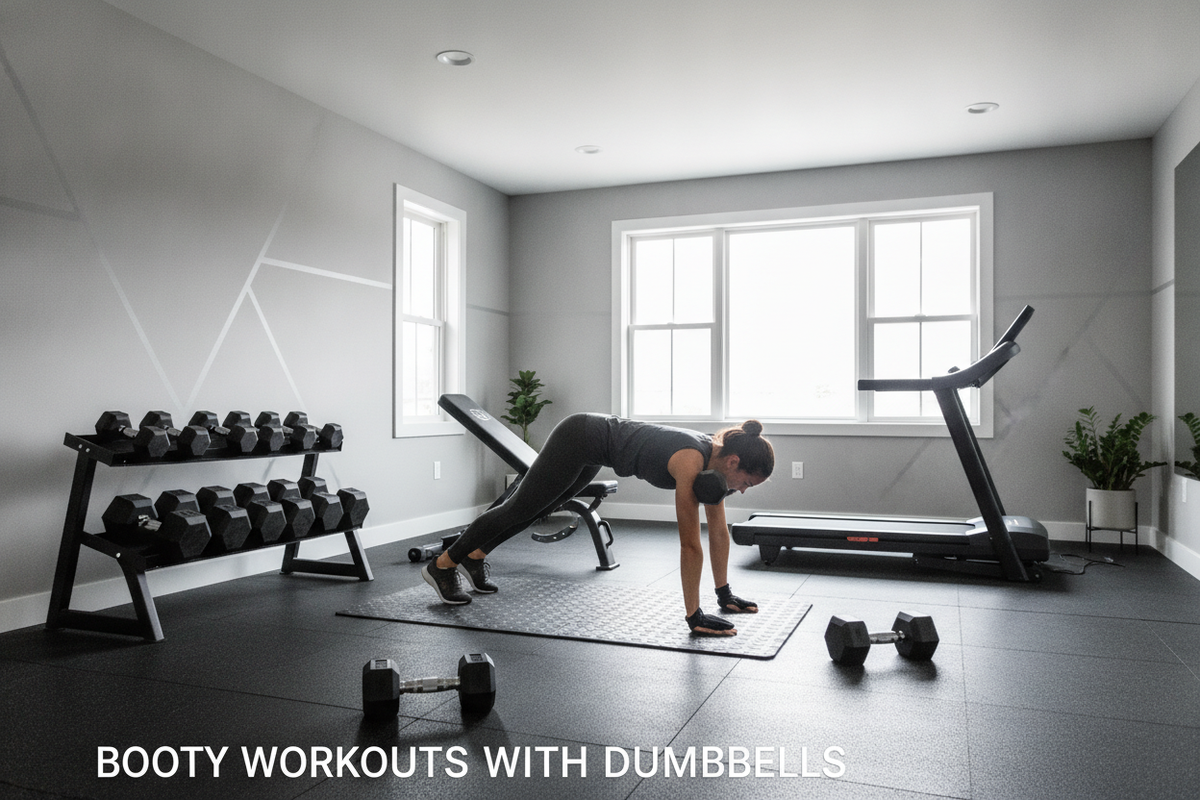
Executing structured booty workouts with dumbbells gives lifters a versatile way to train the lower body without requiring bulky barbell stations. While barbells enforce a fixed bilateral bar path, free weights allow independent limb loading, wrist rotation freedom, and individualized lines of force that conform to natural hip anatomy. This flexibility makes a free weight booty workout accessible in home workout spaces of varying sizes.
Targeting the hip complex requires working across multiple movement vectors. The gluteus maximus serves as the primary hip extensor, responding to horizontal forces such as bridge variations as well as vertical patterns like deadlifts and squats. Meanwhile, the gluteus medius and minimus act as dynamic pelvic stabilizers and hip abductors during single-leg actions and lateral patterns. When reviewing our foundational glutes booty exercise guide, the relationship between movement variety and complete muscular recruitment becomes clear.
Solid floor contact provides the foundation for glute recruitment. During standing or kneeling movements, stability depends on foot tripods—the heel, base of the big toe, and base of the pinky toe—firmly gripping a level surface. A supportive footing allows lifters to drive through the heels and maintain hip alignment without unwanted shifts or compensation patterns.
Core Dumbbell Glute Exercise Archetypes
A well-rounded butt dumbbell workout draws from distinct movement categories to load the hips in both stretched and shortened muscle configurations. Implementing balanced butt exercises with weights ensures that strength develops evenly across the entire pelvic girdle.
Horizontal Hip Extension
Dumbbell glute bridges and elevated hip thrusts place maximum tension on the gluteus maximus in the fully shortened position. Lifters position a single heavy dumbbell or a pair across the crease of the hips, cushioning the contact point if necessary. Driving through the heels while keeping the chin tucked and ribs pulled downward enables a strong lockout without arching the lower back.
Hinges and Staggered Deadlifts
Dumbbell Romanian deadlifts and staggered-stance RDLs challenge the glutes at long muscle lengths. Holding dumbbells in front of the thighs, trainees hinge backwards at the hips while maintaining a soft knee bend and neutral spine. Shifting into a kickstand stance reduces balance demands compared to purely single-leg hinges while maintaining focused tension on the working hip.
Unilateral Split Squats and Step-Downs
Unilateral exercises expose side-to-side imbalances and demand significant input from the stabilizing hip muscles. Bulgarian split squats, reverse deficit lunges, and controlled step-downs require the lead leg to produce force while the stabilizing gluteus medius keeps the pelvis level. These variations make versatile exercises for glutes female with weights and serve lifters of all experience levels who want focused lower-body volume.
Transverse and Abduction Movements
Curtsy lunges, lateral traveling lunges, and weighted side-lying abductions introduce rotational and frontal-plane demands. Rotating through subtle angles challenges the external rotators of the hip, producing comprehensive development that complements linear squats and deadlifts.
Structuring a Balanced Dumbbell Booty Workout Routine
Organizing a regular booty workout dumbbell routine involves balancing lengthened-position movements with peak-contraction exercises. Rather than relying solely on endless repetitions, lifters can vary movement cadences, incorporate two-second paused contractions at full extension, and gradually adjust weight loads over time.
- Primary Compound Hinge: Dumbbell Romanian Deadlift – focused eccentric control with an emphasis on hip displacement.
- Peak Contraction Thrust: Dumbbell Hip Thrust or Elevated Glute Bridge – held at top extension for deliberate glute recruitment.
- Unilateral Dynamic Pattern: Rear-Foot Elevated Split Squat or Deficit Reverse Lunge – steady tempo through a full, comfortable range of motion.
- Stability or Lateral Finisher: Goblet Sumo Squat or Curtsy Lunge – dynamic loading across complementary joint angles.
Pairing these patterns alongside comprehensive quad training, such as the exercises described in our free weight exercise guide, creates a balanced lower-body routine. Trainees who want structured templates can consult a dedicated workout resource to organize weekly training schedules and plan appropriate rest days between dynamic lower-body sessions.
Home Gym Floor Staging and Equipment Placement
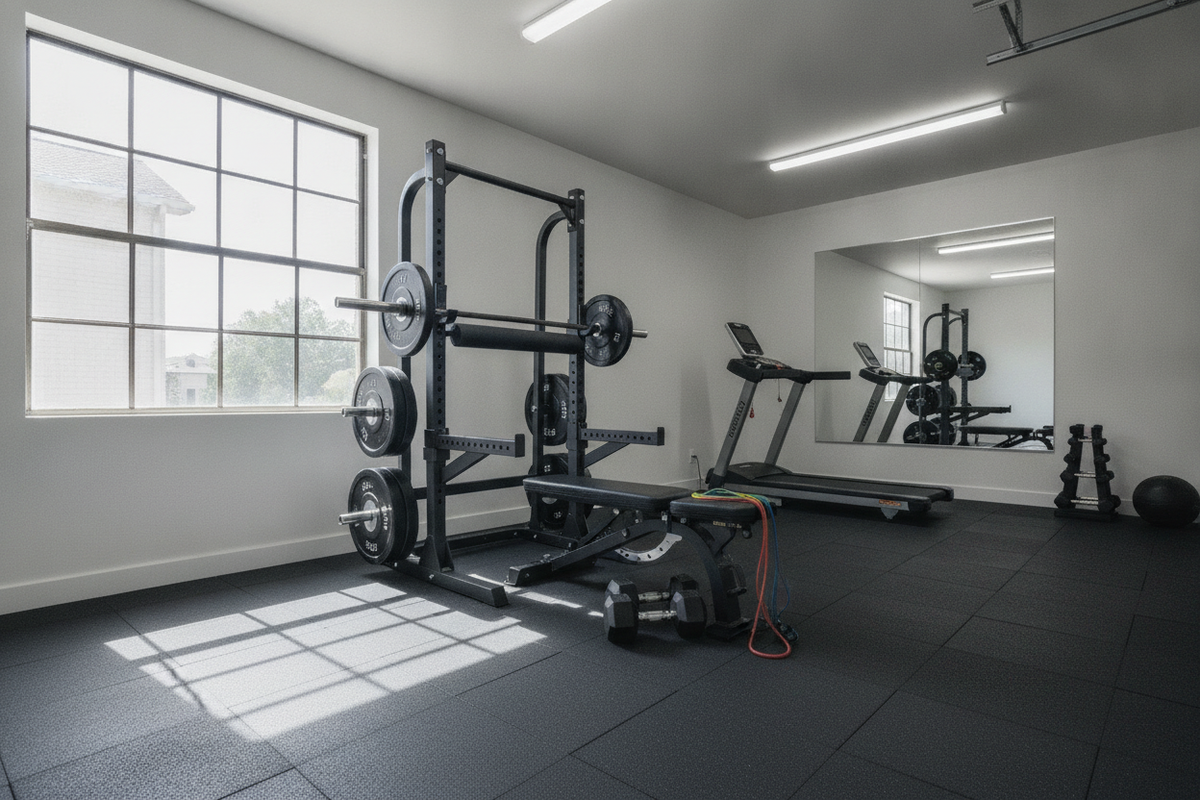
Managing equipment safely in a residential setting requires thoughtful floor staging. Dumbbells made of cast iron or dense rubber can indent hardwood, crack floor tiles, or compress subflooring during set transitions. Laying down a supportive, non-slip training surface protects foundational residential flooring while providing the grip needed for heavy lifting.
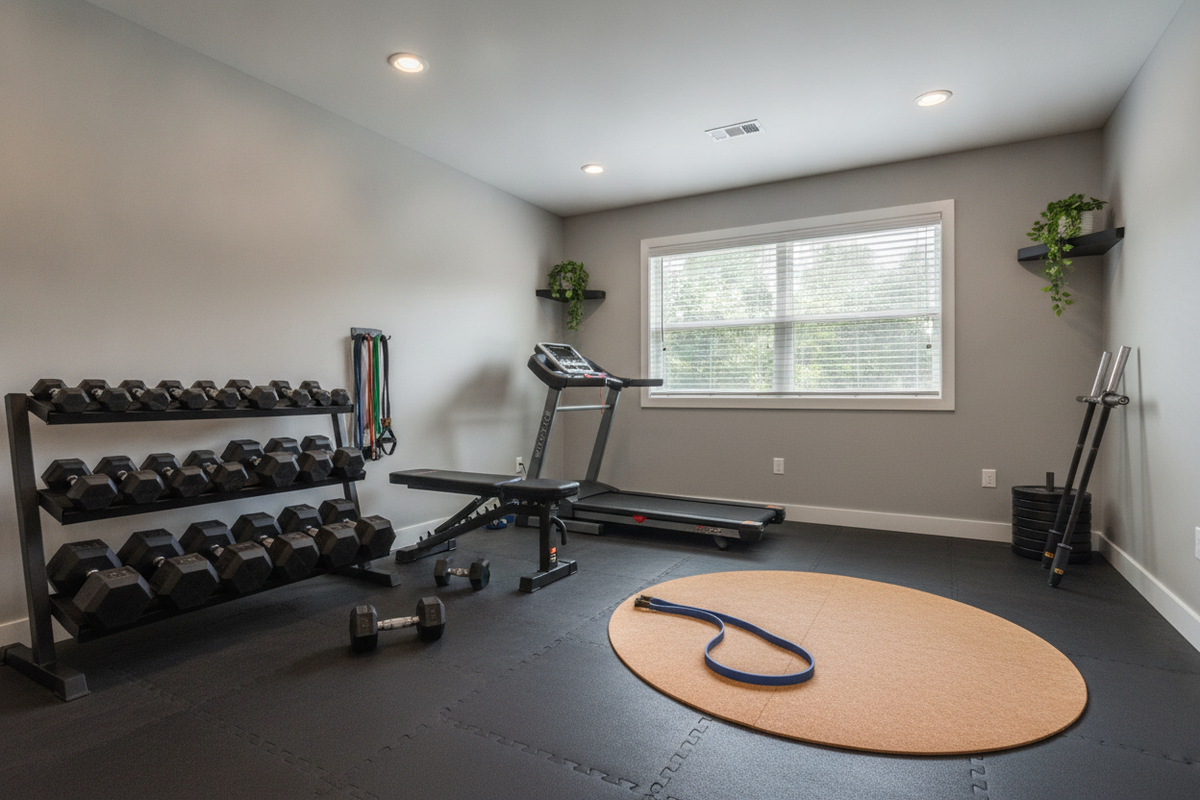
During wide-stance squats or unilateral lunges, high-traction gym matting prevents footwear from slipping under lateral forces. Utilizing an expansive mat, such as a large workout product, creates a unified zone where adjustable benches and weights remain planted. When performing dumbbell hip thrusts, placing both the bench feet and the lifter's feet on the same continuous surface keeps the bench from sliding backward under horizontal driving forces.
Maintaining this surface involves routine wiping with mild soap and water to clear sweat, dust, and outdoor residue. Keeping the mat surface clean preserves its natural grip and extends its service life across demanding weekly training splits.
Execution Mistakes and Form Corrections
Refining mechanical cues ensures that tension remains squarely on the glutes rather than shifting onto the spine or knees during butt workouts with dumbbells:
- Lumbar Hyperextension: In hip thrusts and bridges, avoid overarching the lower back to gain extra height. Stop the movement once the hips align with the knees and torso, using a posterior pelvic tilt to finish the lockout.
- Knee Forward Drift during Hinges: During Romanian deadlifts, the hips must travel back toward the wall behind you. If the knees bend excessively forward, the movement turns into a squat and reduces tension on the posterior chain.
- Unstable Footwear: Lifting in heavily cushioned running shoes can destabilize ankle joints under load. Opt for flat, firm shoes or train barefoot on a supportive, high-density exercise mat to maintain a grounded tripod foot position.