Booty Workout Without Squats: Biomechanical Vectors, Movement Selection, and Home Floor Staging
Why Build Glutes Without Squats: Biomechanics and Joint Considerations
While the standard barbell or goblet squat has long served as an athletic staple, it is not an obligatory requirement for developing hip musculature. The biomechanics of the squat place significant axial loading down the spine and demand extensive flexion at the knee joint. For individuals seeking a targeted booty workout without squats, shifting away from this movement pattern allows direct focus on hip extension without overtaxing anterior chain structures.
Squatting patterns frequently create strong quadricep engagement. When knee travel forward dominates the descent, the quads often bear the primary workload, leaving the gluteus maximus secondary in force production. Transitioning toward movements that emphasize horizontal loading and pure posterior-chain hinges allows individuals to pursue building glutes without squats while sparing sensitive joints. Adopting these movement vectors aligns with established principles of effective bum exercise mechanics, redirecting tension toward targeted hip extensors.
Moreover, removing squats can help lifters who experience lower-back discomfort during axial compression. By selecting movements where the spine remains unloaded or neutral, training volume can be applied directly to the gluteal complex without compounding spinal fatigue.
Movement Vector Framework: Core Glute Exercises That Aren't Squats
Hypertrophy and strength development depend on progressive overload, tension through varying muscle lengths, and working across multiple planes of motion. To successfully build glutes without squats, programming can be structured across three core mechanical vectors: horizontal hip thrusting, anteroposterior hinges, and lateral abductions.
Understanding this vector framework transforms a collection of random exercises into a balanced program. Utilizing dedicated booty gym exercises organized around movement mechanics ensures comprehensive development across the gluteus maximus, gluteus medius, and gluteus minimus.
- Horizontal Hip Extension: Movements where tension peaks at terminal hip extension, minimizing quadricep dominance and maximizing shortened-position glute activation.
- Pure Hinges: Movements emphasizing deep hip flexion with minimal knee bend, placing tension on the glutes in their lengthened state.
- Lateral Abduction and External Rotation: Movements targeting the upper and outer hip musculature responsible for pelvic stabilization.
By organizing non-squat variations according to these mechanical profiles, lifters can stimulate every functional region of the hips efficiently.
Floor-Based and Quadruped Movements for Isolated Hip Extension
Floor-oriented training provides a stable environment for isolating hip extension without spinal axial loading. For athletes exploring how to build glutes without squats or lunges, floor variations eliminate balance limitations and reduce knee shearing forces.
The barbell or dumbbell hip thrust serves as the primary driver in horizontal hip extension. Positioned with the upper back supported on a bench and feet planted firmly, the movement isolates the glutes as the primary driver of hip extension. Adjusting foot positioning allows lifters to target specific angles; positioning the shins vertical at peak lockout directs maximal tension through the gluteal fold.
Single-leg glute bridges and frog pumps offer bodyweight and dumbbell alternatives that reduce loading requirements while intensifying muscular contraction. Frog pumps, performed with the soles of the feet pressed together, recruit hip external rotators alongside the gluteus maximus.
Quadruped kickbacks and fire hydrants round out floor-based training. Positioned on hands and knees, the lifter drives the leg into full extension or lateral abduction. These movements eliminate lower back recruitment when the pelvis remains squared to the ground, offering high-density work without joint strain.
Standing Hinges and Lateral Patterns for Upper and Lower Glute Development
While floor exercises emphasize the glutes in a shortened position, standing hinges develop tissue in the stretched position. Romanian deadlifts (RDLs) with dumbbells or a barbell represent the gold standard for hinge-based glute training. By maintaining soft knees and pushing the hips back horizontally toward the wall behind, tension concentrates along the posterior chain.
Cable pull-throughs provide a continuous resistance curve throughout the entire hinge excursion. Unlike free weights, where tension fluctuates based on gravity, cables maintain constant horizontal resistance, challenging the glutes through lockout without compressing the spine.
Lateral band walks and standing cable abductions target the gluteus medius and minimus. Placing resistance bands around the ankles or feet activates the upper glute complex, which plays a major role in stabilizing the pelvis during locomotion. lifters seeking broader functional training structures can browse our workout resource for complimentary training approaches.
Home Gym Floor Staging and Joint Protection for Floor Work
A rigorous no-squat routine places extensive physical contact on the workout surface. Hip thrusts require steady foot placement, while quadruped kickbacks demand knee and wrist support. Executing these movements directly on hard subfloors such as concrete, tile, or laminate can lead to discomfort that detracts from muscular output.
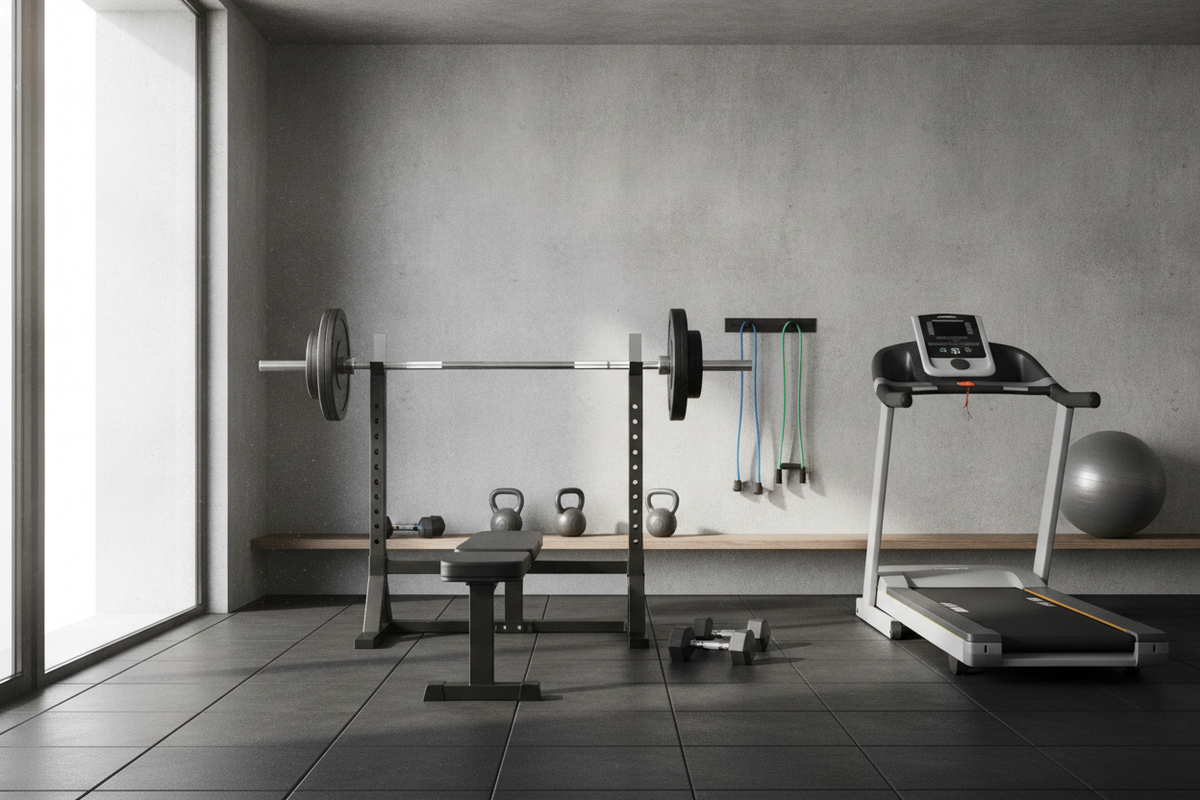
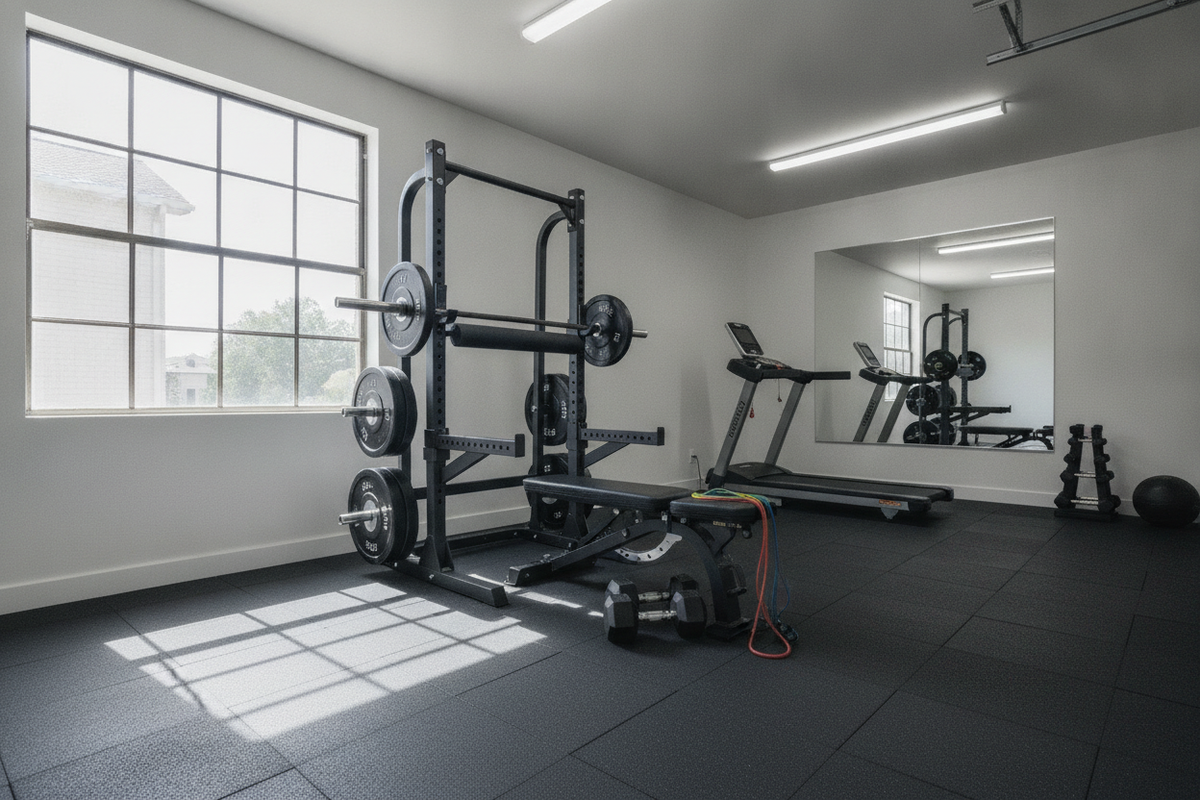
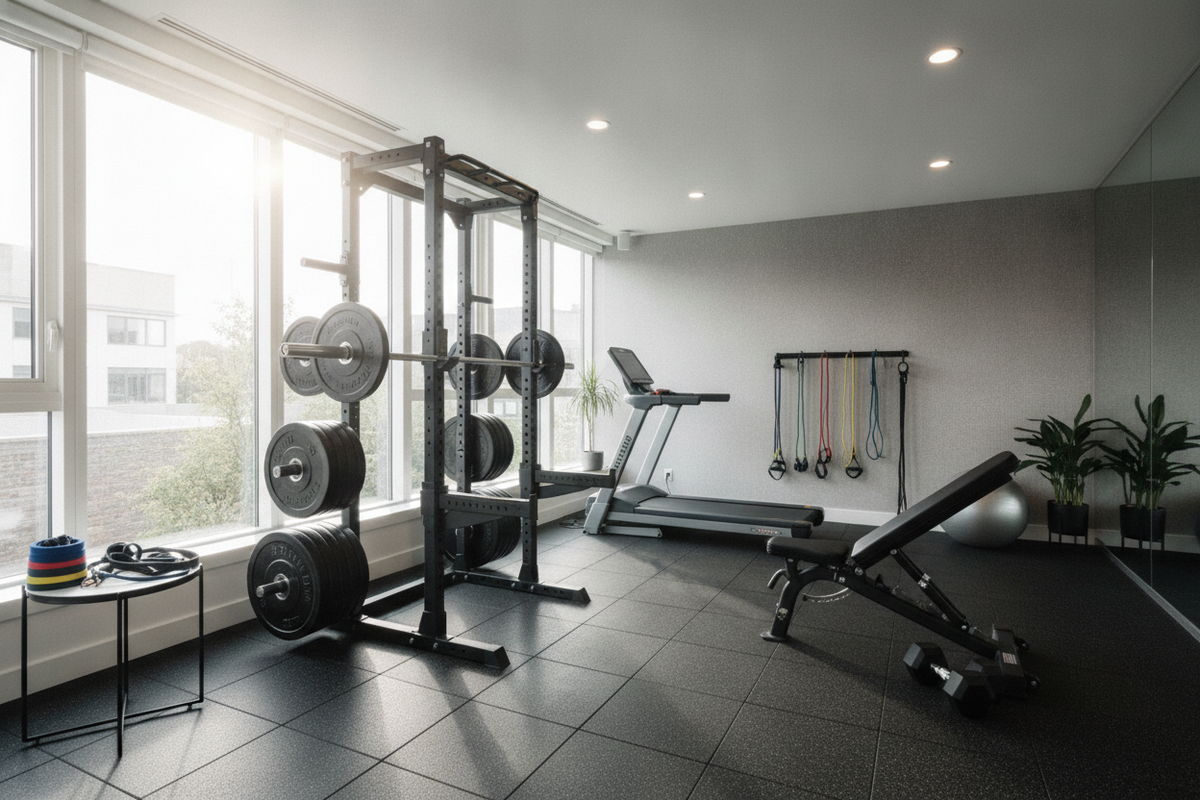
Setting up protective gym flooring for home workouts establishes a cushioned, non-slip base. High-density padding protects the patella during quadruped variations, eliminating the joint pressure that often discourages floor-based hip extension exercises.
Surface traction is equally critical during heavy bridging and thrusting movements. If the lifter's feet slide during hip extension, hamstring cramping or form breakdown can result. A textured mat surface anchors both athletic footwear and weight-training benches, preventing shifting under load.
Structuring a Comprehensive No-Squat Booty Routine
Developing an effective training split without squats requires deliberate sequencing. Starting with compound horizontal thrusts when neurological energy is high, progressing into lengthened hinges, and finishing with quadruped or abduction work balances fatigue and mechanical tension.
- Primary Heavy Compound: Barbell or Dumbbell Hip Thrust — focusing on controlled eccentrics and distinct lockouts at the top.
- Lengthened Posterior Hinge: Romanian Deadlift or Cable Pull-Through — prioritizing backward hip travel and a neutral spine.
- Unilateral Floor Movement: Single-Leg Glute Bridge or Deficit Bulgarian Hip Extension — addressing side-to-side muscular imbalances.
- High-Tension Floor Isolation: Quadruped Cable or Banded Kickback — targeting peak contraction at full hip extension.
- Lateral Abduction Burnout: Lateral Band Walks or Seated Band Abductions — completing the session with high-repetition metabolic stimulus.
Executing this structure consistently on a dedicated exercise mat creates a dedicated training zone where equipment remains anchored and joints stay comfortable throughout the workout.
Flooring Maintenance and Long-Term Setup Tips for Hip Thrust Stations
Dedicated hip thrust stations place concentrated physical demands on home gym equipment and underlying floors. The back edge of a weight bench pressed against a mat concentrates downward and lateral force each time a lifter drives their hips upward. In our experience, pairing a wide mat with an anchored bench makes heavy thrusting feel substantially more stable and repeatable.
To maintain your flooring over extended use, inspect the contact points beneath the bench and foot position periodically. Keeping the mat surface clean of dust and sweat preserves high-traction properties, ensuring that shoes grip without sliding during maximum-effort repetitions.
Using heavy-duty, dense flooring also protects the underlying subfloor from dumbbell or plate contact between sets. By pairing thoughtful movement mechanics with a properly staged workout area, lifters can build strong, well-developed glutes comfortably without relying on standard squats.