Bodybuilding Home Workout Plan No Equipment: Hypertrophy Mechanics, Leverage Progressions, and Training Ground Setup
Executing an effective bodybuilding home workout plan no equipment requires shifting your perspective from chasing arbitrary fatigue to understanding mechanical leverage. In traditional weight training, progressive overload is achieved by adding iron to a barbell or selecting heavier dumbbells. When training solely with bodyweight, tension must be created through spatial geometry, deliberate tempo manipulation, and changes in joint angles. A structured muscle building program at home can produce meaningful muscle growth when exercises are performed with technical precision near technical failure.
The Hypertrophy Dilemma: Overcoming Load Limitations Without Equipment
Hypertrophy relies on mechanical tension, muscle damage, and metabolic accumulation. Without external load, lifters often fall into the trap of turning calisthenics sessions into high-repetition cardiovascular circuits. Moving quickly through endless repetitions creates systemic exhaustion, but it rarely produces the targeted, high-threshold motor unit recruitment needed for hypertrophy.
To turn calisthenics into a true muscle building program home routine, your body must function as an adjustable lever. Shortening a lever reduces resistance, while lengthening it magnifies the torque required around the target joints. By elevating the feet during pushing exercises, transitioning from bilateral to unilateral leg variations, or altering hand positions, you manipulate the percentage of bodyweight acting directly against the active muscle tissue. For individuals establishing foundational movement competency, reviewing a general exercise plan build guide helps reinforce structural alignment before attempting advanced bodyweight variations.
Core Biomechanical Vectors in a Bodyweight Muscle Building Program at Home
A comprehensive build muscle at home workout plan must address every fundamental movement pattern rather than relying solely on push-ups and bodyweight squats. Balanced physique development demands structured attention across multiple distinct movement vectors:
- Horizontal Pushing: Targets the pectorals, anterior deltoids, and triceps via standard, deficit, and archer push-up variations.
- Vertical Pushing: Directs tension toward the clavicular head of the chest, lateral deltoids, and triceps using pike push-ups and elevated handstand holds.
- Horizontal and Vertical Pulling: Recruits the latissimus dorsi, rhomboids, and rear deltoids through doorway rows, table inverted rows, and sliding floor pull-downs.
- Knee-Dominant Lower Body: Stresses the quadriceps and adductors via Bulgarian split squats, tempo step-downs, and assisted pistol squat variations.
- Hip-Dominant Lower Body: Isolates the hamstrings and glutes through single-leg Romanian deadlift hinges, elevated glute bridges, and floor-based hamstring curls.
- Core and Trunk Anti-Extension: Stabilizes the pelvic girdle through long-lever planks, hollow body holds, and controlled hanging or floor leg raises.
Leverage and Progression Frameworks Across Muscle Groups
Progressive overload within an at home workout program to build muscle operates along clear leverage ladders. When a movement pattern becomes manageable for high repetitions, advancing to a more mechanically demanding progression restores intense localized tension.
For the chest and shoulders, standard push-ups advance to decline push-ups with feet elevated on a sturdy chair, which increases load on the upper chest. From there, archer push-ups shift the majority of bodyweight over a single limb, acting as a bridge toward single-arm push-up execution. For the lower body, bilateral squats give way to rear-foot-elevated split squats, progressed further by pausing in the bottom stretch position, and ultimately leading to full single-leg shrimp or pistol squats.
Structuring Your At Home Workout Plan for Muscle Gain: Weekly Split Architectures
Developing a consistent at home workout plan for muscle gain requires balancing training frequency with localized recovery. Because bodyweight movements involve significant core stabilization and multi-joint coordination, scheduling must allow connective tissue and muscle fibers sufficient time to adapt.
Best Exercise Schedule for Muscle Gain at Home: Split Templates
Determining the best exercise schedule for muscle gain at home depends on your available training frequency and recovery capacity. Two balanced scheduling frameworks demonstrate how to organize movement patterns throughout the week:
- Upper/Lower Split (Four Days Per Week): Alternate between upper-body sessions (horizontal and vertical pushing and pulling) and lower-body sessions (knee-dominant, hip-dominant, and core work). A common layout involves training Monday and Tuesday, resting Wednesday, training Thursday and Friday, and resting over the weekend. This distribution provides high weekly volume with built-in recovery windows.
- Push/Pull/Legs Split (Three to Six Days Per Week): Separate workouts into dedicated pushing, pulling, and leg days. This split concentrates volume on related muscle groups within each workout, allowing complete systemic recovery for those muscle chains while other patterns are trained on subsequent days.
Execution Variables: Controlling Tempo, Pauses, and Range of Motion
Without heavy barbells, rep execution dictates muscle tension. Rushing through repetitions utilizes elastic rebound rather than muscular contraction. In our editorial view, slowing down the eccentric phase is the single most potent adjustment a lifter can make when training without weights.
To maximize tension, enforce a deliberate tempo: lower your body under control over several seconds, introduce a distinct pause at the bottom point of muscular stretch, and then drive upward without bouncing. Emphasizing the deep stretch position under continuous control recruits muscle fibers across full physiological ranges of motion, maximizing the stimulus derived from your own body mass.
Training Surface Dynamics: Floor Stability, Joint Protection, and Traction
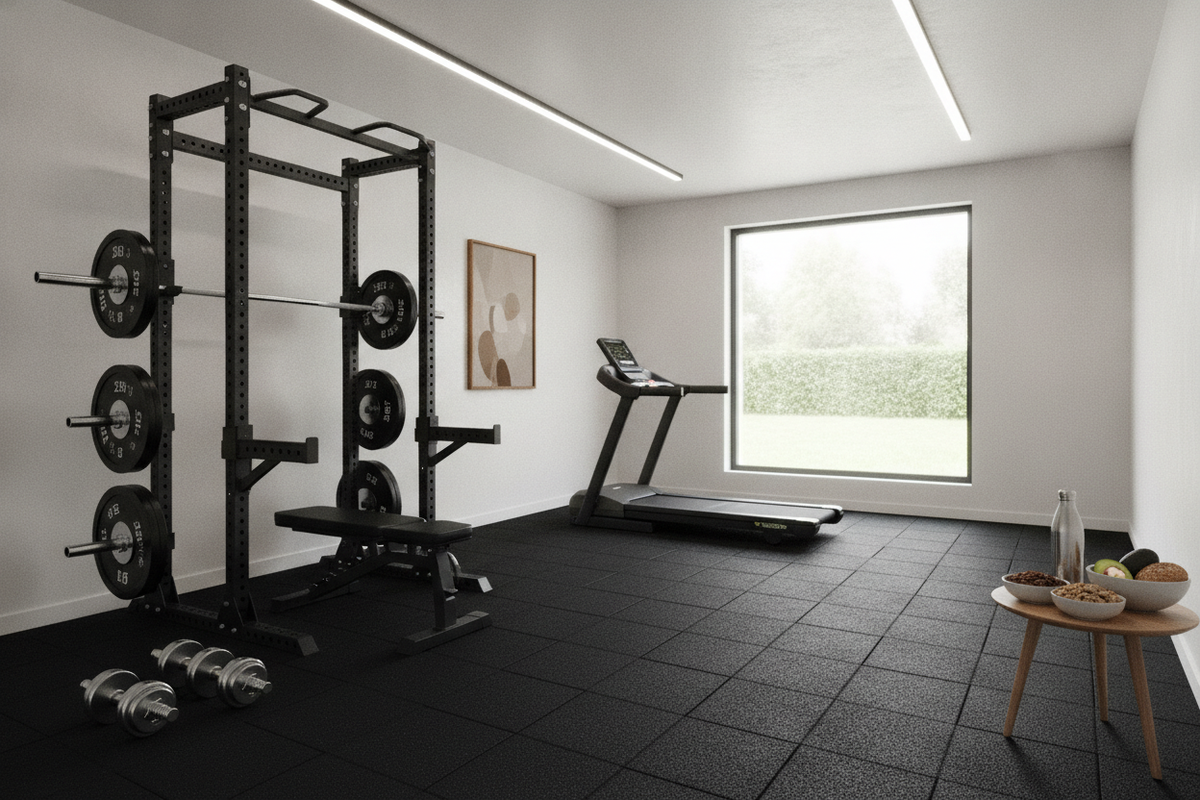
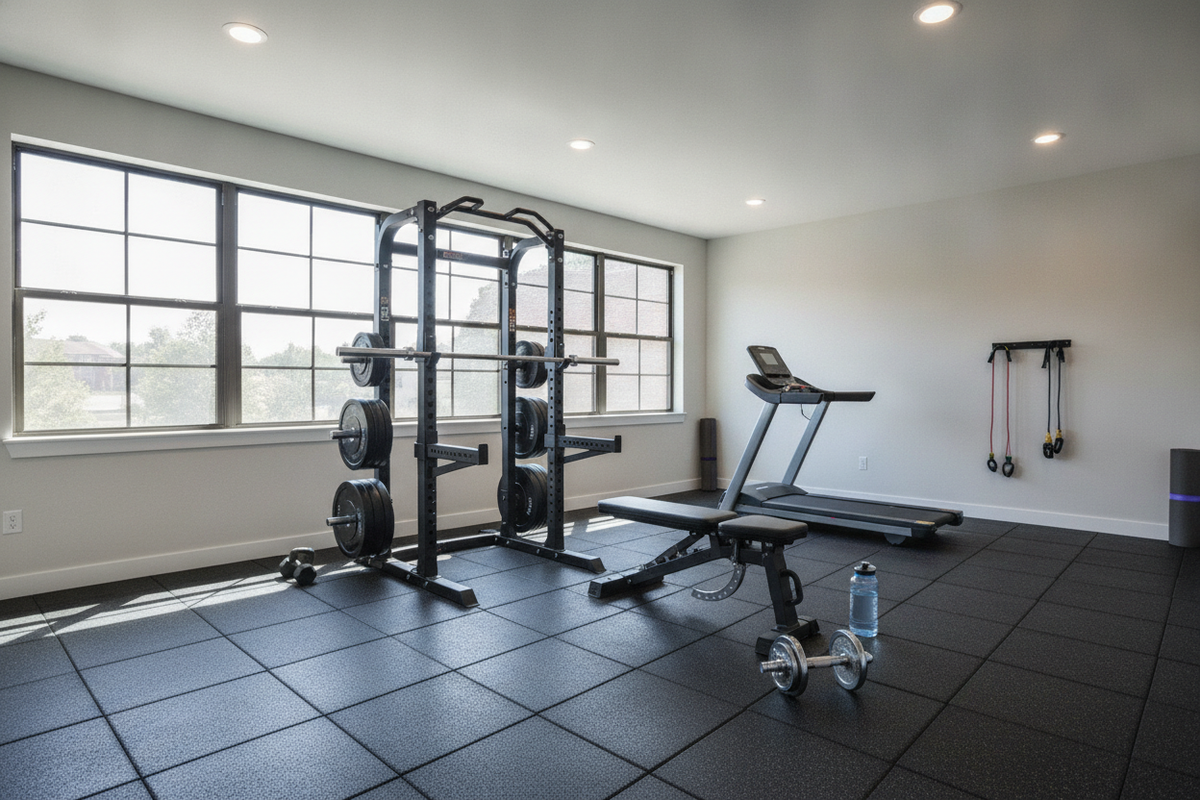
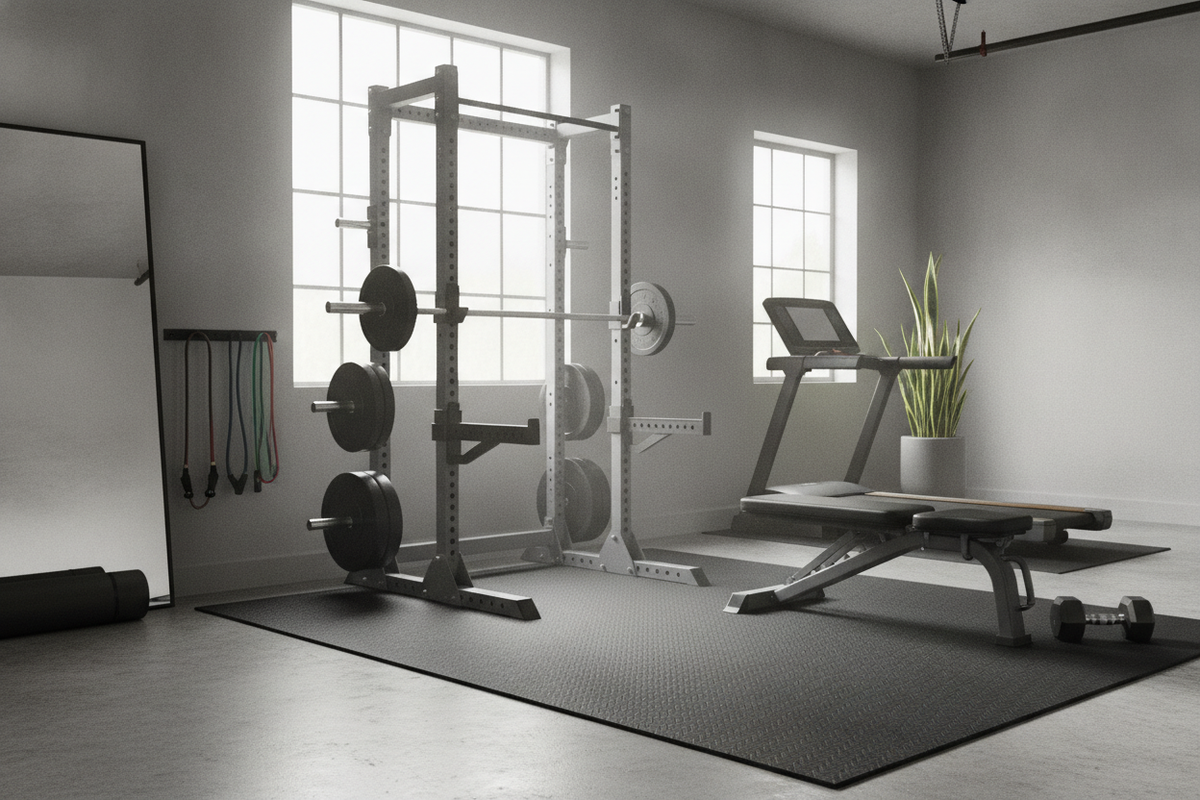
The role of your immediate training floor is frequently overlooked in bodyweight calisthenics. Exercises like deficit push-ups, archer slides, and deep split squats demand stable ground reaction forces. Slippery hardwoods, sliding area rugs, or excessively squishy mats can undermine footing, compromise wrist alignment, and reduce motor output.
Maintaining a dedicated, firm, non-slip training surface protects the wrists during high-volume push-ups and stabilizes the ankles during unilateral leg work. Utilizing a specialized exercise resource ensures high-traction grip under sweat and provides joint support without the instability of overly plush foam. Firm traction allows you to direct all muscular effort into torque generation rather than balance correction.
Integrating Equipment Transitions as Strength Evolves
A zero-equipment framework can build substantial foundational muscle, but every lifter eventually reaches points of diminishing leverage returns, particularly for the posterior chain. Assessing your progression helps determine whether your current setup meets your long-term athletic goals or whether simple resistance aids are warranted. You can review an exercise equipment build guide to examine how modest resistance tools impact progressive overload.
When calisthenic variations require extreme coordination rather than pure muscular effort, gradually transitioning into a dedicated build muscle exercise guide framework allows you to blend bodyweight mastery with external resistance for continued muscular growth.