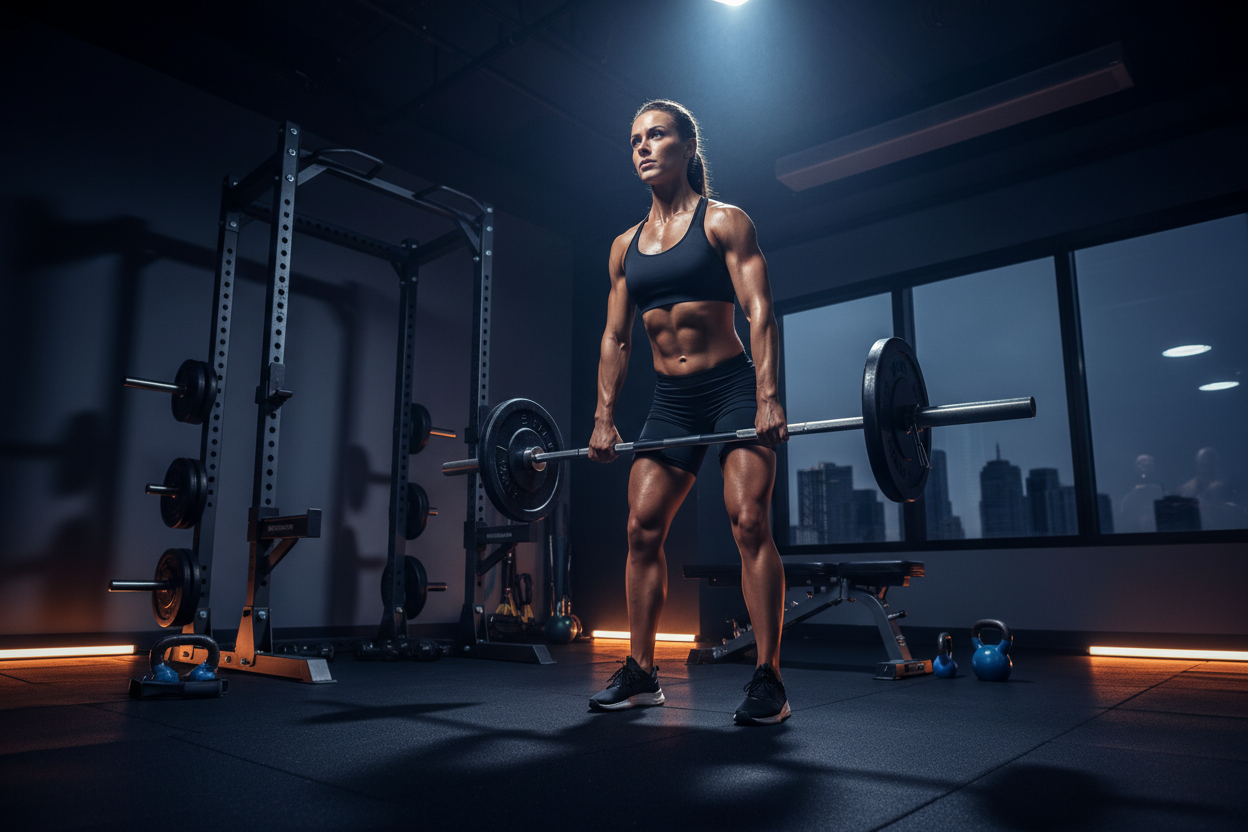
How to Build Real Muscle With Exercise at Home With Equipment
Most people treat their living room workouts as a temporary fix until they can get back to a "real" gym. This is a mistake. Resistance is resistance; your muscles cannot tell the difference between iron plates in a high-end facility and a exercise at home with equipment setup in your garage. The problem usually isn't the gear—it's the intensity and the programming.
If you have invested in a workout set at home, you possess everything necessary to transform your physique. The challenge lies in replicating the environment and mindset of a dedicated training facility within your personal space.
Key Takeaways: The Home Training Blueprint
- Prioritize Compound Movements: Focus your limited equipment on big lifts like squats, presses, and rows to maximize motor unit recruitment.
- Master Progressive Overload: You must increase weight, reps, or decrease rest times weekly. Do not rely on comfort.
- Optimize Your Space: A dedicated 6x6 foot area improves mental focus and safety during at-home fitness routines.
- Structure is King: Random exercises yield random results. Follow a strict program even when training in your pajamas.
The Science of Home Hypertrophy
Many trainees believe that home workout with equipment implies high reps and low weight. This is a myth. Hypertrophy (muscle growth) occurs through mechanical tension, metabolic stress, and muscle damage.
Whether you are using adjustable dumbbells, resistance bands, or a barbell, the goal is to approach mechanical failure. If you are doing 50 reps of a squat without fatigue, you are doing cardio, not strength training. You must manipulate the tempo and leverage to make lighter weights feel heavier.
Leveraging Limited Gear
When performing gym home training, you often lack the stability of heavy machines. You have to create that stability yourself. This actually increases core activation.
For example, a standing overhead press with dumbbells requires significantly more stabilizer muscle activity than a seated machine press. This makes your at home workout with equipment functionally superior for athletic performance, provided you maintain strict form.
Structuring Your Session
A common failure point in home training is the lack of urgency. Without a line of people waiting for the bench press, rest periods tend to drift.
The Warm-Up Protocol
Do not skip this just because you are in your living room. Spend 5 minutes raising your core temperature. Use dynamic stretching to prepare joints for the load. Cold muscles are prone to injury, regardless of the setting.
Main Lifts vs. Accessories
Start your workout at home with equipment by tackling the heaviest, most taxing movements first. If you have a bench and dumbbells, start with chest presses. If you have a kettlebell, start with goblet squats.
Save isolation exercises—like bicep curls or lateral raises—for the end of the session. These exercises for home gym equipment fatigue smaller muscle groups and should not limit your capacity to perform heavy compound lifts.
Common Mistakes to Avoid
The biggest enemy of at-home fitness is distraction. It is easy to check the laundry or answer an email between sets.
Treat your training time as sacred. Put your phone on 'Do Not Disturb'. If you wouldn't pause a set to check the oven at a commercial gym, don't do it here. Intensity requires continuity.
My Personal Experience with exercise at home with equipment
I spent two years exclusively training in a basement with nothing but a set of spin-lock dumbbells and a wobbly utility bench. The glossy ads for home gyms never mention the specific frustration of spin-lock collars.
I remember vividly the annoyance of trying to do a drop set. I'd finish a heavy set of presses, then spend 90 seconds frantically unscrewing the little metal stars, clanging plates together, and getting grease on my carpet, just to lower the weight. by the time I was ready to lift again, my pump was gone.
I learned the hard way that the "flow" of a workout matters. I eventually bought a second pair of handles just so I didn't have to change weights constantly. If you are serious about this, that small investment saves your sanity and keeps your heart rate where it needs to be.
Conclusion
Effective training isn't about the logo on the equipment; it's about the effort exerted against resistance. By applying the principles of progressive overload and maintaining strict discipline, your exercise at home with equipment can yield professional-grade results. Stop browsing for better gear and start sweating with what you have.
Frequently Asked Questions
Can I really build muscle with just dumbbells at home?
Absolutely. Your muscles respond to tension, not the type of equipment. As long as you are progressively increasing the weight or reps and eating enough protein, dumbbells are sufficient for significant muscle growth.
How much space do I actually need for a home gym?
You need less than you think. A clear 6x6 foot area is sufficient for almost all free weight exercises. The key is vertical storage for your weights to maximize floor space for movement.
What is the best equipment for a beginner on a budget?
Adjustable dumbbells are the gold standard. They replace an entire rack of fixed weights. Pair them with an adjustable bench, and you can perform roughly 90% of all effective bodybuilding movements.