Stop Wasting Time on Ineffective Bum Thigh and Hip Exercises
You have likely spent hours on the elliptical or done hundreds of unweighted kickbacks hoping for a complete lower body transformation. It is a common frustration. You put in the work, but the mirror does not reflect the effort. The reality is that most generic routines lack the necessary mechanical tension to drive actual muscle growth.
To truly change your physique, you need to shift your focus from burning calories to building structure. This guide cuts through the fluff and focuses on the biomechanics of effective bum thigh and hip exercises that deliver tangible strength and aesthetic results.
Quick Summary: The Essentials
- Compound Movements First: Prioritize multi-joint movements like squats and deadlifts to target the entire posterior chain simultaneously.
- Progressive Overload: You must increase weight, reps, or tension over time. Doing the same 3 sets of 10 forever will not change your shape.
- Frequency Matters: Hitting these muscle groups 2-3 times per week is generally superior to a single "leg day" for hypertrophy.
- Mind-Muscle Connection: Active glute engagement at the peak of the movement is crucial for the best exercise for bum hips and thighs.
The Anatomy of a Lower Body Transformation
Before we touch a weight, you need to understand what you are training. Many people look for a specific exercise for hips thighs and buttocks without realizing these muscles function as a unit. Your glutes (maximus, medius, and minimus), hamstrings, and quadriceps are designed to work together during extension and flexion.
Isolating them entirely is difficult and often counterproductive for beginners. The most efficient route is utilizing movements that recruit high motor unit thresholds across all three areas.
The Core Compound Lifts
If you want the best exercise for hips thighs and buttocks, you cannot ignore the heavy hitters. These movements provide the greatest hormonal response and mechanical load.
1. The Barbell Hip Thrust
This is arguably the king of glute development. Unlike the squat, which places significant load on the spine and quads, the hip thrust isolates the glutes in their shortened position. The key here is the lockout. If you do not fully extend your hips at the top, you are shortchanging the movement.
2. The Romanian Deadlift (RDL)
For the "shelf" look where the glutes meet the hamstrings, the RDL is non-negotiable. This is a hip-hinge movement. Imagine you are trying to close a car door with your butt while holding groceries. Keep a slight bend in the knees, but the movement comes entirely from pushing your hips back, stretching the hamstrings.
3. The Bulgarian Split Squat
This is a unilateral powerhouse. By taking one leg out of the equation, you fix imbalances and place immense tension on the working glute and quad. It is uncomfortable, but it works.
Accessory Work for Shape and Stability
Once the heavy lifting is done, you can move to targeted exercises for bum thighs and hips that focus on metabolic stress (the "burn").
Cable Abductions and Kickbacks
These are excellent for the glute medius—the muscle responsible for the "shelf" on the upper hip. The goal here is control, not heavy weight. If you swing your torso, you are using momentum, not muscle.
Walking Lunges
A classic thighs buttocks hips exercise that improves dynamic stability. To target the glutes more, take a longer stride and lean your torso slightly forward. For more quad focus, take a shorter stride and keep your torso upright.
Structuring Your Hips Thighs and Buttocks Workout
Randomly selecting exercises will lead to random results. A solid hip thigh and buttocks exercises routine should follow this hierarchy:
- Warm-up: 5 minutes of dynamic stretching (leg swings, bodyweight glute bridges).
- Primary Compound Lift: 3-4 sets of 6-8 reps (Heavy Squat or Deadlift variation).
- Secondary Compound Lift: 3-4 sets of 8-12 reps (Hip Thrust or Lunge).
- Isolation Work: 2-3 sets of 15-20 reps (Abductions, Extensions).
My Training Log: Real Talk
I want to be honest about what this training actually feels like because Instagram makes it look glamorous. It isn't. I remember specifically when I started taking hip thrusts seriously. The most annoying part wasn't the weight—it was the setup.
Trying to roll a loaded barbell over your hips without crushing your pelvic bones requires a thick pad. I've had sessions where I forgot my pad and used a yoga mat, and I still woke up the next day with bruises on my hip bones that looked like I'd been in a fight. And let's talk about the Bulgarian Split Squat: there is a specific moment around rep 8 where your balance falters, and your stabilizing foot starts to cramp in the arch. That wobble is humbling. If you aren't making an ugly face during the last two reps, you probably aren't lifting heavy enough to force adaptation.
Conclusion
Building a strong lower body requires patience and a willingness to embrace discomfort. There is no secret exercises for bum thighs and hips that will work overnight. However, by sticking to the compound movements and applying progressive overload, you will see the changes in strength and composition you are aiming for.
Frequently Asked Questions
How often should I train my lower body?
For most natural lifters, training legs 2 to 3 times per week allows for optimal recovery and protein synthesis. A "bro-split" of once a week is usually insufficient for significant growth.
Can I do these exercises at home?
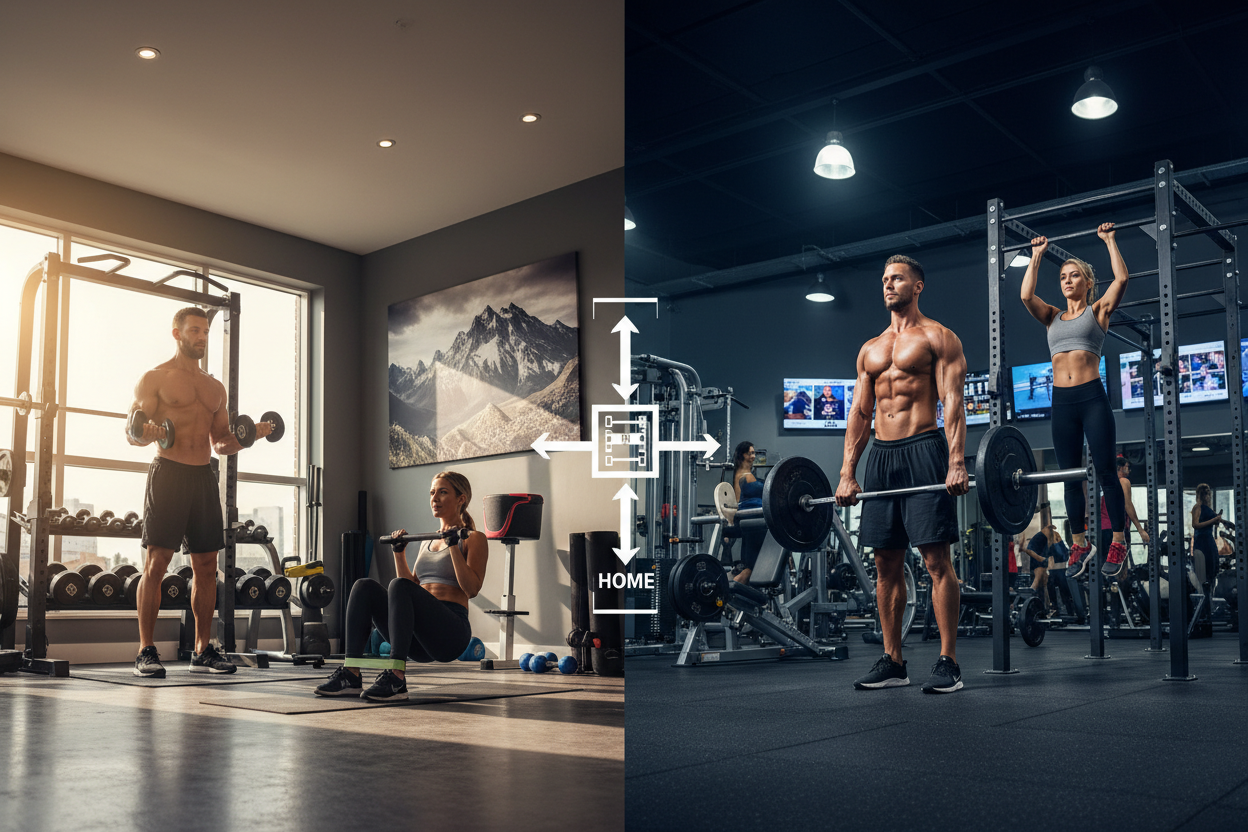
Yes, but you will eventually need resistance. You can start with bodyweight variations of the hip thigh and buttocks exercises listed above, but investing in resistance bands or dumbbells is crucial for long-term progress.
Will lifting heavy make my legs bulky?
This is a common myth. Building significant muscle mass takes years of dedicated high-calorie eating and heavy lifting. Most people will simply look "toned" and firmer by following a hypertrophy program.