
Bodybuilding and Aging: Joint-Conscious Hypertrophy Frameworks, Movement Mechanics, and Floor Staging
The Evolution of Resistance Training: Bodybuilding and Aging Across Decades
Approaching bodybuilding across different stages of life requires an intentional shift in perspective. In earlier lifting phases, trainees often prioritize maximal load progression above all else. However, when balancing bodybuilding and aging, the focus transitions naturally from moving raw weight toward mastering muscular tension, movement efficiency, and long-term joint preservation. Continuing to build and maintain lean tissue over time does not mean abandoning challenging workouts; rather, it calls for refined biomechanics and thoughtful programming.
Understanding bodybuilding aging dynamics means recognizing how connective structures, tendon elasticity, and systemic recovery capacity evolve. Instead of relying solely on heavy, low-repetition lifts that generate high shearing forces across the joints, experienced lifters often achieve exceptional muscular stimulation through controlled tempos, optimized exercise selection, and intentional range-of-motion management. This strategic pivot keeps muscular development active while minimizing cumulative joint wear.
Biomechanical Principles for Joint-Conscious Hypertrophy
Sustainable hypertrophy relies on creating mechanical tension directly within the targeted muscle fibers while keeping joint capsules and surrounding connective tissues in stable positions. Applying specific biomechanical cues allows lifters to maximize hypertrophic stimulus without placing undue strain on vulnerable structures.
- Controlled Eccentric Phases: Lowering weights under deliberate control reduces momentum, ensures continuous muscular tension, and prevents joint jarring at directional turnaround points.
- Standardized Range of Motion: Working within an active, pain-free range of motion keeps tension on the intended muscle belly while avoiding extreme joint angles that stress passive stabilizers.
- Mindful Leverage Adjustments: Modifying grip widths, stance angles, or torso positioning shifts leverage to align forces smoothly with individual skeletal structure.
- Smooth Directional Transitions: Eliminating ballistic bouncing at the bottom of movements protects tendons and forces the musculature to initiate every repetition cleanly.
When balancing joint integrity with continuous mechanical tension, incorporating structured machine-based hypertrophy training can offer guided paths of motion that eliminate unnecessary stabilization fatigue while isolating specific muscle groups.
Machine Versus Free-Weight Balance in Mature Lifting
A balanced hypertrophy program integrates both free weights and guided apparatuses. Free weights, such as dumbbells and barbells, reinforce multi-planar coordination and natural movement patterns. Conversely, fixed-axis and cable machines provide constant tension profiles across the entire repetition curve, supporting continuous load without requiring intense balance demands at the end of fatiguing sets.
Trainees adjusting their routines often find clarity by evaluating bodybuilding with machines to balance stabilization demands against fatigue, allowing for high-effort training sets that keep joint stress predictable and controlled.
Structural Programming: Managing Volume, Frequency, and Lower-Body Work
Managing systemic recovery is a cornerstone of training longevity. As lifters advance in training age, connective tissues often require more time to recover than muscular tissue. Structuring training splits to distribute systemic stress evenly throughout the week helps prevent chronic overuse issues.
Rather than condensing massive training volumes into single marathon workouts, spreading working sets across moderate-frequency sessions supports higher movement quality on every repetition. Alternating between upper-body and lower-body sessions or utilizing push-pull-legs rotations allows muscle groups and surrounding joints adequate downtime between workouts.
Maintaining functional hip and quad strength requires a dedicated approach to lower-body mass training that emphasizes knee tracking and controlled descent. Substituting high-impact or heavily axial-loaded movements with supported variations, such as split squats, hack squats, and leg presses, provides potent quadricep and hamstring stimulus while protecting the lumbar spine.
Home Gym Floor Staging and Joint Protection for Lifelong Lifting
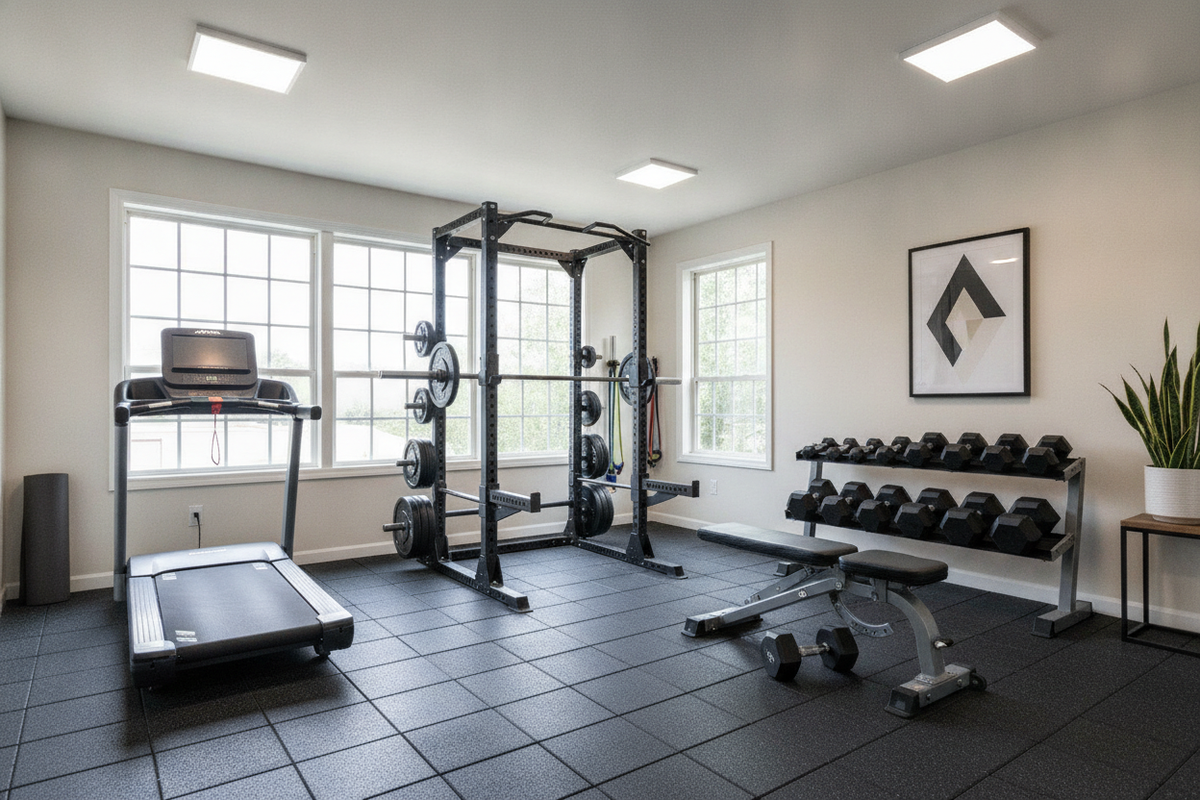
The physical training environment plays a critical role in joint preservation and workout safety. Lifting on hard, unyielding surfaces like bare concrete can transmit impact feedback directly into the ankles, knees, and lower back during standing lifts. Staging a dedicated exercise area with high-density flooring helps create a stable, supportive foundation for all training modalities.
Creating a safe, durable workout perimeter begins with an intentional bodybuilding home gym setup that dampens vibrations and protects your foundation. High-density rubber mats or supportive composite gym flooring provide essential subfloor protection, absorb dropped weight energy, and reduce standing fatigue during extended training sessions.
Flooring Density, Traction, and Maintenance for Stable Footing
Selecting appropriate flooring for a resistance training room involves balancing firmness and shock absorption. Flooring that is overly soft or squishy compromises balance during standing presses or squats, whereas surfaces with optimal density maintain rigidity underfoot while cushioning joint impact.
- Surface Traction: Non-slip textures provide secure footing during unilateral exercises, lunges, and heavy barbell work, preventing unexpected slips.
- Vibration and Shock Reduction: Dense matting absorbs mechanical vibration from plate contact and bench legs, reducing structural noise throughout the home.
- Equipment Stability: Firm matting prevents heavy racks, benches, and adjustable dumbbell stands from shifting during intense training sets.
- Routine Maintenance: Keeping floor surfaces clean of dust, sweat, and debris ensures consistent grip and prolongs the lifespan of both the matting and training gear.
Sustainable Long-Term Frameworks for Lifelong Muscular Development
Longevity in bodybuilding is defined by the ability to train consistently month after month and year after year. Adapting to changes in recovery capacity and joint feedback is not a sign of regression; it is an intelligent progression toward sustainable physical development.
By prioritizing strict movement mechanics, balancing free weights with supportive machines, and creating a stable, protective home training floor, lifters can continually stimulate muscle retention and functional strength across every decade of life.


