Beyond the Squat Rack: A Blueprint for Building Massive Leg Strength
You want to know what leg workouts should i do to see real progress. The answer isn't just "squat more." While squats are fundamental, building a complete lower body requires a strategic mix of knee-dominant, hip-dominant, and unilateral movements. If you ignore one of these categories, you leave performance and muscle growth on the table. A balanced routine targets the quadriceps, hamstrings, glutes, and calves through varied angles and intensities.
The Reality of Leg Training
Early in my lifting journey, I thought I had it figured out. I would walk into the gym, load up the bar for back squats, do five heavy sets, and go home. For a while, it worked. My legs got bigger, and my strength went up. But then, the nagging knee pain started. I developed a muscle imbalance because I was completely neglecting my posterior chain and stabilizing muscles. I had to strip the weight off the bar and rebuild my foundation using different leg exercises that targeted my weaknesses. That experience taught me that volume and heavy weight mean nothing if your exercise selection is one-dimensional.
Foundational Compound Movements
When looking at types of exercises for legs, compound lifts should form the core of your session. These movements recruit multiple joints and muscle groups simultaneously, allowing you to move the most weight and stimulate the greatest systemic fatigue. The back squat is the king, but it isn't the only option.
Deadlifts are equally critical. Specifically, the Romanian Deadlift (RDL) is a powerhouse for hamstring and glute development. Unlike a conventional deadlift where the weight starts on the floor, the RDL focuses on the eccentric (lowering) portion of the lift, placing immense tension on the back of the legs. Incorporating both a squat pattern and a hinge pattern ensures you aren't just building the muscles you see in the mirror, but the ones that provide actual power.
Unilateral Training for Balance
Most lifters have a dominant side. You might push harder with your right leg during a squat without realizing it. This is where different leg workouts often fail; they lack single-leg work. Unilateral exercises force each leg to carry its own load, correcting imbalances and improving core stability.
Bulgarian Split Squats are notorious for a reason. They isolate the quads and glutes while stretching the hip flexors of the trailing leg. Lunges—whether walking, reverse, or stationary—are also vital types of leg exercise. Reverse lunges are generally friendlier on the knees, while walking lunges ramp up the metabolic demand. If you want functional strength that translates to athletics, you cannot skip these.
Isolation and Machine Work
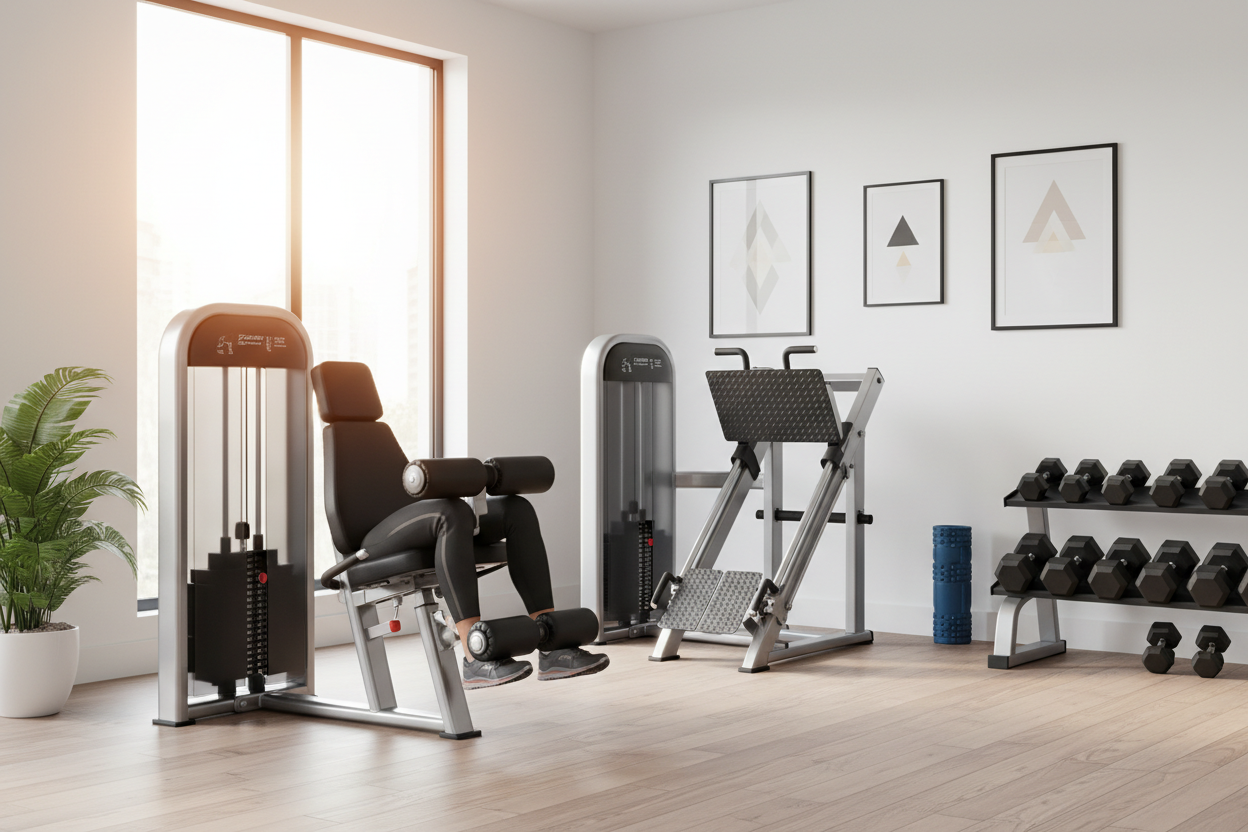
Free weights are superior for stabilizers, but machines have a specific place in a hypertrophy program. They provide stability, allowing you to take muscles to absolute failure safely. When exploring different types of leg exercises, don't shy away from the leg press or hack squat.
The leg extension is one of the few ways to fully shorten the rectus femoris (a quad muscle) in a way that squats cannot. Similarly, seated or lying leg curls are essential for complete hamstring development. The hamstrings have two main functions: knee flexion and hip extension. RDLs cover hip extension, but leg curls cover knee flexion. A truly all legs workout needs to hit both functions to prevent injury.
Structuring Your Routine
Designing the perfect legs wo requires understanding volume and frequency. You shouldn't try to cram every exercise known to man into a single hour. Instead, categorize your movements. A solid session might look like this: one heavy compound squat variation, one hip-hinge movement, one unilateral movement, and two isolation finishers.
If you train legs twice a week, you can employ different types of leg workout splits. Day one could be quad-focused (Squats, Leg Press, Extensions), while day two is posterior-focused (Deadlifts, Hip Thrusts, Curls). This allows for higher intensity per muscle group while managing fatigue.
Variables to Manipulate
To keep progressing, you need to vary more than just the exercise selection. You must rotate through different types of leg exercises and rep ranges. Periodization is key. You might spend four weeks focusing on strength (3-6 reps), followed by four weeks of hypertrophy (8-12 reps), and then a phase of metabolic endurance (15+ reps).
Changing the tempo is another underutilized tool. Slowing down the eccentric phase of a squat or pausing at the bottom of a leg press can stimulate growth without adding more weight. This is particularly useful for older lifters or those recovering from injury who need to limit joint stress while maintaining intensity.
Calves and Adductors
These are the most forgotten groups in many routines. The calves require high volume and a full range of motion. Bouncing the weight at the bottom of a calf raise does nothing. You need a deep stretch and a hard contraction. Standing calf raises target the gastrocnemius, while seated raises target the soleus. You need both for full lower leg development.
Adductors (inner thigh muscles) contribute significantly to squat stability and leg size. While they get worked during deep squats and lunges, adding direct adductor machine work can prevent groin strains and add mass to the upper thigh. It is a small detail that separates a generic routine from a comprehensive one.
Choosing the Right Approach
Ultimately, the "best" workout is one you can recover from. If you are doing an all legs workout that leaves you unable to walk for four days, you are likely overtraining. Consistency beats intensity in the long run. Listen to your body. If your lower back is fried, swap the barbell back squat for a belt squat or a goblet squat. If your knees are bothering you, focus more on posterior chain movements for a few weeks.
There are dozens of different types of leg exercises available. The magic happens not in finding a secret move, but in executing the basics with ferocious intent and perfect form. Rotate your lifts, respect your recovery, and ensure you are hitting the legs from every angle. That is the formula for growth.
Frequently Asked Questions
How often should I train my legs?
For most natural lifters, training legs twice a week is optimal. This frequency allows for sufficient volume to stimulate growth while providing enough days for recovery. A split like Upper/Lower or Push/Pull/Legs works well for this schedule.
Can I build big legs without a barbell?
Yes, you can build significant mass using dumbbells, kettlebells, and machines. Exercises like goblet squats, dumbbell lunges, and Bulgarian split squats can provide a high level of intensity and muscle stimulation without requiring a barbell on your back.
What should I do if I have knee pain during squats?
Check your form to ensure your knees are tracking over your toes and not collapsing inward. If pain persists, switch to more knee-friendly variations like reverse lunges or box squats, and focus on strengthening your hamstrings and glutes to provide better knee support.