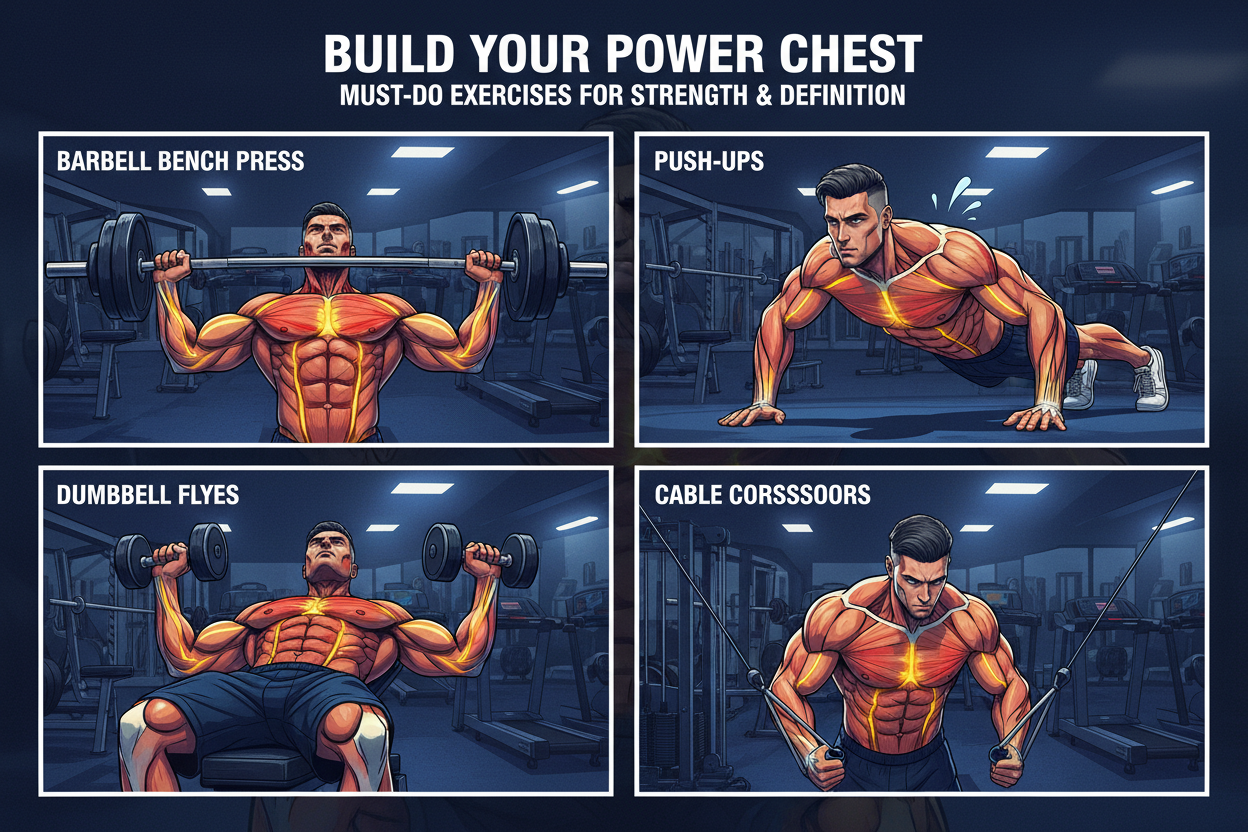
Must-Do Chest Exercises to Build Strength and Definition
Developing a strong and well-defined chest is a goal shared by many fitness enthusiasts, athletes, and those seeking to improve their overall physique. Whether you're aiming for better performance, improved posture, or simply a more sculpted look, incorporating effective chest exercises into your routine can make a significant difference. The right approach includes not only selecting proven movements but also understanding how and why they work, paying attention to proper form, and making adjustments based on progression and individual needs.
Understanding the Role of Chest Muscles
The chest is primarily made up of the pectoralis major and pectoralis minor. The pectoralis major has two distinct parts: the clavicular (upper) head and the sternal (lower) head, each responsible for different movement angles. A balanced chest training program should target all these areas to achieve functional strength and visual symmetry. Neglecting one portion can lead to imbalances and may affect performance in other lifts or athletic activities.
The Must-Do Chest Exercises for Any Routine
There is no one-size-fits-all chest workout, but certain exercises have stood the test of time for their ability to engage the pectorals effectively. These movements, when executed with proper technique, can help you achieve consistent strength gains and muscle growth.
Barbell Bench Press
The barbell bench press remains a staple for chest development. It allows you to handle heavy loads, promoting muscle hypertrophy and overall upper body strength. Keep your feet planted, shoulders retracted, and lower the bar under control to just above your chest before pressing upward.
Dumbbell Bench Press
Using dumbbells instead of a barbell engages more stabilizing muscles and offers a greater range of motion. This can lead to better muscle activation and reduce imbalances between sides. Additionally, dumbbells allow natural wrist rotation, which can be more comfortable for some lifters.
Incline Bench Press
Targeting the upper portion of the chest, incline presses (either with a barbell or dumbbells) are essential for aesthetic and strength balance. Set the bench at an angle of about 30-45 degrees to shift the emphasis to the clavicular head of the pectoralis major.
Chest Dips
Dips done with a forward lean effectively work the lower chest and triceps. Using parallel bars, descend until your shoulders are just below your elbows, then push back up in a controlled manner. This bodyweight exercise challenges your entire upper torso and improves functional pressing power.
Push-Ups
This timeless bodyweight exercise can be modified in countless ways to target different areas of the chest. Variations such as wide-grip push-ups, decline push-ups, or adding resistance with a weighted vest keep the movement challenging and productive.
Form, Safety, and Progression
Proper form is critical for preventing injury and ensuring you engage the intended muscles. Always warm up before working your chest, using light weights or dynamic stretches to prepare the joints and muscles. Aim to gradually increase resistance or repetitions over time, but avoid sudden jumps in load that could strain tendons or ligaments.
Mind-Muscle Connection
Paying attention to how your chest muscles contract and stretch during each repetition can significantly enhance results. This focus, often called the mind-muscle connection, ensures you're not relying too heavily on secondary muscles during compound movements.
Personal Experience
When I first started training, I focused almost exclusively on flat bench presses. While my strength improved, my chest lacked upper definition. Introducing incline presses and dips into my routine made a noticeable difference in both appearance and performance. Over time, I learned that a mix of angles and equipment types not only stimulated growth but also kept training enjoyable and sustainable.
Optimizing Your Training Routine
Combining two to four of these must-do chest exercises in a single workout can yield excellent results. For example, you could start with a heavy compound movement like the barbell bench press, follow with incline dumbbell presses, and finish with dips or push-ups for endurance and definition. Adjust volume and rest periods according to your goals—shorter rests for muscular endurance, longer rests for strength development.
Recovery and Nutrition
Muscles grow during recovery, not during the workout itself. Allow at least 48 hours before targeting the chest again to facilitate repair and adaptation. Adequate protein intake, hydration, and sufficient sleep are indispensable for progress. Without these factors, even the best exercise selection cannot deliver optimal results.
Final Thoughts
Incorporating these must-do chest exercises into your training plan will help you develop strength, balance, and a more sculpted upper body. The key lies in executing movements with precision, progressing intelligently, and giving your body the time it needs to adapt. Over weeks and months, consistent effort in the gym paired with proper recovery will yield impressive and lasting changes not just in your chest, but in overall fitness.