Beyond the Squat: A Complete Breakdown of Leg Anatomy for Better Gains
Building a powerful lower body requires more than just mindlessly getting under a barbell. To truly develop strength, aesthetics, and functionality, you need to understand the machinery you are operating. The legs are not a single unit but a complex system of levers and pulleys. The major leg muscle groups responsible for movement are the quadriceps, hamstrings, glutes, and calves, supported by smaller stabilizers like the adductors and abductors. Understanding how these interact is the quickest way to break through plateaus and prevent injury.
I learned this lesson the hard way a few years into my lifting journey. I was obsessed with increasing my squat max, focusing entirely on pushing weight up. I ignored the posterior chain almost entirely. Eventually, I developed a nagging pain in the front of my knee—patellar tendonitis. My physical therapist pointed out that my leg muscle group development was incredibly lopsided. My quads were doing all the work, while my hamstrings and glutes were dormant. Once I started isolating the different muscle groups in legs specifically to correct this imbalance, my knee pain vanished, and my squat numbers actually went up.
The Quadriceps: The Anterior Powerhouse
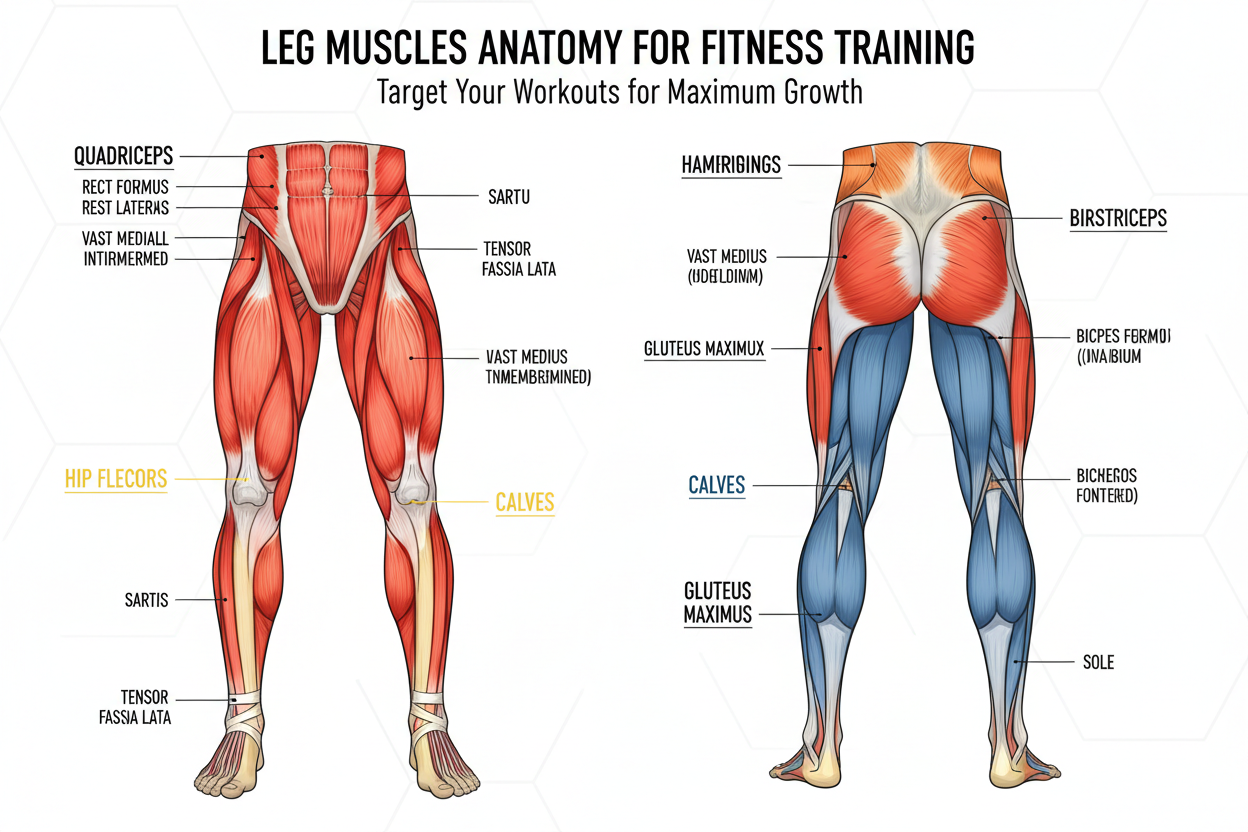
When you look at a developed leg from the front, what you are seeing is the quadriceps femoris. As the name suggests, this is not one muscle but four distinct heads that make up one of the largest muscle groups in legs. These four muscles—the rectus femoris, vastus lateralis, vastus medialis, and vastus intermedius—converge at the quadriceps tendon.
The primary function here is knee extension. Every time you stand up from a chair, walk up stairs, or kick a ball, your quads are driving the motion. Among the leg muscle group names, the vastus medialis (often called the teardrop muscle) is frequently cited by bodybuilders for its aesthetic appeal just above the knee, but it plays a critical role in knee stability. Neglecting any head of the quad can lead to tracking issues with the kneecap.
To target these muscle groups of the leg, compound movements like squats and lunges are king. However, to isolate the rectus femoris specifically, leg extensions are necessary because it is the only quad muscle that crosses the hip joint, assisting in hip flexion.
The Hamstrings: More Than Just Leg Curls
Flip the leg over, and you find the hamstrings. These are arguably the most neglected muscle groups in leg training. Many lifters throw in a few sets of lying leg curls at the end of a workout and call it a day, but the hamstrings are complex. They consist of three muscles: the biceps femoris (long and short heads), semitendinosus, and semimembranosus.
The hamstrings have a dual function: they flex the knee (bringing your heel to your butt) and extend the hip (driving your hips forward). If you only do leg curls, you are missing half the picture. To fully develop these major muscle groups in legs, you must incorporate hip-hinging movements like Romanian Deadlifts (RDLs) or Good Mornings. A well-developed hamstring provides the "sweep" on the back of the leg and acts as the primary braking system during athletic movements like sprinting, protecting the ACL from injury.
The Glutes: The Engine Room
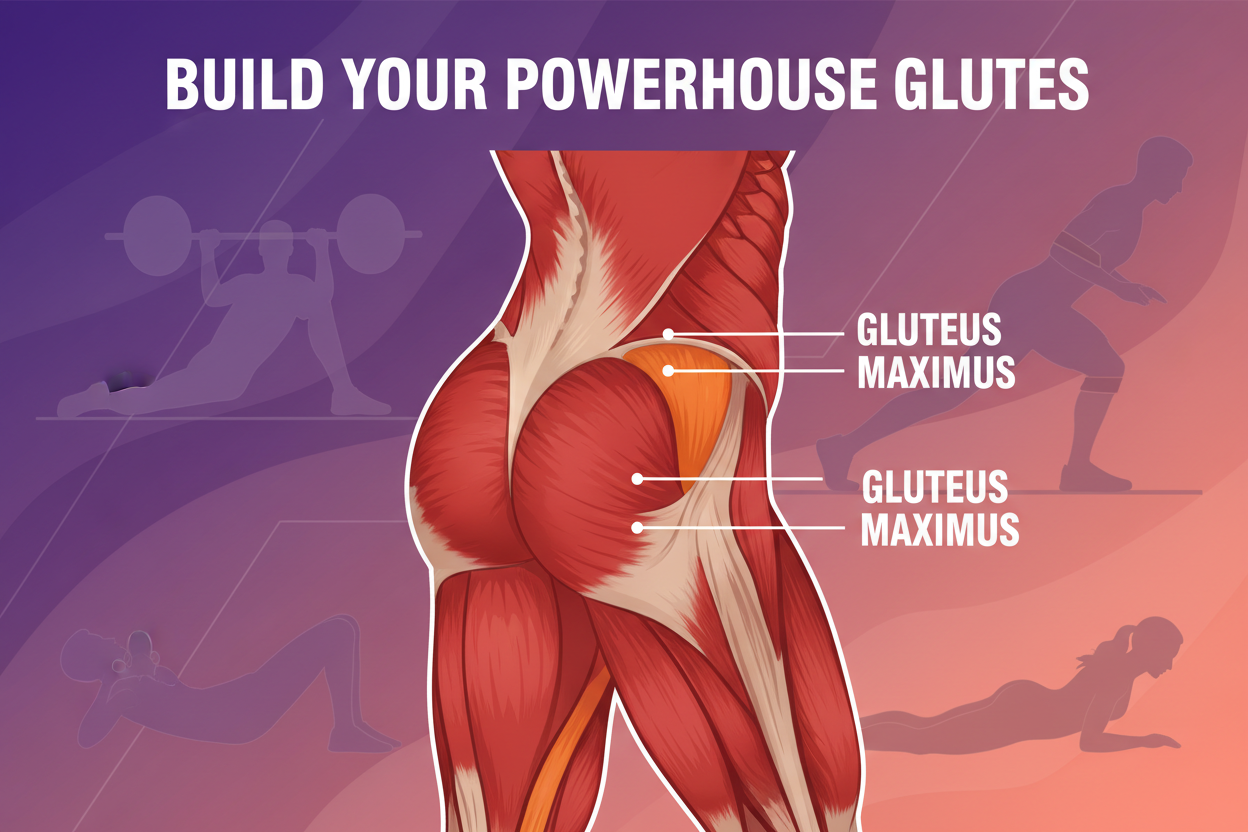
While some anatomy texts separate the pelvis from the leg, in a functional fitness context, the glutes are the key drivers for the lower body muscles groups. The gluteus maximus is the largest muscle in the human body. Alongside the gluteus medius and minimus, this group controls hip extension, abduction, and external rotation.
Weak glutes force the hamstrings and lower back to compensate, which is a recipe for injury. When discussing different leg muscle groups, the glutes are often the link that connects the power of the legs to the stability of the torso. Movements like the hip thrust and deep squats engage these fibers heavily. If your knees cave inward during a heavy squat, it is often a sign that your gluteus medius is weak and failing to stabilize the femur.
The Adductors and Abductors: The Unsung Heroes
If you have ever felt sore on the inner thigh after a wide-stance squat, you have met the adductors. This group includes the adductor magnus, longus, and brevis, along with the gracilis. Their main job is to pull the leg inward toward the centerline of the body.
Conversely, the abductors (including the tensor fasciae latae and gluteus medius) pull the leg away. These are rarely the star of the show when listing main muscle groups in legs, but they are vital for stability. Without strong adductors and abductors, your primary movers cannot generate maximum force because the body senses instability and throttles down power output to protect itself. Including lateral lunges or dedicated machine work ensures all leg muscles groups are balanced.
The Calves: The Lower Leg
Finally, we reach the lower leg. The calves are comprised of two main muscles: the gastrocnemius and the soleus. The gastrocnemius is the visible, diamond-shaped muscle that crosses the knee joint, while the soleus lies underneath and only crosses the ankle.
Because the soleus is predominantly slow-twitch muscle fiber, it is incredibly resistant to fatigue. This is why walking doesn't make your calves huge. To stimulate growth in these muscles groups in the leg, you need heavy resistance and varied rep ranges. Standing calf raises target the gastrocnemius, while seated calf raises shift the focus to the soleus. Treating the calves as an afterthought usually results in lackluster development; they require the same intensity as your quads or hamstrings.
Integrating Anatomy into Training
Knowing the all leg muscle groups is only useful if it changes how you train. A comprehensive leg day shouldn't just be five variations of squats. It needs to address knee extension (quads), knee flexion (hamstrings), hip extension (glutes/hams), and ankle plantarflexion (calves). By visualizing the specific muscle groups in legs working during each rep, you improve your mind-muscle connection and ensure no area is left lagging.
Balance is the ultimate goal. You want the strength of the anterior chain to be matched by the posterior chain. When you respect the unique function of the major leg muscle groups, you build a lower body that is not only aesthetically pleasing but resilient and powerful.
Frequently Asked Questions
Should I train all leg muscle groups in a single workout?
Yes, training the entire leg in one session is very effective for most people. However, if you are an advanced lifter, splitting your training into a quad-focused day and a hamstring/glute-focused day can allow for higher volume and intensity per muscle group.
Which leg muscle is the hardest to develop?
For many, the calves are the most stubborn due to their high density of slow-twitch fibers and genetic factors. They often require higher frequency training and a focus on a full range of motion compared to other lower body muscles.
Why do I feel squats mostly in my quads and not my glutes?
This usually comes down to mechanics and foot placement. A high-bar squat with a narrower stance emphasizes the knee joint and the quads, while a low-bar position with a wider stance increases hip flexion, recruiting more glutes and hamstrings.