Beyond the Squat: How to Build a Complete Backside by Hitting All Three Glute Muscles
Most people walk into the gym, head straight for the squat rack, and assume their lower body training is complete. While squats are fantastic for overall leg strength, relying on them exclusively is often why so many lifters feel stuck with their progress. If you want a backside that looks developed from every angle and performs athletically, you have to understand that the "glutes" aren't just one big slab of meat. They are a complex system requiring varied angles and rotational forces to fully activate.
To build a truly three-dimensional shape, you need a strategy that includes exercises that target different glute muscles specifically. The gluteal region is composed of three distinct muscles: the gluteus maximus, gluteus medius, and gluteus minimus. Each has a unique function, and neglecting the smaller stabilizers in favor of just the big prime movers is a recipe for muscular imbalances and a flat appearance from the side.
Understanding the Anatomy: The Big Three
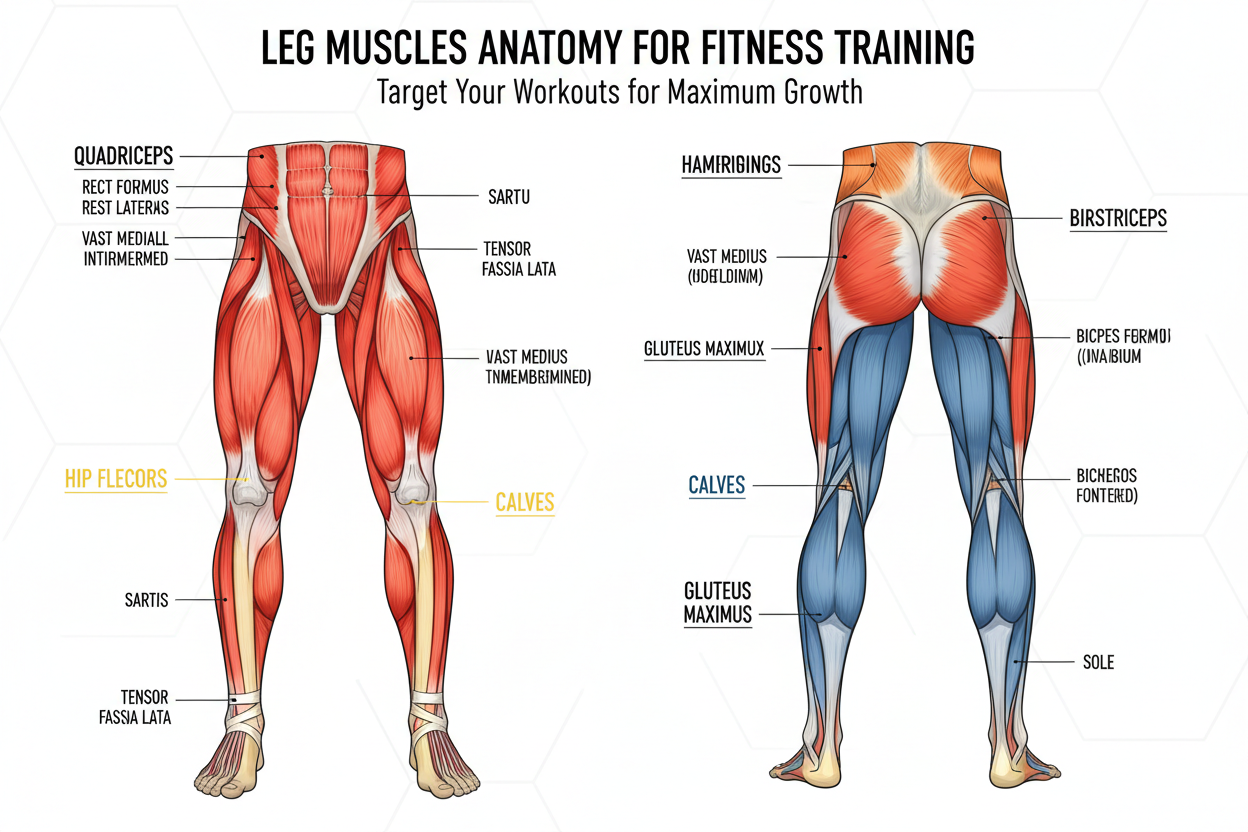
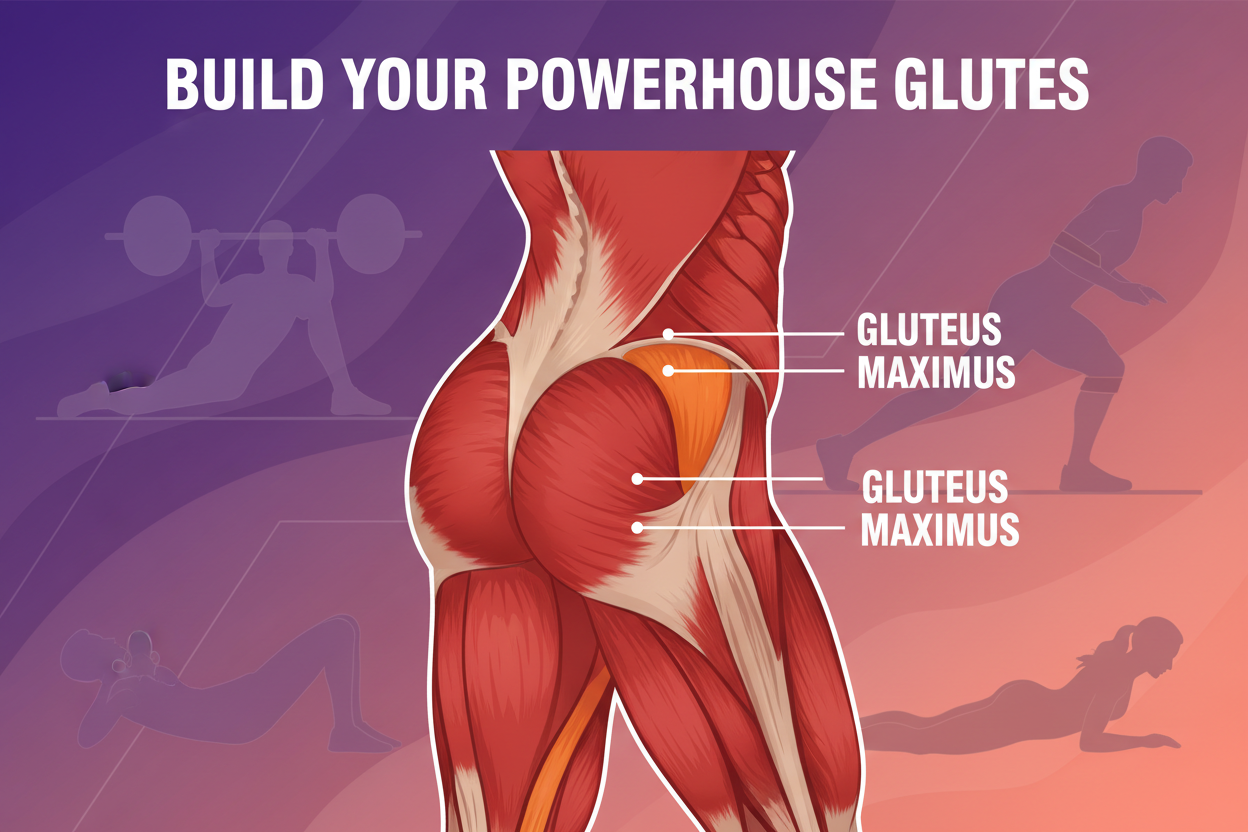
Before you can optimize your training, you need to know what you are actually working. Visualizing the muscle contracting can significantly improve your results. When we look at glute exercises muscle groups, we are usually talking about these three players:
- Gluteus Maximus: This is the largest muscle in the human body. It is responsible for the bulk of the shape and is the primary driver of hip extension (moving your leg behind you).
- Gluteus Medius: Located on the upper, outer surface of the pelvis. This muscle is crucial for hip abduction (moving the leg away from the midline) and stabilization. It creates that "shelf" look on the upper glutes.
- Gluteus Minimus: Situated underneath the medius, this smaller muscle assists with abduction and internal rotation. It works in tandem with the medius to keep your hips stable when you walk or run.
The Powerhouse: Training the Gluteus Maximus
The gluteus maximus is the main event for most people. It provides the front-to-back size. Since its primary job is hip extension, the best movements involve thrusting the hips forward against resistance. While squats and lunges do hit the maximus, they also heavily recruit the quads. For maximum recruitment, you want exercises where the tension is highest when the glutes are fully shortened.
The Hip Thrust
There is arguably no better movement for isolation. By bending the knees, you take the hamstrings largely out of the equation (a phenomenon called active insufficiency), forcing the maximus to do the heavy lifting. I remember spinning my wheels for years doing heavy deadlifts, wondering why my glutes weren't growing. It wasn't until I dropped the ego, set up a barbell against a bench, and focused on the top squeeze of a hip thrust that I saw significant changes in muscle density. The burn is distinctively different—it feels like a cramp in the best possible way.
Romanian Deadlifts (RDLs)
While the hip thrust challenges the muscle in the shortened position, the RDL challenges the gluteus maximus in the lengthened (stretched) position. This stretch under load is a powerful stimulus for muscle growth (hypertrophy). Keep a slight bend in your knees, push your hips back as far as possible, and stop when your hips stop moving back. Going lower than that usually just rounds your lower back.
The Upper Shelf: Targeting the Medius and Minimus
This is where most routines fail. If you only move forward and backward (sagittal plane), you ignore the muscles responsible for lateral movement. Neglecting workouts for different parts of glutes—specifically the upper and outer regions—can lead to "gluteal amnesia" in the stabilizers, which often manifests as lower back pain or knee issues.
To target the medius and minimus, you must move the leg away from the body or rotate the hip. This creates the visual width of the hips and contributes to the athletic "X" physique.
Cable Hip Abductions
Standing cable abductions are excellent for keeping constant tension on the muscle. Stand sideways to a cable machine, attach a cuff to your outer ankle, and sweep the leg out to the side. The trick here is to slightly internally rotate your foot (point your toes inward). This slight rotation biases the glute medius and minimus over the tensor fasciae latae (TFL), a hip flexor that often tries to take over.
Seated Abduction Machine
Often dismissed as a "lazy" exercise, the seated abduction machine is actually highly effective if done correctly. Lean forward slightly to put the glute medius in a stronger position to contract. Don't just fling the weight out; control the eccentric (closing) phase. You should feel this burning on the side of your hips, near the top.
The Unilateral Advantage
You cannot discuss a comprehensive glute workout for all three muscles without mentioning single-leg training. Unilateral exercises hit the maximus for power while simultaneously forcing the medius and minimus to fire aggressively to prevent your pelvis from tilting.
Bulgarian Split Squats
This is the movement everyone loves to hate. By elevating the rear foot, you place the majority of the load on the front leg. To make this more glute-dominant, lean your torso forward slightly (keeping the back straight) and position your front foot further out. This increases the degree of hip flexion, stretching the glute more than the quad. The stability required here lights up the medius.
Step-Ups
Step-ups are deceptive. Most people cheat by pushing off the bottom foot. To truly target the glute, find a box roughly knee-height. Lean forward, and drive solely through the heel of the foot on the box. Control the descent slowly—do not just drop down. The slow negative phase recruits high-threshold motor units in all three glute muscles.
Structuring Your Routine
You don't need to do every exercise listed above in a single session. However, a well-rounded leg day should hit these movement patterns: a heavy hinge, a thrust, a unilateral movement, and an abduction movement. Here is an example of how to structure a session effectively.
Sample Session
- 1. Barbell Hip Thrust: 4 sets of 8-12 reps (Target: Maximus/Shortened position)
- 2. Romanian Deadlift: 3 sets of 10-12 reps (Target: Maximus/Lengthened position)
- 3. Deficit Reverse Lunges: 3 sets of 12 reps per leg (Target: Maximus & Medius/Stability)
- 4. 45-Degree Hyperextension (Glute Focus): 3 sets of 15-20 reps (Target: Upper Maximus)
- 5. Cable Abductions: 3 sets of 15-20 reps (Target: Medius & Minimus)
Common Pitfalls to Avoid
Even with the right exercises, execution is everything. A common mistake in abduction movements is using too much momentum. If you are swinging your body to get the leg out, you are using your lower back, not your glutes. Drop the weight and focus on a strict range of motion.
Another issue is anterior pelvic tilt (arching the lower back) during extension exercises like the kickback or hip thrust. This shifts the tension from the glutes to the lumbar spine. Brace your core as if you are about to take a punch to the stomach. This rib-down position locks the pelvis in place, ensuring that the movement comes strictly from the hip joint.
Building a complete backside takes patience and intentionality. It requires moving beyond the basic squat and understanding how to apply tension from multiple angles. By incorporating specific exercises that target different glute muscles, you ensure balanced development, better posture, and a stronger, more resilient body.
Frequently Asked Questions
How often should I train my glutes for maximum growth?
Most people see the best results training glutes 2 to 3 times per week. The glutes are large, resilient muscles that can handle high volume and frequency, provided you vary the intensity and exercise selection (e.g., one heavy day, one lighter high-repetition day).
Why do I feel my lower back taking over during glute exercises?
This usually happens due to poor core bracing or lifting a weight that is too heavy, causing you to compensate by arching your spine. Focus on tucking your pelvis slightly (posterior pelvic tilt) and engaging your abs to isolate the hips and protect the lower back.
Can I build my glutes without heavy weights?
Yes, but you will eventually need progressive overload to continue seeing changes. While bodyweight exercises and resistance bands are great for activation and metabolic stress (the "burn"), adding resistance through weights is the most efficient way to stimulate significant muscle hypertrophy over the long term.