Best Exercise in Gym: Movement Hierarchies, Foundation Mechanics, and Floor Staging
What Defines the Best Exercise in Gym Training?
Stepping into a fully equipped fitness facility presents a vast array of machines, free weights, cables, and open turf. When lifters search for the best exercise in gym environments, the answer rarely lies in an isolated accessory machine. Instead, the most productive gym movements are defined by kinetic chain recruitment, multi-joint coordination, load adaptability, and functional movement transfer.
A premier gym exercise recruits multiple muscle groups simultaneously, challenges structural posture, and requires active core stabilization. Rather than exhausting a single muscle through a fixed machine trajectory, high-value compound exercises teach the entire body to produce force as a cohesive unit. Evaluating movements through biomechanical efficiency allows lifters to maximize session quality while building balanced strength from the floor up.
The Core Movement Hierarchies: The Best Gym Exercises Ranked by Pattern
Categorizing training by fundamental movement patterns provides a clear hierarchy for selecting the best gym exercises. Rather than randomly assembling exercises, organizing sessions around foundational human mechanics ensures comprehensive structural development.
The Squat and Hinge Patterns: Lower-Body Powerhouses
Lower-body compound lifts represent the foundation of systemic strength. The barbell back squat and front squat demand deep knee and hip flexion alongside thoracic rigidity, making them essential benchmarks for lower-body power. Concurrently, the hip hinge pattern—embodied by conventional, sumo, and Romanian deadlifts—trains the entire posterior chain, emphasizing the hamstrings, glutes, and spinal erectors.
Mastering these lifts requires precise joint stacking and firm foot-to-floor contact. Reviewing a detailed good gym exercise guide can assist lifters in matching specific hinge and squat variations to their personal mobility and limb leverage for sustainable, long-term joint comfort.
The Horizontal and Vertical Upper-Body Drives: Push and Pull Classics
Upper-body mechanics center around paired horizontal and vertical actions:
- Overhead Press: The standing barbell press demands total-body tension, vertical bar trajectory, and active shoulder stability.
- Barbell Bench Press: A foundational horizontal push that develops the pectorals, anterior deltoids, and triceps while requiring solid upper back retraction on the bench.
- Pull-Ups and Chin-Ups: Essential vertical pulling movements that challenge relative bodyweight control, latissimus dorsi recruitment, and grip strength.
- Barbell and Dumbbell Rows: Horizontal pulling patterns that reinforce scapular retraction and mid-back thickness to balance heavy pressing volume.
Loaded Carries and Dynamic Core Bracing
Loaded carries, including farmer walks and suitcase carries, bridge static strength and dynamic movement. Carrying heavy implements requires rigid abdominal bracing, lateral hip stability, and high grip endurance. Integrated alongside anti-rotational exercises such as the Pallof press, loaded carries reinforce the midline and stabilize the spine under shifting conditions.
Biomechanical Ground Drive: Why Floor Grip and Density Dictate Lifting Output
Every standing compound movement relies fundamentally on ground reaction force. When initiating a heavy squat, deadlift, or overhead press, force originates at the feet and travels up through the kinetic chain. If the floor beneath the lifter is overly soft, unstable, or slick, energy dissipates before reaching the barbell.
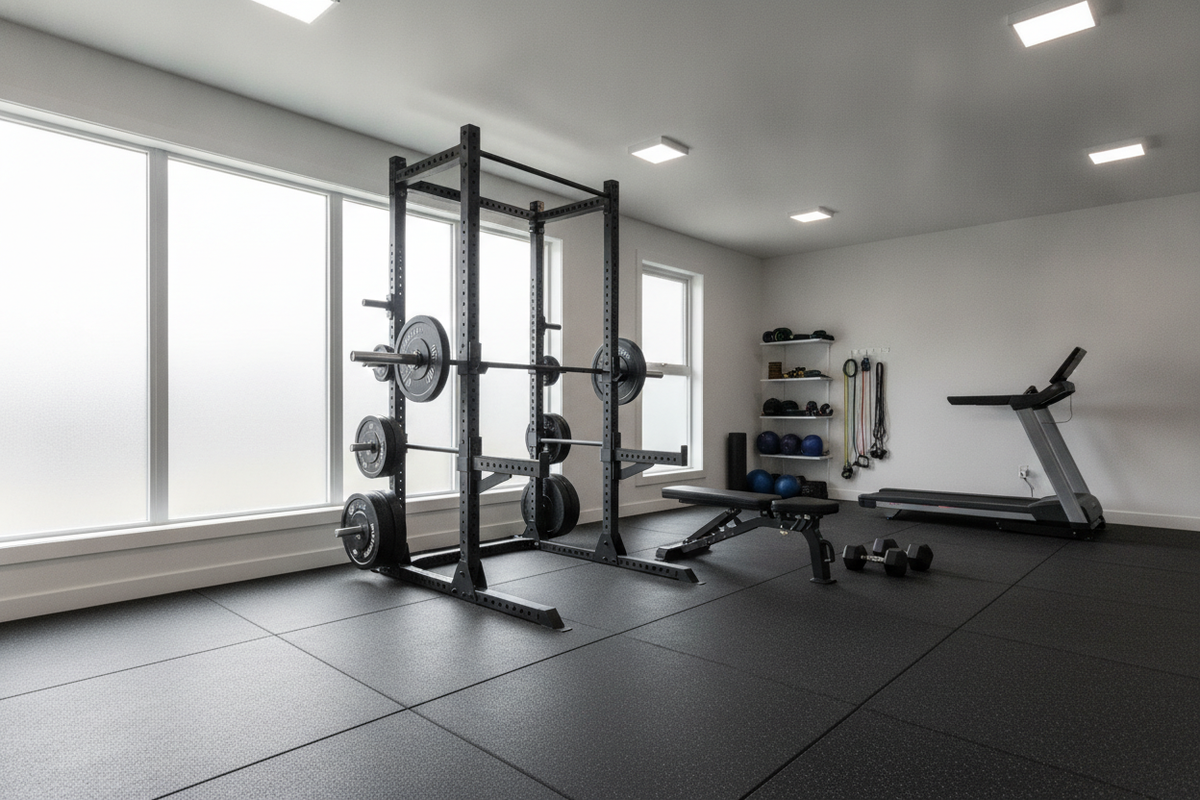
Squishy carpet or low-grade foam compresses unevenly under load, altering ankle alignment and knee tracking during maximal efforts. Equipping a training area with a dense exercise gym product provides the firm surface resistance required for solid foot planting. A high-traction surface prevents lateral foot slide during wide-stance squats, allowing the lifter to root their feet securely into the floor and drive vertical force without kinetic loss.
Designing a Balanced Routine Around the Best Gym Exercises
Constructing an effective workout routine does not require dozens of complicated movements. High-level strength and conditioning programs structure workouts around a small selection of good exercises at the gym, progressively refining execution and load over time.
When organizing a training split, consider the following structural guidelines:
- Anchor Each Session with a Primary Compound Lift: Begin workouts with the most demanding multi-joint exercise, such as a squat, deadlift, or overhead press, while central nervous system readiness is highest.
- Pair Antagonistic Movement Patterns: Combine horizontal pushes with horizontal pulls, or quad-dominant squats with hamstring-dominant hinges, to maintain structural balance around joints.
- Incorporate Unilateral Accessories: Add split squats, lunges, and single-arm rows to address side-to-side asymmetries and pelvic alignment.
- Manage Fatigue and Volume: Avoid stacking multiple high-axial-load movements within the same session to keep spinal fatigue manageable.
For those looking to transition commercial gym structures into smaller setups, consulting an exercise gym guide offers practical advice for modifying complex gym programming into streamlined home workouts.
Translating Commercial Gym Staples to a Protected Home Training Space
Replicating commercial gym movements at home requires careful attention to equipment layout, surface density, and floor preservation. Dropping heavy weights, resting power racks, and executing high-impact conditioning drills place significant stress on residential subfloors.
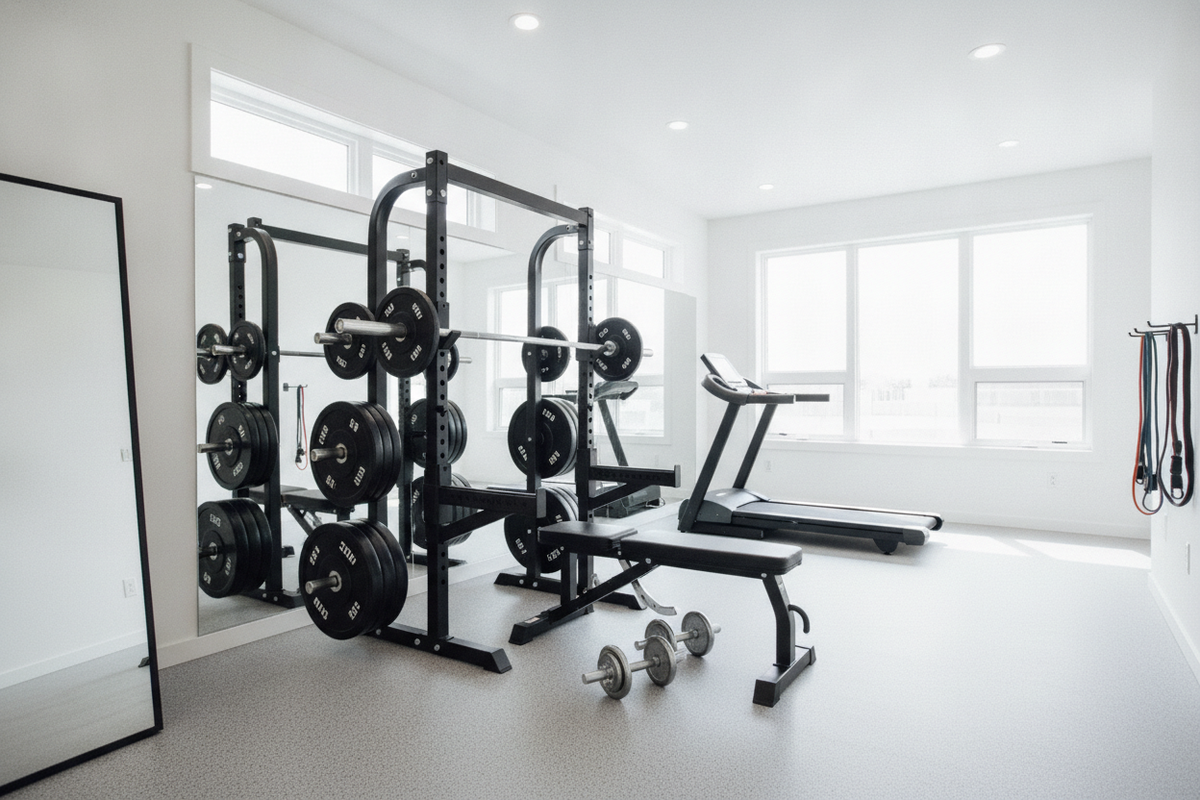
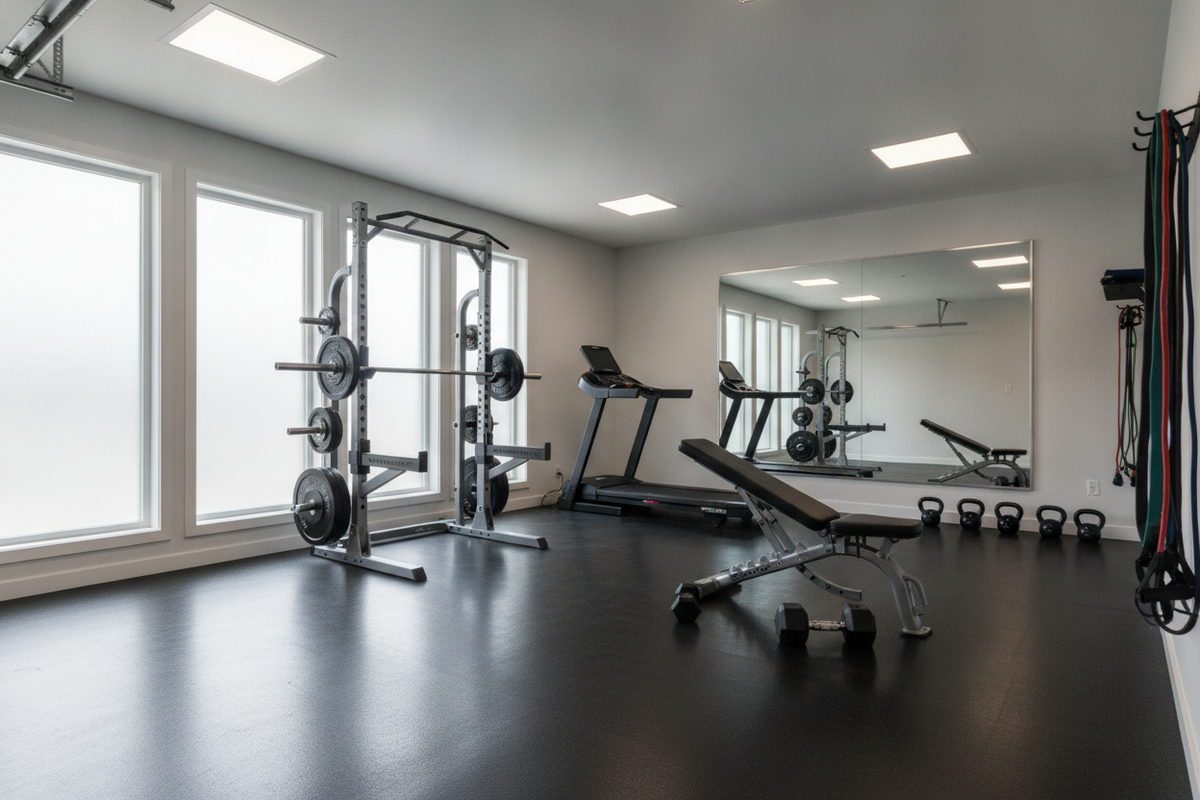
Deploying a dedicated exercise gym collection surface ensures that free weights, benches, and racks sit on a level, shock-dampening foundation. Room-scale matting protects underlying tile or hardwood from direct impact and helps muffle the acoustic vibration of deadlifts and dropped dumbbells.
Maintaining your workout floor is equally vital for training longevity. Utilizing a cleanable exercise gym product allows for seamless transitions between heavy barbell work and floor-based mobility drills. Regular surface wipe-downs with mild cleaners preserve the high-friction surface texture, ensuring dependable grip across squats, lunges, and plyometric drills for years to come.