Good Gym Exercises That Protect Your Joints Long-Term
I remember standing in my cramped garage gym at 5 AM, rubbing my right shoulder after a heavy bench press set. I was 30 years old, and I thought chronic aches were just the tax you paid for putting on muscle. I was completely wrong.
When I started consulting for clients who wanted to build home gyms and lift into their 60s without waking up stiff, I realized we needed a massive overhaul of their routines. We had to filter out the stuff that grinds down cartilage and focus strictly on good gym exercises that build sustainable muscle.
Quick Takeaways for Joint-Friendly Lifting
- Muscle recovers in 48 hours; tendons and ligaments take much longer. Lift for your connective tissue.
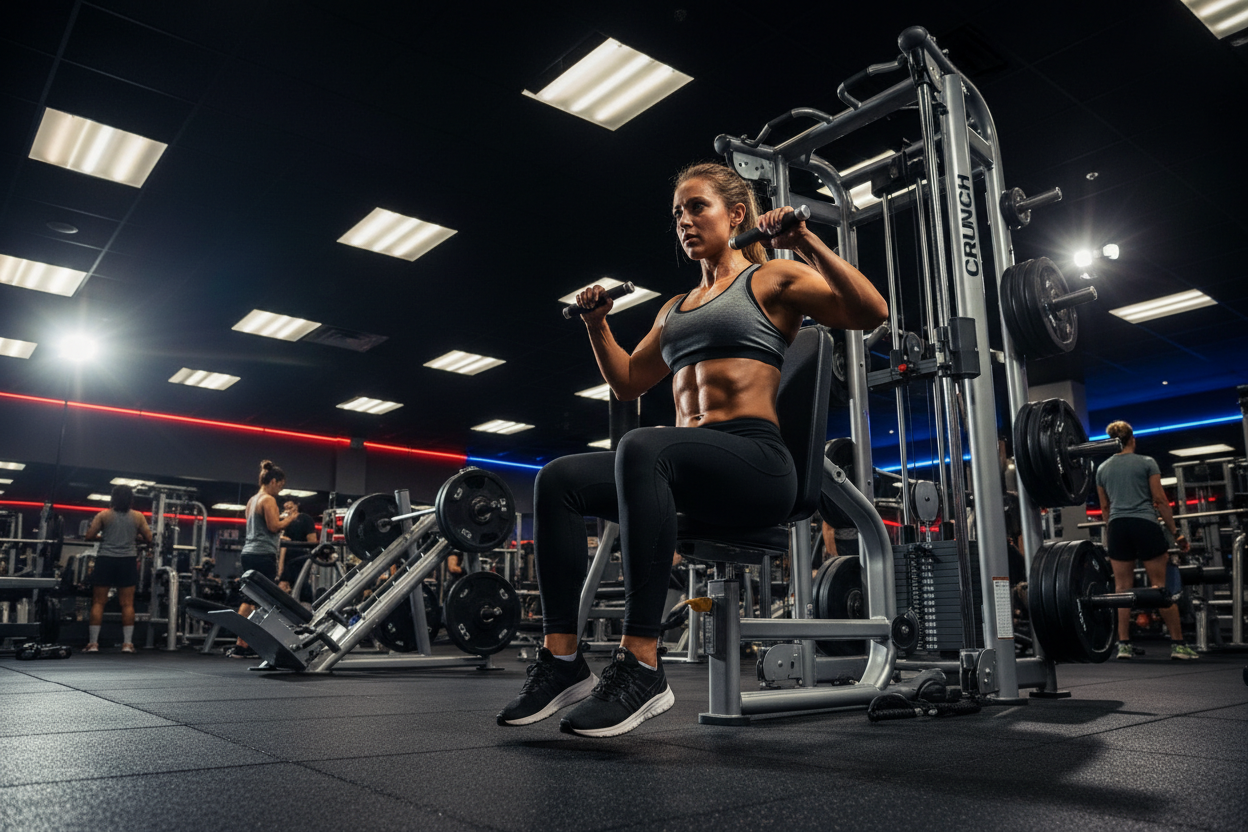
- Swap fixed-barbell movements for dumbbells or cables to allow natural joint rotation.
- Reduce spinal compression by trading heavy back squats for unilateral leg movements.
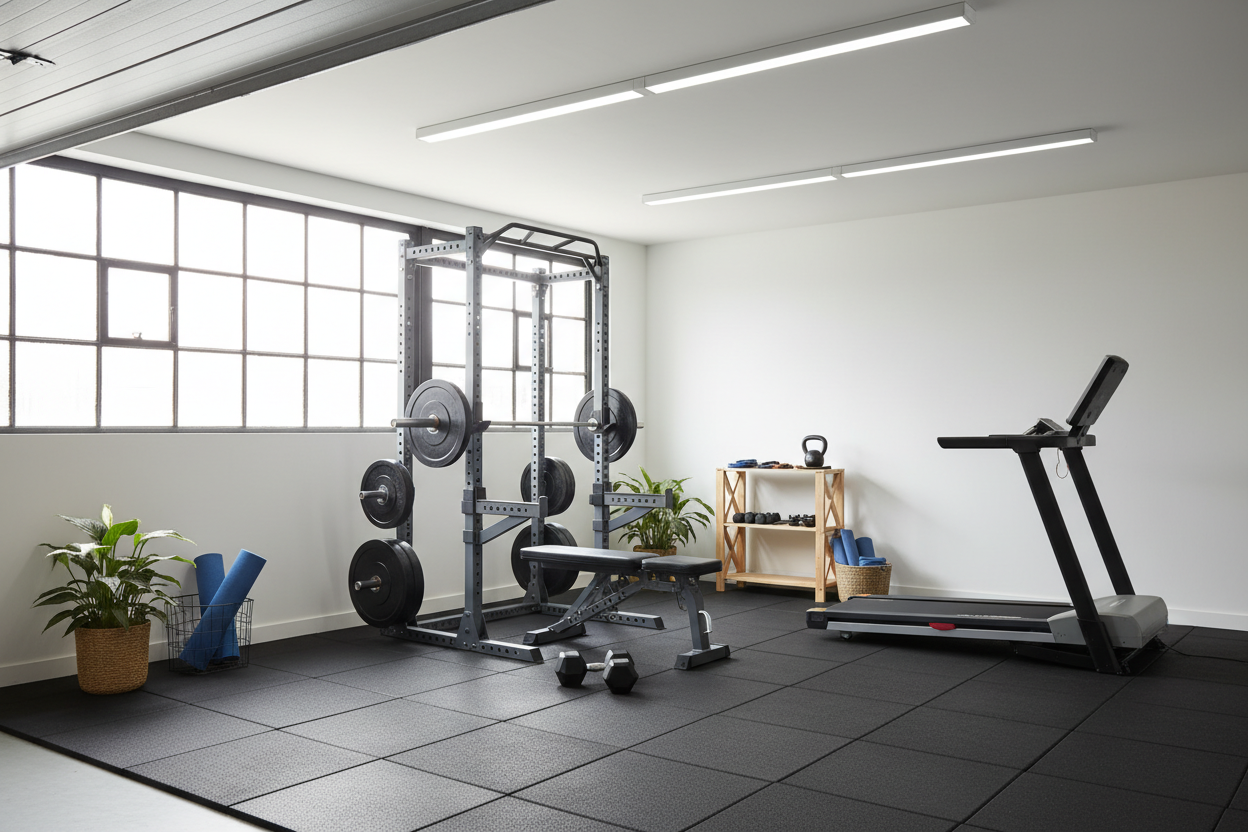
- Invest in high-density flooring to prevent micro-slips that cause sudden joint strain.
Why Joint Longevity Should Dictate Your Routine
Most lifting programs focus entirely on muscle fatigue. The problem is that muscles adapt quickly. They have a massive blood supply and can recover from a grueling workout in a couple of days. Your joints, ligaments, and tendons do not have that luxury.
Connective tissue receives very little blood flow. When you grind your joints through unnatural ranges of motion, the micro-trauma accumulates over months and years. Eventually, a rotator cuff frays or a meniscus tears. Lifting for longevity means picking movements that align perfectly with your unique biomechanics.
I tell my clients to chase the muscle pump, not the joint ache. If an exercise makes your muscles burn, keep going. If it creates a sharp, pinching sensation in the joint capsule, drop the weight immediately. Long-term progress requires you to stay out of the physical therapist's office.
Identifying Good Gym Exercises vs. Risky Movements
Evaluating the safety profile of common gym exercises comes down to one simple question: Does the equipment force your body to adapt, or does the equipment adapt to your body?
Fixed barbells lock your hands into a static position. When you press or pull, your wrists, elbows, and shoulders are forced to travel along a rigid path. If that path does not match your natural skeletal structure, your joints absorb the friction. Dumbbells and cables, on the other hand, move freely. They allow your wrists to rotate naturally as you push.
It is wild how many popular gym exercises actually force the humerus into internal rotation while under heavy load. Upright rows and behind-the-neck presses are prime offenders. A good exercise will always keep your joints in a neutral, supported alignment throughout the entire eccentric and concentric phase.
Upper Body Swaps: Protecting Shoulders and Chest
Chest day is notorious for wrecking shoulders. The traditional barbell bench press pins your shoulder blades to the bench and limits scapular mobility. Over time, this leads to anterior shoulder pain and impingement.
If you want to build your strongest chest without tearing a rotator cuff, swap the barbell for a pair of adjustable dumbbells. I use a 5-52.5 lb adjustable set with my clients. When you press with dumbbells, you can angle your hands slightly (a neutral or 45-degree grip). This tucks your elbows closer to your sides, taking the mechanical stress off the anterior deltoid and placing it squarely on the pectoral muscles.
For back training, ditch the wide-grip pull-ups if your shoulders click. Switch to neutral-grip pulldowns or single-arm dumbbell rows. The single-arm row allows your shoulder blade to wrap naturally around your ribcage, building massive lat strength without grinding the joint.
Safer Alternatives to Common Workouts
Let us do a rapid-fire breakdown of typical, joint-heavy movements and their safer, high-yield replacements. You can swap these common workouts today without losing any muscle-building stimulus.
- Skip the Upright Row: Replace it with cable face pulls or dumbbell lateral raises in the 15-20 rep range. You get the same lateral deltoid growth without impinging the shoulder.
- Skip the Behind-the-Neck Press: Replace it with the dumbbell Arnold press. The rotational movement protects the rotator cuff while hitting all three heads of the deltoid.
- Skip the Barbell Skull Crusher: Replace it with overhead cable triceps extensions. Cables provide constant tension without the harsh elbow joint shear at the bottom of the movement.
Lower Body Power Without Spinal Compression
I love heavy barbell back squats, but they put a tremendous amount of shear force on the L4 and L5 discs in your lower spine. If you have a desk job and already suffer from tight hip flexors, loading 300 pounds onto your spine is a recipe for a herniated disc.
You can build incredibly strong legs without compressing your spine. The secret is unilateral (one-legged) training. Bulgarian split squats and heavy goblet squats are my go-to lower body builders. Think about the math: holding a 50 lb dumbbell in each hand during a split squat gives your working leg 100 lbs of resistance. But your spine only feels 100 lbs of total compression, compared to a 200 lb barbell squat.
To execute these safely, you need ample, dedicated space. Traveling lunges and split squats require a wide stance and excellent balance. This is why I always spec a large exercise mat for home gym setups. You need room to fail safely without tripping over equipment or slipping on a hard floor.
The Role of Surface Stability in Pain-Free Lifting
Your joints are only as stable as the floor beneath you. Lifting heavy dumbbells on a concrete floor sends shockwaves up through your ankles and knees every time you drop the weight or step hard. Conversely, lifting on a squishy, half-inch yoga mat creates micro-slips. Your stabilizing muscles have to work overtime just to keep your ankles from rolling.
Proper flooring absorbs shock while providing a firm grip. I typically install a 6x8ft exercise mat for my clients because the 7mm high-density PVC offers the exact firmness needed for heavy lifting. It anchors your feet during a heavy dumbbell press and cushions your knees when you drop down for floor work.
My Personal Experience
I tested this exact transition in my own training three years ago. I pulled the barbell out of my garage, laid down a high-density mat, and committed to a dumbbell and cable-only routine for six months. My joint pain vanished within three weeks. My chest and legs actually grew because I was able to train closer to muscle failure without joint pain holding me back.
I will give you one honest downside: unilateral leg training takes twice as long. Doing three sets of Bulgarian split squats per leg means doing six total sets. It is exhausting, and it tests your cardiovascular limits. But my lower back has not ached in years, making the extra time completely worth it.
Frequently Asked Questions
How heavy should I lift for longevity?
Focus on the 8-15 rep range. Lifting extremely heavy weights (1-3 rep maxes) places immense strain on your central nervous system and connective tissue. Moderate weights with slow, controlled eccentrics build just as much muscle with a fraction of the joint stress.
Are barbells inherently bad?
No, barbells are highly effective tools. However, they require excellent mobility to use safely. If you lack the shoulder or ankle mobility to hit proper depth and alignment, barbells will expose those flaws and cause pain. Dumbbells are simply more forgiving.
How many days a week should I do these exercises?
For most adults, 3 to 4 days of resistance training per week is optimal. This allows for at least 48 to 72 hours of recovery for each muscle group, giving your tendons ample time to repair before the next session.