How to Master the Best Exercise for Toning Buttocks: Tension Profiles, Weekly Splits, and Floor Setup
Biomechanical Foundations: What Makes an Exercise Effective for Toning Buttocks?
Finding the single best exercise for toning buttocks requires understanding how gluteal muscles respond to different lines of force. The gluteus maximus, medius, and minimus work together across several movement planes to extend the hips, rotate the femur, and stabilize the pelvis. Rather than relying on a single movement, the best way to tone glutes involves combining distinct tension vectors that challenge the muscle fibers at different muscle lengths.
Muscular tension falls primarily into two distinct loading patterns:
- Horizontal Vector (Shortened-Position Peak Tension): Movements where maximum resistance occurs at full hip extension, such as barbell hip thrusts and glute bridges. These create strong muscle contractions at the top of the movement.
- Vertical Vector (Lengthened-Position Tension): Movements where maximum resistance occurs when the hips are deeply flexed, such as Romanian deadlifts and deep squats. These emphasize loaded stretching across the muscle belly.
When selecting training patterns, referencing a comprehensive bum exercise mechanics guide can help align movement choices with natural joint kinematics and long-term joint comfort.
The Core Movement Tiers: Best Exercises to Tone Butt and Glute Contours
A balanced lower-body regimen organizes movements into clear functional tiers. Combining these movement patterns creates balanced muscular stimulation across all segments of the hips.
1. Shortened-Range Drivers: Hip Thrusts and Glute Bridges
Many fitness practitioners consider the hip thrust the best exercise to tone buttocks because it isolates hip extension without requiring heavy spinal compression. By positioning the upper back against a stable bench and driving through the heels, the horizontal resistance profile places peak load directly onto the gluteus maximus at terminal lockout.
2. Lengthened-Range Builders: Romanian Deadlifts and Deep Squats
Romanian deadlifts (RDLs) and squats load the glutes in an elongated state. In an RDL, maintaining a soft knee bend and hinging backward at the hips shifts the workload away from the lumbar spine and onto the glutes and hamstrings. These lengthened movements are foundational among the best exercises to tone butt contours because they recruit high-threshold motor units across a full range of motion.
3. Unilateral Stabilizers: Bulgarian Split Squats and Step-Ups
Single-leg work is often the best exercise to tone your bum when addressing side-to-side strength imbalances and activating the gluteus medius for pelvic stability. Bulgarian split squats and high step-ups challenge balance while providing deep hip flexion. For a broader overview of structure and exercise variations, consulting a practical guide to firmer buttocks exercises offers additional programming inspiration.
Structuring a Balanced Weekly Glute-Toning Routine
Executing the best way to tone glutes requires structured programming that allows for adequate recovery between sessions. Rotating tension angles across the training week helps maintain consistent training volume without overburdening local joint structures.
- Session A (Horizontal & Unilateral Focus): Barbell or dumbbell hip thrusts, Bulgarian split squats, and lateral band walks.
- Session B (Lengthened & Vertical Focus): Dumbbell Romanian deadlifts, goblet squats, and cable or band kickbacks.
Aim for controlled tempos rather than rapid repetitions. Pausing for one to two seconds at the top contraction of bridge movements and lowering through a three-second eccentric phase during deadlifts ensures the targeted muscles handle the mechanical tension.
Home Gym Floor Staging: Surface Grip, Stability, and Room Protection
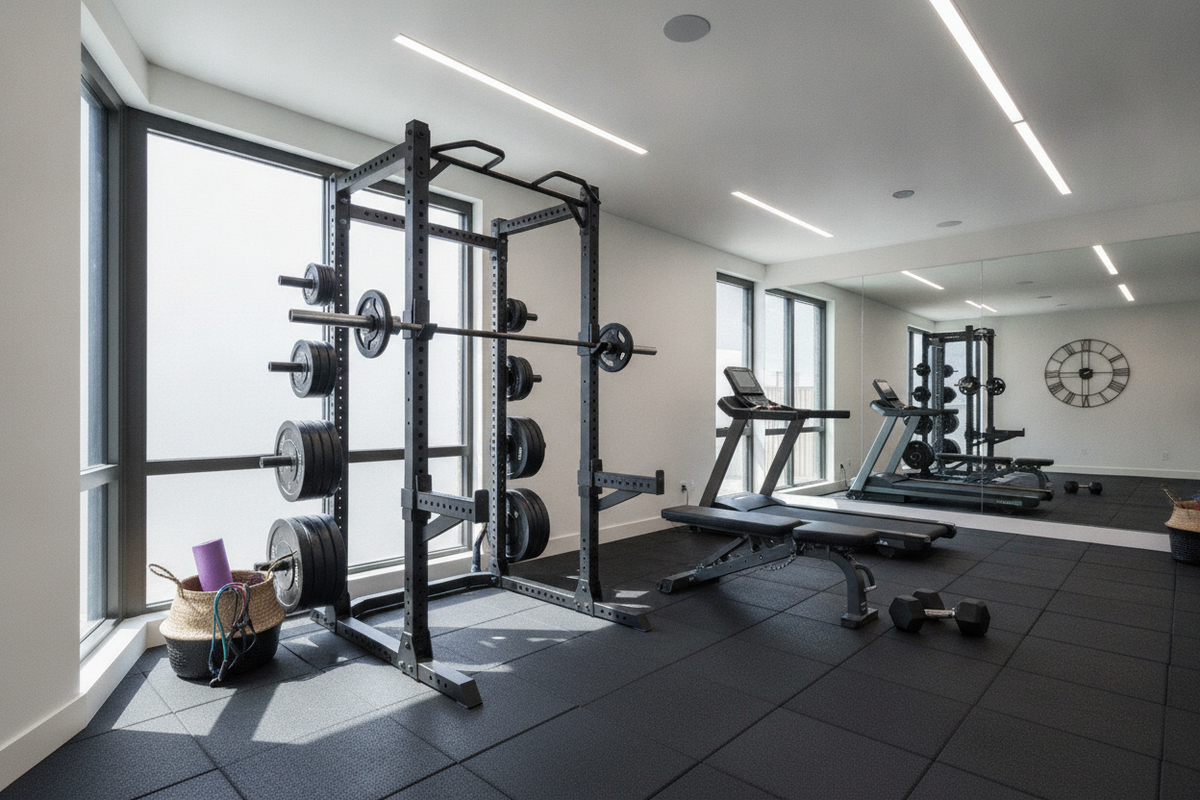
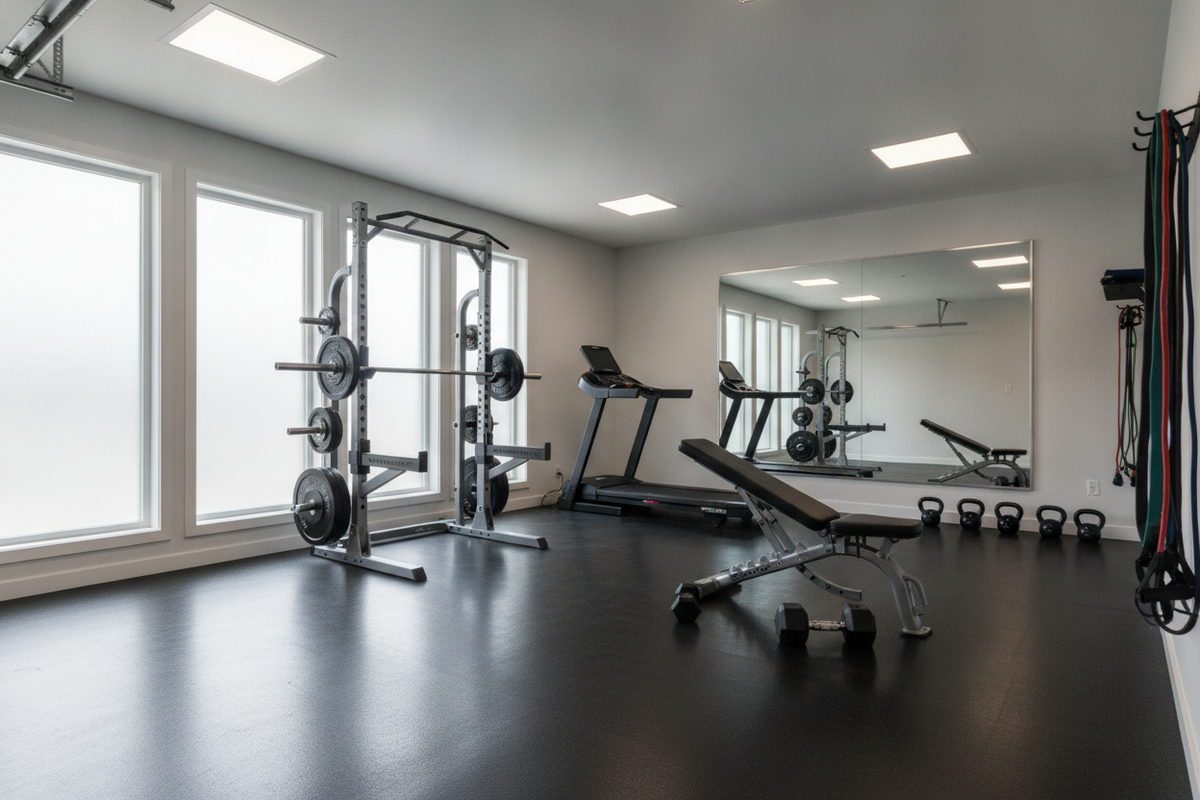
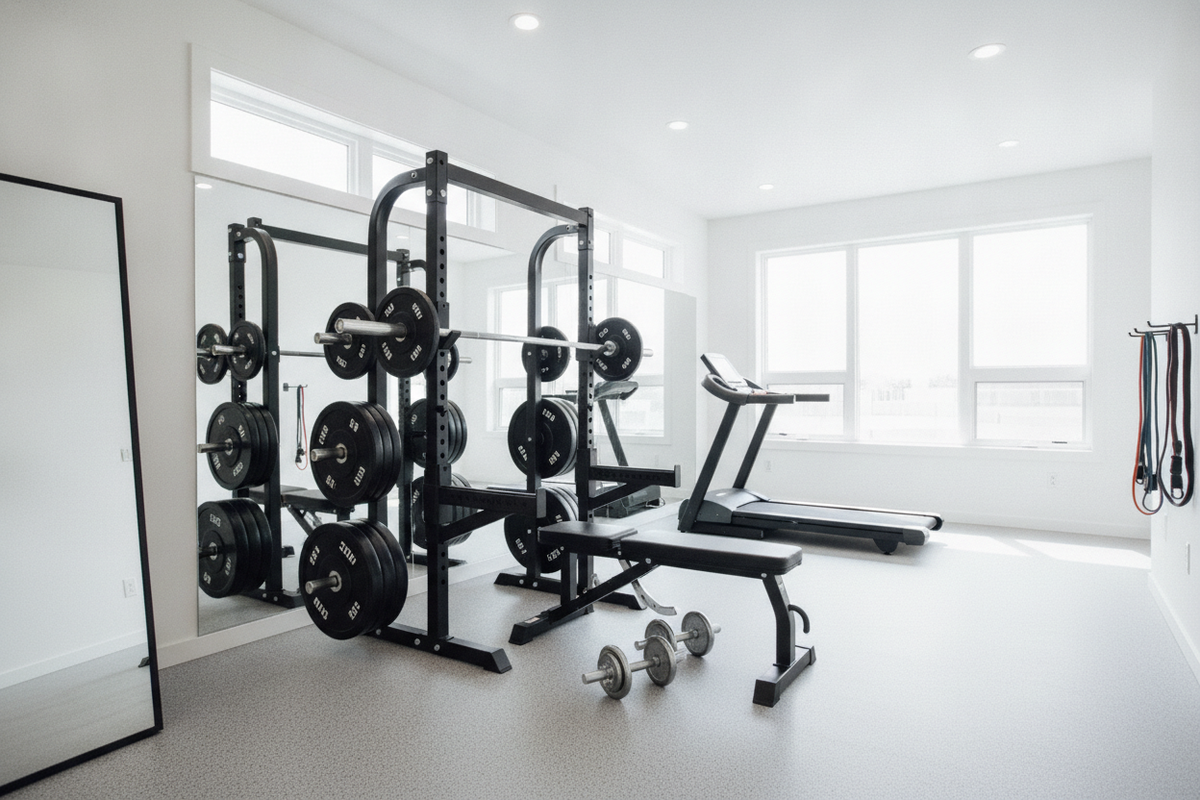
Performing loaded glute movements at home requires a secure foundation. Exercises like hip thrusts, weighted lunges, and Romanian deadlifts place significant downward and lateral force on the floor. Setting up on an improper surface can lead to foot slippage, uneven weight distribution, or damage to residential flooring.
To build an effective training zone, consider these flooring considerations:
- Foot Drive Traction: During hip thrusts and bridges, your feet must maintain firm friction against the floor to prevent your heels from sliding forward under load. A high-density protective exercise mat provides a non-slip base that locks your footwear in place.
- Subfloor and Equipment Shielding: Setting heavy dumbbells or barbells down between sets can scratch hardwoods or crack subfloor tiles. Utilizing a spacious large exercise mat spreads the point-load impact across a broader footprint.
- Kneeling Comfort: Exercises like kneeling kickbacks, bird-dogs, and split squats place pressure directly on the knee joints. Firm, high-density padding cushions bony contact points without creating the unstable squish of soft foam mats.
- Ample Movement Boundary: Stepping movements, lunges, and dynamic warm-ups require generous space. Laying down a dedicated 6x10ft workout mat establishes a clean perimeter that keeps your bench, weights, and footwork contained on a uniform plane.
Form Optimization and Common Movement Pitfalls
Even the best exercise to tone buttocks loses its value if poor technique shifts tension into secondary muscle groups or strains the lower back. Applying consistent form cues helps maintain clean movement mechanics:
- Avoid Lumbar Hyperextension: In hip thrusts and kickbacks, finish the movement by tucking the pelvis slightly (posterior pelvic tilt) and bracing the core rather than arching the lower back at the top.
- Maintain Shin Angle: When setting up a hip thrust, adjust your foot placement so your shins are roughly vertical at the top of the movement. Placing feet too far forward emphasizes the hamstrings, while keeping them too close shifts work to the quadriceps.
- Control Foot Plant: During split squats and lunges, distribute weight evenly through the front tripod foot (heel, big toe base, and small toe base) to prevent knee collapse.
Pairing these foundational cues with a stable, supportive floor setup allows you to train consistently, progress resistance gradually, and sculpt the glutes with confidence.