
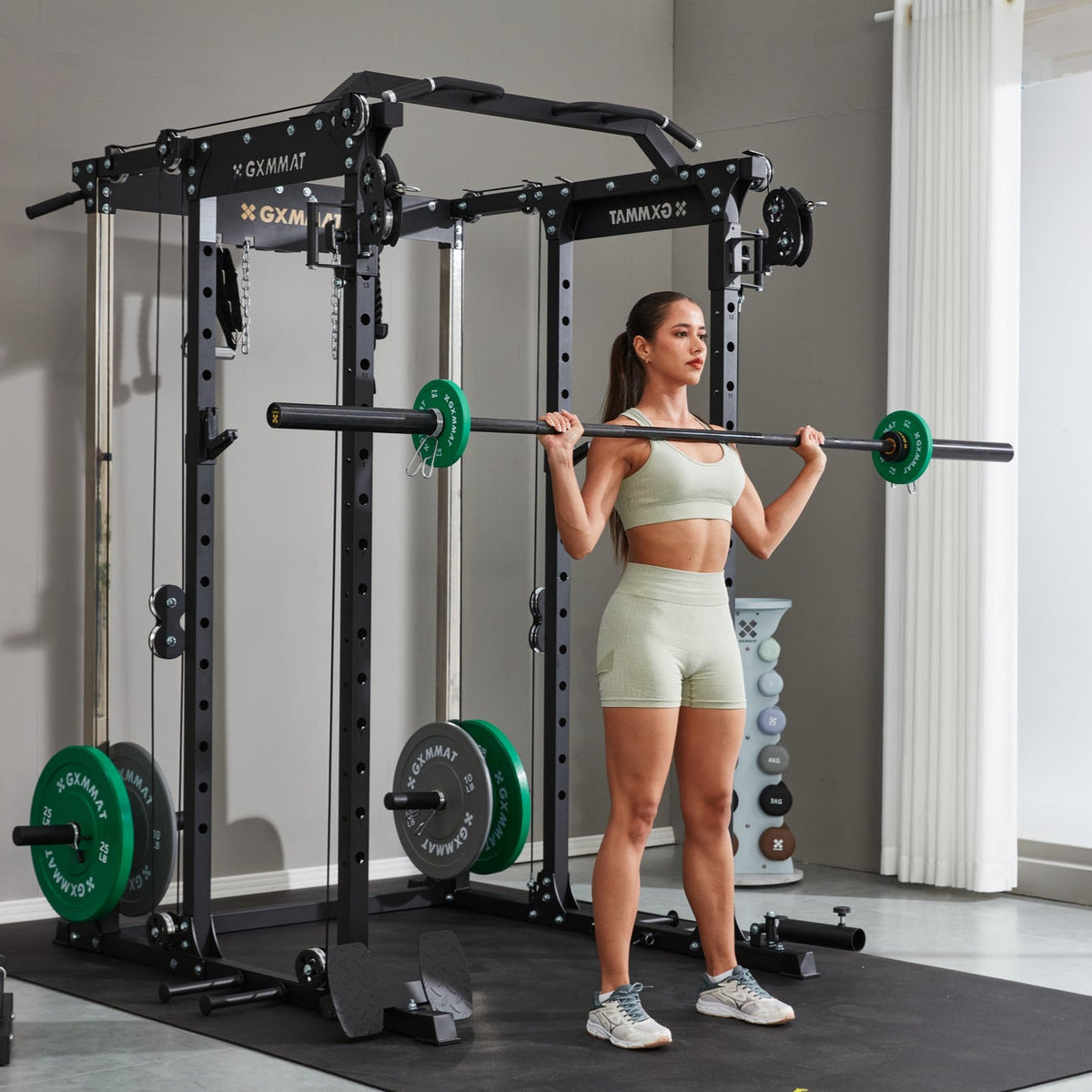
Benefits of the Shoulder Press: 8 Reasons to Press Overhead
Quick answer: The main benefits of the shoulder press (also called the overhead press or military press) are stronger, bigger shoulders, more upper body strength, a stronger core from bracing under a weight overhead, healthier shoulders when it's performed correctly, and better ability to handle everyday tasks like lifting things onto high shelves. It's a compound exercise that trains the anterior deltoid, side delts, triceps, upper chest and upper back together. Most people do well with 2–3 sets of 5–10 reps once or twice a week.
Key takeaways
- One lift, multiple muscles: shoulders, triceps, upper chest, upper back and core.
- Standing presses train the core more; seated presses isolate the shoulders.
- Overhead strength carries over to daily life and sports.
- Good form protects the shoulders: bar path close to the face, core engaged.
- Many variations let almost anyone press pain free.
Muscle groups the shoulder press works
| Muscle | Role |
|---|---|
| Anterior deltoid (front delts) | Main mover |
| Lateral deltoid (side delts) | Assists; builds shoulder width |
| Triceps | Lock the arms out overhead |
| Upper chest | Helps at the start of the press |
| Upper back and traps | Support the bar in the overhead position |
| Rotator cuff muscles | Keep the shoulder joint stable |
| Core, glutes and lower body | Brace the body in a standing position |
8 benefits of the shoulder press
1. Builds shoulder strength and size
The press loads the delts more heavily than any isolation move, making it one of the best exercises for building muscle in the shoulders.
2. Develops upper body strength
The shoulder press trains several upper body muscles at once and supports other pressing lifts. A stronger press often helps the bench press and push ups.
3. Strengthens the core
Pressing a weight overhead while standing forces your abs, obliques and lower back to stop you from arching or leaning. That core activation is a big reason the standing overhead press is so valuable.
4. Improves shoulder health and stability
When performed correctly through a full range of motion, the press strengthens the shoulder muscles and rotator cuff around the joint. Balance it with pulling and rear-delt work for healthy shoulders.
5. Carries over to daily tasks
Lifting luggage into an overhead bin, putting boxes on shelves, holding a child up: these are overhead movements. Strength in the overhead position makes daily tasks easier.
6. Helps fix strength imbalances
Single-arm and dumbbell or kettlebell versions show and correct differences between sides.
7. Supports sports and Olympic lifts
Throwing, swimming, climbing and the jerk all need overhead strength. The barbell push press bridges the gap to Olympic lifts.
8. Needs little equipment
A barbell, kettlebells or even a backpack is enough, making it a great exercise for home workouts.
Standing vs seated shoulder press
| Standing overhead press | Seated overhead press | |
|---|---|---|
| Core strength | High demand | Lower |
| Shoulder isolation | Moderate | Higher |
| Weight lifted | Lower | Often a little more weight |
| Lower back stress | Higher if you lean back | Lower with back support |
| Best for | Overall strength, athletes | Building shoulder muscle, added stability |
Shoulder press variations
| Variation | Benefit |
|---|---|
| Barbell overhead press (military press) | Heaviest strict press; easy to progress |
| Dumbbell or kettlebell shoulder press | Natural path; fixes imbalances |
| Barbell push press | Uses the legs to move more weight overhead |
| Seated overhead press | Added stability; less lower-back stress |
| Landmine press | Shoulder-friendly angled path |
| Half-kneeling press | Stops leaning back; fits low ceilings |
| Pike push ups | Body weight only |
If pressing straight overhead bothers you, see overhead press alternatives.
How to do the barbell overhead press with good form
- Set the bar on the J-hooks at upper-chest height and grip it just outside shoulder width.
- Unrack and step back. Feet hip to shoulder width, glutes tight, core engaged.
- Start with the bar on your front shoulders, elbows slightly in front of the bar.
- Press straight up, moving your head back slightly so the bar path stays vertical and close to your face.
- Lock out with the bar over the middle of your feet, biceps by your ears, and push your head through.
- Slowly lower to the shoulders and repeat.
Full technique: overhead press form guide.
Common mistakes
| Mistake | Fix |
|---|---|
| Leaning back | Squeeze glutes and abs; use less weight |
| Bar path drifting forward | Move your head back and keep the bar close |
| Elbows flared wide at the start | Elbows slightly in front of the bar |
| Partial range | Full lockout overhead, full return to the shoulders |
| Bent wrists | Bar sits over the forearms; wrists stacked |
| Too much weight | Correct form first; add weight in small steps |
Shoulder pain while pressing? Stop and get advice from a physical therapist or a qualified personal trainer before continuing.
How to add the shoulder press to your training
| Goal | Sets × reps | Frequency |
|---|---|---|
| Strength | 3–5 × 3–6 | 1–2 times a week |
| Building muscle | 3–4 × 6–10 | 1–2 times a week |
| Beginners | 3 × 8 with light weight | 2 times a week |
Pair it with other exercises that balance the shoulders: face pulls, cable lateral raises and rows. Warm up first with ramp-up sets.
Shoulder press at home
- Rack: the G5, V6 and X6 power racks have J-hooks to set the bar at shoulder height, plus a landmine attachment for landmine presses.
- Bar and plates: 20 kg Olympic bar, bumper plates and change plates. Shoulder presses progress slowly, so 2.5 lb jumps matter.
- Kettlebells: soft kettlebells (10–25 lb) for single-arm presses.
- Ceiling check: standing presses need headroom above your outstretched arms; seated or kneeling presses work under lower ceilings.
FAQ
What are the benefits of the shoulder press?
Stronger and bigger shoulders, more upper body strength, a stronger core, better shoulder stability and easier overhead daily tasks.
What muscles does the shoulder press work?
The front and side delts, triceps, upper chest, upper back and rotator cuff, with the core and lower body bracing in standing versions.
Is the overhead press the same as the military press?
Mostly yes. "Military press" usually means a strict standing barbell press with the feet close together.
Is the shoulder press safe?
For most people, when performed correctly with sensible loads. If overhead pressing hurts, try landmine or seated variations and get it checked.
Should I do the shoulder press standing or seated?
Standing builds more core strength; seated lets you focus on the shoulders. Both are useful.
Written by Yuvien Royer for GXMMAT. This article is general fitness information, not medical advice.


