Benefits of HIIT with Weights: Hybrid Conditioning Blueprints, Equipment Selection, and Home Floor Staging
High-intensity interval training has long served as a staple for time-efficient conditioning. When external resistance is integrated into these fast-paced intervals, the training stimulus expands from purely cardiovascular output to a hybrid discipline combining resistance mechanics and sustained work capacity. Exploring the benefits of hiit with weights helps fitness enthusiasts design smarter programs, choose appropriate tools, and prepare their training environments for explosive, loaded movement.
Understanding HIIT with Weights: The Intersection of Load and Intervals
Traditional high-intensity interval training relies largely on bodyweight drills, sprinting, or stationary cardio machines to cycle between brief bursts of near-maximal effort and recovery periods. While bodyweight circuits elevate cardiovascular output, adding external loads introduces muscular tension and rotational demands that simple bodyweight movements cannot fully replicate.
Understanding why hiit appeals to structured conditioning begins with training density. By loading fundamental movement patterns—such as hinges, squats, presses, and carries—practitioners can challenge both aerobic pathways and muscular endurance simultaneously. When asking what is a hiit workout good for in a loaded context, the answer lies in its versatility: it builds functional movement capacity across multiple planes while maintaining a brisk workout tempo.
Core Advantages: Functional Strength, Metabolic Demand, and Efficiency
Integrating dumbbells, kettlebells, or medicine balls into intervals transforms standard conditioning into a comprehensive physical challenge. Examining the benefits of hiit paired with resistance highlights several key performance advantages:
- Expanded Muscular Tension: External loads require greater recruitment of stabilizing musculature across the core, hips, and shoulders during rapid transitions.
- Time Economy: Rather than separating pure strength work and cardiovascular sessions across different days, loaded intervals combine both demands within a compact session window.
- Dynamic Postural Control: Moving weights quickly and under control reinforces joint alignment and balance during fatigue.
Clarifying what are the benefits of a hiit workout with added load also helps explain why do hiit workouts remain popular among athletes looking to build stamina without abandoning compound resistance exercises. Furthermore, understanding what does hiit cardio do under load reveals how hybrid training challenges both peripheral muscular endurance and central cardiovascular rhythm in a single training block.
Loaded Interval Formats and Movement Frameworks
Structuring a weighted interval session requires thoughtful selection of loads, work-to-rest ratios, and exercise order. Because fatigue accumulates rapidly, exercise sequences generally alternate between contrasting movement patterns or upper- and lower-body splits to maintain movement quality.
Many practitioners experience these structures firsthand in group environments, where structured pacing defines common hiit class benefits. In home settings, adapting the structural benefits of hiit classes often takes the form of timed circuits, every-minute-on-the-minute (EMOM) sets, or short complexes. When discovering what are the benefits of high intensity interval training with resistance, following structured programming keeps intervals predictable and repeatable.
Selecting the right free weights and accessories from a dedicated training collection allows for seamless weight adjustments between upper-body and lower-body intervals. For practitioners seeking dynamic rotational power combined with dumbbell intervals, following a structured weights workout high guide provides actionable sequence templates for home training.
Managing Intensity, Pacing, and Recovery Demand
Because loaded intervals place demands on both muscular structures and systemic recovery, careful pacing is essential. When determining whether are high-intensity workouts good for you or evaluating if a heavy is high intensity workout good for you, training frequency and baseline conditioning should guide session volume.
Loaded intervals are demanding; thus, asking is hiit necessary for every training session highlights the importance of program balance. High-intensity sessions are best utilized as targeted stimuli rather than daily requirements. Observing overall hiit training effects on the body helps prevent overtraining and joint strain. Pair dynamic work with steady-state cardio or dedicated mobility days to keep progress sustainable.
Pairing elevation changes with light resistance creates a balanced circuit, as detailed in our step-oriented hiit weights cardio guide.
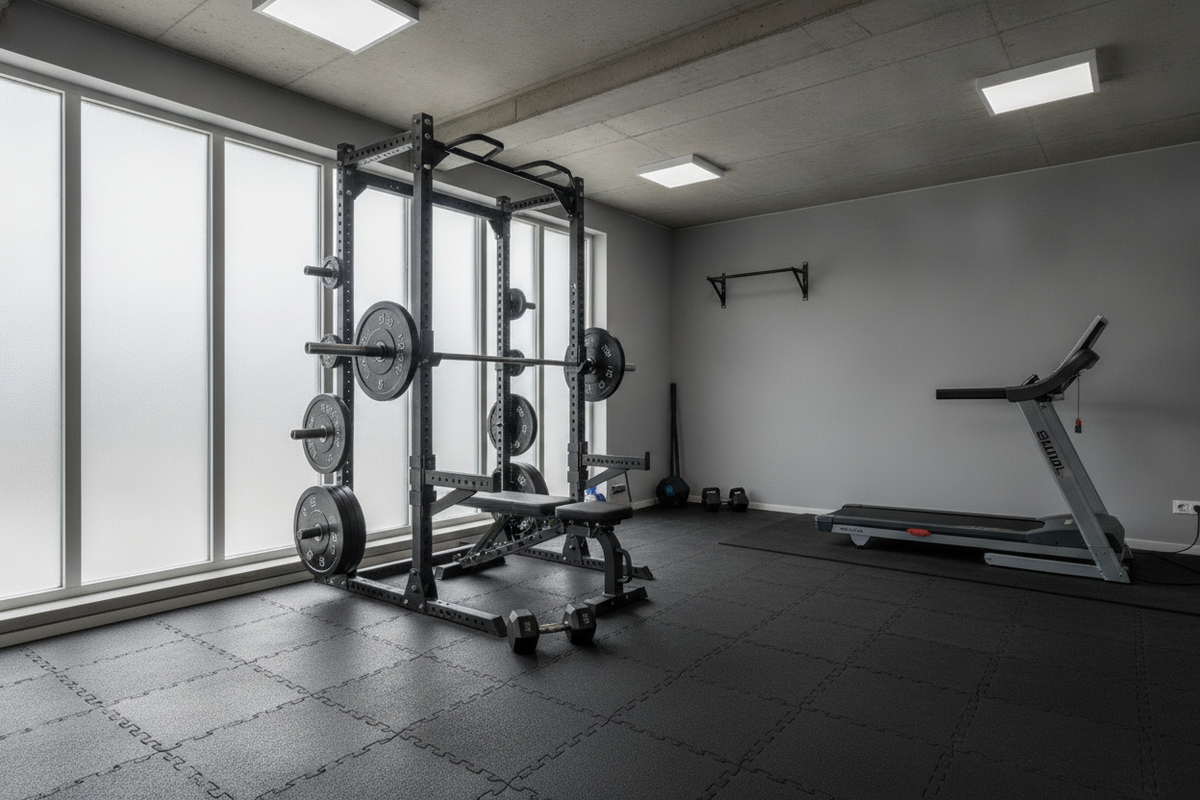
Home Gym Staging: Flooring Stability and Subfloor Protection for Weighted Intervals
Executing explosive jumps, lunges, and weight drops requires a secure, stable base. The physical demands of hybrid training mean that typical bare domestic floors—such as hardwood, tile, or thin carpet—are rarely suitable for loaded intervals. Understanding the broader mechanical and physiological benefits of hiit training emphasizes the role of joint comfort and surface stability during repeated ground impacts.
A proper workout surface provides three critical functions during weighted interval sessions:
- Traction and Grip: Textured mat surfaces prevent slipping during lateral bounds, mountain climbers, and dynamic push presses.
- Impact Damping: Dense high-density foam or rubber materials absorb shock from repeated landings, reducing direct stress on ankles and knees.
- Subfloor Defense: Dropping or setting down dumbbells, kettlebells, and plates can crack tile or dent hardwood if the subfloor lacks adequate protective coverage.
Establishing an expansive, high-density workout product underfoot ensures adequate clearance for explosive jumps, lateral bounds, and controlled dumbbell placement without the mat shifting beneath your feet.
Equipment Layout and Transition Safety in Compact Spaces
Because high-intensity workouts rely on rapid transitions between loaded movements and bodyweight recovery drills, equipment staging directly impacts both safety and flow. Cluttered floor spaces create tripping hazards when transitioning between standing presses and floor-based movements like burpees or planks.
To maintain a clean and safe training zone:
- Designate an Equipment Staging Zone: Keep dumbbells, kettlebells, and bands along the outer perimeter of your training mat rather than scattered across the center.
- Maintain Clear Landing Paths: Ensure that areas intended for plyometric jumps or lateral movements remain completely unobstructed.
- Check Mat Borders: Use mats with beveled edges or anti-slip underlays so that edges do not curl or bunch during rapid multi-directional footwork.
With structured programming, appropriate load management, and a properly staged home flooring setup, weighted high-intensity interval training provides an efficient, versatile pathway to building athletic endurance and full-body strength.