
Beginner Glute Workout with Weights: Movement Blueprints, Progression Strategies, and Floor Staging
Starting a structured lower-body resistance routine can transform training efficiency, athletic posture, and overall movement confidence. A well-designed beginner glute workout with weights bridges foundational bodyweight control and progressive barbell or dumbbell loads. By understanding hip biomechanics and pairing fundamental movement patterns with stable training surfaces, beginners can establish consistent muscular development while protecting their joints and equipment.
Foundations of Weighted Glute Training for Beginners
The gluteal complex consists of the gluteus maximus, gluteus medius, and gluteus minimus. Together, these muscles are responsible for hip extension, abduction, external rotation, and pelvic stabilization. While bodyweight activation exercises introduce movement pathways, adding external resistance provides the mechanical tension necessary for strength adaptation and lean muscle development.
For those starting a beginner gym glute workout, managing load selection is critical. Rather than rushing toward heavy barbells, novices benefit most from learning to maintain a neutral spine, bracing the abdominal wall, and creating full hip extension under controlled resistance. Progressive overload begins with movement quality before escalating weight volume.
Core Movement Patterns in a Beginner Gym Glute Workout
An effective gym booty workout for beginners does not rely on random exercises. Instead, it balances primary movement categories that target the musculature through multiple planes of motion. Combining horizontal hip hinges, vertical hinges, knee-dominant squats, and unilateral patterns creates balanced stimulation across the hips and thighs. For a broader overview of gym-based lower-body structures, consulting a comprehensive booty workout gym guide can provide helpful contextual depth.
Step-by-Step Exercise Execution and Biomechanical Cues
Integrating clear movement cues helps beginners feel the working muscles without placing unwanted strain on the lower back or knees:
- Dumbbell Glute Bridge or Hip Thrust (Horizontal Hinge): Rest your upper back across a stable bench or lie flat on a cushioned floor mat. Place a moderate dumbbell across the hip crease, holding it securely with both hands. Position your feet flat, roughly shoulder-width apart. Drive through your mid-foot and heels to elevate the hips until your thighs and torso align horizontally, pausing briefly at full hip extension without arching the lower back.
- Dumbbell Romanian Deadlift (Vertical Hinge): Stand tall with feet hip-width apart, holding a pair of dumbbells against the front of your thighs. Keep a slight soft bend in your knees, pull your shoulders back, and hinge forward at the hips. Push your pelvis backward toward the wall behind you while keeping the weights close to your shins. Lower until you feel tension in the hamstrings and glutes, then drive your hips forward to return to standing.
- Goblet Squat (Knee-Dominant Pattern): Hold a single dumbbell vertically against your chest with both hands cradling the top weight plate. Set your stance slightly wider than shoulder-width with toes turned outward slightly. Sit your hips back and down between your knees, keeping your chest upright. Drive evenly through the floor to return to the starting position.
- Dumbbell Reverse Lunge (Unilateral Pattern): Hold a light-to-moderate dumbbell in each hand at your sides. Step backward with one leg, lowering your back knee smoothly toward the floor while keeping the front shin relatively vertical. Push through the front foot to return to the upright position, emphasizing control and balance.
Structuring Your Beginner Weighted Glute Routine
A sustainable booty gym workout for beginners balances training frequency with adequate recovery. Performing a targeted weighted routine two to three times per week provides ample stimulus while allowing connective tissues to adapt to new loading patterns.
A balanced beginner session typically follows this structure:
- Warm-Up & Muscle Activation: Begin with dynamic hip openers, bodyweight glute bridges, and quadruped fire hydrants to prepare the hips for loaded movement.
- Primary Compound Exercise: Focus on horizontal hip thrusts or Romanian deadlifts for moderate sets of eight to twelve controlled repetitions.
- Secondary Compound or Unilateral Exercise: Introduce goblet squats, step-ups, or reverse lunges for sets of ten to twelve repetitions per side.
- Accessory Movement: Conclude with cable or band-assisted hip abductions or a steady conditioning block. For structured ideas combining conditioning and accessory work, review this workout weights glute guide or explore our broader workout resource library for versatile programming templates.
Progression Models: Safely Advancing Resistance and Volume
Progressive overload for beginners does not require adding heavy weight every week. Instead, progress through manageable tiers:
- Execution Precision: Master smooth eccentric (lowering) tempo and eliminate momentum.
- Repetition Volume: Work within a target rep range (for example, progressing from 8 reps up to 12 reps with the same dumbbell before advancing weight).
- Incremental Loading: Increase dumbbell weight by modest increments once all sets can be completed with strict form.
- Rest Management: Keep rest periods between sixty and ninety seconds for compound sets to maintain training density.
Staging Your Floor Station: Stability, Room Protection, and Equipment Safety
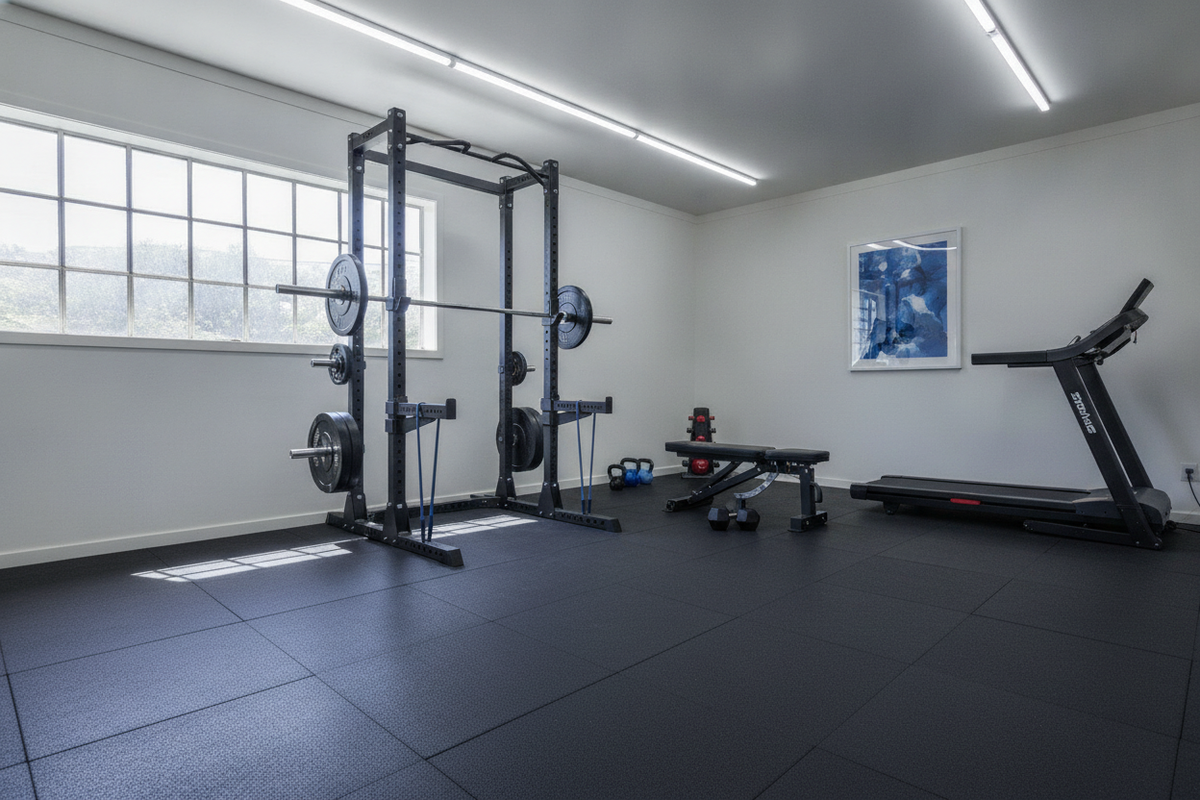
Floor-based exercises such as hip thrusts, kneeling hinge variations, and lunges require dependable footing and subfloor protection. Setting up a dedicated training zone ensures that benches stay anchored and heavy dumbbells can be lowered without damaging residential flooring or gym tiles.
When performing weighted glute bridges or setting up benches for hip thrusts, slick hardwood or low-grade foam can slide during heavy hip drive. Utilizing a durable, high-density gym workout product provides a stable, non-slip foundation that absorbs vibration, secures workout benches, and cushions joints during kneeling and unilateral transitions.
Common Form Faults and Practical Troubleshooting
Beginners frequently encounter several form challenges when adding weights to lower-body routines. Recognizing these errors early ensures productive training sessions:
- Hyperextending the Lumbar Spine: At the top of a hip thrust or deadlift, avoid pushing the ribs upward or overarching the lower back. Keep the chin slightly tucked and the ribcage pulled down to finish the movement through pure hip extension.
- Drifting Onto the Toes: In squats and lunges, shifting weight onto the balls of the feet can shift tension away from the posterior chain onto the knees. Maintain balanced tripod foot contact across the big toe, pinky toe, and heel throughout every repetition.
- Rushing the Eccentric Phase: Dropping rapidly during the lowering phase reduces muscle engagement and increases joint shear. Lower weights under a steady two-second descent.
- Excessive Knee Collapse: When squatting or lunging, ensure knees track in the same direction as your toes rather than caving inward.
By prioritizing foundational movement mechanics, utilizing stable floor staging, and applying gradual load progressions, beginners can build strength, posture, and lower-body stability through a safe and structured weighted glute routine.


