Athleticism Training Program: Building a Pro Routine at Home
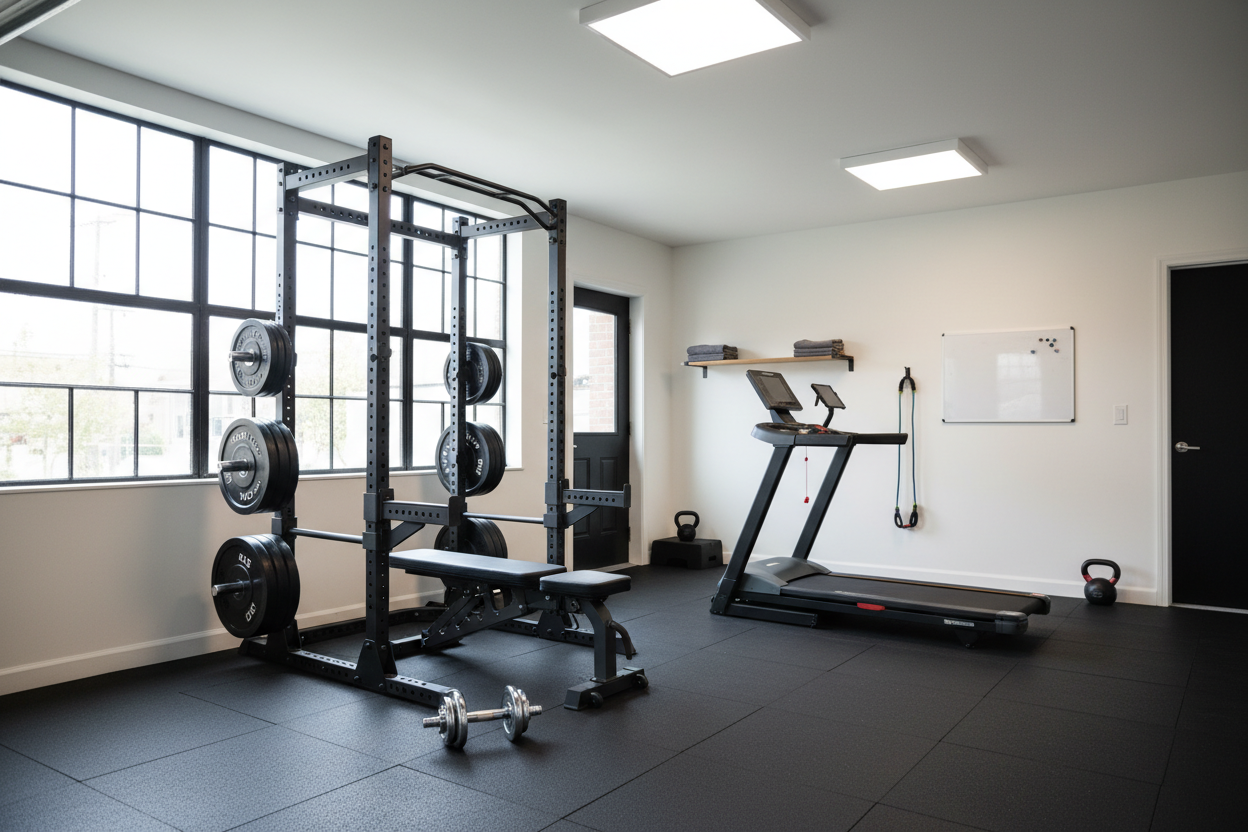
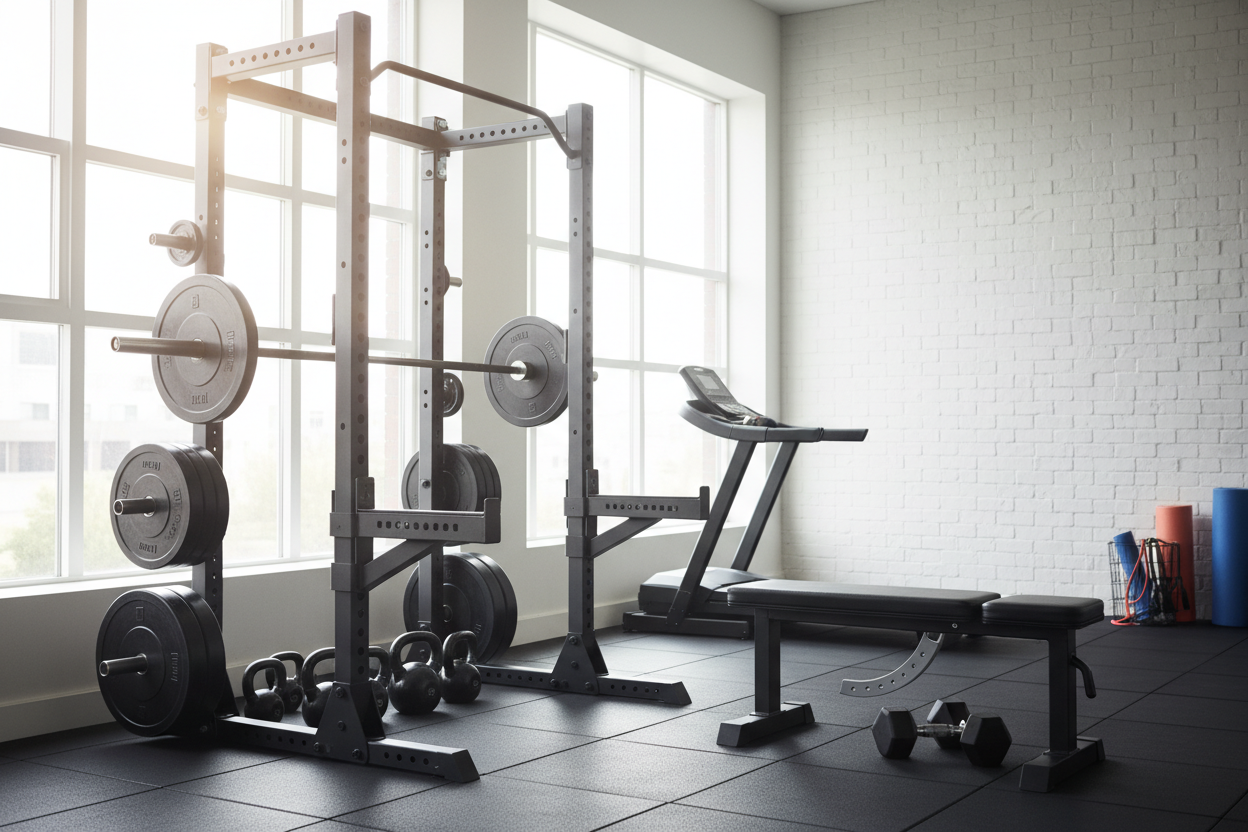
I remember staring at my garage setup a few winters ago. I had a power rack, 300 pounds of iron, and a pair of adjustable dumbbells ranging from 5 to 52.5 lbs. I was pushing heavy weight, but when I joined a weekend basketball league, I felt heavy, stiff, and completely gassed by the second quarter. That is when I realized I needed a dedicated athleticism training program.
I stopped training just to fill out my t-shirts and started programming for actual performance. Building an athlete workout routine in a standard 10x10 foot garage space requires a shift in mindset. You have to move away from chasing muscle pumps and start focusing on force production, deceleration, and multi-directional speed.
Quick Takeaways
- Shift your focus from isolated muscle hypertrophy to overall movement quality.
- Incorporate plyometrics and medicine ball drills to build explosive power.
- Train in all three planes of motion to bulletproof your joints and prevent injury.
- Manage your central nervous system fatigue with a highly structured schedule.
Why Your Current Routine Isn't Building True Athleticism
Most people default to a standard bodybuilding split. You hit chest on Monday, back on Tuesday, and legs on Wednesday. While this builds muscle mass, it does very little for functional sports performance. An effective athlete gym program prioritizes movement quality and force generation over isolated muscle fatigue. You want your muscles to work as a unified system, not as disconnected parts.
When I evaluate new clients who want to improve their field performance, their existing athlete workout plans usually look like a generic hypertrophy template. They are doing slow, controlled reps of bicep curls, leg extensions, and triceps press-downs. Athleticism requires your central nervous system to fire rapidly. You need to train your muscles to contract quickly and absorb force efficiently.
If your goal is to jump higher, run faster, or change direction without tearing a ligament, your training must reflect those demands. A true workout plan for athletes minimizes time spent sitting on machines. Instead, it forces you to stand up, brace your core, and move loads through space rapidly. This is the fundamental difference between training for the mirror and training for the scoreboard.
The Core Pillars of an Athleticism Training Program
To transition from a static lifter to a dynamic mover, you need an athletic strength and conditioning program built on four main pillars: speed, agility, explosive power, and multi-planar stability. You do not need a 50-yard turf field to train these qualities. A solid set of resistance bands, a 15 lb medicine ball, and a few feet of floor space are enough to execute most athletic workout programs right at home.
Speed and agility dictate how fast you can accelerate and change direction. Explosive power is your ability to generate maximum force in minimal time, translating directly to your vertical jump or your initial sprint step. Multi-planar stability ensures your joints can handle those violent changes in direction without buckling.
Prioritizing Power and Explosiveness Over Raw Size
Raw strength is the foundation, but power is how fast you can apply that strength. In a standard workout program for athleticism, we shift from grinding out sets of 10-12 reps to executing explosive sets of 3-5 reps. This means swapping slow, grinding bench presses for plyometric push-ups and heavy medicine ball chest passes.
One of the biggest mistakes I see in a typical workout plan for athletes is treating upper body days like a powerlifting meet. You need to train your muscles to fire with maximum velocity. If you want to dive deeper into structuring these specific upper body days, I highly recommend checking out this Athlete Chest Workout Guide For Power And Performance. It breaks down exactly how to build upper body explosiveness instead of just chasing a muscle pump.
Mastering Multi-Planar Movement and Joint Stability
Athletes do not just move straight forward and backward. They shuffle laterally, rotate through the hips, and decelerate at awkward angles. Therefore, your routine must include exercises in the sagittal, frontal, and transverse planes. Think lateral lunges, rotational medicine ball throws, and single-leg Romanian deadlifts.
If you only train the sagittal plane with heavy squats and deadlifts, you are asking for an injury the moment you have to change direction on a field. For those figuring out how to train like an athlete workout plan, joint stability is non-negotiable. Shoulders are particularly vulnerable. To fix this, Stop Training Like A Bodybuilder The Real Athlete Shoulder Workout is a great resource for transitioning from static isolation lifts to dynamic, multi-planar shoulder stability exercises.
Designing Your Athlete Workout Schedule
Structuring your week is where most home gym users fail. An athlete training schedule demands a careful balance of high-intensity central nervous system (CNS) days and active recovery. You cannot max out your squats on Monday and expect to perform high-quality sprint drills on Tuesday. Proper programming prevents burnout and keeps your fast-twitch muscle fibers fresh.
A proper athlete workout schedule alternates between high CNS demand (heavy lifting, intense plyometrics) and low CNS demand (mobility, steady-state conditioning, core stability). When planning a workout schedule for athletes, I usually recommend a high-low model. Monday and Thursday might be high-intensity power days, while Tuesday and Friday focus on lighter movement quality and agility.
For my own garage setup, I built a dedicated 6x6 foot shock-absorbing zone. If you are doing repeated box jumps or agility ladder drills on bare concrete, your knees will hate you. I use a 6X8Ft Exercise Mat Yoga Mat Gym Flooring For Home Workout because it provides the ideal shock-absorbing foundation for safely executing agility drills and plyometrics on a home athlete schedule. Having the right flooring allows you to train deceleration aggressively without fearing joint impact.
Sample All-Around Athlete Training Program for Beginners
If you are ready to ditch the traditional bro-split, here is a practical all-around athlete training program you can run in a standard garage gym. This 3-day split integrates plyometrics with fundamental strength movements. It serves as an excellent athlete training program for beginners who want to move better without overcomplicating the science.
Day 1: Lower Body Power & Strength
Start with 3 sets of 5 broad jumps to prime the CNS. Move into trap bar deadlifts (4 sets of 5 reps) focusing on bar speed. Follow up with Bulgarian split squats holding 20 lb dumbbells (3 sets of 8 per leg) and finish with lateral band walks to fire up the glute medius.
Day 2: Upper Body Explosiveness
Begin with plyometric push-ups (3 sets of 6). Transition to a neutral grip dumbbell bench press using your heaviest adjustable dumbbells (4 sets of 6). Add heavy dumbbell rows and finish with rotational medicine ball slams against a sturdy wall. This forms the core of a highly effective free athlete workout program.
Day 3: Full Body Contrast Training
Pair a heavy strength movement with an explosive one. Perform 5 heavy goblet squats immediately followed by 5 unweighted vertical jumps. Rest for 3 minutes, then repeat for 4 total sets. Finish with pull-ups and core stabilization work like Pallof presses.
Sustaining the D1 Athlete Mindset at Home
Executing a d1 athlete workout plan requires more than just a printed spreadsheet; it requires intent. When you step into your garage, you have to treat it like a collegiate weight room. That means taking your rest periods seriously. Waiting three minutes between plyometric sets might feel like you are wasting time, but your central nervous system needs that recovery to produce maximum force on the next set.
Consistency and intense focus are what separate casual exercisers from true athletes. Track your vertical jump, time your shuttle runs, and monitor your bar speed. If you are looking to expand your routine and find more specialized performance programming, head over to the Workout Hub. Stay disciplined, respect your recovery times, and watch your on-field performance transform.
Frequently Asked Questions
How many days a week should I do a workout plan for athletes?
For most home gym users, 3 to 4 days of intense training is optimal. This allows for adequate central nervous system recovery, which is absolutely crucial for speed and power development.
Can I build an athlete workout routine with just dumbbells?
Yes. Adjustable dumbbells ranging from 5 to 52.5 lbs are incredibly versatile. You can perform loaded jumps, goblet squats, dumbbell snatches, and multi-planar lunges to build functional athletic strength without a barbell.
What makes an athletic workout different from standard weightlifting?
Standard weightlifting focuses heavily on moving weight from point A to point B to build muscle size. Athletic workouts prioritize movement velocity, multi-planar stability, and force deceleration to improve actual field performance and prevent injury.