
At Home Exercises for Upper Glutes: Biomechanical Vectors, Targeted Progressions, and Floor-Staging Setup
Understanding Upper Glute Anatomy and Activation Mechanics
Targeting the upper posterior chain at home requires an understanding of how distinct muscle fibers orient across the pelvis. The upper buttock shelf is primarily formed by the gluteus medius alongside the superior, upper fibers of the gluteus maximus. While conventional bilateral hip extension patterns such as standard squats emphasize the lower gluteal divisions, engaging the upper region demands deliberate hip abduction, external rotation, and diagonal extension paths.
Achieving consistent upper glute activation begins with intentional neuromuscular connection. When initiating a movement, stabilizing the pelvis prevents lumbar spinal flexion or pelvic tilting from taking over the work. For broader principles on foundational muscular tension and development, reviewing a comprehensive glute hypertrophy guide can provide helpful anatomical context that translates directly into home-based training sessions.
Essential Movement Vectors for Upper Glute Development
To direct mechanical tension effectively into the upper booty muscles, exercise selection should encompass multiple directional planes rather than relying exclusively on sagittal motion.
Coronal Abduction and Lateral Force Paths
Pure lateral movement across the coronal plane isolates the gluteus medius. As the thigh moves directly away from the midline of the body, the upper glute complex contracts to elevate and stabilize the femur. Maintaining a level pelvis during lateral abduction ensures that the target musculature bears the load rather than the quadratus lumborum or tensor fasciae latae.
Diagonal Extension and Hyperextension Vectors
The superior fibers of the gluteus maximus run diagonally across the pelvis toward the iliotibial band. Moving the leg backward at an outward angle combines hip extension with subtle abduction. This diagonal pathway aligns directly with the upper muscle fibers, creating a distinct line of pull that standard straight-back kickbacks often miss.
Core At-Home Exercise Framework for Upper Glutes
You can construct a rigorous routine using bodyweight, resistance loop bands, and deliberate tempo control on a stable floor surface. Here is a practical movement framework focused on at home exercises for upper glutes.
Floor-Staged Abduction: Clamshells and Quadruped Fire Hydrants
Side-lying clamshells and all-fours fire hydrants target lateral pelvic stability without requiring heavy external loading:
- Side-Lying Banded Clamshells: Lie on your side with hips stacked, knees bent, and feet aligned with your spine. Place a resistance band above your knees. Keeping your feet touching, elevate the top knee by rotating the hip open while keeping the pelvis completely vertical.
- Quadruped Fire Hydrants: From a hands-and-knees position with hands beneath shoulders and knees beneath hips, elevate one bent leg outward to the side. Pause briefly at the top of the movement without tilting your torso toward the supporting side.
Diagonal Kickbacks and Frog Pumps
These exercises emphasize external rotation paired with end-range extension:
- 45-Degree Quadruped Kickbacks: Position yourself on all fours and extend one leg backward while angling the foot outward. Squeeze the upper glute at the peak of the motion, avoiding excessive arching in the lower back.
- Frog Pumps: Lie supine with the soles of your feet pressed together and knees flared wide. Drive through the outer edges of your feet to elevate the hips, holding the peak contraction to focus tension across the upper glute shelf.
Standing Banded Lateral Walks and Curtsy Variations
Weight-bearing standing movements recruit both the moving and stabilizing hips simultaneously:
- Banded Lateral Monster Walks: Place a loop band around your ankles or mid-thighs, lower into a partial athletic hinge, and take deliberate lateral steps. Maintain continuous tension on the band throughout the entire working set.
- Deficit Curtsy Lunges: Step one leg diagonally behind the lead leg while keeping your chest upright and hips facing forward, loading the outer and upper hip of the front leg under controlled descent.
Transitioning Concepts: Home Modalities vs. Gym Environments
Home-based routines rely on elastic resistance, bodyweight leverage, and sustained time under tension. In contrast, commercial facilities often utilize selectorized machines and cable stations. Understanding how these modalities correlate helps maintain progress regardless of training location.
For instance, seated machine abductions found in commercial glute development routines can be closely replicated at home by performing banded seated abductions on a firm chair or bench. Similarly, standing cable kickbacks translate to anchored resistance band diagonal kickbacks, offering comparable tension curves when form and tempo remain controlled.
Home Gym Floor Staging and Environmental Protection
The physical surface beneath your workout plays a direct role in movement execution, balance, and joint comfort during floor-intensive glute sessions.
Traction and Base Stability for Lateral Loading
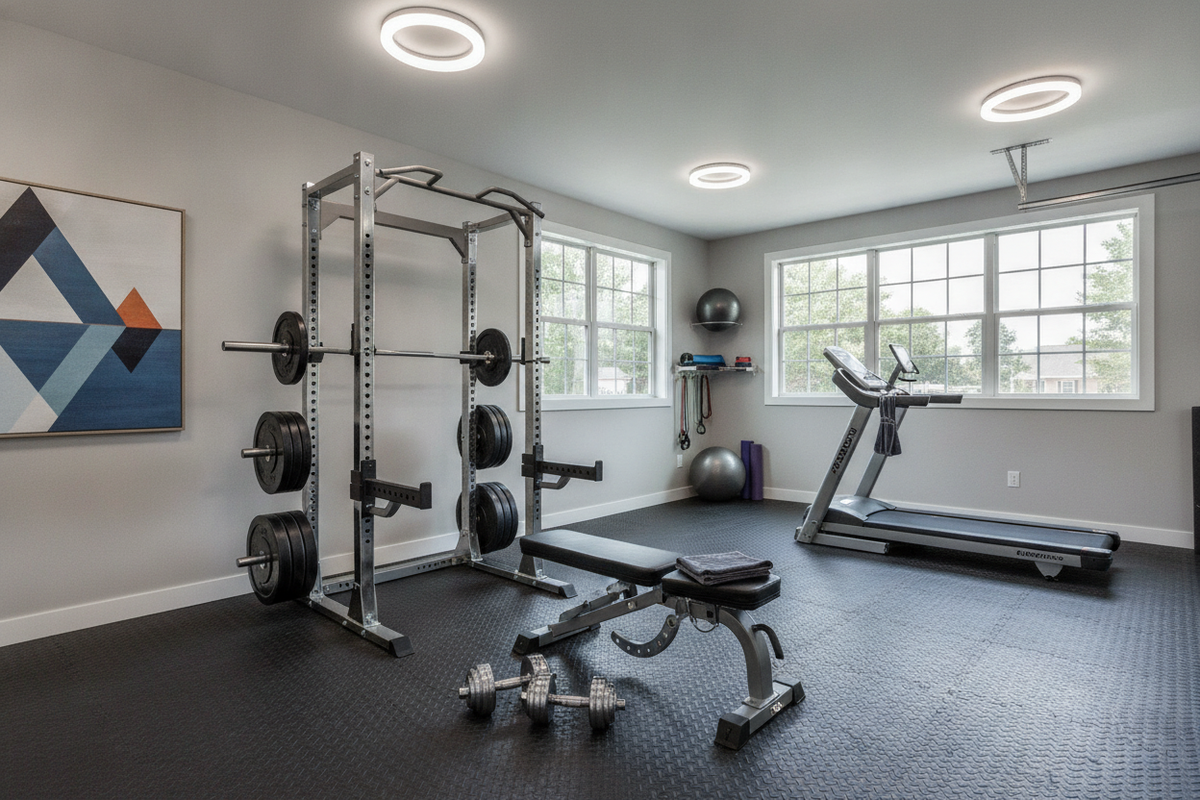
Dynamic standing movements such as lateral band walks and curtsy lunges require a non-slip foundation. Hardwood or smooth tile can cause unexpected foot slippage when pushing against elastic resistance. Staging your area with a high-density large exercise mat establishes reliable surface grip, allowing you to maintain wide stances and steady lateral force without sliding.
Joint Cushioning for Quadruped and Side-Lying Workouts
Many of the most effective upper glute isolation exercises require sustained pressure on the knees, wrists, and lateral hip bones. Thin mats or bare subfloors can create uncomfortable pressure points that distract from muscle engagement. Dense, supportive floor staging cushions contact zones during high-repetition quadruped and side-lying sets while protecting the underlying residential flooring from equipment wear.
Structuring Your Home Upper Glute Routine
Organizing these movements into a structured weekly schedule ensures progressive development without overtaxing localized stabilizers. Incorporating these variations two to three times per week allows adequate recovery between sessions.
Begin each workout with unweighted activation movements, such as bodyweight clamshells or bridge holds, to establish muscular engagement before adding resistance bands. During working sets, utilize a controlled tempo—such as lowering for two to three seconds and holding the peak contraction for one second—to maximize tension. For comprehensive programming strategies and broader routine design, explore structured home training progressions to keep your long-term fitness plan cohesive and balanced.


