At Home Conditioning: Foundational Exercises, Session Design, and Floor Setup
Understanding At Home Conditioning: Work Capacity in Limited Spaces
Building functional stamina and muscular endurance does not require access to a commercial track or rows of cardio machines. Conditioning in a residential setting focuses on elevating total work capacity—the ability to perform, sustain, and recover from physical effort—using manageable movement patterns within a compact training area. While traditional endurance routines often emphasize continuous linear movement like distance running, an effective home routine prioritizes multi-planar movement, varied pacing, and balanced muscular engagement.
For many lifters and fitness enthusiasts, developing home conditioning helps bridge the gap between pure strength training and general cardiovascular preparedness. When planned with care, these workouts challenge energy systems while reinforcing movement quality. To explore how different metabolic pathways interact during training sessions, reviewing a detailed conditioning guide can provide helpful context on managing intensity and rest intervals.
Foundational Movement Tiers for Home Conditioning Exercises
A sustainable conditioning plan avoids erratic, unstructured exertion. Instead, organizing exercises into distinct tiers creates a balanced framework that can be scaled based on experience, available space, and physical tolerance. By combining rhythmic steady-pace exercises with dynamic compound patterns, you can sustain continuous movement without overloading individual joint structures.
Low-Impact Rhythmic Movements for Sustainable Output
Low-impact movements serve as the foundation of sustainable home conditioning. These drills allow you to maintain a elevated heart rate while keeping joint impact and noise levels minimal, which is particularly beneficial in shared residential environments or upper-floor apartments.
- High-Knee Marching with Overhead Reach: A deliberate, tempo-controlled drill that reinforces upright posture and hip flexion without foot strike shock.
- Step-Jack Sequences: Lateral foot taps paired with overhead arm sweeps provide rhythmic cardiovascular demand without plyometric landing forces.
- Shadowboxing and Torso Rotations: Continuous multi-directional movement that engages the core musculature while maintaining continuous, low-impact output.
- Bodyweight Good Mornings to Calf Raises: A fluid posterior chain pattern that promotes hip hinge mechanics and lower-leg circulation.
Compound Dynamic Drills for Work Capacity
Once rhythmic pacing is established, adding compound bodyweight exercises introduces strength-endurance demands. These movements recruit larger muscle groups, requiring greater oxygen delivery and active core stabilization.
- Bear Crawl Holds and Step-Throughs: Quadrupedal patterns challenge shoulder stability, core tension, and wrist endurance simultaneously.
- Tempo Air Squats to Alternating Reverse Lunges: Combining knee-dominant movement patterns develops lower-body stamina and joint control.
- Mountain Climbers on a Stable Surface: Alternating knee drives maintain horizontal core engagement while elevating metabolic demand.
- Skater Steps and Lateral Bounds: Controlled side-to-side transitions train balance and lateral stability across the lower body.
Structuring an At Home Conditioning Workout
Structuring a conditioning session requires balancing work intervals with adequate rest to prevent technical breakdown. Rather than exercising to complete exhaustion, modular training formats allow you to manage fatigue and maintain smooth movement mechanics from start to finish.
Popular workout structures include:
- Interval Density Blocks: Alternating 40 seconds of continuous work with 20 seconds of recovery across three to four exercises for multiple rounds.
- Every Minute on the Minute (EMOM): Completing a target repetition count at the start of each minute, using the remaining time for rest and breathing regulation.
- Continuous Movement Flow: Rotating through low-intensity drills at a steady, conversational pace for an extended duration to build aerobic base capacity.
Integrating Strength and Conditioning at Home
Conditioning sessions work best when they complement, rather than compete with, resistance training. Pairing general conditioning circuits with structured resistance work ensures comprehensive development of both maximal force production and long-term stamina. For lifters seeking a balanced program, referencing a full-body strength exercise workout guide helps ensure movements do not redundantly fatigue the same prime movers. Those utilizing dedicated gear can also explore options in a curated strength collection to introduce progressive load safely alongside bodyweight conditioning.
Home Gym Zoning and Floor Setup for Conditioning
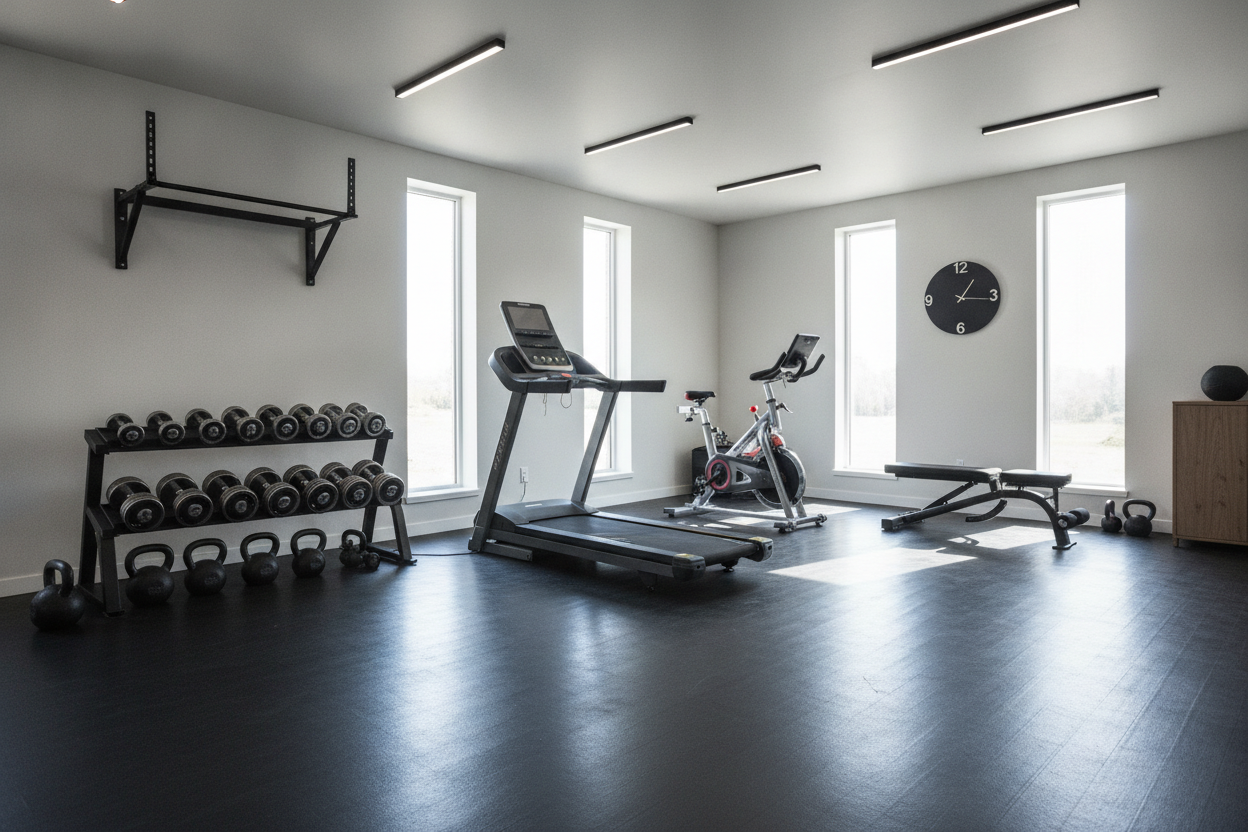
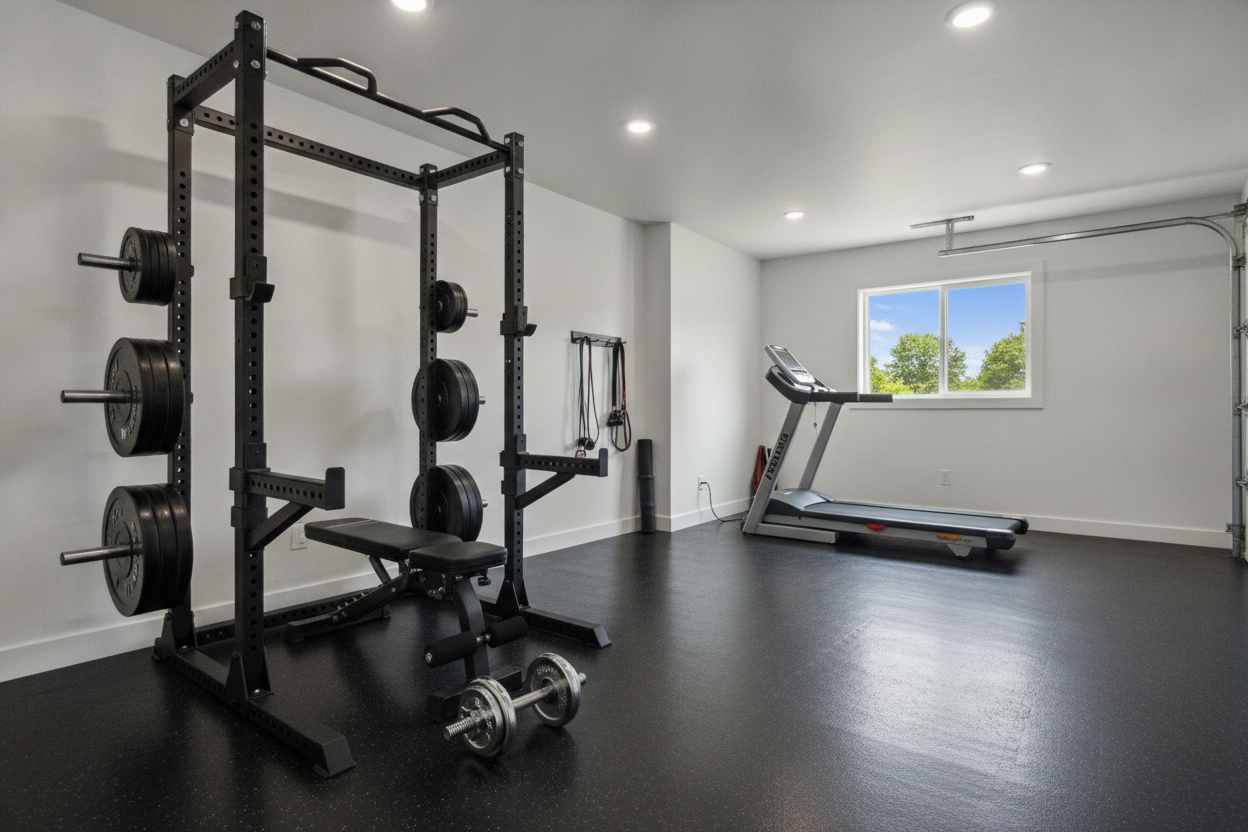
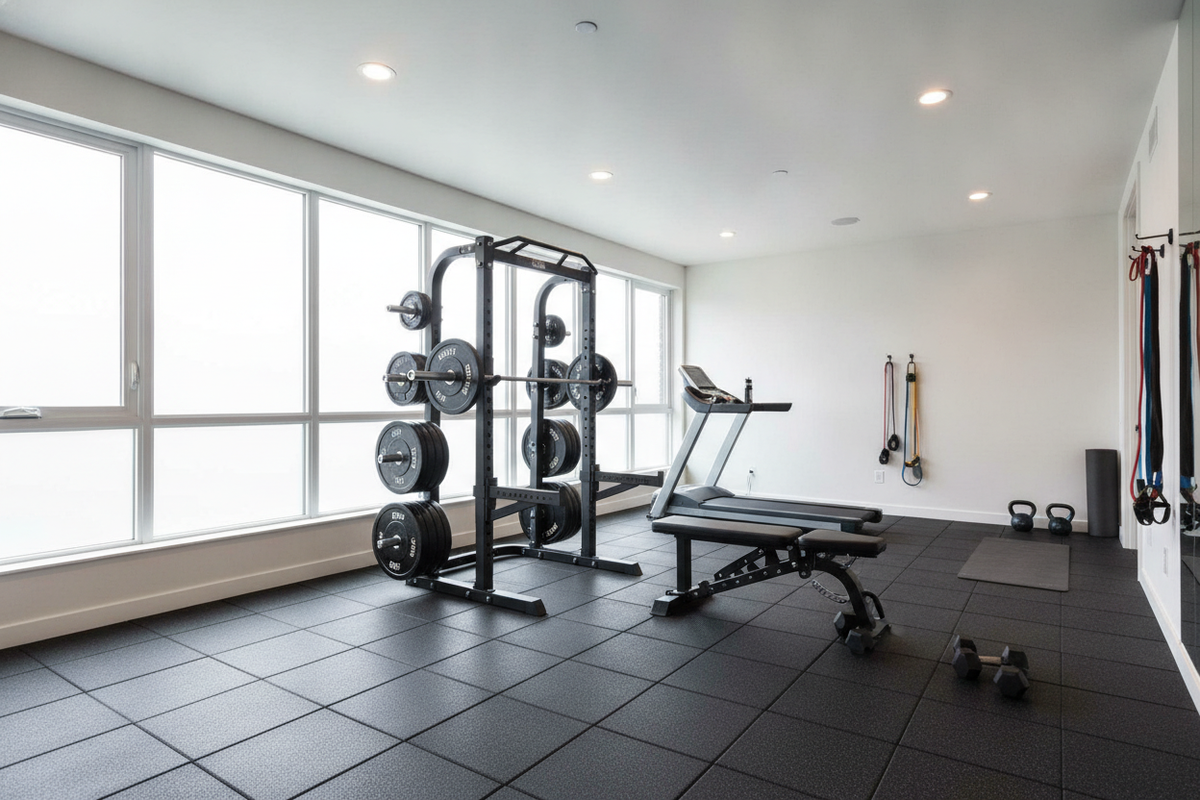
Dynamic conditioning routines involve frequent footwork shifts, floor-based transitions, and lateral directional changes. Performing these movements on unpadded concrete, slick tile, or plush living room carpet can lead to traction loss or excessive wear on domestic flooring. Designing a designated workout zone ensures stability and floor protection.
A proper home conditioning zone requires adequate clearance in all directions, allowing unobstructed arm and leg travel during planks, lunges, and side steps. Equally important is having a resilient, high-traction surface that stays firmly planted throughout repetitive foot strikes.
Mat Density, Grip, and Acoustic Damping
Floor support plays a major role in how comfortable and quiet home conditioning sessions feel. Investing in a reliable workout product such as a high-density exercise mat provides several practical benefits for dynamic training:
- Surface Traction: Textured, non-slip surfaces help prevent foot slippage during sweat-inducing dynamic intervals and lateral movements.
- Joint Cushioning: Dense foam or rubber layers help disperse pressure on wrists, elbows, and knees during ground-based drills like pushups and crawls.
- Acoustic and Vibration Reduction: A dense mat dampens the thud of dynamic foot transitions, minimizing noise transfer through subfloors in multi-story homes.
- Subfloor Preservation: Dedicated protective layers guard hardwood and laminate floors against scuffs, friction, and moisture accumulation.
Common Programming Pitfalls and Pacing Guidelines
One of the most frequent mistakes in home conditioning is starting sessions at a sprint pace. Beginning at maximal intensity often leads to premature fatigue, compromised posture, and incomplete workouts. Aim for a steady, sustainable pace that allows you to complete all scheduled rounds with consistent movement quality.
Another common error is neglecting active recovery and mobility. Incorporating light movement between high-effort sets facilitates breathing control and keeps muscles supple. For individuals pairing conditioning with machine-based resistance work, exploring specialized gear such as a dedicated lower-body strength collection can help target specific muscle groups independently, allowing conditioning days to focus purely on fluid, multi-joint movement and baseline stamina.