Master At Home Conditioning: The Energy System Guide
I remember staring at the four walls of my cramped 500-square-foot apartment, dreading my upcoming cardio session. I did not have the space or the budget for a two-thousand-dollar treadmill, and doing endless burpees until I collapsed was not making me fitter—it was just wrecking my knees. That is when I stopped chasing sheer fatigue and started programming my at home conditioning based on human physiology. By manipulating specific work-to-rest ratios, I realized I could build elite, athletic stamina using absolutely zero machines.
Quick Takeaways:
- True stamina is about training energy systems, not just sweating profusely.
- The Alactic system builds explosive power with short 10-second bursts.
- The Lactic system builds muscle endurance through 30-to-60-second intervals.
- The Aerobic system requires 20+ minutes of sustained, lower-intensity work.
- You can target all three pathways using basic bodyweight moves or a single kettlebell.
Rethinking True Stamina Without Machines
Most people confuse getting tired with getting fit. If you do jumping jacks in your living room for twenty minutes at maximum speed, you will end up exhausted, drenched in sweat, and gasping for air. But exhaustion is not a metric of an effective training program. To actually improve your cardiovascular and muscular stamina, you need a structured at home conditioning workout that forces your body to adapt to specific physical stressors.
When I design programs for my clients, I ban the phrase 'go until you puke.' Instead, we look at conditioning through the lens of energy systems. Your body has three distinct ways of producing ATP (adenosine triphosphate), which is the cellular currency for muscle contractions. Depending on how long you work and how long you rest, you tap into different physiological pathways. By ditching the random sweat sessions and applying strict timing to your movements, you can drastically improve your cardiovascular output right in your living room. You do not need a stationary bike or a rowing machine; you just need a stopwatch and a plan.
Decoding Your Three Energy Systems
To build a highly effective strength and conditioning workout at home, you have to understand the three engines driving your body. First is the Phosphagen (or Alactic) system. This is your immediate energy source. It fuels absolute maximum efforts, like a heavy deadlift or a massive vertical jump, but it completely taps out after about 10 to 15 seconds.
Next is the Glycolytic (or Lactic) system. When the short-term energy runs dry, this system takes over. It breaks down carbohydrates to produce energy for moderate-duration, high-intensity efforts lasting roughly 30 seconds to two minutes. This is the pathway that creates that notorious, fiery muscle burn.
Finally, we have the Oxidative (or Aerobic) system. This is your long-haul engine. It uses oxygen to convert fats and carbohydrates into energy for sustained efforts lasting anywhere from three minutes to several hours. A complete athlete needs all three engines firing efficiently. If you only ever do long, slow jogs, your explosive power will suffer. Conversely, if you only do frantic HIIT circuits, your aerobic base will crumble. The secret to a balanced physique is targeting each system deliberately throughout your training week.
The Alactic Pathway for Explosive Power
Training the Alactic system is all about raw, unadulterated power output followed by near-complete recovery. You are not trying to get out of breath here; you are trying to recruit fast-twitch muscle fibers. For these conditioning exercises at home, your work-to-rest ratio should be around 1:5 or even 1:10. That means 10 seconds of maximum effort followed by 50 to 90 seconds of total rest.
I like to use explosive movements that do not require complex barbell setups. Broad jumps across the living room floor, maximum-height squat jumps, or heavy kettlebell swings are perfect. If you have a 53-pound kettlebell, do 8 to 10 violent, hip-snapping swings. As soon as you set the bell down, start your rest timer. You should feel completely recovered before starting the next set. Aim for 8 to 10 rounds. Because the volume is low and the rest is high, your heart rate will not spike into the red zone, but your central nervous system will get a massive stimulus, translating to better athletic speed and power.
The Lactic Pathway for Muscle Endurance
This is the system most people associate with a typical home conditioning workout. Training the Lactic pathway is intentionally uncomfortable. You are building your body's ability to tolerate and clear metabolic byproducts (like hydrogen ions) that accumulate in the muscle tissue during intense exercise. The ideal work-to-rest ratio here is 1:2 or 1:1. Think 30 to 60 seconds of hard work followed by 60 to 120 seconds of rest.
For this pathway, you want exercises that involve multiple muscle groups moving continuously. Think alternating reverse lunges, mountain climbers, or thrusters using dumbbells. A classic setup I use with clients is 40 seconds of dumbbell thrusters followed by 80 seconds of rest, repeated for 6 to 8 rounds. By round three, your legs and lungs will be burning.
If you want to push your lactic threshold limits, trying something like high volume conditioning at home will force your muscles to adapt to the burn. The key is maintaining your pace. If you get 20 reps in your first 40-second work period, you should fight to get 18 to 20 reps in the final period. If your rep count drops to 8 by the end, you went out too fast and failed to pace the energy system properly.
The Aerobic Base for Sustained Capacity
Your aerobic base is the foundation of your entire fitness profile. A strong aerobic system actually helps you recover faster between those heavy Alactic and Lactic sets. To train this pathway, you need continuous, low-to-moderate intensity work lasting 20 to 60 minutes. Your heart rate should sit comfortably between 120 and 140 beats per minute. You should be able to hold a conversation while doing this.
Without a treadmill, you have to get creative with your home conditioning exercises. I highly recommend building a 'bodyweight flow' or a light mobility circuit. You can combine bear crawls, slow bodyweight squats, glute bridges, and shadow boxing. Move from one exercise to the next without stopping, keeping a steady, relaxed rhythm. Doing this barefoot while flowing through movements on a 6x8ft exercise mat keeps your joints protected from hard floors and allows you to string together 30 minutes of continuous movement without getting bored or achy.
Programming Your Weekly Routine
You cannot smash all three energy systems on the same day and expect good results. Structuring your conditioning workouts at home requires a balanced weekly schedule. I usually advise clients to dedicate one day to each specific pathway, layered around their normal resistance training.
A solid template looks like this: Monday is your heavy strength day followed by a 10-minute Alactic finisher (short bursts). Wednesday is a dedicated Lactic threshold day (the 1:2 work-to-rest intervals) to build muscle endurance. Friday is your Aerobic base day, consisting of 30 to 40 minutes of continuous, steady-state movement. Setting up a dedicated training area with a large exercise mat for home gym use makes it incredibly easy to transition between these different styles of workouts without constantly rearranging your furniture.
Proper Recovery and Joint Maintenance
Intense home conditioning, especially the Lactic and Alactic days, takes a toll on your connective tissues. Because you are doing a lot of repetitive, ground-based movements, joint maintenance is non-negotiable. After every session, you must spend 5 to 10 minutes actively cooling down to help your body flush out metabolic waste and return your nervous system to a parasympathetic (resting) state.
Do not just collapse on the couch. Walk around your living room, control your breathing, and move into static stretches. Incorporating a stretching workout at home will clear tightness in your hip flexors and ankles—two areas that take a massive beating during burpees, lunges, and jumps. Your next workout is only as good as your recovery from the last one.
My Personal Experience Testing Home Conditioning Gear
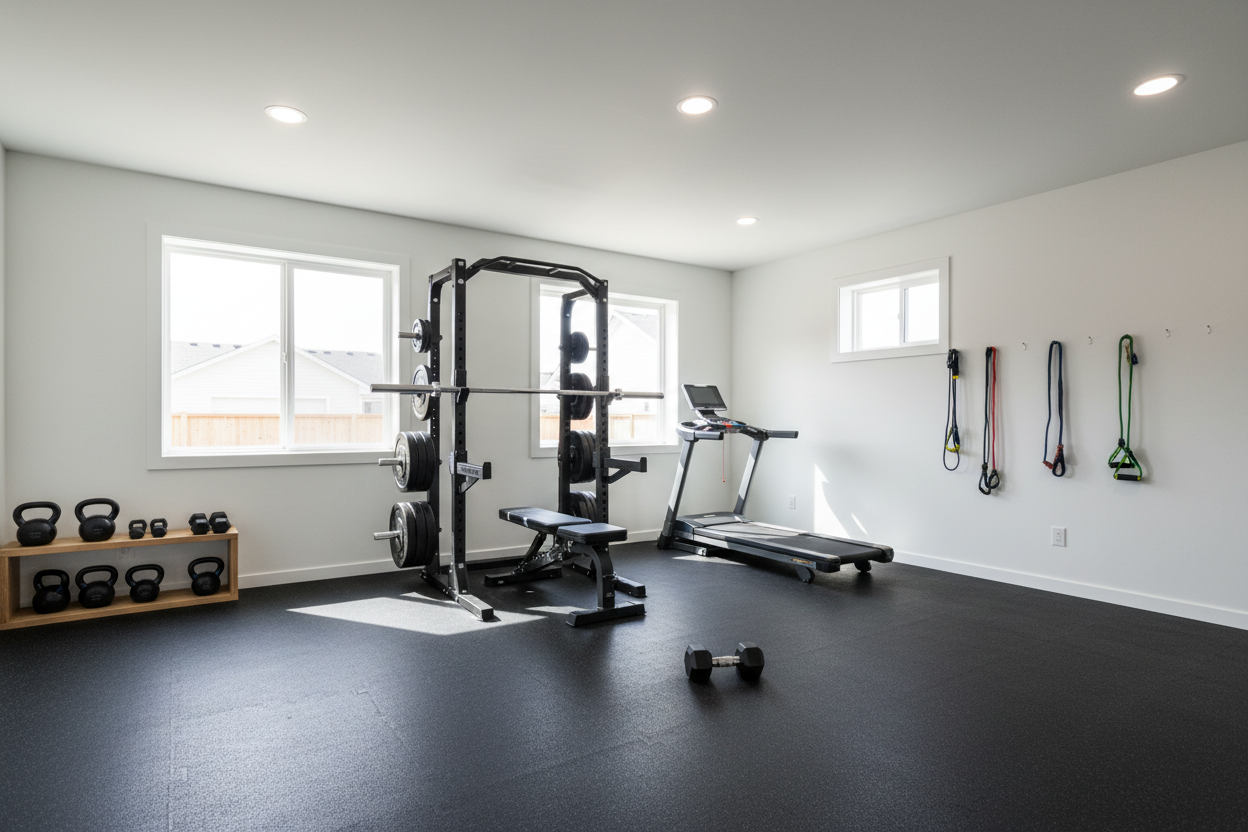
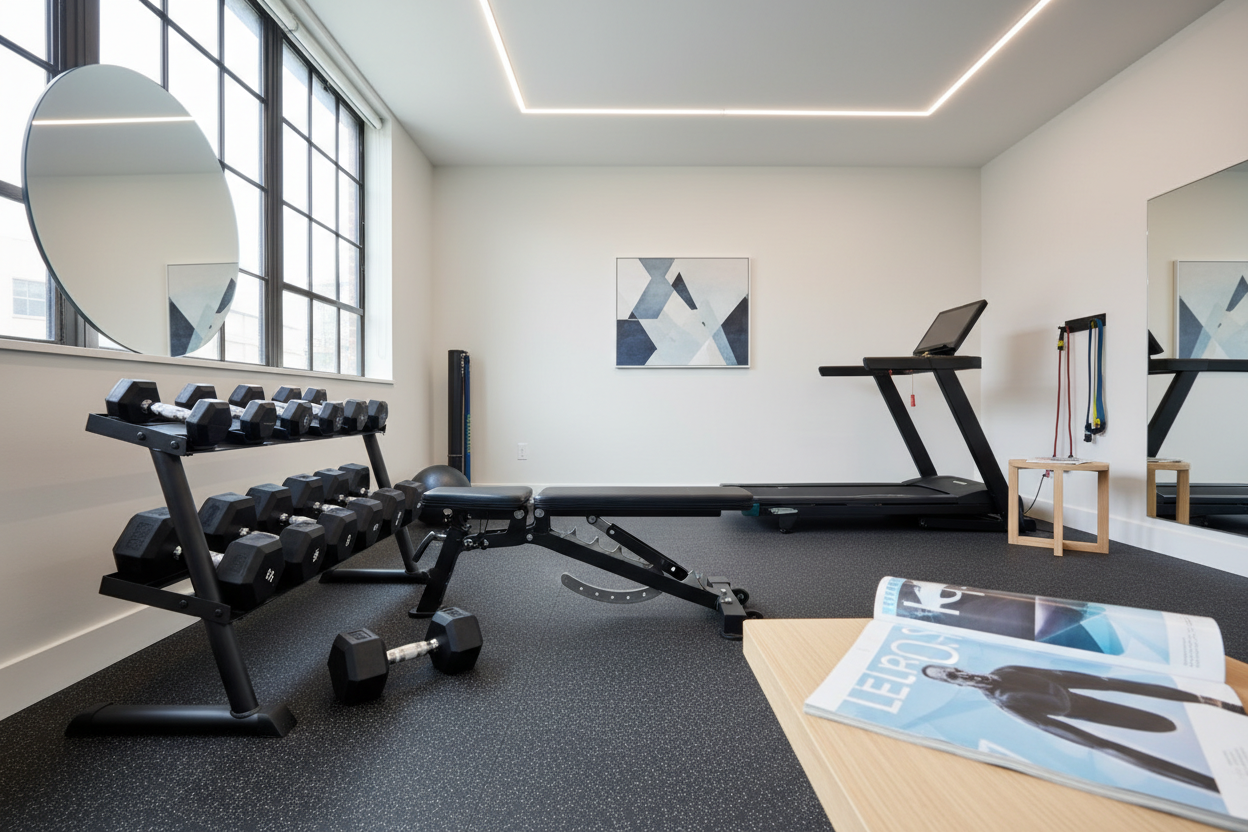
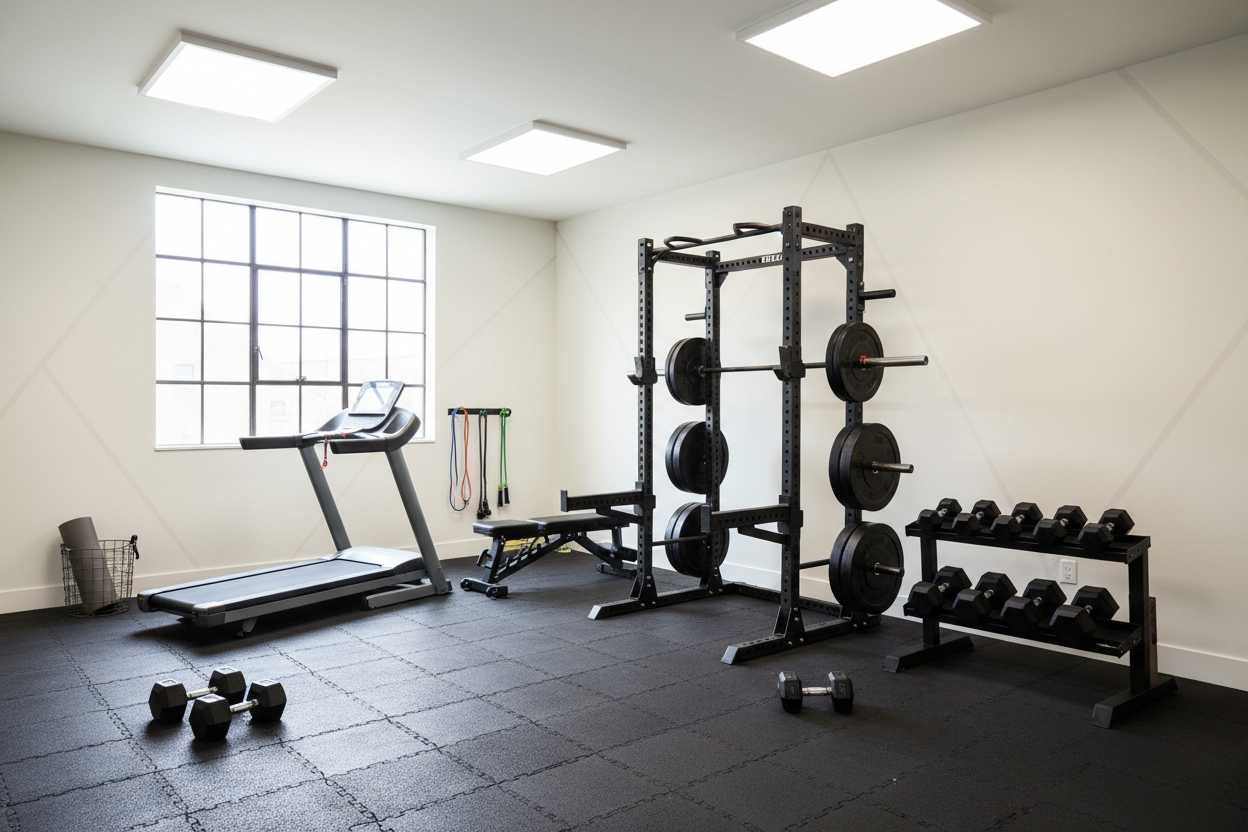
Over the last five years, I have tested dozens of setups in my own garage and living room. When I started programming heavy kettlebell swings for my Alactic power days, I quickly realized a major downside: dropping a 53-pound cast-iron bell on standard apartment laminate will instantly destroy the subfloor. I learned the hard way that if you are going to do explosive, weighted conditioning indoors, you cannot skimp on floor protection. Investing in high-density, shock-absorbing flooring was the only way I could confidently push my power output without worrying about noise complaints or property damage.
Frequently Asked Questions
How many days a week should I do conditioning?
For general health and fat loss, 2 to 3 days of dedicated conditioning is plenty when combined with a resistance training program. Ensure you mix the intensities so you aren't doing high-intensity lactic work every single day.
Do I need weights for these energy systems?
No. While kettlebells and dumbbells are great tools for adding resistance, you can target all three energy systems using just your bodyweight. The key is the speed of movement and strict adherence to the work-to-rest ratios.
Why am I not losing weight with high-intensity intervals?
Fat loss is primarily driven by your nutrition (caloric deficit). If you are doing intense intervals but eating more calories than you burn to compensate for the fatigue, your weight will not budge. Conditioning improves your engine; diet shrinks the chassis.