Magazine Workouts: Making Glossy Routines Actually Work at Home
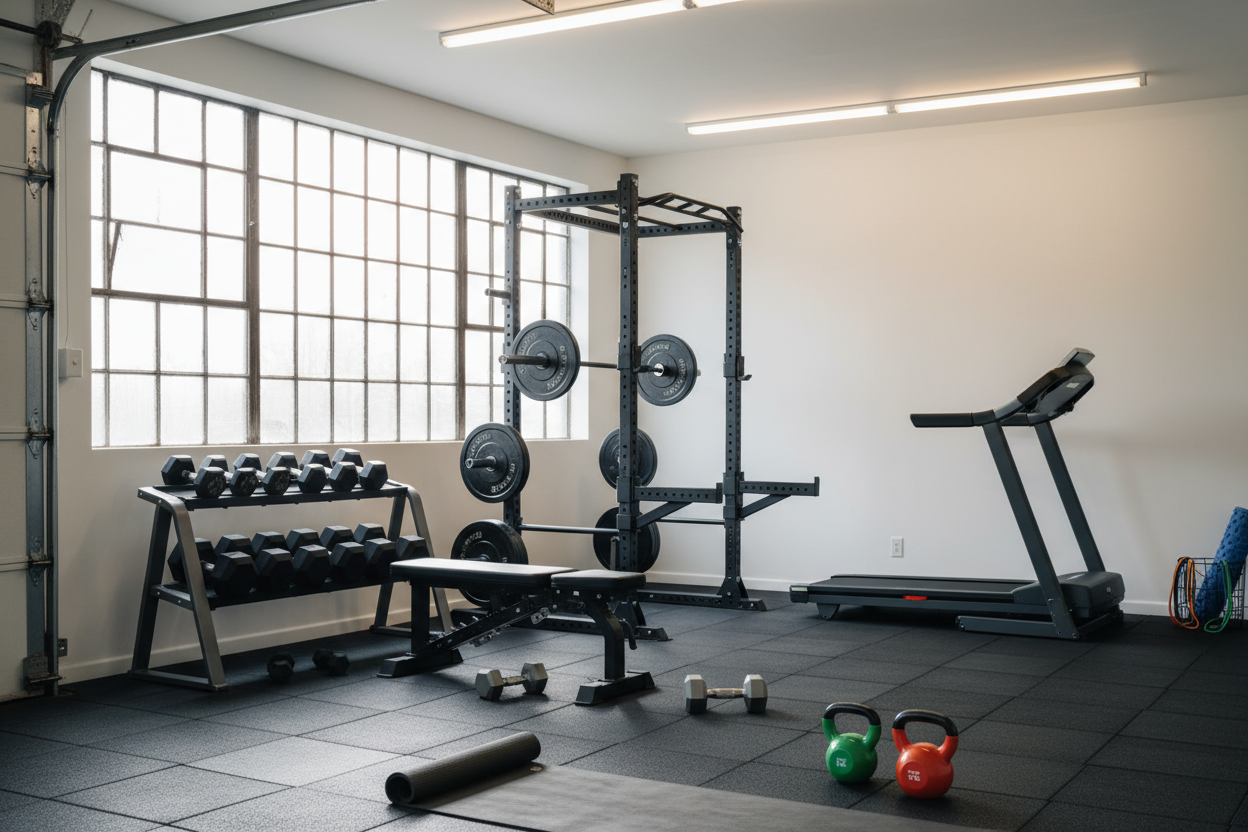
You are standing in the grocery store checkout line, staring at a shredded actor on the cover of a fitness publication. They are claiming to share the exact 20-minute routine that got them ready for their latest superhero role. Naturally, you buy the issue, take it home to your cramped 10x10 foot garage gym, and realize the routine requires six different cable machines and a team of spotters.
I have spent over a decade training clients and building out custom home setups. Over the years, I have seen countless people get frustrated by magazine workouts. They try to replicate these glossy celebrity routines with a pair of rusty dumbbells and end up confused, injured, or simply seeing zero results.
The truth is, those printed routines are designed to sell copies, not necessarily to build your physique. But you do not have to throw the whole issue in the recycling bin. With a few smart tweaks, you can strip away the fluff and turn those flashy workouts into structured, progressive routines that actually work with basic home equipment.
Quick Takeaways
- Print routines prioritize novelty to sell issues; true muscle growth requires repetitive, progressive basics.
- Complex multi-joint exercises can usually be broken down into fundamental push, pull, squat, and hinge movements.
- Commercial machines can easily be swapped for adjustable dumbbells, barbells, or heavy-duty resistance bands.
- A magazine routine is just a single snapshot; you must add progressive overload to turn it into a multi-week program.
The Problem With Mainstream Magazine Workouts
Fitness publications face a unique challenge: they have to publish a new issue every single month. If they printed the actual, honest truth about building muscle—which is doing variations of squats, deadlifts, presses, and rows for years on end—they would go out of business. To keep readers hooked, they invent novelty.
This is where the concept of muscle confusion usually enters the chat. You will see routines featuring bizarre rep schemes, supersets that require hoarding three different pieces of equipment, and exercises that look more like a circus act than strength training. As a trainer, I cringe when I see a client trying to balance on a stability ball while performing a twisting overhead press just because a fitness model did it on page 42.
When I tested a popular 30-day celebrity shred routine in my own 6x6 foot basement setup, the flaws became glaringly obvious. The workout called for a cable crossover superset with a seated leg curl. In a home gym, moving between those two stations quickly is nearly impossible unless you have a massive, expensive functional trainer. The routine was completely impractical for a solo lifter with basic gear.
Decoding the Routine: Finding the Core Movement Patterns
To make a print workout functional for your home space, you have to look past the complex, multi-joint tricks. Your goal is to identify the underlying mechanics. Every effective exercise boils down to a fundamental movement pattern: a push, a pull, a squat, a hinge, or a loaded carry.
Let us say the magazine suggests a reverse lunge to a single-arm Arnold press. That is just a lower-body squat pattern combined with an upper-body vertical push. If you struggle with the balance or simply want to push heavier weight, split the exercise in two. Do a set of standard split squats, followed by a set of seated dumbbell shoulder presses.
By breaking down the flashy exercises into their core components, you instantly make the routine safer and more effective. You can actually focus on contracting the target muscles rather than worrying about falling over your adjustable bench.
Swapping Commercial Gym Machines for Free Weights
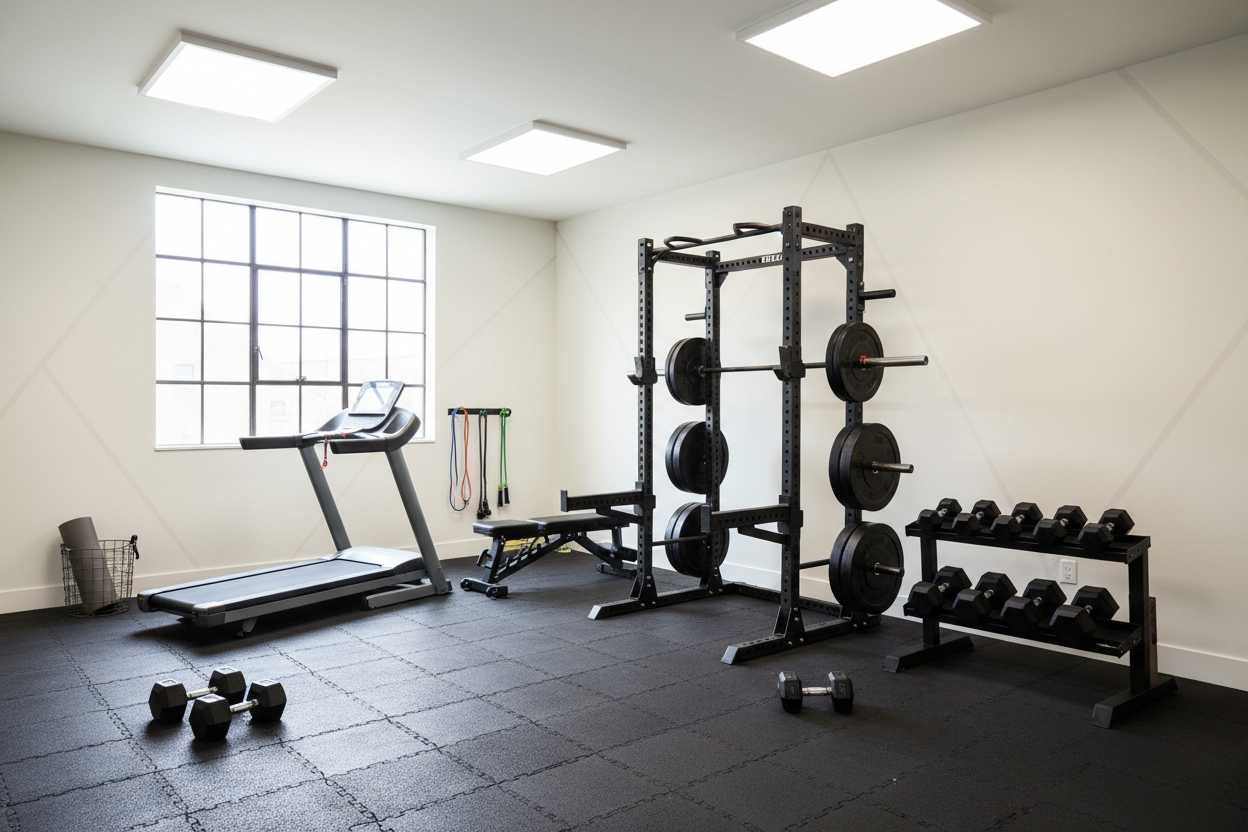
Most print routines are shot in massive commercial facilities, featuring rows of pristine selectorized machines. When you are working out in a spare bedroom with a basic power rack and a set of 5-52.5 lb adjustable dumbbells, you have to get creative with your substitutions.
If the workout calls for a machine chest press, swap it for a flat or incline dumbbell press. If it demands a seated cable row, grab your dumbbells for bent-over rows, or loop a heavy resistance band around your rack uprights. Leg presses can easily become goblet squats or barbell front squats, which honestly provide a better core stimulus anyway.
The one downside to swapping machines for free weights at home is the stabilization factor. Machines lock you into a fixed path, allowing you to push closer to failure safely. When using free weights, especially on heavy lower-body days, you must pay closer attention to your form and fatigue levels to avoid dropping a weight on your floorboards.
Adding Progression to a One-Off Routine
The biggest failure of any print workout is that it only provides a single snapshot in time. It gives you the exercises, sets, and reps for one day. But muscle growth and strength gains require progressive overload—doing slightly more work over time. Doing the exact same routine with the exact same 20-pound dumbbells for a month will stall your progress almost immediately.
To fix this, you need to turn that single sheet of paper into a 6-week training block. Start by establishing your baseline. During week one, find the maximum weight you can lift for the prescribed rep ranges while maintaining perfect form. Write it down in a training log.
In week two, try to add one or two reps to each set. In week three, if you hit the top of the rep range, increase the weight by 5 to 10 pounds. If you really want to dial in your numbers and stop guessing, you can start building strength with percentage based programming. Apply those load progression principles to the exercises you pulled from the magazine, and you will actually see the results promised on the cover.
When to Ditch the Magazine and Upgrade Your Plan
Adapting monthly print workouts is a great way to break out of a rut or find new exercise variations. However, there comes a point when piecing together random routines will no longer serve your goals. If you have been training consistently for more than six months, you will likely outgrow the piecemeal approach.
Signs that it is time to upgrade include stalling out on your major lifts, feeling chronic joint fatigue from unbalanced programming, or simply getting tired of translating machine exercises into free weight equivalents. True strength and physique development require distinct phases of training, including hypertrophy, strength, and deload blocks.
When you are ready to stop hacking together routines and want a comprehensive multi-phase plan, it is time to look at dedicated home training programs. There are plenty of modern alternatives for home gyms that provide months of structured workouts designed specifically for limited equipment and tight spaces.
Building Your Fitness Media 'BS Detector'
As you continue to source ideas from fitness media, you need a reliable way to filter out the nonsense. Before trying a new routine, run it through a quick mental checklist. First, look at the exercise selection. Are there more than two exercises that require balancing on an unstable surface? If so, skip it.
Second, check the volume. If a workout prescribes 40 total sets for a single muscle group, it is either designed for an elite, chemically enhanced bodybuilder, or it is just clickbait. Finally, look at the end goal. If the article promises you will drop 20 pounds of fat in two weeks while simultaneously adding two inches to your biceps, put the magazine down and walk away.
Frequently Asked Questions
Can I build muscle using only magazine workouts?
Yes, but only if you apply progressive overload. The exercises themselves are usually fine, but you must consistently increase the weight, reps, or sets over time rather than just doing the routine once and moving on to the next issue.
Are celebrity workouts actually what the actors do?
Rarely. Most actors undergo months of strict, progressive strength training and highly controlled diets. The routines published in magazines are often simplified or heavily modified versions designed to look interesting on the page.
How do I replace a leg curl machine at home?
If a print routine calls for seated or lying leg curls, you can substitute them with dumbbell Romanian deadlifts, sliding floor curls using furniture sliders, or by anchoring a heavy resistance band to a sturdy rack upright and performing standing leg curls.