Are You Violating the Principles of Weight Training in Your Garage?
I’ve spent too many late nights staring at my power rack, wondering why my bench press hasn’t moved in six months despite the thousands I’ve dropped on a stainless steel barbell and competition plates. It’s easy to get distracted by the gear, but if you’re ignoring the principles of weight training, you’re just moving heavy things around for no reason. You aren't building a physique; you're just making yourself tired.
- Sweating is a byproduct of effort, not a metric of progress.
- If your program changes every week, you aren't training.
- Your anatomy determines your form, not a generic PDF guide.
- Progressive overload is the only law that actually matters for growth.
You're Probably Working Out, Not Actually Training
There is a massive psychological gap between 'working out' and 'training.' Working out is what you do when you want to burn off a weekend of pizza or clear your head. It’s random, it’s reactive, and it usually involves chasing a 'pump' until you feel tired enough to stop. Training, however, is the deliberate application of weight training principles to force your body to adapt.
When you train, every set has a purpose. You aren't just trying to get sweaty; you're trying to convince your central nervous system that it is currently too weak to survive your garage gym sessions. If you don't have a logbook—digital or a beat-up notebook—you aren't training. You're just exercising, and exercising won't put two inches on your quads.
The Overload Rule: Why You Have to Stop Switching Programs
The biggest mistake I see in home gyms is 'program hopping.' People get bored after three weeks because they aren't seeing Hulk-like transitions in the mirror, so they swap their linear progression for some high-intensity 'metcon' nonsense they found on Instagram. This kills your gains because it violates the principle of progressive overload.
You need to realize that your first year of weight lift training should be boring. Real progress is found in the monotony of doing the same five or six lifts every week and adding five pounds or one extra rep. Forget 'muscle confusion.' Your muscles aren't smart enough to be confused; they only understand tension and recovery. If the weight on the bar isn't going up over time, you're just spinning your wheels.
The Specificity Trap: Stop Trying to Do Everything at Once
Specificity means your body gets better at exactly what you tell it to do. If you spend half your workout on a cardio rower and the other half doing light lateral raises, don't be shocked when your deadlift stays stagnant. You cannot effectively train for a marathon and a 500-pound squat at the same time without compromising both.
If you want to get strong, you have to prioritize the movements that offer the most bang for your buck. For most of us, squats are the king of all exercises and should be the foundation of your lower body days. Everything else—the leg extensions, the calf raises, the lunges—is just accessory work. Pick a primary goal and let every other movement in your session support that goal, rather than distracting from it.
Individualization: Your Leverage Dictates Your Lifts
Stop trying to mimic the exact foot stance of a 5'6" pro powerlifter if you're a 6'3" guy with long femurs. One of the most overlooked weight training principles is individualization. Your limb lengths and hip socket anatomy dictate how you should move. There is no 'perfect' form that applies to every human being on earth.
This is why I generally prefer free weights over machines for the big lifts. While stack-loaded weight lifting machines are fantastic for isolating a muscle without worrying about stability, they lock you into a fixed path. Free weights allow your joints to find their natural 'lane.' If a movement feels like it's grinding your joints despite 'perfect' textbook form, your individual leverages probably require an adjustment in stance or grip width.
How to Audit Your Own Home Gym Setup Today
If your garage gym consists of a pair of 25-lb dumbbells and a yoga mat, you're going to hit a wall very fast. To follow these principles, you need the right tools to fail safely. You can't truly test your limits on a bench press if you're terrified of the bar pinning you to your chest. You need equipment that scales with your strength.
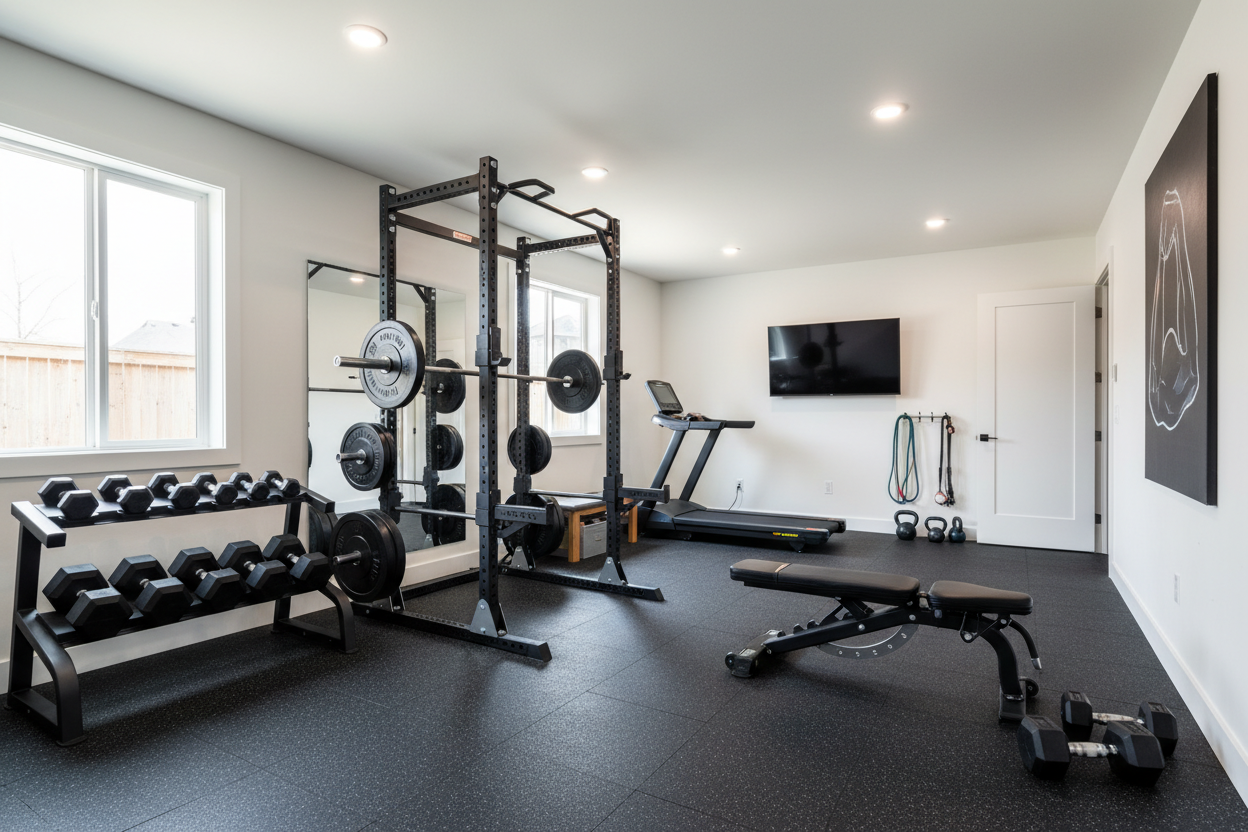
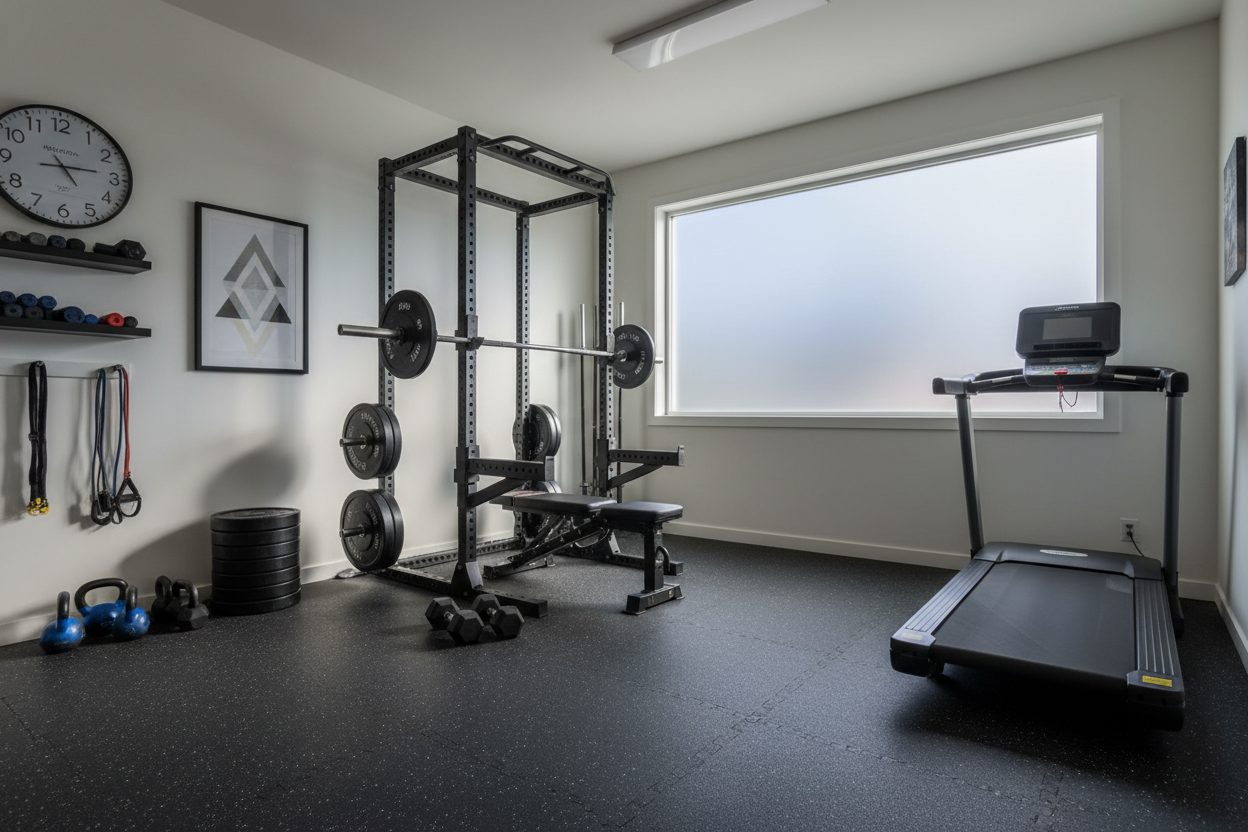
Investing in a solid power rack and weight bench package is the bare minimum for anyone serious about long-term growth. It provides the safety spotters you need to push that final, ugly rep where the real growth happens. Audit your space: do you have enough plates to actually get stronger next month? Do you have a way to micro-load? If the answer is no, you're capping your potential before you even pick up the bar.
My Personal Lesson in Failure
I once spent an entire year 'program hopping' because I was obsessed with variety. I had every attachment you could buy—lat pulldown bars, specialized handles, different bands. I was doing a different 'workout' every single day. At the end of that year, I looked exactly the same and my strength hadn't budged. I was 'working out' five days a week, but I wasn't training. It wasn't until I stripped everything back to a basic 3-day-a-week barbell program that I actually saw my body change. It was a ego-bruising lesson: the flashy stuff is fun, but the basics are what build the house.
FAQ
How do I know if I'm recovering enough?
If your strength is dropping for two sessions in a row, you're likely under-recovered. Check your sleep and protein intake before you blame your program.
Can I build muscle with just bodyweight?
Yes, but it's much harder to apply progressive overload. Adding a 5-lb plate to a bar is easier and more precise than trying to make a push-up 'slightly harder' every week.
How long should a training session last?
Between 45 and 75 minutes. If you're in the garage for two hours, you're likely talking to your neighbor too much or taking 10-minute rest breaks.