Are Bands Enough for Real Resistance Training for Women?
I remember the exact morning my home workouts hit a wall. I was halfway through my third set of glute bridges with a 'heavy' fabric loop, and I wasn't even breathing hard. I’d followed the influencers, bought the colorful latex kits, and yet, my progress looked as flat as the bands themselves. If you are serious about resistance training for women, you eventually have to face a hard truth: rubber has its limits. You can only double-wrap a band so many times before it snaps or simply stops challenging your nervous system.
Quick Takeaways
- Bands have a 'variable resistance curve,' meaning they are easiest when your muscles are in their weakest position.
- Progressive overload requires measurable, incremental weight jumps that bands cannot provide.
- Adjustable dumbbells and kettlebells offer a smaller footprint than a full rack of bands and accessories.
- Floor protection is the most overlooked safety feature in a home setup.
The Rubber Band Plateau (Why You Stopped Seeing Results)
The problem with relying solely on elastic tension is biomechanical. When you use a band, the resistance increases as the band stretches. This sounds fine until you realize that for most movements, the 'hardest' part of the band stretch happens at the end of the range of motion. Think about a squat: the band is slack at the bottom where you need the most tension to build power, and tightest at the top where you are already standing straight. This uneven loading makes it nearly impossible to build foundational strength across the entire movement.
Many of us swapped studio classes for resistance training because we wanted more control over our results. But if you stay in the 'high-rep, low-tension' zone that bands force you into, you’re mostly just doing cardio with a side of friction. For effective strength and resistance training for women, the muscle needs to be challenged during the eccentric phase (the lowering part of the lift). Bands offer almost zero resistance here; they just snap back into place. To actually change your body composition, you need a load that fights you the whole way down.
I’ve seen dozens of women get frustrated because they 'feel the burn' but don't see the muscle definition. That burn is often just metabolic stress, not the mechanical tension required for hypertrophy. If you can do 30 reps of an exercise without your form breaking down, the resistance is too low. It is time to stop thinking in colors and start thinking in pounds.
What Real Progressive Overload Actually Demands
Progressive overload is the law of the land. To get stronger, you must do more over time. With iron, this is easy: you add a 2.5-lb plate or move from a 15-lb dumbbell to a 20-lb one. With bands, the jumps are massive and imprecise. A 'medium' band might be 20 lbs of tension, while a 'heavy' one is 40 lbs. That is a 100% increase in load. Imagine trying to double your bench press overnight—it doesn't happen.
When upgrading your strength training accessories, you should look for tools that allow for micro-loading. Small magnetic weights or fractional plates allow you to increase your lift by just one or two pounds. This is how you stay consistent without hitting a plateau every three weeks. Muscle tissue adapts to specific, measurable stress. If you can't tell me exactly how many pounds you lifted last Tuesday, you aren't training; you're just exercising. There is a huge difference between the two when it comes to long-term body recomposition.
Transitioning from Elastic to Iron Without Clutter
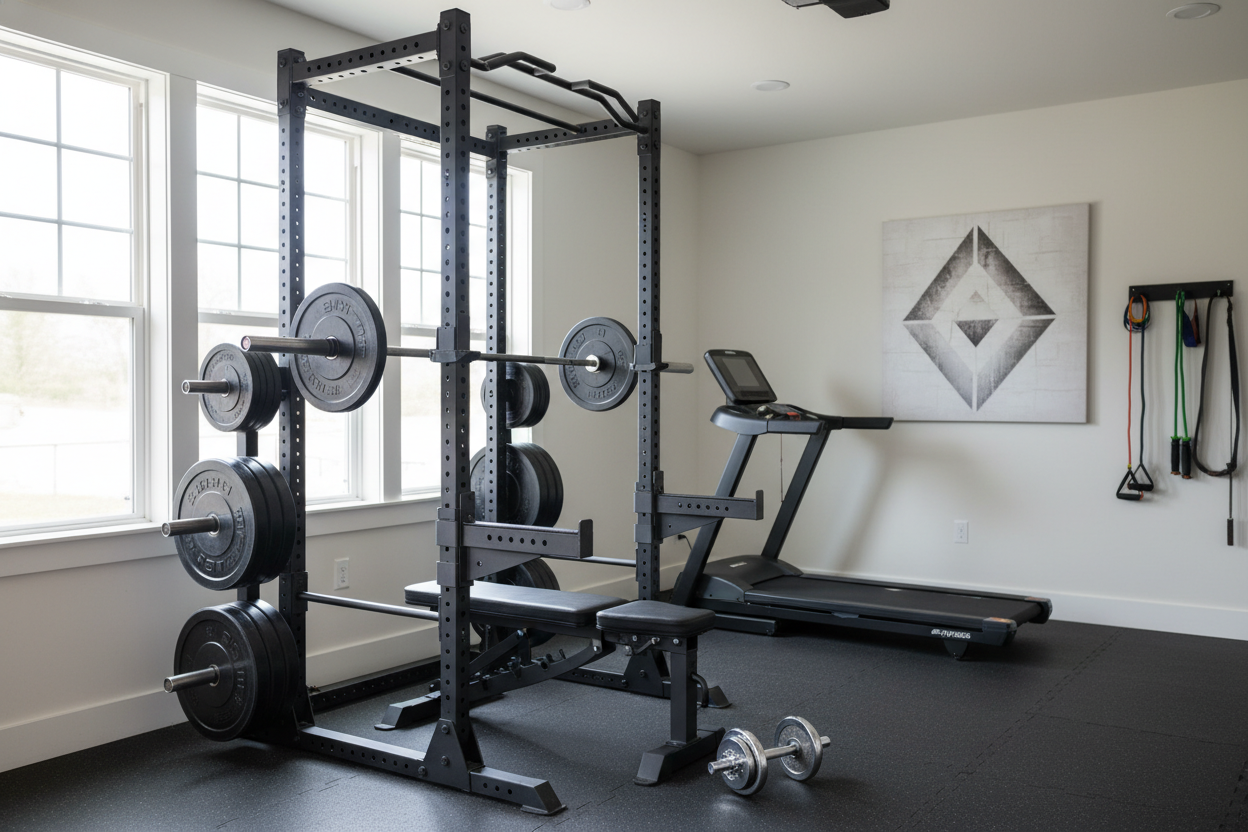
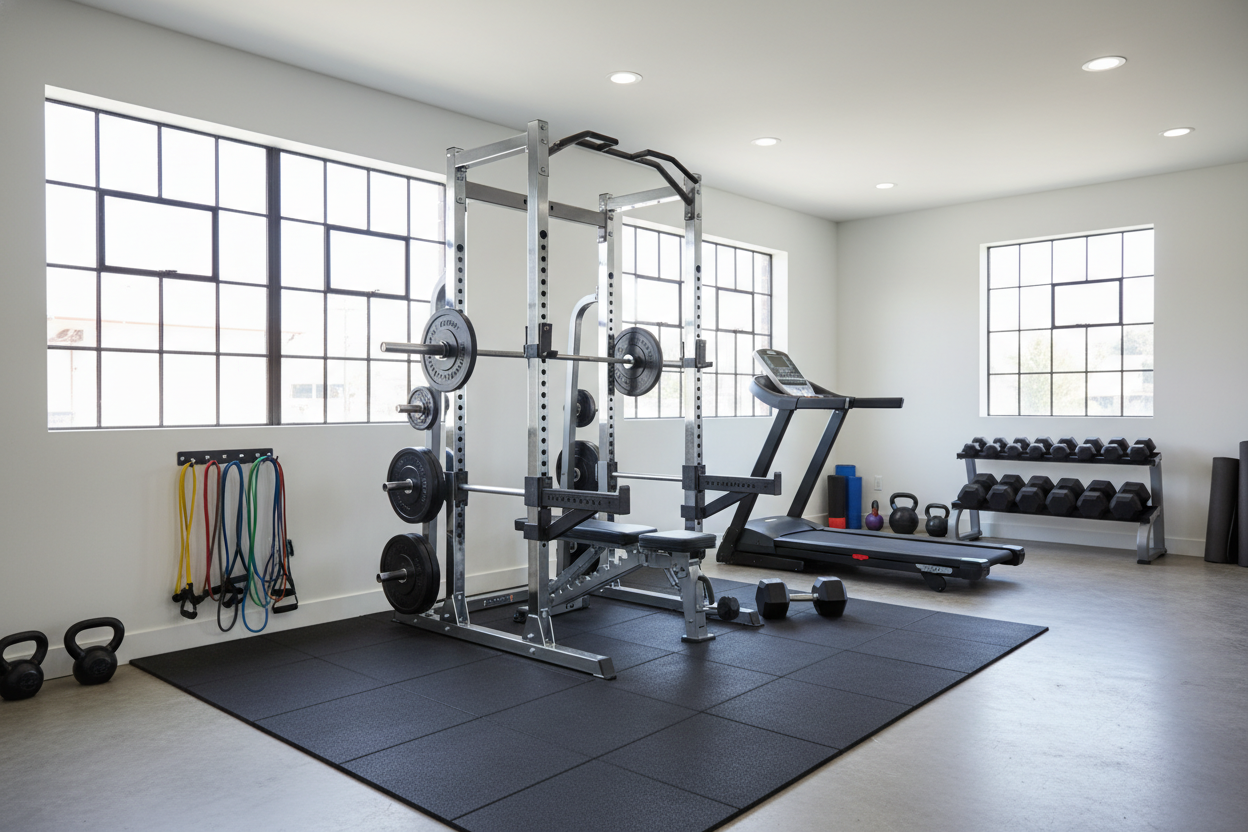
The biggest fear I hear is that moving away from bands means turning the spare bedroom into a cluttered commercial gym. That is a myth. You can get a world-class workout with three specific items: a pair of adjustable dumbbells, one heavy kettlebell for posterior chain work, and a flat bench. This compact home strength equipment takes up less than 10 square feet of floor space but provides thousands of pounds of potential resistance.
I personally prefer adjustable dumbbells that use a pin or dial system. They replace an entire rack of 15 pairs of weights. When you’re doing rows or deadlifts, you can quickly dial up to 50 lbs, then drop it down to 10 lbs for lateral raises. It’s efficient, it’s tidy, and it actually feels like a gym. A single 35-lb kettlebell is also a secret weapon for women’s resistance training. It’s the perfect tool for swings and goblet squats, hitting the glutes and hamstrings in a way a rubber loop never could.
Start From the Floor Up
Before you bring a single piece of iron into your house, you have to think about the surface you’re standing on. Standard carpet or hardwood is a disaster for heavy lifting. Carpet is unstable, which can lead to rolled ankles during lunges, and hardwood will crack the second a dumbbell slips out of your sweaty hands. A high-density exercise mat gym flooring is the non-negotiable first purchase. It dampens the noise so you don't annoy the neighbors, protects your subfloor, and gives your feet the grip they need to drive through a heavy press. I’ve made the mistake of lifting on a thin yoga mat—it bunched up, I tripped, and I ended up with a bruised ego and a dented floor. Don't skip the floor prep.
A Smarter Framework for Home Lifting
Once you have the gear, you need a plan that isn't just 'sweat for 30 minutes.' Real strength is built in the 5 to 12 rep range. If you’re doing 20+ reps, you’re building endurance, not necessarily density or power. My ultimate guide to equipment for resistance training emphasizes that your gear should match your programming. If your goal is to look 'toned,' what you actually mean is you want to build muscle and lower your body fat percentage. You cannot build that muscle without a significant external load.
Start by tracking your 'big four': a squat variation, a hinge (like a deadlift), a push (overhead press), and a pull (rows). Use your new iron to stay in a rep range where the last two reps are difficult but manageable with perfect form. That is where the magic happens. You’ll find that 15 minutes of heavy lifting does more for your physique than an hour of 'band-burn' ever did.
Personal Experience: My $200 Mistake
A few years back, I bought a set of 'bargain' adjustable dumbbells from a random marketplace. They rattled like a box of Legos every time I moved them. One day, while doing overhead presses, the locking mechanism slipped. I caught it, but it scared the life out of me. The lesson? When it comes to things that hang over your head or feet, don't buy the cheapest option. Buy the gear that feels solid. High-quality iron doesn't expire; it’s a one-time investment in your health.
FAQ
Can I build any muscle with just bands?
Yes, especially if you are a total beginner. However, you will likely plateau within 3 to 6 months as your body adapts to the limited tension bands provide.
Is iron training better for fat loss?
Indirectly, yes. Lifting heavier weights builds more muscle mass, which increases your resting metabolic rate. You'll burn more calories just sitting on the couch than you would with a lower-muscle-mass frame.
Will lifting heavy iron make me 'bulky'?
This is the oldest myth in the book. Women don't have the testosterone levels to accidentally turn into a bodybuilder. Lifting heavy iron usually results in a firmer, more 'athletic' look, not a bulky one.