Are 6-Day Weight Lifting Plans for Women Actually Necessary?
I remember sitting on my garage floor at 10 PM, staring at a 6-day-a-week program I’d just bought from a girl on Instagram who clearly doesn't have a 9-to-5 or a toddler. I felt like a failure before I even started. Most weight lifting plans for women you see online are designed for people whose entire career is their physique. For the rest of us, trying to hit the iron six days a week isn't just hard—it is a recipe for injury and a dusty power rack.
Quick Takeaways
- Consistency beats frequency every single time.
- Three heavy days per week will build more muscle than six half-hearted days.
- Recovery is where the actual muscle growth happens, not the gym floor.
- High-quality equipment is safer and more effective than high-volume fluff.
The Trap of the 'Influencer Split'
We’ve all seen the reels. The aesthetic lighting, the perfectly coordinated sets, and the claim that you need to be in the gym six days a week to see a single muscle fiber pop. This 'influencer split' usually involves a different body part every day. Monday is glutes, Tuesday is shoulders, Wednesday is hamstrings, and so on. If you miss Tuesday because your kid got sick or a meeting ran late, your whole weightlifting routine for women is trashed for the week.
This cycle of 'missing and making up' leads to a guilt-spiral that makes people quit. I’m a huge advocate for ditching the follow-along workout videos and those frantic daily schedules. When you move to a realistic weight lifting schedule for women, you stop viewing the gym as a daily chore and start seeing it as a performance session. You don't need to live in your garage gym to look like you lift.
Why 3 or 4 Days is Your Hypertrophy Sweet Spot
Muscle isn't built while you’re under the bar; it’s built while you’re sleeping and eating. When you run a heavy women's weightlifting plan, you are creating micro-tears in the muscle tissue and taxing your central nervous system (CNS). If you hit the weights six days a week, your CNS never fully resets. You end up 'training tired,' which is how you get sloppy form and plateaued lifts.
A 3 or 4-day split allows for 48 to 72 hours of recovery between hitting the same muscle groups. This is the sweet spot for hypertrophy. By giving your body a full day of rest between sessions, you can show up and actually move more weight than you did the week before. That progressive overload is the only thing that actually changes your body composition.
Hardware Over Volume: Equipping Your Home Gym
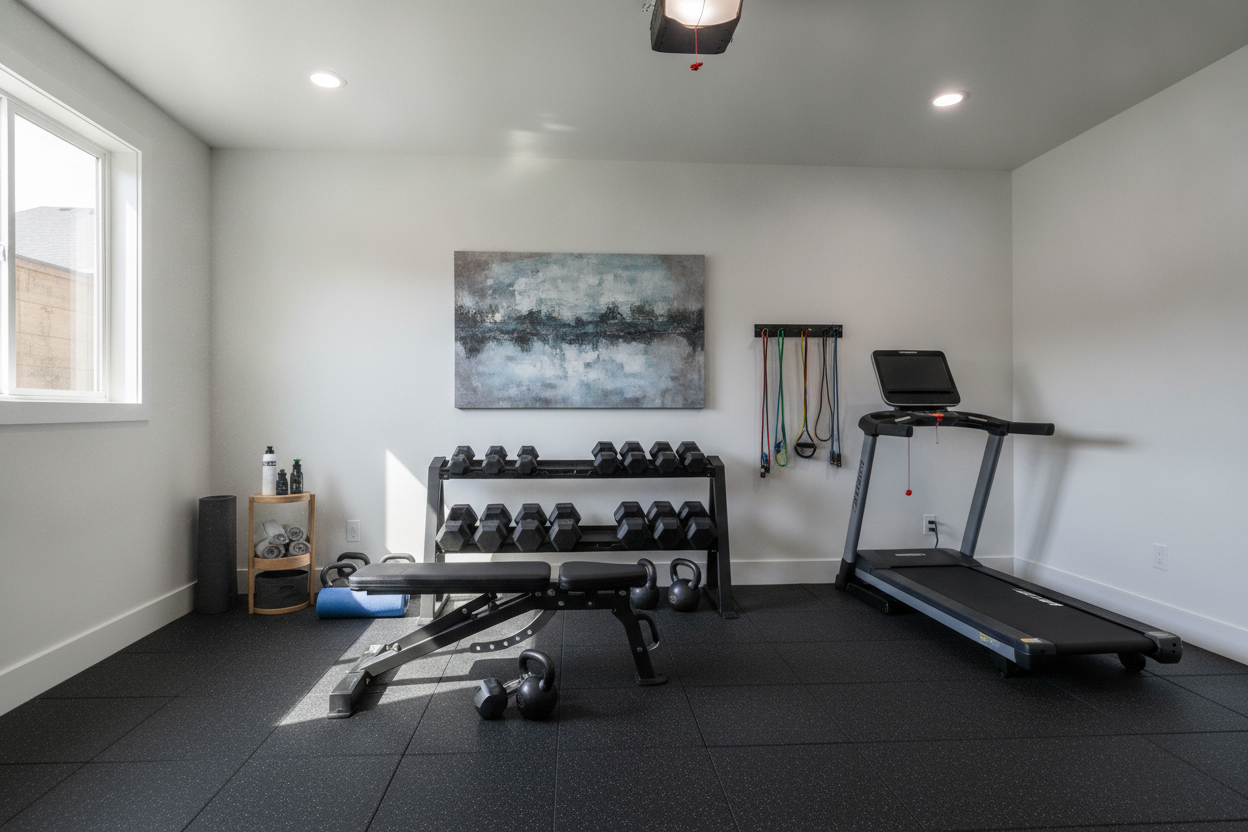
If you're only training three days a week, those sessions need to be high-quality. You can't trigger real adaptation with those neoprene-coated pink dumbbells. To make a low-frequency women's weight training schedule work, you need to be able to go heavy on compound movements like squats, deadlifts, and presses. This means you need gear that doesn't shake when you rack the bar.
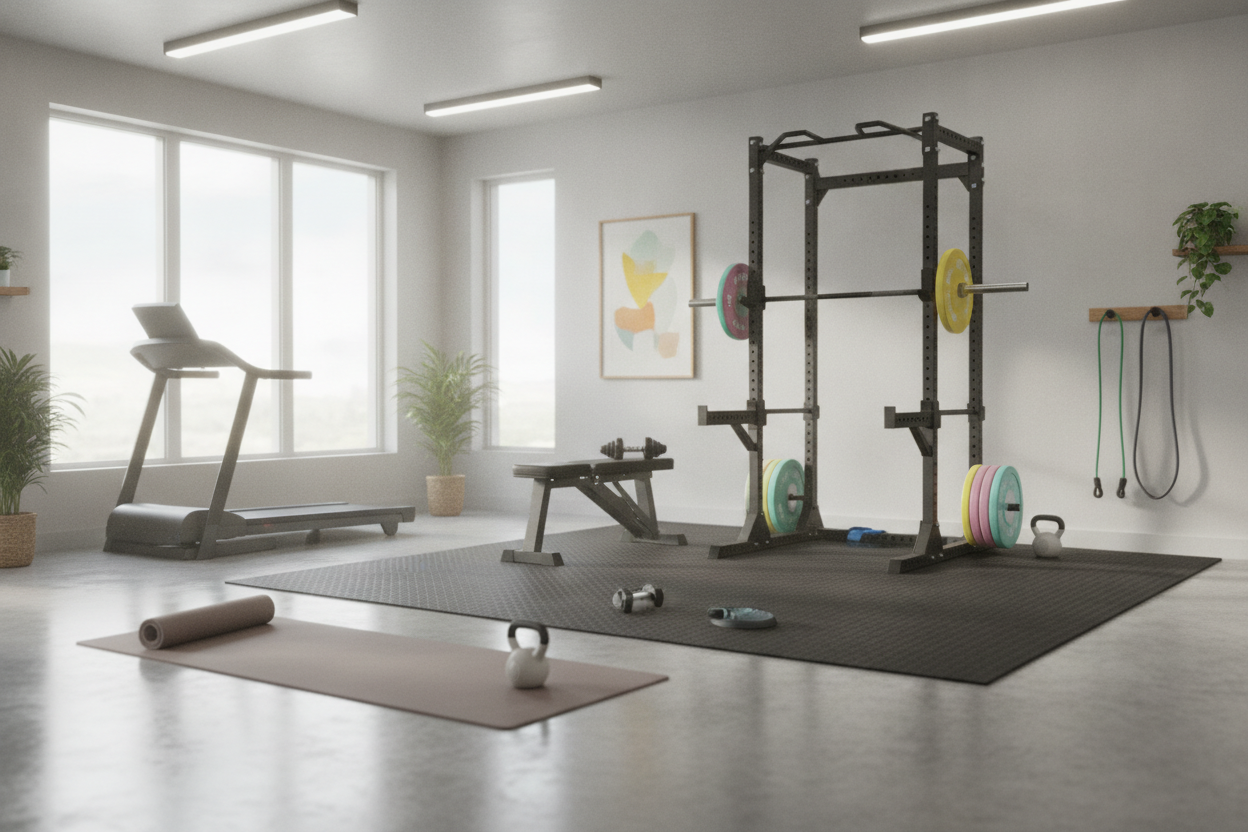
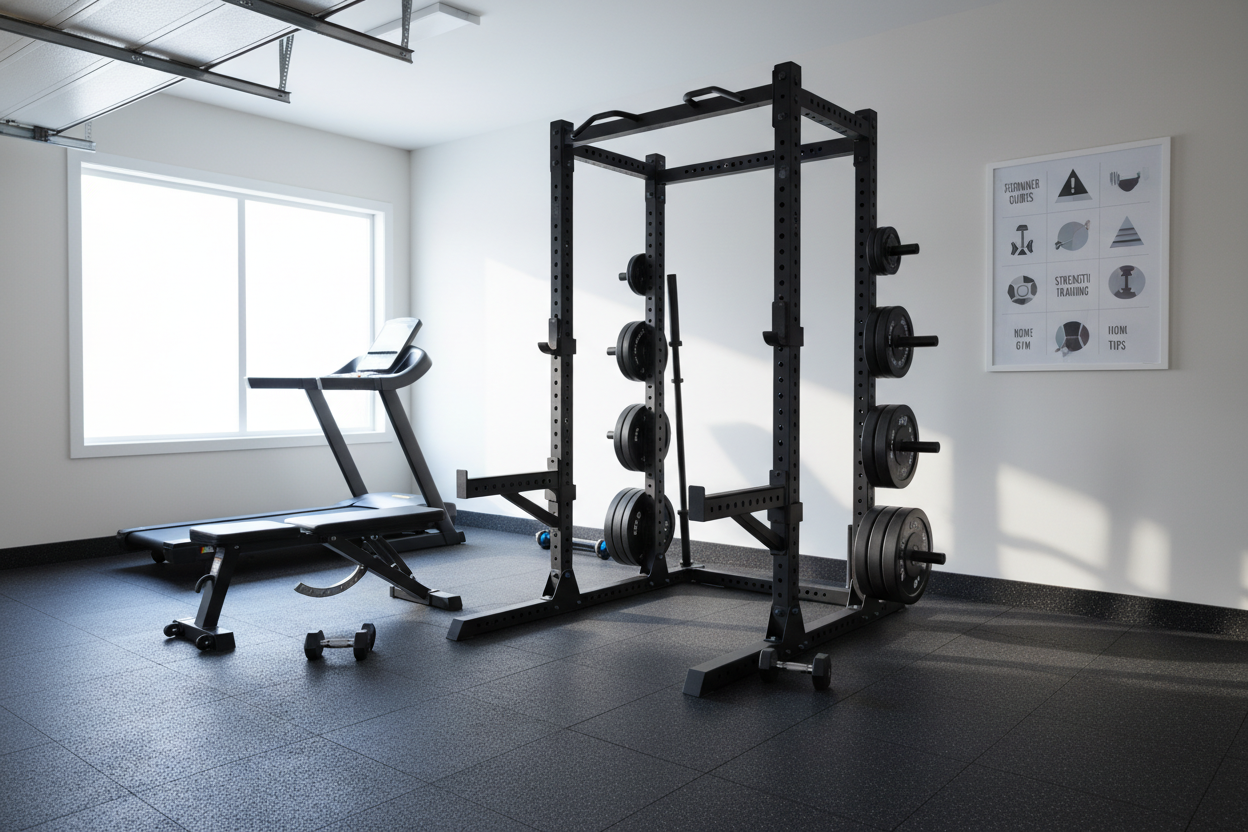
For a serious home setup, I always recommend a full power rack and weight bench setup. Having a cage with safety spotter arms means you can push to failure on a bench press or squat without needing a spotter. It gives you the confidence to add that extra five pounds to the bar, which is where the real progress happens.
You Can't Out-Program a Wobbly Bench
I’ve tested cheap benches that felt like they were made of recycled soda cans. If your back doesn't feel supported, your brain will literally 'throttle' your strength output to protect you from falling. It’s a survival mechanism. You need a sturdy adjustable weight bench that stays planted. Look for a tripod design or a heavy-duty steel frame with at least a 600-lb capacity. If the bench wobbles when you sit down, you’ll never reach your max potential on a chest press.
Mapping Out a Realistic Women's Weight Training Schedule
So, what does a real-world weightlifting routine for women look like? You have two main options that actually work with a busy life. The first is a 3-day Full Body split (Monday, Wednesday, Friday). Every session, you hit a squat variation, a hinge, a push, and a pull. This is incredibly efficient because if you miss Friday, you can just do it Saturday without 'missing' a body part.
The second option is a 4-day Upper/Lower split (Monday, Tuesday, Thursday, Friday). This gives you a bit more volume for specific goals but still keeps your weekends completely free for recovery or hiking. Both of these schedules prioritize heavy, compound movements over 'toning' exercises. Remember, there is no such thing as 'toning'—there is only building muscle and losing fat.
Stop Tweaking the Spreadsheet
The biggest mistake I see women make is 'program hopping.' They do a 3-day plan for two weeks, don't see a six-pack, and switch to a 6-day 'shred' plan. Stop it. Consistency on a 'good enough' 3-day program will beat inconsistency on a 'perfect' 6-day program every time. My advice? Pick a solid routine and stop overthinking beginner programs. Commit to 12 weeks of lifting heavy three times a week. I promise you'll see more progress than you ever did chasing influencer-style burnout.
My Training Reality Check
Two years ago, I tried to run a high-volume 'Leg Day' three times a week because I thought more was better. By week four, my knees were screaming, and I was dreading my workouts. I was so exhausted that I started skipping sessions entirely. I eventually stripped it back to a basic 3-day full-body routine. My deadlift went up 40 pounds in two months because I was finally recovered enough to actually lift heavy. I learned the hard way: more isn't better, better is better.
FAQ
Do I need to do cardio on my off days?
You don't 'need' to, but active recovery like walking or light swimming is great. Just don't do a HIIT session that leaves you too sore to lift the next day. Focus on movement, not exhaustion.
Will lifting heavy 3 days a week make me 'bulky'?
No. Building significant muscle mass takes years of dedicated eating and heavy lifting. Lifting three days a week will make you stronger, denser, and more defined, but you won't wake up looking like a bodybuilder by accident.
What if I only have 30 minutes?
Focus on one big compound lift (like a deadlift) and one superset of upper body work. Quality over quantity. You can get a lot done in 30 minutes if you stay off your phone and keep the rest periods tight.