
80g of Protein Daily Guide: Whole-Food Meal Blueprints, Muscle Support, and Home Gym Synergy
Establishing a sustainable daily nutrition baseline often starts with setting manageable macronutrient targets. Hitting 80 g of protein each day provides an approachable, highly effective benchmark for active individuals, beginner lifters, and anyone seeking reliable muscle recovery without overly complex meal preparation. When combined with consistent strength training on stable home gym flooring, achieving your target of 80 grams of protein per day creates a solid foundation for physical development.
Understanding 80 Grams of Daily Protein: Who It Serves and How It Works
A daily target of 80 g protein suits a wide range of individuals, particularly those maintaining moderate body weights, recreational athletes, or people transitioning from a low-protein diet toward a more structured nutritional plan. If you are wondering, is 80 grams of protein enough, the answer depends largely on your personal body composition goals and activity volume. For general health, tissue repair, and daily satiety, 80 grams protein serves as a practical stepping stone that avoids dietary overwhelm while still supporting recovery.
When structuring your daily nutritional baseline alongside a starter workout routine, following a structured plan build muscle guide helps ensure your lifting effort translates into tangible gains. Committing to 80 g of protein a day gives your body the recurring amino acid building blocks required to repair muscle fibers broken down during training sessions.
What Does 80 Grams of Protein Look Like? Visualizing Whole-Food Portions
Many trainees wonder what does 80 grams of protein look like across real meals. Visualizing portion sizes makes it significantly easier to hit your intake targets without obsessively weighing every ingredient. Protein-dense kitchen staples can be combined flexibly across the day:
- Poultry and Lean Meats: When considering how much chicken is 80 grams of protein, roughly two modest palm-sized cooked chicken breasts supply close to this entire daily quantity.
- Whole Eggs and Egg Whites: For those asking how many eggs is 80 grams of protein, it would require roughly a dozen whole eggs alone, which is why blending whole eggs with lean meats or dairy is a more balanced approach.
- Greek Yogurt and Cottage Cheese: A single standard bowl of thick strained Greek yogurt or low-fat cottage cheese provides a substantial portion of your daily requirement.
- Canned Tuna and Salmon: Two standard cans of tuna or a generous fillet of baked salmon easily cover more than half of your daily target.
- Plant-Based Legumes and Tofu: Combining firm tofu, lentils, and edamame offers a rich plant-focused pathway to reaching 80g protein a day.
Meal Structuring Strategies: 3-Meal vs. 4-Meal Distribution Frameworks
Figuring out how to get 80 grams of protein a day does not require drinking chalky shakes all afternoon. Distributing your intake across three or four evenly spaced meals optimizes digestion and appetite control throughout your daily schedule.
In a standard three-meal framework, you can aim for approximately 25 to 30 grams of protein at breakfast, lunch, and dinner. For instance, pairing eggs and Greek yogurt in the morning, a turkey and grain bowl for lunch, and a lean fish fillet with vegetables at dinner cleanly meets your goal. Alternatively, if you prefer smaller portions, spreading intake across three lighter meals and one nutrient-dense afternoon snack makes hitting an 80 g protein meal split effortless.
While some wonder about consuming 80 grams of protein in one meal, pacing your intake across several eating windows generally supports steady energy and prevents the sluggishness often associated with overly heavy single feedings.
Muscle Building and Body Composition: Evaluating the 80g Target
A common fitness question is whether 80 grams of protein is enough to build muscle. If you are a lighter trainee or engaged in beginner-level resistance training, an 80 protein diet can provide sufficient support for muscular adaptation and strength acquisition. Gaining noticeable strength and size takes consistent training and recovery; consult our realistic timeline overview in the does build muscle guide to set proper expectations.
For those using minimal home workout gear alongside a targeted meal plan, reviewing the enough build muscle guide clarifies how progressive overload works with lighter resistance. While advanced heavy lifters may eventually require higher protein amounts, 80g of protein remains an excellent, sustainable target that prevents excess caloric intake while fueling steady progress.
Synergy Between Nutrition and Home Training: Floor Support and Movement Mechanics
Nutrition provides the structural materials, but regular physical resistance creates the stimulus that tells your body to utilize dietary amino acids. Setting up an effective home workout space enables you to train consistently alongside your meal plan.
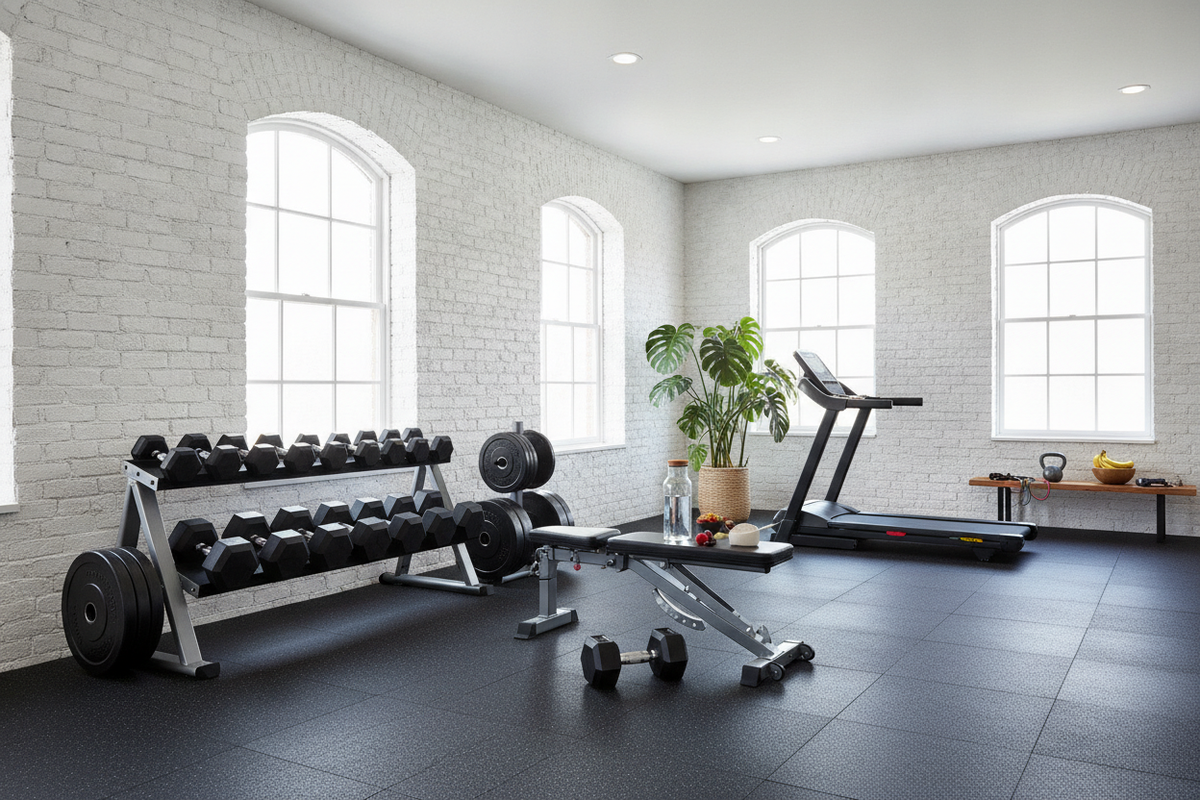
To maximize how effectively your body uses dietary protein for lower-body hypertrophy, avoid common form mistakes highlighted in our like build muscle guide. Executing heavy compound lifts safely requires high-density gym flooring that absorbs impact, prevents equipment slippage, and stabilizes your footing during squats, deadlifts, and lunges. In our workshop reviews, we regularly observe how dense rubber flooring preserves joints and subfloors during intense workouts.
Pairing your protein meals with streamlined compound training is straightforward when you apply principles from the minimalist build muscle guide on high-density leg movements. A reliable exercise surface gives you the traction needed to focus purely on muscular recruitment and strength output.
Practical Tips for Sustainable Daily Consistency
Maintaining an 80 gm protein diet over months and years relies on practical kitchen systems and steady habits rather than rigid dietary restriction:
- Batch Prep Lean Proteins: Roast chicken breasts, tofu blocks, or lean ground turkey in advance so you always have ready-to-eat protein bases on busy weekdays.
- Leverage High-Protein Snacks: Keep string cheese, roasted edamame, and single-serve yogurt cups in your kitchen for convenient midday options.
- Pair Habits with Workouts: Align your post-training meal with a dependable protein source to establish a satisfying daily routine.
- Prioritize Whole Foods: Emphasize nutrient-rich whole foods over processed alternatives to ensure you get essential micronutrients alongside your macronutrient goals.
By blending an intentional 80-gram daily protein target with a dedicated home training environment, you create a sustainable, results-driven fitness routine that supports strength, body composition, and everyday energy.


